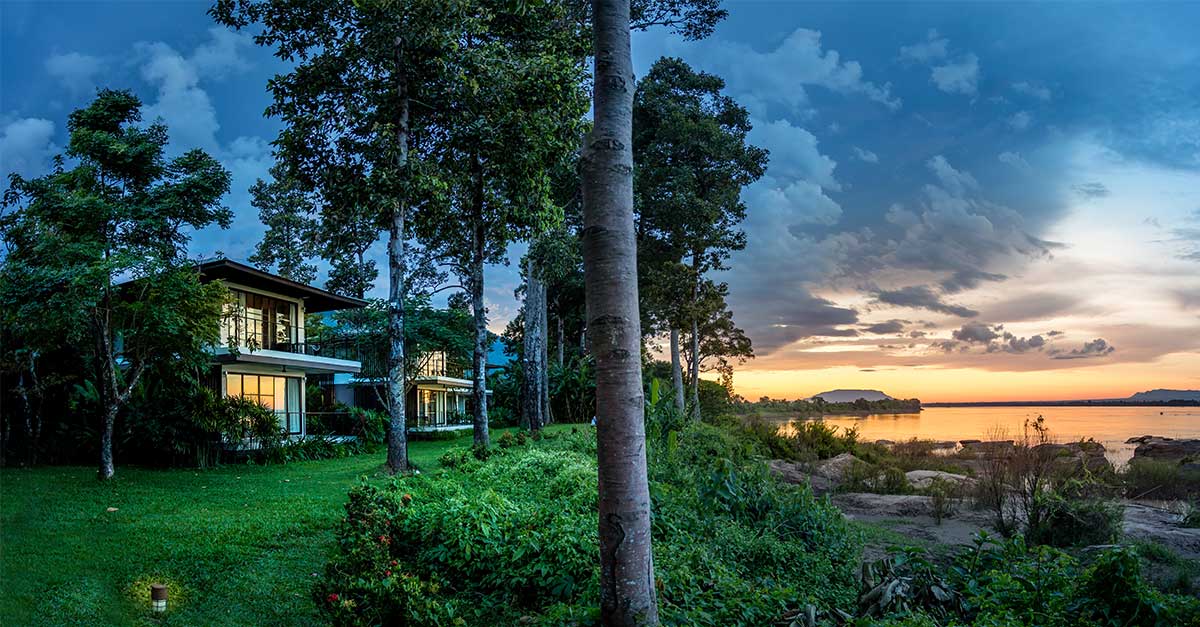
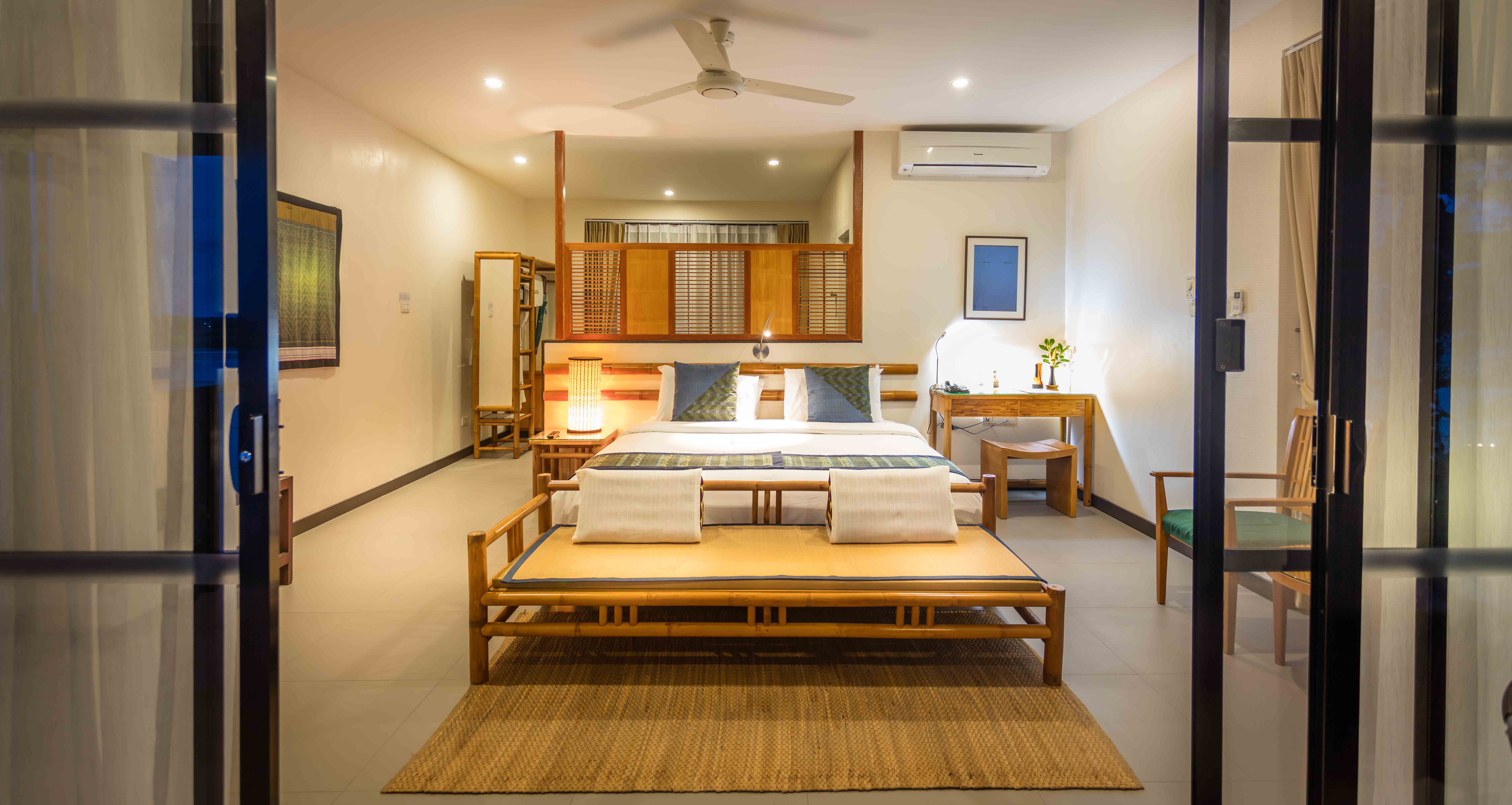
On the right bank of the Mekong, just north of Champasak town, sits a hidden treasure in Laos: The River Resort. Formerly a royal orchard, the 30,000 square meter area is teeming with green space for travellers looking to get away into nature and affordable luxury.
I had heard of The River Resort for quite some time and that it was a not only beautiful, but had a holistic attention to detail. People often remarked that it was a highlight of Southern Laos! I needed to find out for myself.
Cheerful Mr Ton, the General Manager, greeted me at reception and walked me through the property to my room. I learned that the resort itself is comprised of 28 Deluxe Guestrooms, 20 two-storied villas; and 8 adjoining rooms in two-storied structures. Each room has a splendid Mekong River view or Pond/Garden view, which can be enjoyed through large panorama windows.

The property also has two infinity pools with Mekong views, as well as a stunning riverside restaurant serving sumptuous Lao, Thai, and Western cuisine. There is even a rooftop area that is perfect for small private events or corporate meetings, complete with its own bar. Mr Ton also mentioned that the hotel has their own boats available for journeys up and down the Mekong, and even sunset cruises!
The American and Japanese owners fell in love with the location and invested in building this unique hotel project in keeping with the history of the area, and with a focus on the wellbeing of both guests and the community. The River Resort is dedicated to sustainable practices by composting organic waste to grow the magnificent flower, fruit, and vegetable gardens; using solar power in the kitchens, using ecologically grown bamboo in most of the furnishings; as well as maintaining a working rice paddy on the property! Hotel staff are almost all from the local area and have learned that hospitality brings skills they can use to improve their lives and share their region with the world.
I decided to see more of the area before dinner and boarded one of their comfortable local-style boats. In this area, it is very common to construct a large platform spanning two local pirogues as pontoons. Sitting in comfortable rattan chairs under a grass roof, I was feted with local snacks and a few soothing bottles of Beerlao to help quench the late afternoon heat.
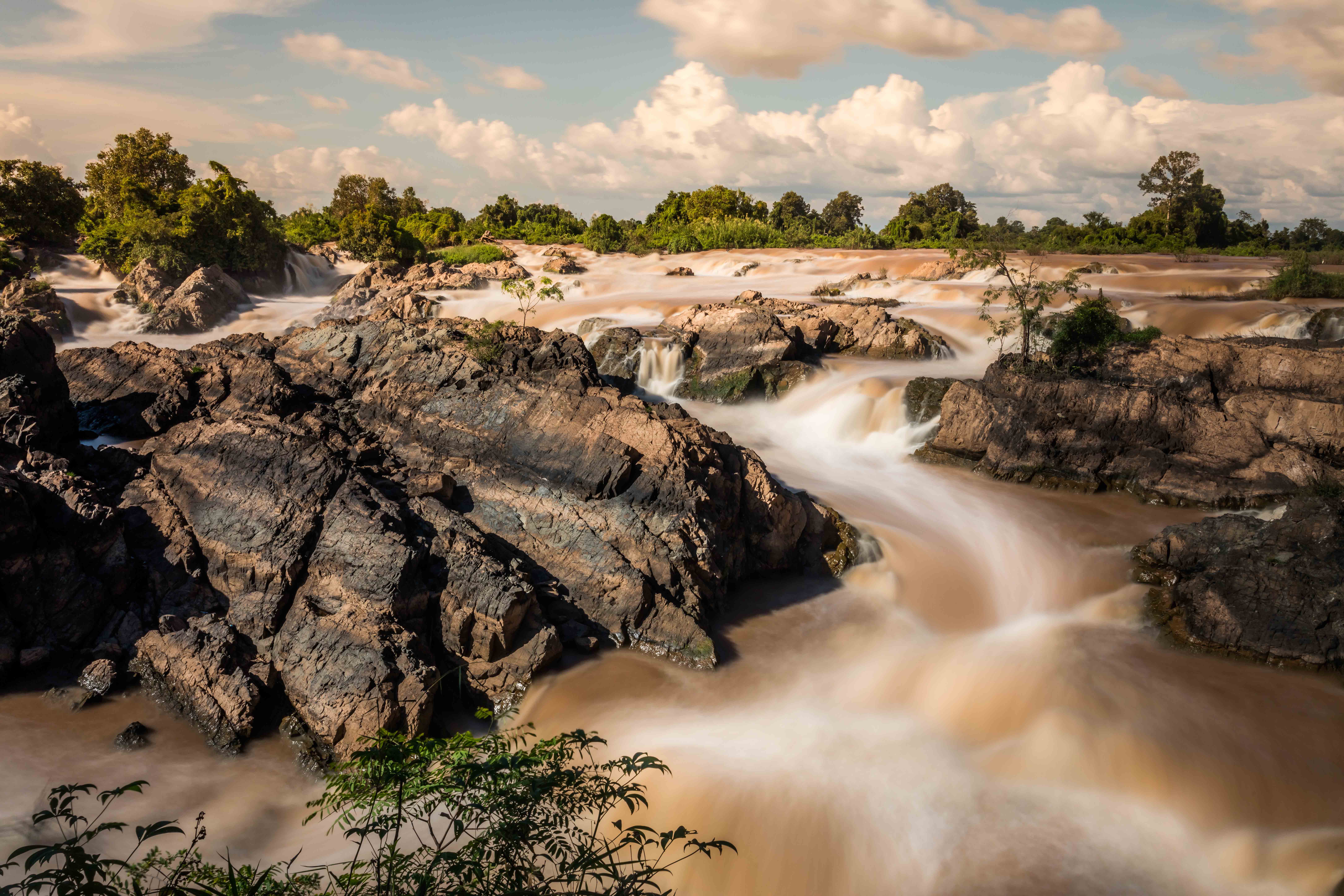
Admiring the mountains towering over scenes of local life along the riverbank, it truly felt like a special piece of paradise.
Getting there:
The River Resort is just outside of Champasak town,
which is 30 km south of Pakse city. Lao Airlines flies from Vientiane
to Pakse daily, and flies from Bangkok four times per week.
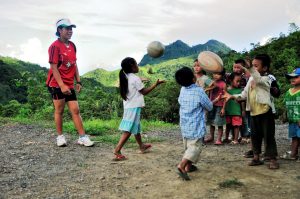
Laos' national women's rugby captain, star player turned development officer Lao Khang hails from the country's rural province of Xieng Khouang, home to a multiethnic population including her Hmong community.
“Lao led the Laos women’s national rugby team to historic international victories, and is the first Hmong woman to earn her rugby coach license”, the inscription read.
Lao Rugby Federation’s Lao Khang at on the BBC 100 Women list for 2018.
The Lao Rugby Federation welcomed the news:
“Congratulations to Lao Kang, the LRF’s Xieng Khouang Rugby Development Coordinator, for being named one of the BBC100 Women of 2018! As a star player, coach, and leader, Lao has inspired many and continues to be a trailblazer in Laos and in the region!” the LRF posted on its Facebook page.
Lao was also the focus of a documentary that screened on Japan’s NHK World network entitled Because I am a Girl.
Child Fund Pass It Back / Lao Rugby Federation
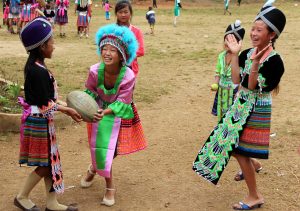
The recognition comes as the popularity of the game particularly among girls in rural Laos is on the rise, particularly in multiethnic villages.
Combined efforts, particularly in the province of Xieng Khouang, have seen the Child Fund’s Pass it Back program emerge using rugby as a tool to increase teamwork and self-confidence among girls and young women during their developmental years and beyond.
The programme has attracted high level support, with Australia’s former foreign minister Julie Bishop being among the foreign visitors to help the LRF give the “game they play in heaven” a kick-along in Laos, Laotian Times reported back in 2016.
Laos’ national women’s rugby captain, star player turned development officer Lao Khang hails from the country’s rural province of Xieng Khouang, home to a multiethnic population including her Hmong community.
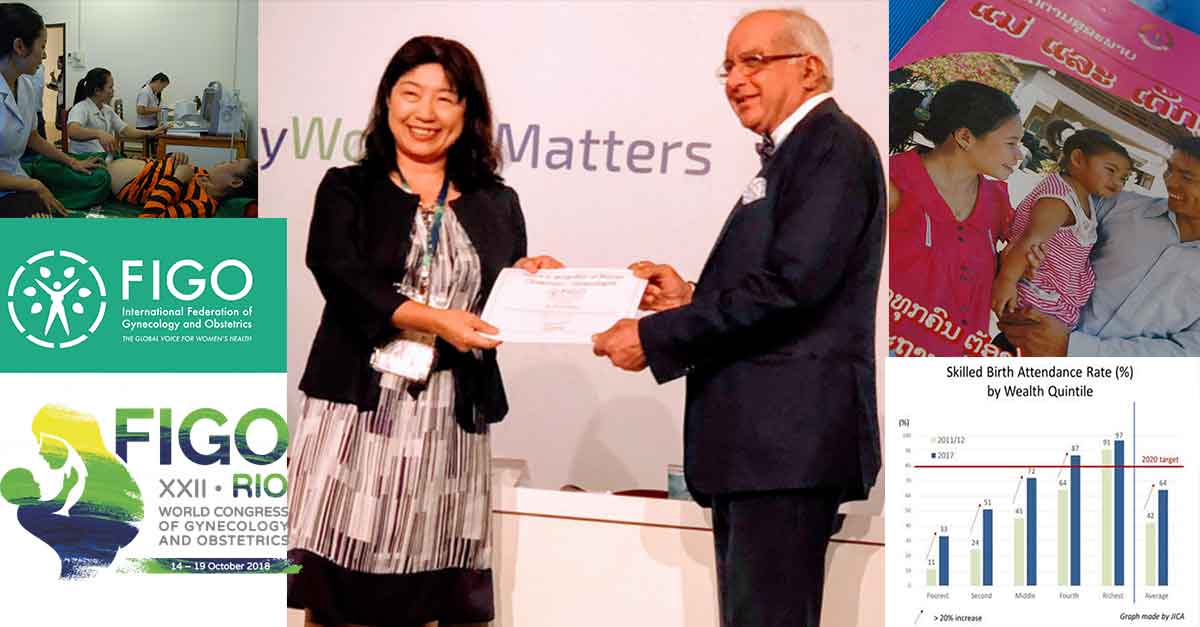
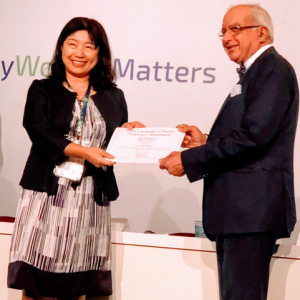
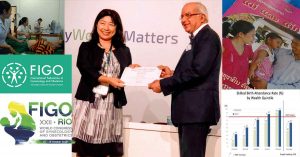
Dr Hiromi Obara presented with FIGO Award at World Congress in Rio de Janeiro, Brazil.
Laos-based medic Doctor Hiromi Obara from Japan is one of twenty women practitioners in the field worldwide awarded in 2018 by the International Federation of Gynecology and Obstetrics’ (FIGO) at its World Congress in Brazil. The recognition comes amid contributions to improving the health of women in low and middle-income countries and other resource-limited settings.
As the winter snows fall on Japan’s rural and windswept northern coastal Aomori prefecture, the cool, dry season of Laos in tropical South-East Asia may seem somewhat distant indeed.
For award-winning medic, Dr Hiromi Obara, the connection between the two places and their people is clear when it comes to maternal and child health.
Growing up in this part of rural Japan helped put this women’s reproductive health specialist on a long path to the international impact that has now seen formal recognition. Her inspiration to pursue a career in this critical field of medicine was born of experiences of people in her homeland, whose geographically remote and less populated parts have long-faced the challenges of deficits of access to medical care due to distance and related issues.
Her career since has seen her obtaining her MSc in Epidemiology at the London School of Hygiene and Tropical Medicine to contributing in joint efforts with counterparts to improve access to quality care for rural and remote communities in the Southeast Asian nation of Laos and beyond.
Dedication and capacity developed over the intervening years has led to present focus on the health of women and children in Laos. In this south-east Asian nation, she actively supports policymakers and practitioners to assist more women and children in rural and remote parts to achieve better health outcomes thanks to increased access.
Serving as a Health Policy Advisor to Laos’ Ministry of Health on behalf of Japan International Cooperation Agency (JICA), Dr Obara is working closely with fellow officials and programme managers in the country to improve access to the services provided by professional health personnel nationwide.
Now, these efforts have been formally recognised by her fellows in the field. FIGO, a peak body representing national societies in some 130 countries worldwide, awards women obstetricians and gynecologists, predominantly from low- and middle-income countries, who have contributed significantly to the improvement of health care for women in their daily practice or via research.
Among the twenty FIGO awardees announced at the triennial global congress held in October in Brazil, Dr Obara was one of a handful to hail from a developed country.
Asked what she is most proud of, it’s the impact of the results of the work of her counterparts and the achievements they have been able to make with women, their children, families and communities.
“Compared to other countries, the situation in Lao PDR was notorious concerning inequity in access to Maternal and Child Health Care, as recently as 2011/12.”
“However, thanks to the government’s commitment, investment in reproductive, maternal, newborn, child health has increased by various means such as the development of midwives, free MCH access schemes, resulting in improved pro-poor access to maternal and child health at scale.”
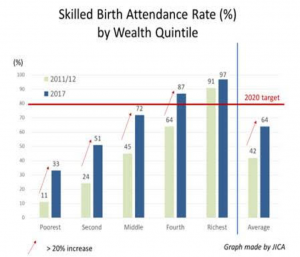
Among these achievements is the increased percentage of births attended by professional health personnel. As average, the proportion of deliveries attended by professional health personnel increased from 42% in 2011/12 to 64% in 2017.
Credit for such improvements she ascribes primarily to efforts of counterparts in the ministry at every level, from leadership to those delivering lifesaving and protecting services across the country.
“My counterparts (MoH officials) have strong ownership and leadership which, together with the inputs from JICA and other Development Partners, has contributed to the recent health outcomes, in particular, pro-poor and equitable access to maternal and child health services.
“Without enough dialogue, it is not possible for me to offer technical support. As such, I appreciate their kind collaboration. I have learned a lot from MoH officials here in the Lao PDR.”
On secondment from the National Center for Global Health and Medicine (NCGM) Japan, Dr Obara has over 18 years’ experience providing technical, programmatic and management support in reproductive, maternal and newborn health (RMNH).
Her career has since seen her contributing across several locations in the Western Pacific Region and beyond, focusing on resource-limited settings in particular.
At home in Japan, she has served as Deputy Director of the International Affairs Division of the Ministry of Health, Labour and Welfare and as a doctor at Jichi Medical University Hospital.
Apart from Laos, she has also worked as a reproductive Health Medical Officer in World Health Organization (WHO) Regional Office for the Western Pacific and as Chief Advisor to JICA’s MCH project in Cambodia.
Dr Obara counts among her areas of expertise country policies, strategies, plans, clinical guidelines, and efforts to improve financial access to and equitable access to and quality of care. Her efforts include contributing to regional and global meetings as an RMNH expert and to WHO publications as a member of several Guideline Development Groups and the Independent Review Group.
Such contributions have seen her well placed to offer advice to health authorities in how to best conduct maternal death reviews, improve newborn care, eliminate unsafe abortions, develop policy strategy frameworks and conduct monitoring both at country and regional levels.
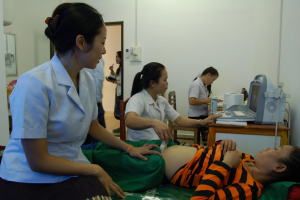
Japan Overseas Cooperation Volunteer (JOCV) supports Lao medical professionals to deliver MCH services. (Credit Steven A Cleary/JICA)
Looking forward, Dr Obara is optimistic about the trends and prospects for better access and outcomes for women and their children in Laos as the developing nation closes in on its 2020 goals.
To achieve these goals and continually improve the health outcomes for women and infants in 2020 and beyond necessitates appropriate funding allocation to the sector in terms of facilities, equipment and medicine as well as providing targeted incentives for ongoing improvement of human resource capacity to deliver result-based, family-centered services and clinical care countrywide, Dr Obara said.
Dr Hiromi Obara presented with FIGO Award at World Congress in Rio de Janeiro, Brazil.
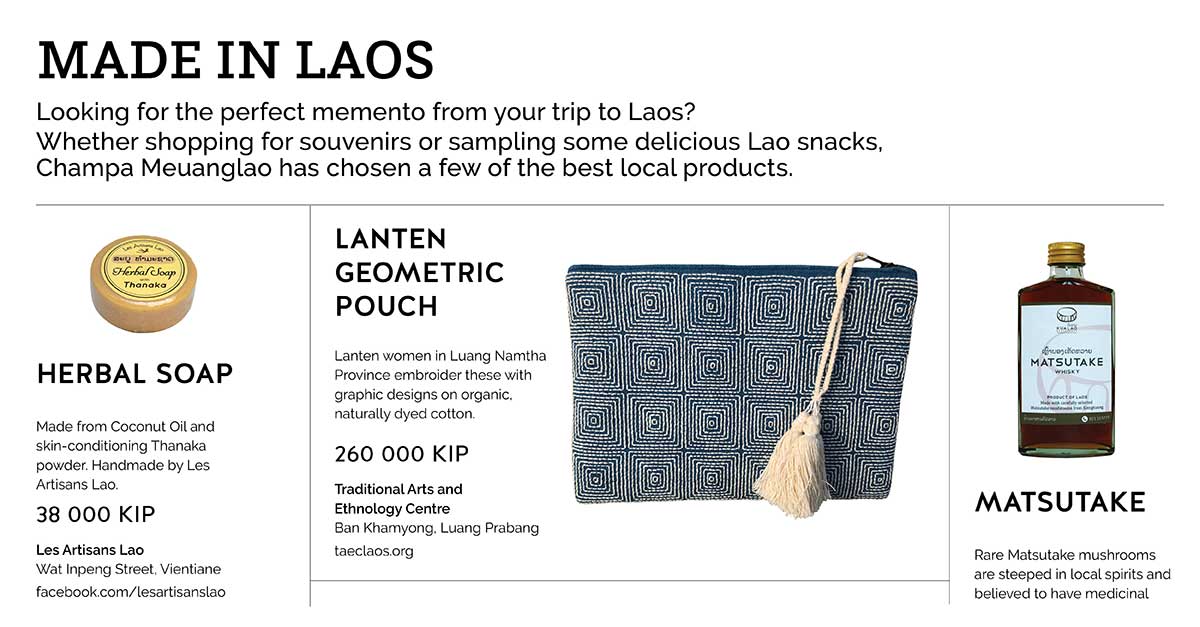
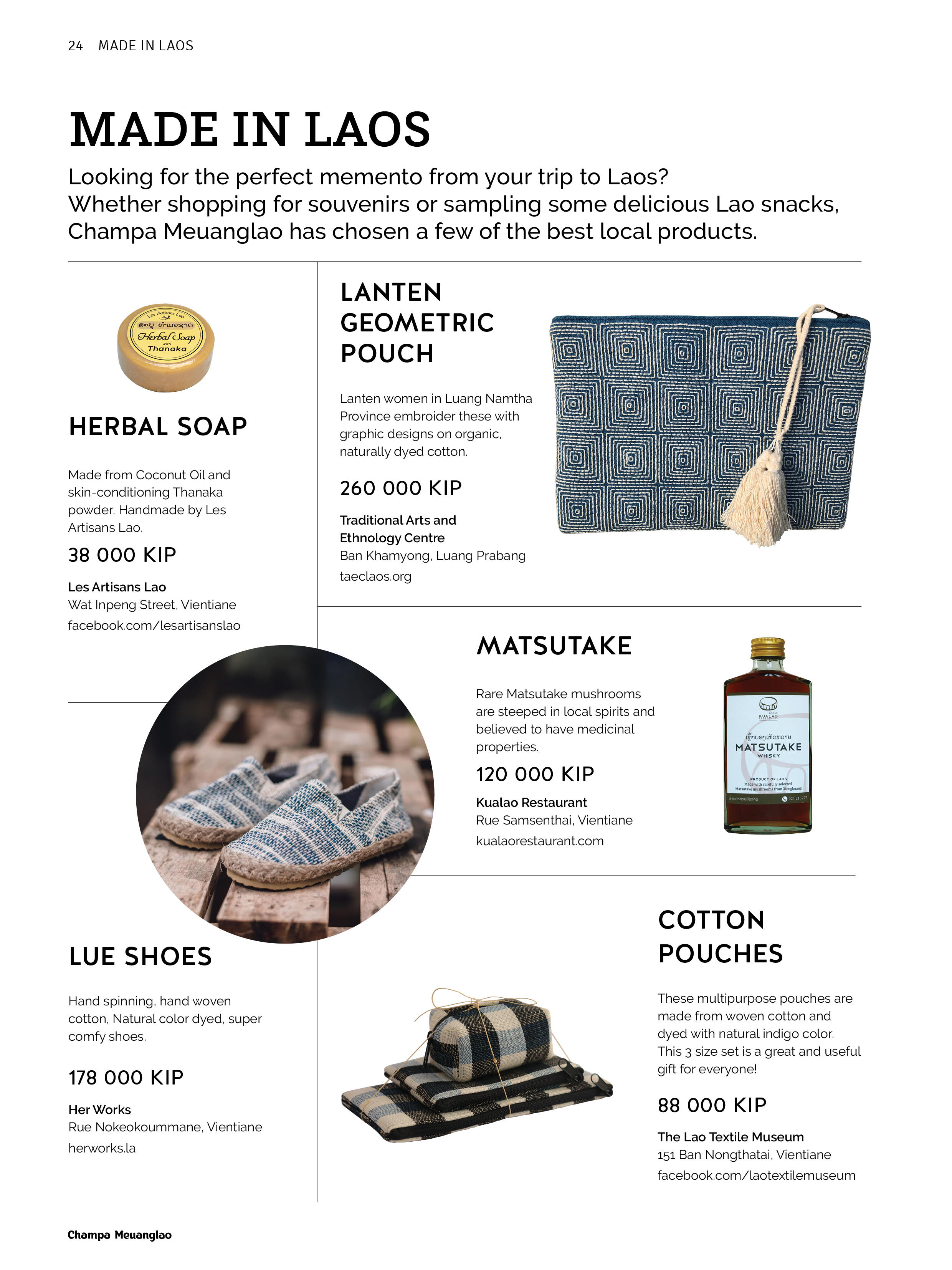
Champa Meuanglao, the official inflight magazine of Lao Airlines, is offering a special promotion to Lao businesses that create and sell their own products. The magazine section, entitled “Made in Laos” is showcasing souvenirs and other items made by Lao producers in order to catch the attention of foreign visitors.
The magazine is now calling on any interested businesses and artisans who may wish to promote their products in the January-February issue of the magazine. Interested parties may contact the magazine for enquiries at info@champameuanglao.com or by phone at +856 20 55731717.
Lost in the glittery world of her mother’s old magazines, Malathip Phenglamphan took a keen interest in embroidery and design from an early age. And coming from a dressmaking family, it’s no surprise that she followed in her mother’s footsteps, albeit on a grander scale.
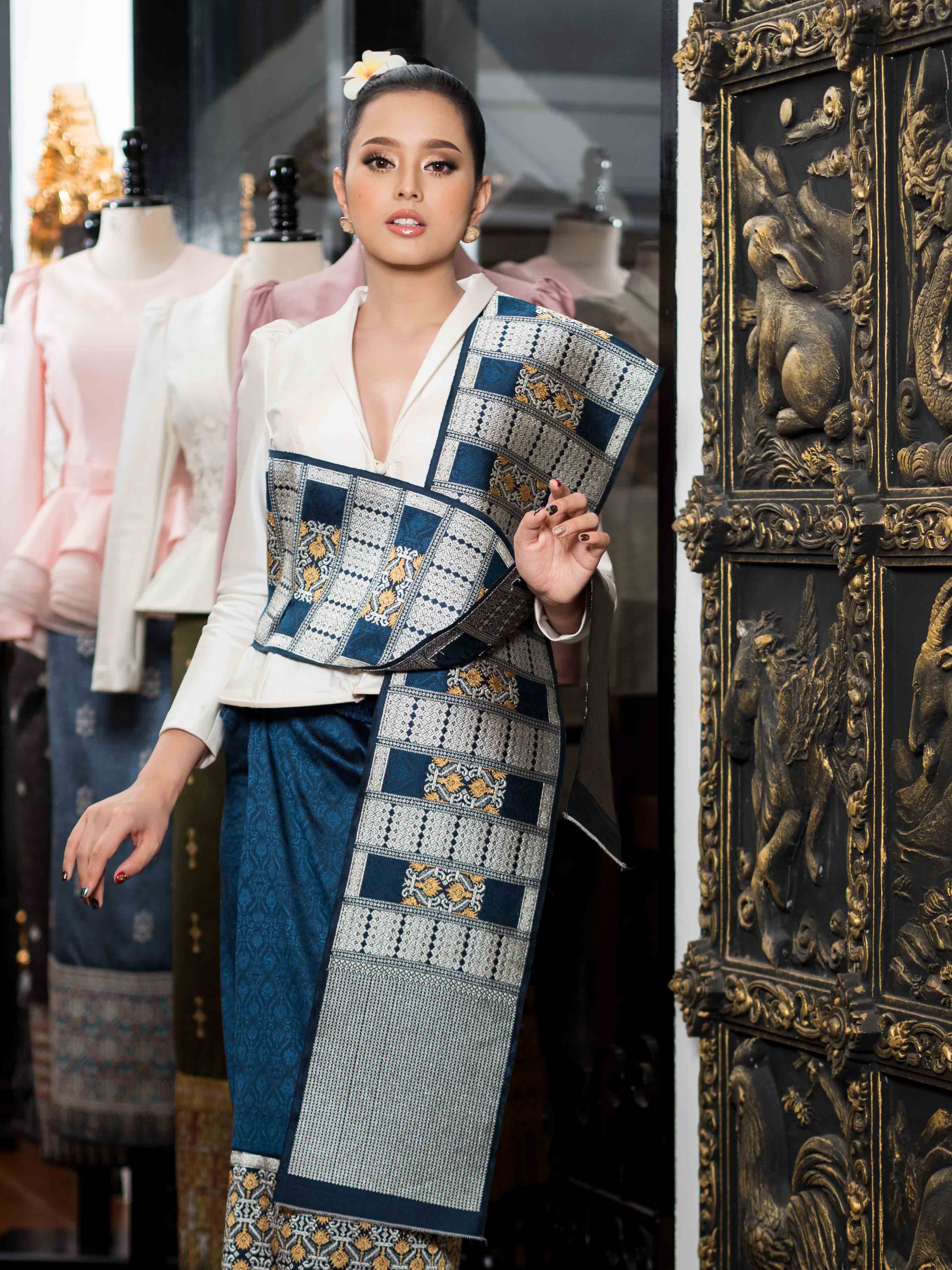
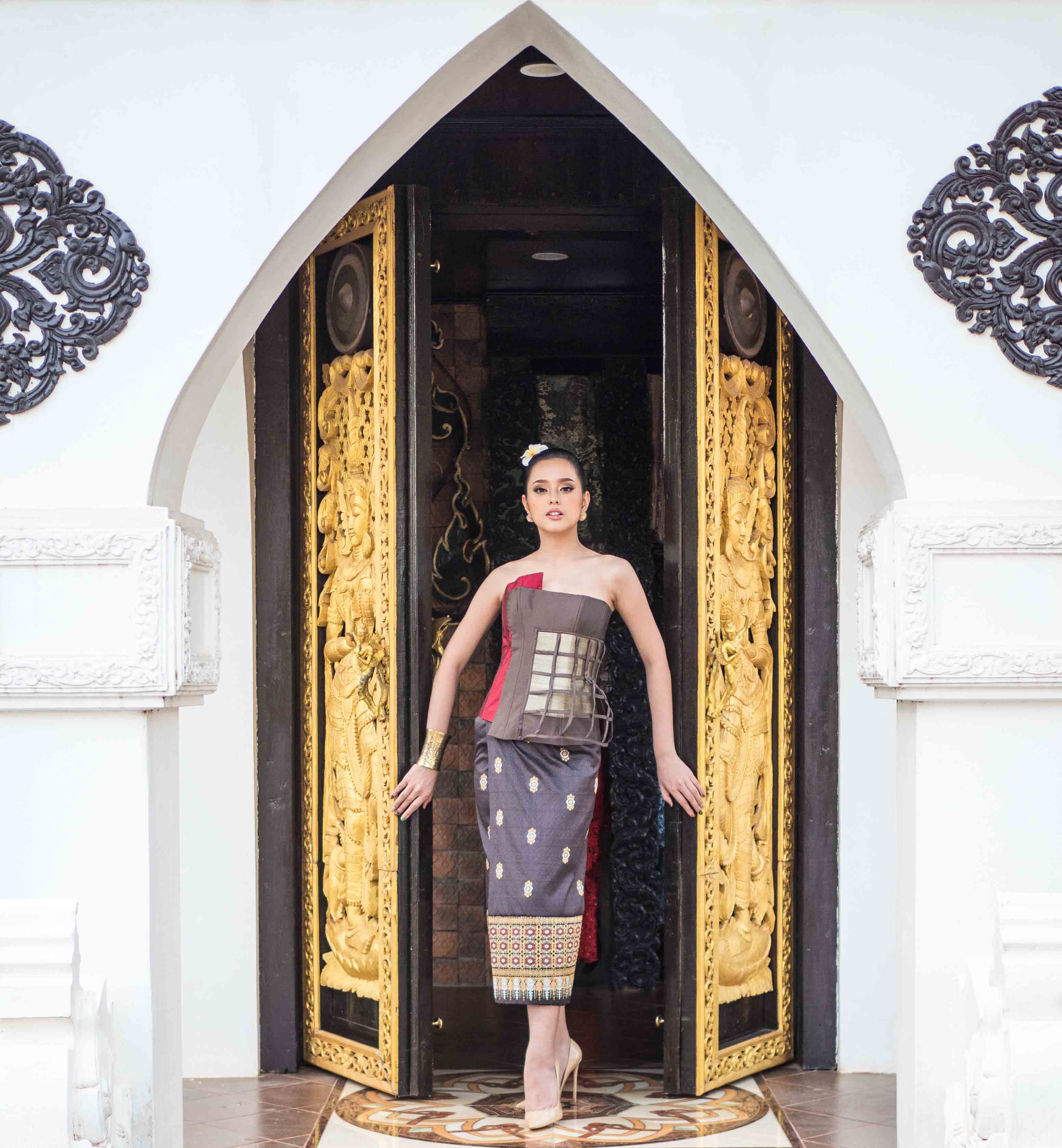
Setting foot in Sakoun Lao is like a glimpse into another world, or perhaps even another time. An eclectic mixture of the extravagant and the traditional, this exclusive silkwear boutique offers designs that are meticulously handcrafted from the first stitch to the final product.
Model: Phounsap Phonnyotha
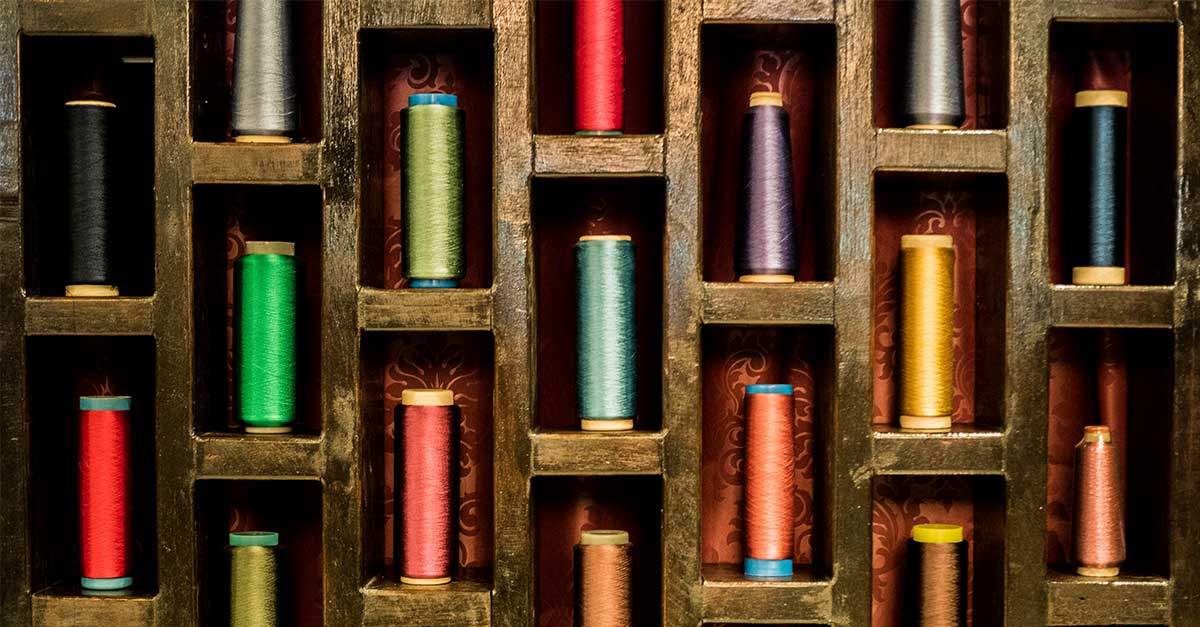
Malathip dreams up all her designs by herself, and diligently maps them out in pencil on rolls of graph paper. Next, the designs are carefully embroidered by hand until the pattern in her mind’s eye gradually becomes a reality, and the intricate designs begin to take form.
“All our designs are one of a kind. If you purchase a piece from Sakoun Lao, you won’t see this anywhere else,” says Malathip.
And second only to the uniqueness of the embroidery, comes the quality of the fabric.
“Our embroidery designs are made with silk imported from France, because the quality is higher than that produced in Laos. But the material is handwoven here in our workshop by Lao artisans.”
And the difference is clear; the silk produced in the Lyon region of France has been going strong for over 500 years, so its long history yields a quality almost unmatched in other parts of the world.
The smooth, lustrous and waxy feel of the silk is prized by her customers, and in the skilled hands of Lao weavers, the fabric produced at Sakoun Lao outmatches its counterparts.
Model: Phounsap Phonnyotha
Malathip Phenglamphan
Understandably, many of the customers at Sakoun Lao include young and budding brides, ready to be outfitted in an unforgettable
Lao wedding gown. It is the exclusive designs and the overall experience that brings brides to the boutique, often commissioning a particular design for the bridal party, and a matching but matchless piece for the bride herself.
Adding value to the experience, Malathip has begun offering various extra services, such as wedding invitation publishing and even a handbag spa!
And so the young girl with big dreams, poring over magazines, has grown into an elite artist, offering exclusive pieces that are truly a cut above the rest.
“Because if you stay where you are, you’ll never get anywhere,” says Malathip.
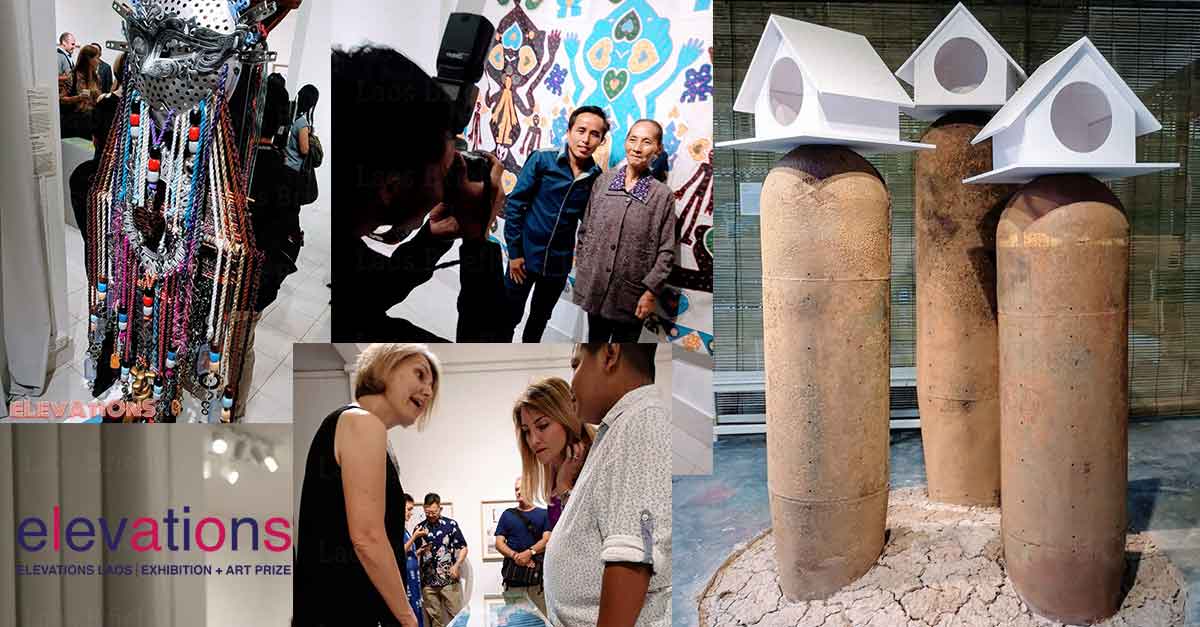
Traditional practices accompany contemporary trends in Depths, the inaugural exhibit of Elevations, a non-profit art initiative launched this month in the Southeast Asian nation of Laos.
Launched last Friday night in the Lao capital Vientiane and continuing until January 16th, the exhibition is both an international event, including artists from China to Cambodia, and a celebration of work of three local artists, Tcheu Siong, Bounpaul Phothyzan and Souliya Phoumivon.
This month, the trio will become the first-ever group of artists from Laos to be included in Brisbane, Australia’s Asia Pacific Triennial of Contemporary Art, the Queensland Art Gallery’s Gallery of Modern Art’s flagship exhibition.
Depths is divided into three “chapters”—Other, Lands and Selves—reflecting themes explored in the work of Siong, Phothyzan, and Phoumivon respectively.
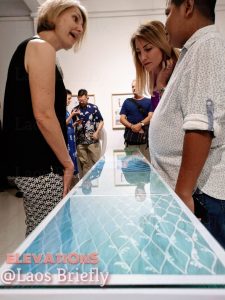
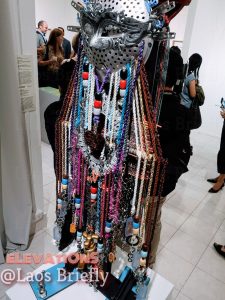
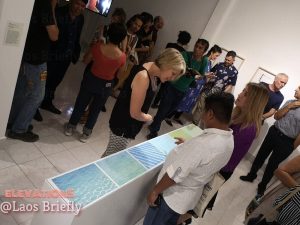
Depths, an exhibition by Elevations at I:Cat Gallery Simeuang Village in Vientiane, Laos. (Laos Briefly)
These sections, each occupying a room at I:Cat, present traditional visual and textile work alongside contemporary sculpture, installations and audio-visuals.
The result is a sprawling, impressive debut fitting an ambitious new organization.
Significantly, Depths showcases video and material installation by artists from Laos —including forms that have not always resonated with a local audience.
As Phothyzan explained in a panel at Elevation’s opening symposium; “When I exhibited conceptual work in Laos once before, the reaction was not good. The interest was not here—the thought was that the arts must be drawing, painting, visuals.”
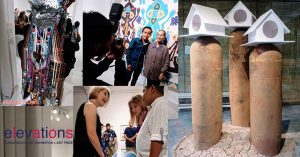
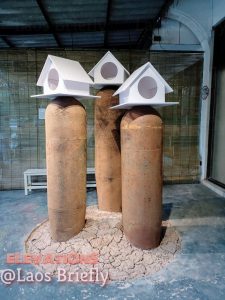
In Depths, Phothyzan’s material installation is a trio of mounted bombshells, each precariously supporting an empty, white, hauntingly pristine birdhouse. His work powerfully reflects both on the devastations of Laos’ recent history of war and his late father’s career as a soldier.
At Elevation’s Symposium event, Lao artists spoke of the pressure to focus on traditional painting and sculpture as these forms remain the most lucrative, thanks to the demand that is driven by the tourist industry.
Phoumivon, who graduated from Laos’ National Institute of Fine Arts in 2008, found his departure from visual work met with outright disapproval: “People asked me, how are you going to feed your family, make money in Laos if you are not painting?”
Erin Gleeson, Elevation’s founding artistic director and curator, hoped to answer this question by developing a space supportive of both traditional and non-visual art forms. Says Gleeson: “We wanted to create an environment in which it felt right to show not only painting but also [installation] work artists might usually show outside.”
Phoumivon’s marvellous stop-motion animation—an eerie, playful series depicting humans transforming into a colorful herd of buffalo—represents, in part, Phoumivon’s struggle to resist social pressure and follow his artistic instincts.
“It’s easy to follow the train of society—to become a buffalo. If you simply follow trends, follow materialistic impulses, even highly educated people can become buffalos,” Phoumivon says.
While Elevations places Lao artists among their international peers in Depths, the organization also aims to encourage growth in the local art world. Public programs—ranging from film screenings to art-classes—offer support for emerging artists.
A reading room in Little House Café, a short walk from the gallery, allows patrons to browse texts on art history, theory and practice, while children can color on worksheets inspired by the gallery exhibition.
In addition to its public programs, Elevations is organizing a competition for local emerging artists on even years and a subsequent international exhibition on odd years.
Elevations was founded by Gary Stafford of the Spellbrook Foundation. Stafford served as a managing director of Brisbane-based copper and gold miner PanAust Limited, best known in Laos for its Phu Bia Mining subsidiary.During Stafford’s 18 years managing PanAust, he frequently travelled to Laos, his interest in art collection gradually familiarizing him with the local scene.
When he began investigating how to support emerging Lao artists he was introduced to Gleeson, who at the time was serving as curator and the founding Artistic Director of SA SA BASSAC in Phnom Penh.
The two collaborated to create a unique initiative that would best suit Laos, drawing on support from the Australian Embassy, STELLA, and I:Cat gallery.
Elevations aims to enrich an artistic ecosystem in Southeast Asia by nurturing connections between diverse artists. “If we bring the right people together, networks are formed and opportunities are made,” Gleeson says.
Guo-Liang Tan, an exhibiting artist from Singapore, attests. “Already we’ve exchanged many stories, developed personal and professional relationships.”
Tan also observed the opportunity for intercultural learning afforded by exhibiting abroad. “It’s a great chance for those of us not from Laos to learn about a place many of us have not yet been.”
The visiting artists were introduced to Vientiane on a tour led by Elevations last Friday, focusing on the city’s artistic and literary history.
Although Depths’ range can be dizzying, its lack of focus is often a strength—in moments, contrast creates a delightful tension between works.
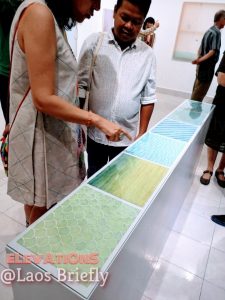
Such is the case in the exhibition’s second chapter, Lands, in which a panel of austere, serene water patterns are shown beside destructive, explosive rivers in looping video footage of the impact of humanity on nature for our modern power needs.
Depths, an exhibition by Elevations at I:Cat Gallery Simeuang Village in Vientiane, Laos. (Laos Briefly)
Among a number of superb pieces—such as prints that transform abandoned lots into dreamy landscapes and a photo-series that documents a Hmong legend as lived out in America—the colorful, enigmatic needlework of Lao artist Tcheu Siong is not to be missed.
Siong translates her dreams into large-scale textiles, relying on Hmong mythology and her husband’s shamanistic practice as interpretive tools. While her work is rooted in tradition, the product is something utterly unique, and unlike the full canvases and bold geometric patterns of traditional Hmong textile.
Her textiles depict human figures engulfed in cheerfully polka-dotted creatures. Heart shaped decals flower across the canvas like otherworldly eyes. Appliqués appear simple geographic forms at first glance, but upon closer observation reveal themselves as bodied animals and humans.
The blend of old and new in Siong’s work perhaps best exemplifies Depth’s power as a conceptually modern exhibition that doesn’t belittle or dismiss traditional practices but considers how these may be used in fresh and unusual ways.
Text: Julia Case-Levine
Images: Laos Briefly
Depths, an exhibition by Elevations at I:Cat Gallery Simeuang Village in Vientiane, Laos. (Laos Briefly)
Depths, an exhibition by Elevations at I:Cat Gallery Simeuang Village in Vientiane, Laos. (Laos Briefly)Depths, an exhibition by Elevations at I:Cat Gallery Simeuang Village in Vientiane, Laos. (Laos Briefly)
Depths, an exhibition by Elevations at I:Cat Gallery Simeuang Village in Vientiane, Laos. (Laos Briefly)
Depths at I: Cat Gallery, Simeuang Village, Vientiane Capital, Laos until January 16, 2019.
Friends of Fur Gathering at Ball for A Wall At Laos' First Animal Sanctuary
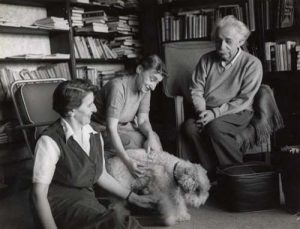
“If a man aspires towards a righteous life, his first act of abstinence is from injury to animals” – Albert Einstein
Hey smart ladies and gents! Animal lovers!! All friends of the fur in Laos!!!
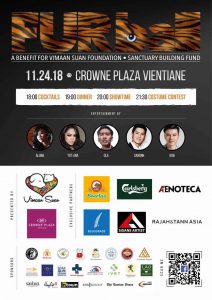
Vimaan Suan Foundation and Crowne Plaza Vientiane jointly present FurBall 2018, a fundraiser for the Vimaan Suan Foundation’s Sanctuary Building Fund that touches down in Vientiane on November 24, 2018.
Award-winning celebrities from Laos including Aluna Thavonsouk, Tot Lina, Ola, Sanonh Maniphonh will be joined by 2018 Pepsi Singing Contest Winner Kob to entertain supporters attending the gala dinner.
Vimaan Suan Foundation is the first foundation dedicated to improving the welfare of domestic animals/pets in Laos to be registered in the country.
Programmes supported by the Foundation include vaccination projects, school and youth education programmes, community service programmes, capacity building programmes and a sanctuary for senior and special-needs dog and cats.
Based on estimates, each ticket sold will help build about 1 square meter of a wall that is some 3m tall to that will help to protect the sanctuary’s resident animals.
All proceeds raised will be earmarked for the First Phase of construction for the sanctuary which is located in Vientiane’s Naxaythong district.
Exclusive partners for FurBall 2018 are BeerLao, Carlsberg, AEnoteca, BlueGrass Design Group, Sisane Artist and Rajah and Tann Asia.
Sponsors and supporters include Lao Tobacco Limited, Mercure Vientiane, Vientiane Dog Paradise, Yokohama Japanese Restaurant, Hangout Restaurant, intown Restaurant, LV Imex, International Veterinary Centre, RDK Group, Tukata Vientiane Nursery, Super BBQ, Coco Bar, The Laotian Times, Soap4Life, Bounxouei Foundation, iVET, Saoban, Panyanivej Organic Farm, MyVet, Planet Internet, KPY, Terminal 8, Lao Lake House, Animal Doctors International with more being added as they are confirmed.
Tickets are $120 and are available at Crowne Plaza Vientiane (please ask for Rhandy), Vientiane Dog Paradise, Yokohama Japanese Restaurant, intown Restaurant, Hangout Restaurant, LV Imex, Bar the Way and directly from Vimaan Suan Foundation volunteers. Tables of 8 are available for $100 per person (total $800) if purchased before November 22, 2018. Credit card sales are available at HangOut Restaurant, intown Restaurant and LV Imex.








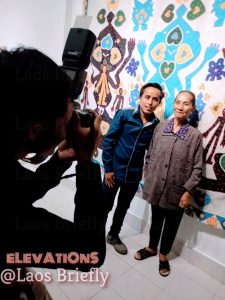
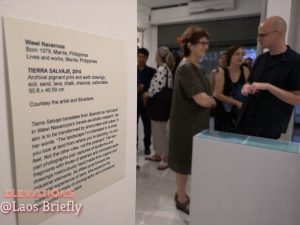 Depths, an exhibition by Elevations at I:Cat Gallery Simeuang Village in Vientiane, Laos. (Laos Briefly)