Home Blog Page 6526

Hin Nam No Soon to be Nominated Laos’ First Natural UNESCO World Heritage Site

Hin Nam No Protected Area
Hin Nam No Protected Area (photo credit: official website of Hin Nam No)

The Hin Nam No National Protected Area is on its way to become Laos’ first natural UNESCO World Heritage Site.

Earlier this January in Hanoi, the Lao and Vietnamese governments signed a MOU, ensuring Vietnam’s full support of the nomination of Hin Nam No National Protected Area as a transboundary World Heritage Site together with the already established natural UNESCO World Heritage Site known as Phong Nga Ke Bang (PNKB) National Park in Quang Binh, Vietnam. The latter shares a common border with Hin Nam No National Protected Area in Khammouane, Laos.

High ranking officials including Vice Minister of Information, Tourism and Culture Buagneun Saphouvong, Vice Minister of Energy and Mines Thongphat Inthavong, and Khammouane Province Deputy Governor Khamsy Outhivong met with representatives from the respective government agencies to review and endorse the way forward.

“With Hin Nam No’s huge potential for eco-tourism, it [World Heritage status for UNESCO] will make an important contribution to national socio-economic development, especially for Khammouane people,” said Saphouvong.

“Becoming a World Heritage Site will also enhance the protection of the area, improve conservation and will facilitate better management of the natural resources in and around Hin Nam No, promote ecotourism and scientific research,” he added.

Hin Nam No NPA has been recognized as a site of global significance for the conservation of biodiversity because its variety of habitat and forest types provided by the landscape geomorphology support a high diversity of animals and plants, including a number of globally threatened species, endemic species and karst specialist species. Thus, the elevated UNESCO status will contribute substantially to the conservation of this unique ecosystem.
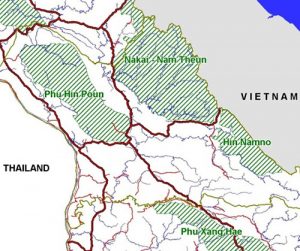
Hin Nam No Protected Area

Deputy Governor Outhivong expressed that “Hin Nam No will attract both local and international tourists and thereby will generate incomes for local communities once it is nominated as a World Heritage Site. More importantly, it will also create opportunities to boost the livelihoods of the local communities who live around the area. By this means, they are also able to ensure their food security and alternative income generation.”

Under the newly signed MoU between Laos and Vietnam, a number of points have been agreed for which both countries commit to support the nomination of Hin Nam No National Protected area as a transboundary World Heritage Site, connected to Phong Nga Ke Bang National Park in Vietnam.

The two countries will also work together to appoint their own committees at different levels to help and push for the nomination of Hin Nam No National Protected Area.
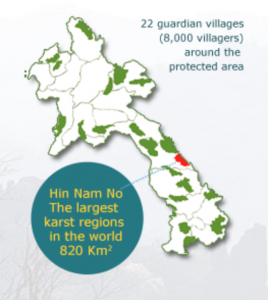
Based on a history of over five years of technical support for the management and development of Hin Nam No National Protected Area, the Deutsche Gesellschaft für Internationale Zusammenarbeit (GIZ) GmbH is continuing to support these important undertakings through the component “Integrated nature conservation and sustainable resource management in the Hin Nam No region” of the German Development Cooperation Project “Protection and Sustainable Use of Forest Ecosystems and Biodiversity in Laos” (ProFEB).

Hin Nam No is believed to have “outstanding universal value”, adding to or complementing the conservation values that have been considered of global importance in Phong Nga Ke Bang by UNESCO.

These values need strong protection and therefore need a strong commitment from the highest level and by all stakeholders.

Source: KPL

Wild Elephant Crosses Laos-China Border

elephant crosses border Laos China

A wild elephant has been caught on camera crossing the border between Laos and China.

CCTV footage captured the wild elephant in south-west China strolling through the border crossing before sunup on Saturday morning.

The elephant walked from Xishuangbanna Dai Autonomous Prefecture, Yunanna Province, and took a walk across the border into neighboring Laos.

Cameras at the Chahe border crossing checkpoint took footage of the elephant walking toward the exit. When reaching the railing, the elephant slows and crosses the obstacle into the territory of Laos.

Border offiicals immediately sent two teams of soldiers to monitor the elephant and ensure its safety.

An hour later, the elephant headed back toward the border crossing, walking around the railing.

There are about 300 wild Asian elephants in China, found mostly in the forests of Yunnan Province.


Image / Video: The Star Online

RHB Bank Lao Opens 3rd Branch in Dongdok

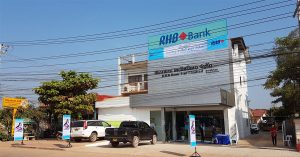
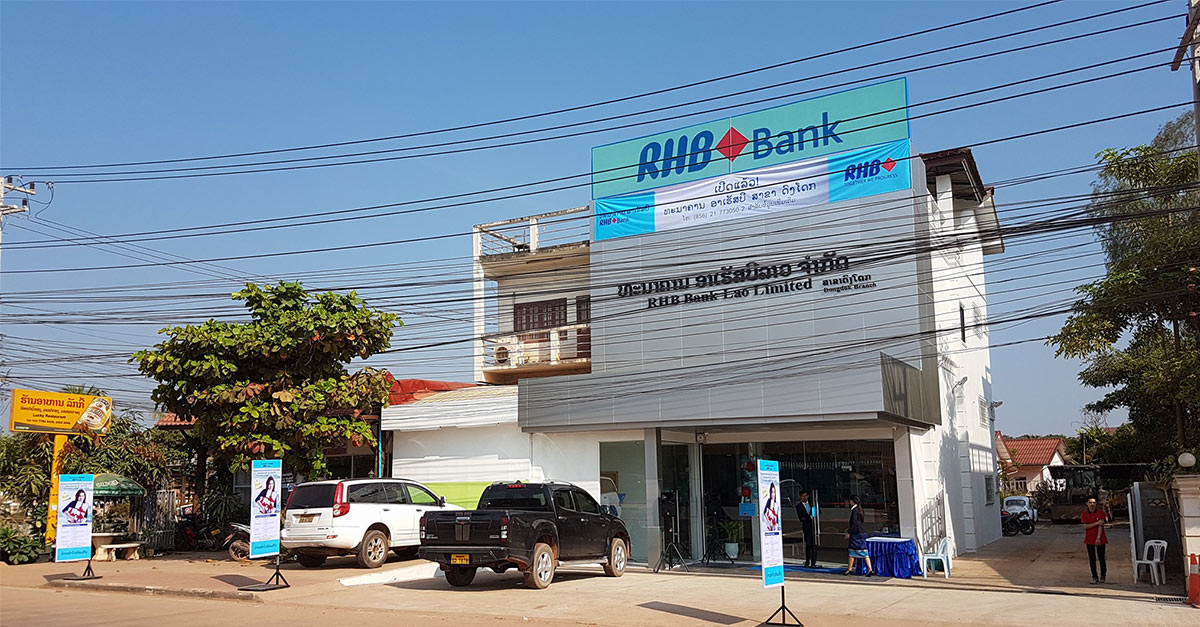
RHB Bank Lao Limited Dongdok Branch

RHB Bank Lao has opened a third branch in Dongdok on the 26th of January, 2018. The official ceremony was attended by Country Head Danny Ling, and Branch Manager Thonglay Phonvilaisouk and other staff members.

Opening under the theme of an open house, customers and invited guests were encouraged to learn about bank products and services which include deposits, remittances, ATM services, loans and trade finance services that support domestic trade, import-export and business expansion. The bank also provides a variety of credit facilities like business loans with tenor of up to 10 years and housing loans with tenor of up to 20 years.

RHB Bank Lao staff pose at opening ceremony of Dongdok Branch

RHB Bank Lao Dongdok branch is to provide banking services to individuals, entities, educational institution, SMEs, enterprises, among others.

In addition, the RHB Bank Lao Dongdok branch supports the deposits of students and parents who want to manage the savings of their children in the future.

RHB Bank Lao's 3rd Branch
RHB Bank Lao’s 3rd Branch in Dongdok
Source: KPL

Laos Featured on Travel + Leisure’s 50 Best Places to Travel in 2018

Laos Featured on Time and Leisure's 50 Best Places to Travel in 2018

Luang Prabang has done it again by landing on top travel magazine, Travel + Leisure‘s ‘The 50 Best Places to Travel in 2018.” This UNESCO World Heritage Site lives up to its name by making an appearance on this list, serendipitously coinciding with the country’s official state sanctioned tourism campaign this year.

Here is Kate Springer’s description of beautiful Luang Prabang:

“Landlocked Laos might be quieter than Southeast Asian neighbors like Vietnam and Thailand, but 2018 could transform the country into the region’s next hot spot. Wattay International Airport, in the capital of Vientiane, is set to complete a terminal expansion to accommodate more international links next year, but the biggest changes are foot in the UNESCO World Heritage–inscribed town of Luang Prabang, in central Laos. This serene riverside spot lures travelers to its golden Buddhist temples, French-colonial architecture, hiking trails, nearby elephant sanctuaries — and now, glamorous new digs. Last year, the design-forward Azerai opened inside a century-old French-colonial building that was formerly an officer’s quarters. The debut concept from Aman Resorts founder Adrian Zecha has airy, light wood interiors that nod to local culture in their use of batik textiles and Laotian artwork. There’s also an 80-foot swimming pool in a tree-shaded central courtyard. The upcoming Rosewood Luang Prabang aims to be a destination in itself. Opening in mid 2018, this highly anticipated resort will feature pavilion-style villas, luxury tents, and a spa that seems to float above the jungle.”

Travel and Leisure is a magazine based in New York City. Owned by Time Inc, it is published monthly and boasts 4.8 million readers per year.

Drug Bust Finds 11 Million Meth Pills from Laos

drugs meth Laos

The Royal Thai Navy Mekong River unit has confiscated 11 million methamphetamine pills that originated in Laos, according to reports this week.

The Thai navy captured the boat when it arrived in Nakhon Phanom on the Thai side of the Mekong River, which is the de facto border between Laos and Thailand.

Most of the crew jumped ship to escape authorities, however one Lao citizen was arrested. A search of the boat found 11 million methamphetamine pills laced with caffeine, known as “yaba” in Laos and Thailand.

37 bags of drugs were found in the boat, with each bag containing 300,000 pills. Thai police have valued the haul at around US $100 million at market rates.

The pills were marked with a 999 stamp, which indicates they were likely produced by the Wa ethnic group, based in Myanmar, who manufacture a large portion of the methamphetamine found in Southeast Asia.

Laos is a known transit country for drug trafficking, as the country features long and unpoliced border areas with Thailand, Myanmar, and Cambodia.

Source: AFP
Photo:  AFP/Lillian Suwanrumpha

Official Visit Laos Year 2018 Song: ‘Simply Beautiful’

Simply Beautiful
Simply Beautiful

Check out the official promotional music video for the Visit Laos Year 2018 campaign song entitled “Simply Beautiful.”

Apart from the extraordinary voice talents of local singing sensations Alexandra Bounxouei and Vorachit “Sam” Intharaphitak, the video features excellent high quality drone shots of some of the most breathtaking natural landscapes and destinations of Laos. The music video also highlights the amazing cultural, historical and architectural aspects of the country.

Please share and help promote Visit Laos Year 2018!

Maybank Expands Women Eco-Weavers Programme to Laos

Maybank Group through its Corporate Responsibility arm, Maybank Foundation, has expanded its “Maybank Women Eco Weavers” programme to Laos making it the third country in Asean to have such an initiative.

This follows the successful running of the Eco-Weavers Programme in Indonesia and Cambodia, where it has been instrumental in further promoting the traditional art of textile weaving and creating business opportunities for underprivileged women thus enabling them to enjoy financial independence.

The programme was inaugurated by Mrs Outen Masyxonxai, Deputy Governor, Xieng Kuang province, together with the Chairman of Maybank and Maybank Foundation, Datuk Mohaiyani Shamsudin and Madam Kommaly Chanthavong, Founder of Mulberries Laos. Also present at the event were His Excellency Mohd Aini Atan, Malaysian Ambassador to Laos, Ms Khanlasy Keobounphan, Director General of Intellectual Property, Ministry of Science and Technology, Mr Bouthsakone Inthalangsee, Director of Clean Agriculture Standard Centre, Ministry of Agriculture and Forestry, Ms Chanthone Chanthachith, Director of The State-Owned Enterprise of Lao Cotton and Standing Committee of Lao National Chamber of Commerce, Mr Dongtien Bounmiaphai, Deputy BM of Bank of Lao,Xieng Kuang province, Mr Soon Su Long, CEO of Maybank Indochina and Mr Shahril Azuar Jimin, CEO of Maybank Foundation.

Speaking at the launch, Datuk Mohaiyani said, “Since the inception of the programme in both Indonesia and Cambodia, we have seen great traction shown by the communities in those countries. From this progress, it has further propelled us to expand this program to Laos. It is without doubt, this program will continue to empower the lives of the women in the communities we serve, revive the textile industry, and subsequently contribute to the economic development of the respective countries.”

In Laos, the Maybank Women Eco-Weavers programme will partner Mulberries, a social enterprise and cooperative founded by Madam Kommaly Chanthavong, a Ramon Magsaysay Award recipient and Noble Peace Prize nominee. The programme seeks to empower and train women weavers with silk weaving skills and to also conduct the sericulture programme for Mulberry tree farmers.

Maybank Foundation CEO, Shahril Azuar Jimin said, “The Maybank Women Eco-Weavers programme is in a class of its own as it helps to sustain local heritage and cultures as well as help build the capacity of new weavers. The key focus is to preserve, sustain and promote traditional textile making techniques that produces modern fashion in an environmentally friendly manner.”

In conjunction with the launch, Maybank Foundation also unveiled a Maybank Eco-Weavers Hostel, catered for the eco-weaver trainees. The hostel was built to address transportation challenges currently faced by the new trainees, who had to travel for as long as two days to reach the farm to attend the 15-day on-site training. The creation of the building was a collective effort by Maybank together with Laos programme partner Mulberries in Xieng Khuoang Province, Laos.

In Cambodia, the Eco-Weavers programme has already trained 74 new women weavers, engaged more than 190 farmers and planted more than 30,000 mulberry trees as the main food source for the silkworms in the production of raw silk. In Indonesia, the programme has trained 200 new women weavers and provided microfinance to 80 new weavers.

The Eco-Weavers programme is supported by the ASEAN Foundation as it is an evolving common mission to preserve ASEAN’s cultural heritage and contribute towards building the ASEAN identity.

Maybank Foundation is the corporate responsibility arm of the Maybank Group, which seeks to positively impact communities in markets that Maybank operates. The Foundation’s programs are focused on six key pillars which are Education, Community Empowerment, Healthy Living, Arts & Culture and Environmental Diversity and Disaster Relief.

Government Attempts to Improve Almsgiving Practice in Luang Prabang

Monks During Almsgiving Round (photo credit: laosdaytour.com)

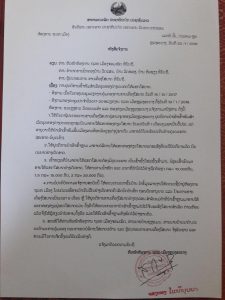
Visitors to Luang Prabang relish the long rows of saffron monks at dawn that have become a highlight of the tourist experience in this UNESCO World Heritage Town. With an increase in tourism, negative side effects have also flourished, which the District of Luang Prabang is attempting to solve with a recent government notice obtained by The Laotian Times. The contents of the notice (translated from Lao) are as follows:

  1. Sellers of almsgiving foods at three areas in Luang Prabang must cease selling prepackaged imported snacks to foreign tourists to give alms from 1 February. It is permitted to sell traditional Lao homemade snacks if quality (cleanliness – freshness) can be ensured.
  2. It is absolutely forbidden to bring rice in bamboo (khao lam) to sell to tourists to give to monks on their morning alms round.
  3. Sticky rice that is sold to tourists to give as alms must be of good quality and freshly steamed, and absolutely cannot be reheated old rice. Rice must be sold by weight and at the permissible rate (1 kg = 10,000 kip; 1.5 kg = 15,000 kip; 2 kg = 20,000 kip).
  4. If these instructions are not heeded, the village inspection authorities will report the infractions to the District Office of Information, Culture, and Tourism for disciplinary measures such as: written citations, revocation of licenses, and suspension of almsgiving sales for 6 months or permanently. As for vendors who sell khao lam to tourists in the almsgiving area, for the first infraction, the khao lam will be confiscated until after almsgiving when it will be returned. For the second infraction, the khao lam will be confiscated and will not be returned.
  5. This is presented to the Head of the Office of Information, Culture, and Tourism of Chomphet District, the Village Chief of Xieng Mene, the Village Chief of Nakham, the Almsgiving Service Management Inspection Committee of the three villages, and entrepreneurs who sell almsgiving supplies to be informed and whose compliance is sought.