Home Blog Page 6619

Over 40 Crimes Reported during That Luang Festival

A total of 46 crimes were reported to the Vientiane Public Security Headquarters during this year’s That Luang Festival.

The incidents took place from November 8-14, with pickpocketing being the most common crime and 31 cases reported. In addition, five bags were reportedly slashed, one fight broke out, there was one drug-related case, and five robberies and three general thefts were noted.

Losses included more than 47 million kip in cash, over 56,000 Thai baht, 14 baht weight of gold, US$6,200, 700 yuan, 18 mobile phones, one camera, and other items. The police arrested eight people including two women.

During last year’s That Luang festival there 21 crimes, with pickpocketing again the most commonly reported offence. More than 15 million kip and other items were stolen and the police arrested two men.

No crimes were reported at Lao-ITECC, where the commercial part of the festival took place.

This year, 2,481 police, soldiers and students were stationed around the festival to ward off criminals and prevent antisocial behaviour.

The Vientiane Public Security Headquarters also reported other crimes that occurred around the capital during the festival period.

reported in Vientiane with police solving 29 cases and arresting 77 people including 19 women.

Most of the incidents were drug-related, with 13 cases reported. Police solved 13 cases and arrested 35 people, including five women.

There were also 11 general thefts, with police solving six cases and arresting nine people. Police also seized 298 amphetamine pills and a gun.

The Vientiane Traffic Police reported that from November 8-14, a total of 31 traffic accidents took place in the capital, resulting in four fatalities.

Compared to last year the number of accidents dropped from 19 to 31, but the number of fatalities remained the same.


Source: Vientiane Times

Govt, Development Partners Push for Technology, Innovation Development

The government and its development partners have stepped up joint efforts to push for the development of science, technology and innovation in Laos in a move to drive national development.

Representatives from the relevant ministries and UNESCO met yesterday in Vientiane to raise awareness on UNESCO’s Global Observatory on Science, Technology and Innovation Policy Instrument.

In his opening remarks, Deputy Minister of Science and Technology, Mr Houmphanh Intharath spoke highly of the policy that supports science, technology and innovation development in various countries.

The deputy minister touched on the move in which Laos has been selected as the first country in the region to implement a pilot project under the policy to support the development of science, technology and innovation in the country.

During the two-day training workshop, participants shared lessons learnt concerning science, engineering, technology and innovation policies as well as instruments, research and development indicators on science, engineering, technology and innovation including those being implemented in Laos.

The move aims to contribute to the effort of defining policy, strategy and both the shorter and longer term development plans of the sector in order to contribute to the ambition to attain the sustainable development goals for 2030.

Mr Houmphanh informed the meeting that the Lao Ministry of Science and Technology has just concluded its 2nd Nationwide Meeting and the first Science Meeting last month, which adopted the draft strategy on science and technology development until 2025 and vision until 2030.

The five-year science and technology development plan 2016-2020 was also approved at the meeting.

“The plan has set both shorter and longer term targets in order to enable the science, technology and innovation sector to become an instrument to drive and realise the 8th national socio-economic development plan,” he told the meeting.

The Party and government of Laos has attached great importance to the development of science and technology, reflected by the fact that the development needs of the sector have been incorporated in the constitution, laws and resolutions of the Party Congress, the deputy minister said.

Given that a lot more work needs to be done to develop science and technology in Laos, Mr Houmphanh said the workshop would provide an opportunity for Lao policy developers to learn and share best practices with international experts so that the lessons could contribute to the development of the relevant policies in Laos.


Source: Vientiane Times

Laos, Partners Promote Int’l Humanitarian Law

Laos will partner with the International Committee of the Red Cross (ICRC) and the international community at large to raise awareness and understanding of the International Humanitarian Law, as part of the State Parties’ obligations.

This was the key statement delivered yesterday by the Director General of the Department of Treaties and Law at the Ministry of ForeignAffairs, Mr Phoukhong Sisoulath, when addressing a seminar on related issues.

In his opening remarks, Mr Phoukhong said he appreciated the efforts of the ICRC to make the International Humanitarian Law known worldwide, and its important role in limiting the impact of wars and armed conflicts that have occurred in many parts of the world.

As Laos has been affected by war and armed conflict in the past, its people are cognisant of the impact of war and the adverse consequences of war remnants in the form of UXO.

“The country now enjoys lasting peace which is the highest aspiration of the Lao people,” Mr Phoukhong said.

The importance of the International Humanitarian Law and the treaties and conventions that form its core were the main points of the seminar organised by the department and the ICRC yesterday.

“The ICRC and the Lao Red Cross have worked together since 1999 to promote and disseminate the International Humanitarian Law in Laos. Many sessions and workshops on the law and the Red Cross and Red Crescent Movement have been held in Vientiane and at the provincial level,” the Head of the ICRC office in Laos, Mr Frank Kuenzi, said.

Mr Kuenzi said the ICRC’s mission includes the promotion and dissemination of the law, adding “The International Humanitarian Law, and the respect of its principles and provisions by all parties to a conflict, are of utmost importance since we witness in many parts of the world an escalation of protracted situations of conflict and a multiplication of actors involved in those conflicts.”

“Ensuring the knowledge and the respect of the provisions of the law is an obligation. It is in times of peace that preparations for a deterioration of the situation, leading potentially to conflicts, should be made,” Mr Kuenzi said.

“This is the fourth event organised in collaboration with the Ministry of Foreign Affairs, where we have the opportunity to share knowledge and views on how the law remains relevant even during peacetime,” he added.

Fifty representatives from related line ministries and organisations attended and heard about the main humanitarian-related treaties, in particular the Geneva Conventions and their Additional Protocols, as well as Laos’adherence to those treaties.

The seminar was part of the joint effort by the Lao government and the ICRC to raise awareness and understanding of the International Humanitarian Law in Laos.

The seminar was co-chaired by Mr Kuenzi, Mr Phoukhong and the ICRC Regional Legal Adviser, Ms Kelisiana Thynne.


Source: Vientiane Times

ASEAN Defence Ministers Vow to Pursue Unity, Stability

ASEAN defence ministers have reaffirmed their joint commitment to strengthening solidarity, unity and centrality among ASEAN member countries.

Minister of National Defence Lieutenant General Chansamone Chanyalath reiterated the ministers’ stance in his opening remarks at the ASEAN Defence Ministers’ Meeting (ADMM) Retreat and ASEAN-Japan Defence Ministers’ Informal Meeting, taking place in Vientiane from November 15-17.

This means that we intend to build ASEAN into a region of peace, stability, security and development in line with the ASEAN Vision 2025, he said.

Lt. Gen. Chansamone said cooperation through the ADMM has been continuously progressing, resulting in a number of achievements.

Such progress can be seen through the establishment of new cooperative mechanisms and other related activities, he said.

But Lt. Gen. Chansamone observed that ASEAN is still facing traditional and non-traditional security threats and challenges, which no single country alone can handle.

This meeting is an important opportunity for us to discuss defence and security issues so we can explore appropriate measures in order to address these challenges in an effective and timely manner, he said.

Lt. Gen. Chansamone was optimistic that the main points discussed in the meeting would pave the way for the enhancement of the ADMM and other related mechanisms in the long run.

He said the meeting would enable ASEAN defence ministers to contribute to the discussion in an active and constructive atmosphere, so that it would result in fruitful outcomes. This convivial atmosphere had brought about amity and understanding, he added.

Lt. Gen. Chansamone said he strongly believed the issues discussed would be another solid foundation for future ASEAN defence and security cooperation.

In order to accomplish the intended goals, he asked all ASEAN defence ministers to work closely and persevere as they attempted to address existing and future security challenges.

This would enable them to promote peace, stability, security and prosperity for the ASEAN Community in line with this year’s 10th ADMM theme: Promoting Defence Cooperation for a Dynamic ASEAN Community.

During the meeting, Lt. Gen. Chansamone Chanyalath congratulated Mr Delfin Lorenzana on his new position as Secretary of National Defence of the Republic of the Philippines.

The Republic of the Philippines will be the next chair of 11th ADMM, 4th ADMM-Plus and other related meetings next year.


Source: Vientiane Times

Two Road Improvement Projects Halted in Huaphan

The construction of two transport routes in Huaphan province has been suspended because of lack of road construction heavy equipment to complete the required works and also associated financial problems among the contractors.

Minister of Public Works and Transport, Dr Bounchan Sinthavong told National Assembly (NA) members about the halt to road construction in Huaphan at the meeting of the ongoing session.

One road has just been assigned to a new construction company after AB Company suspended the construction of the 30-kilometre road with a double layer of asphalt from Nongkhang area in Xamneua to Aed district.

AB Company previously had construction slated for 36 months at the cost of about 224 billion kip with the provincial government to repay the company upon completion of the project.

However AB Company discontinued the work after construction was 70 percent complete.

The new firm that will carry out the construction of this road is Chinese, with the work now scheduled to be completed in 2018. We expect that the Chinese company will restart construction this month, he said.

But the other road, which is about 31 km long linking Xamtay to Kuan districts at a cost of 367 billion kip, has yet to find a new company after Daoheuangsong Company suspended works on the route.

Governor of Xamtay district, Mr Hinthong Luangchansouk told Vientiane Times on Wednesday that the work stopped when the improvement of the road was 24 percent complete.

Right now it is still not known which company will be assigned to continue the works because the relevant provincial sectors and Daoheuangsong Company are assessing how much money the company had paid after it suspended works at 24 percent.

The province will refer responsibility of building the road with a double layer of asphalt from Xamtay to Kuan districts to the Ministry of Public Works and Transport after it has cleared its debt with the company.

Upgrading the road from Xamtay to Kuan districts will soon become a responsibility of the ministry to continue. It was noted that Huaphan has seen that this route will be part of a national road in the future.

Mr Hinthong explained that the road from Xamtay to Kuan may be a part of the Vientiane-Hanoi highway.

Laos is preparing to undertake a feasibility study with Laos and Vietnam for a Vientiane-Hanoi highway project to bring the two capital cities closer to one another through the completion of the 760-kilometre highway link .

The governments of Laos and Vietnam strongly support the improvement of these roads to develop the economic potential of the north-eastern corridor in order to support investment, trade and tourism in the region.


Source: Vientiane Times

NA Members in Favour of Retaining Death Penalty

National Assembly (NA) members yesterday voiced their support for keeping the death penalty, which is handed down to people who have committed serious crimes, including brutal acts of murder and possession of large quantities of drugs.

Assembly members expressed their feelings on the issue when commenting on the draft of the Criminal Code during a debate session.

The Ministry of Justice has enhanced the Criminal Code to replace the existing Penal Law in the hope that it will be a better guide for criminal lawsuits.

The ministry introduced the draft, which contains 420 articles, to sound out the opinion of NA members before submitting it to the Assembly for approval.

Of the 420 articles, 309 specify certain offences, with 12 categories of offences subject to the death penalty.

Under the Penal Law, these offences include treason, rebellion, spying, physical harm against the interests of national security, destruction, disruption of state or social undertakings, civil commotion, destruction or attack of detention and reformatory centres, the use of chemical weapons, murder, battery, and drug trafficking.

In his deliberation before handing the draft to the floor for debate, NA Vice President Mr Somphanh Phengkhammy reminded members that many countries had done away with the death penalty.

NA member for Oudomxay province Colonel Khamphong Vichit said he supported the idea of terminating the death penalty for most crimes but wanted the new Criminal Code to maintain the death penalty for cruel murders and dealers in hard drugs.

Even though the Penal Law mandates the death penalty, it has frequently not been enforced when a court verdict has stipulated it.

NA member for Luang Namtha province, Mr Kongphet Keobuapha said that if the death penalty were waived for certain crimes, the term of imprisonment should be extended from the current maximum of 20 years to 25 or 30 years.

Members pointed to several loopholes in the draft and asked the drafting sub-committee to close them.

Mr Kongphet said that if the Criminal Code stipulated only one ceiling fine for a category of crime, that could allow officials too much leeway in issuing fines, as they would have the freedom to impose the full amount or levy just a small fine if they were so disposed.

Colonel Khamphong raised his concerns about terms of imprisonment that had a large range of, for example, one to five years, saying officials were at liberty to decide on any length they pleased.

He also wanted the punishment for hit and run drivers to be clarified, saying discrimination should be made between drivers who fled the scene of an accident and continued to hide, and those who drove off but later went to a police station.

NA member for Phongsaly province Mr Buathong Ousengkham said he wanted the new Criminal Code to clarify the punishment for offences relating to corruption in civil servant recruitment. He complained that no one who committed such an offence was punished.


Source: Vientiane Times

Inspection of State Leaders, Departments Centres on Legal Amendments

State leaders, heads of government, top legislators and other high-ranking officials will undergo inspection following the approval of the amended Inspection Law of the National Assembly (NA) and Provincial Assemblies.

Members of the NA concluded a majority vote by 78 percent of those attending the ordinary session on Tuesday, passing the draft-amended law.

The newly-added Article 15 of the draft-amended law stipulates that the country’s president, vice president, prime minister, deputy prime ministers and cabinet members, who are elected or whose appointment is approved by the NA, shall be required to undergo inspection by the NA through its ordinary session.

The supreme prosecutor, president of the People’s Supreme Court, president of the State Auditing Organisation, and president of the NA, vice presidents of the NA, NA committees, NA committee chairpersons and vice chairpersons as well as the NA Secretary will also be inspected by the parliament.

Chairman of the NA Law Committee, Mr Saithong Keoduangdy told the ordinary session that it was necessary to amend the 2004-version law to meet the changing circumstances, aiming to ensure that the leaders and state organisations elected and approved by the NA function in their roles properly.

Four new parts, four new charters and 49 new articles were amended and newly added, bringing the total to eight parts, 10 chapters and 103 articles in the draft-amended law. Slight changes could be made to the structure of the law as revision could be made in accordance with recommendations from the law makers following their debate.

The NA will carry out its inspections through reports of the leaders and the regulations the leaders promulgated to ensure they coincide with the country’s constitution, state laws and resolutions of the NA.

The inspection will also be based on petitions the people submit to the parliament and other inspection mechanisms the NA has created.

Amendments also demand state organisations to undergo inspection by the NA’s mechanisms. The committee in charge of constituency affairs is mandated to carry out inspection into the performance of the NA members.

Provincial governors, the Vientiane mayor and their deputies as well as presidents of the provincial assemblies and their vice presidents along with other high-ranking provincial officials will also be inspected through the sessions of the provincial assemblies, according to the newly-added Article 56.

Inspections of targets under the responsibilities of the provincial assemblies will also be carried out.

Standing committees of both the NA and the provincial assemblies are mandated to draw up inspection plans for both parliaments to approve in order to facilitate the inspections.

Once the amended law is promulgated, Regular inspection will be carried out over the targets as stipulated by the law, Mr Saithong said, adding that the people will have trust in the inspections of both the NA and the provincial assemblies.


Source: Vientiane Times

Swiss-Lao Project Promotes Newborn Care

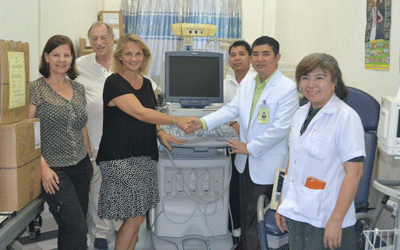
The Swiss-Lao Hospital Project has provided medical equipment worth about US$1 million for Lao hospitals, aiming to improve conditions for new mothers and newborns around the country.

Deputy Director General of the Mother and Newborn Hospital, Dr Sivanesay Chanthavongsouk, said this week the equipment would help to improve the quality of medical services for mothers and children.

Switzerland’s assistance supports the Ministry of Health’s policy to reduce the number of deaths among mothers and babies throughout the country, he added.

According to the 2012 Lao Social Indicator Survey, the death rate of birthing mothers is 357 out of every 100,000 births. The death rate of children under one year is 68 out of every 1,000 live births, and for children under five it is 79 out of every 1,000 live births.

The equipment donated by Switzerland includes incubators, phototherapy lamps, ultrasound machines, warming beds, gynaecology chairs and other items related to mother and child healthcare.

It will be distributed to Xayaboury, Luang Namtha, Xieng Khuang and Champassak provinces and the main hospitals in Vientiane. Most of the equipment will be installed at district hospitals. Vice President of the Swiss-Lao Hospital Project, Dr Marion Monkhoff, said the project will continue to improve mother and child health in Laos in the long term.

In the future we plan to provide training on how to provide better service in hospitals, she said.

Dr Monkhoff observed that the care of newborns and their mothers is better today than in the past but said many aspects still needed improvement. The Swiss-Lao Hospital Project would continue to provide solutions to various problems, she added.

The Swiss-Lao Hospital Project is an initiative run by Swiss doctors, midwives, nurses and association members who have lobbied for an improvement in the medical care available to mothers and children in Laos since 2000.

President of the project, Dr Urs Lauper, was also present at the equipment handover.


Source: Vientiane Times