Home Blog Page 1381

Laos to Require Online Businesses to Register Under New E-Commerce Rules, Starting Next February

Online shopping in Laos (Image by The Star Media)

On 17 December, the Ministry of Industry and Commerce (MOIC) issued a nationwide directive requiring individuals and companies operating online businesses in Laos to register and comply with new administrative regulations, with enforcement set to begin on 1 February 2026.

The official notice, issued on 17 December, applies to all individuals and legal entities currently operating, or planning to operate, e-commerce and online businesses in the country. 

Sellers must submit registration documents either in person through the Department of Internal Trade’s E-Commerce Management Division or online via the newly introduced E-Trust system.

According to the ministry, the E-Trust system aims to support online sellers, particularly small businesses and operators in remote provinces, by allowing electronic commerce registration and permit applications through an online platform.

Once approved, registered entities will receive an official certificate or business permit. These documents must be renewed upon expiry and updated if there are changes to business information or operations.

The regulation applies nationwide and covers all forms of online trade, including sales conducted through social media platforms such as Facebook and TikTok, websites, messaging applications, and other digital channels.

MOIC warned that individuals or companies that fail to comply without valid justification will face administrative penalties, including fines, formal warnings, and possible legal action in line with existing laws. Authorities said the notice is intended to strengthen oversight of online commerce, ensure traceability of sellers, and curb illegal or unregistered online trading activities.

The announcement builds on earlier e-commerce regulations, including a 2021 decree establishing the legal framework for online trade and a 2023 instruction clarifying registration and certification requirements. In 2025, authorities also introduced penalties for non-compliance.

The announcement aims to strengthen oversight of electronic commerce, improve traceability and legality of online businesses, and enhance consumer protection within Laos’ growing digital economy.

AI-Powered Super League “A-Super Night” Empowering All Industries Held in Guangxi, China

NANNING, CHINA – Media OutReach Newswire – 29 December 2025 – On the evening of December 26, the AI-Powered Super League Empowering All Industries, known as “A-Super Night,” was held in Guangxi, China. From a panoramic presentation of competition outcomes to immersive demonstrations of cutting-edge technologies, from the showcase of cross-disciplinary teams to deep resonance in ASEAN cooperation, this event—blending technology with humanity and linking the present with the future—made the land of Guangxi shine brightly.

Stepping into the “AI Night” themed exhibition hall felt like entering a new era of the future. Three major sections—”AI Life Experience Zone,” “Your Future New Colleagues,” and “AI Empowering All Industries”—outlined a clear vision of the intelligent age. Dozens of innovative achievements were vividly presented through graphics, physical exhibits, and dynamic demonstrations, bringing to life the league’s core theme of “AI Guangxi, AI China, AI ASEAN.”

According to organizers, this edition of the “A-Super” competition reached an unprecedented scale. The event covered all 31 provincial-level regions of China as well as 11 ASEAN countries, featuring 20 competition tracks closely aligned with economic and social development needs. A total of 10,447 teams from China and abroad participated, including 604 teams from ASEAN. Through intense competition, “challenge-based” projects with a total value exceeding RMB 74 million were generated, alongside 93 outstanding competition scenarios and 202 new technology exhibits. Forty projects gained preliminary interest from investors, 57 technologies entered commercialization and application pathways, and a number of enterprises reached cooperation agreements with ASEAN partners.

The “A-Super Night” program that evening was rich in highlights, presenting the charm of intelligent technology through innovative formats. At the opening, guests used digital scent players to jointly embark on an immersive “AI Guangxi” journey created by the theme film Guangxi Has AI. This was followed by a series of segments including Digital Intelligence Narratives, the Super Roadshow, Moments of Glory, Strategic Launches, Rhythms of the Future, and Qinzhou Time. Among them, the “Super Roadshow” served as a concentrated showcase of technological achievements, with eight outstanding projects presented in succession, spanning areas such as social governance, intelligent manufacturing, public well-being, and cross-border trade. The “Moments of Glory” segment announced the three core “A-Super” awards: the “AI Innovation Spark Award,” the “Guangxi Most Promising Award,” and the “ASEAN Future Unicorn Award.” During the “Strategic Launch” segment, a series of cutting-edge industrial achievements and new products made their collective debut. In parallel, the “A-Super Night” themed exhibition was held throughout the event.

Hashtag: #A-SuperNight

The issuer is solely responsible for the content of this announcement.

CCTV+: China-Lao Agricultural Science Cooperation Delivers New Results in 2025

BEIJING, Dec. 29, 2025 /PRNewswire/ — China and Lao PDR have stepped up their cooperation on agricultural science and technology, with 2025 marking a year of concrete progress from laboratory planning to field-level impact.

At the heart of this collaboration is the China-Lao Joint Laboratory for Plant Biosafety, co-led by the Institute of Plant Protection, Chinese Academy of Agricultural Sciences (IPPCAAS) and the Department of Agriculture (DOA), Ministry of Agriculture and Forestry (MAF), Lao PDR. Over the past year, the joint lab has refined its governance arrangements, agreed on fixed contact points on both sides and prepared a supplementary agreement on high-resolution insect radar, which is now undergoing the Lao regulatory process. The Lao side has also completed the functional layout of new laboratory facilities, including basic living space for resident scientists, so that technical teams can work and respond on site.

In the field, cooperation has focused on building systems that directly serve farmers. In central and southern Lao PDR, intelligent light-trap stations have been deployed in five core agricultural provinces—Vientiane, Bolikhamxay, Khammouane, Savannakhet and Champasak—to monitor major pests in maize and rice.

Field demonstration links these tools with day-to-day production. Around Vientiane and in nearby districts, China–Lao teams have set up rice and maize plots that compare biological control, conventional chemical control and integrated pest management (IPM) packages. These side-by-side trials allow local officers and farmers to see how different options affect crop loss, labour and input costs, and safety, and to select combinations that match local conditions and market requirements.

Capacity development and communication have become key features of the partnership. In 2025, Chinese and Lao experts jointly organized four rounds of hands-on training linked to the new monitoring sites, covering light-trap operation and maintenance, sample handling, pest identification and basic data recording, and reaching more than 60 provincial, district and frontline technicians. The joint lab is also working with the National University of Laos to recruit and mentor local interns, giving students practical experience in applied agricultural research and data management. To make the cooperation more visible, bilingual display panels on the joint lab’s mandate, monitoring sites and demonstration plots have been produced, and Lao National Television has reported on the work through its news and online channels.

Together, these developments show how China and Lao PDR are turning agricultural science cooperation into practical support for more resilient crops and rural livelihoods, while providing a useful example for wider regional collaboration.

HKSH Medical Group and Southern University of Science and Technology Collaborate for Medical and Medical Physics Training, Enhancing Medical Education and Research Innovation

HONG KONG, Dec. 29, 2025 /PRNewswire/ — HKSH Medical Group (“HKSH”) and Southern University of Science and Technology (“SUSTech”) officially signed a Memorandum of Understanding (“MOU”) on 15 December 2025, a significant initiative to deepen collaboration between Hong Kong and the Chinese Mainland in the fields of medicine and medical physics.

During the ceremony, Dr. Walton LI, Chief Executive Officer of HKSH Medical Group and Medical Superintendent of Hong Kong Sanatorium & Hospital (2nd from right), and Professor JIANG Hong, Party Secretary of SUSTech (2nd from left), signed the MOU, with Mr. Wyman LI, Chief Operating Officer of HKSH Medical Group and Director of Hong Kong Sanatorium & Hospital (1st from right), and Professor WANG Peng-fei, Joint Party Secretary of SUSTech's School of Medicine (1st from left), as witnesses.
During the ceremony, Dr. Walton LI, Chief Executive Officer of HKSH Medical Group and Medical Superintendent of Hong Kong Sanatorium & Hospital (2nd from right), and Professor JIANG Hong, Party Secretary of SUSTech (2nd from left), signed the MOU, with Mr. Wyman LI, Chief Operating Officer of HKSH Medical Group and Director of Hong Kong Sanatorium & Hospital (1st from right), and Professor WANG Peng-fei, Joint Party Secretary of SUSTech’s School of Medicine (1st from left), as witnesses.

Distinguished guests at the HKSH Medical Group and Southern University of Science and Technology Memorandum of Understanding Signing Ceremony.

Distinguished guests at the HKSH Medical Group and Southern University of Science and Technology Memorandum of Understanding Signing Ceremony.

During the signing ceremony, Dr. Walton LI, Chief Executive Officer of HKSH Medical Group and Medical Superintendent of Hong Kong Sanatorium & Hospital, and Professor JIANG Hong, Party Secretary of SUSTech, signed the MOU, with Mr. Wyman LI, Chief Operating Officer of HKSH Medical Group and Director of Hong Kong Sanatorium & Hospital, and Professor WANG Peng-fei, Joint Party Secretary of SUSTech’s School of Medicine, as witnesses. This collaboration signifies the commencement of a comprehensive collaboration between the two entities in medical and medical physics education and research, and advanced technological research, with the objective of enhancing the development of related fields in the Chinese Mainland.

In his address, Dr. Walton LI stated, “HKSH firmly believes that talent and technology are paramount to advancing healthcare. We are committed to providing advanced, high-end, and internationally recognised medical services, particularly in the realm of oncology, where we offer comprehensive one-stop specialty services and cutting-edge equipment. We have focused on building a robust integrated medical team and have been nurturing medical physics professionals for over twenty years, currently employing over 30 experienced certified medical physicists. SUSTech possesses world-class expertise in physics, mathematics, and life sciences, along with a synergistic development mechanism that effectively bridges scientific research to practical applications. We are confident that our collaboration in the areas of medicine and medical physics will substantially benefit the long-term development of medical education and healthcare services in the region.”

Professor JIANG Hong, Party Secretary of SUSTech, emphasised, “As an innovative research-based university, SUSTech is proudly entering its 15th anniversary. Our collaboration with HKSH, a century-old institution with a reputable legacy in quality medical services and technological innovations, is a strategic move to deepen SUSTech’s educational and research strengths in medicine, bioengineering, physics, and artificial intelligence. This collaboration will provide vital support for cultivating innovative talents in science, engineering and medicine.”

Mr. Wyman LI, Chief Operating Officer of HKSH Medical Group and Director of Hong Kong Sanatorium & Hospital, asserted the significance of this cooperation, “This collaboration is profoundly significant, as it promises to establish a comprehensive cooperation between HKSH and SUSTech, the aspiring research-based university, thereby offering a new paradigm for integrating medical education and technological innovation in Hong Kong and the Greater Bay Area. Both institutions will enhance medical exchanges, cultivate additional medical professionals, and facilitate healthcare development in the region, ultimately benefitting more patients and the entire community.”

Under the terms of the MOU, HKSH will provide strategic support for SUSTech’s graduate programme in medical physics, where professionals from both institutions will engage in short-term to long-term training and exchanges. There will also be sharing of experiences in discipline development and healthcare service delivery with the affiliated hospital of SUSTech in future, providing professional support and assistance. This collaboration aims to drive academic development and healthcare services simultaneously, fostering advancements in medical technology to enhance the standard of healthcare services in the Greater Bay Area.

About HKSH Medical Group

Officially launched in September 2017, HKSH Medical Group promotes public health and advanced medicine through a multi-faceted, coordinated approach across clinical services, medical education, scientific research and public health education. Members of the Group, including Hong Kong Sanatorium & Hospital, HKSH Healthcare, HKSH Eastern Medical Centre and HKSH Cancer Centre, are dedicated to offering top-quality holistic care to patients.

Established in 1922, Hong Kong Sanatorium & Hospital is one of the key members of HKSH Medical Group and a leading private hospital in Hong Kong. Living up to its motto of ‘Quality in Service, Excellence in Care’, the Hospital is committed to serving the public as well as promoting medical education and research.

For more information about HKSH Medical Group, please visit http://www.hksh.com.

PAObank Enhances “Money Safe” Feature for Upgraded Anti-Fraud Protection

Universal Access Now Available to All Retail Banking Customers Raising the Bar for Deposit Security


HONG KONG SAR – Media OutReach Newswire – 29 December 2025 – PAO Bank Limited (“PAObank”) places the highest priority on safeguarding customers’ funds. In alignment with the Hong Kong Monetary Authority’s (“HKMA”) latest anti-fraud measures, PAObank is proud to announce a comprehensive upgrade to its “Money Safe” feature. Effective immediately, all customers can now proactively lock part or all of their deposits directly through the PAObank Mobile Banking APP, based on their individual needs, adding an extra layer of security to their funds.

Mr. Ronald Iu, Chief Executive of PAObank, said, “With fraud cases continuing to rise in recent years, protecting customers’ funds remain a bank’s primary responsibility. PAObank fully endorses the HKMA’s anti-fraud efforts and is actively enhancing our protection measures, enabling customers to manage and safeguard their funds with greater autonomy and flexibility. With this latest upgrade to the ‘Money Safe’ service, we have further strengthened the protective measures available to all our customers. We remain committed to integrating innovative technology to deliver a safer and more reliable financial services experience.”

PAObank customers can now activate Money Safe protection at any time via the PAObank Mobile Banking APP. This feature enables customers to isolate or lock part or all of their bank deposits, preventing any outward transfers of the protected funds through any channel. To access locked funds, customers are required to visit PAObank office in person for identity verification, after which the funds will be released within three working days. This process ensures robust protection while maintaining accessibility when needed.

For details, please visit PAObank’s website at www.paob.com.hk. For enquiries, please contact our customer service through the PAObank Mobile Banking APP or contact our hotline at 3762 9900.

Hashtag: #PAObank

The issuer is solely responsible for the content of this announcement.

About PAO Bank Limited

PAO Bank Limited (“PAObank”), a wholly-owned subsidiary of Lufax Holding Ltd (“Lufax”) (SEHK: 6623; NYSE: LU) and a member of Ping An Insurance (Group) Company of China, Ltd. (“Ping An”) (SEHK: 2318; SSE: 601318), is committed to fostering financial inclusion and establishing a digital banking ecosystem by leveraging its extensive experience in SME banking services and its leading financial technology advantages. PAObank was granted a banking licence by the Hong Kong Monetary Authority in May 2019 to offer banking services via virtual channels. PAObank is expanding diverse business segments including retail banking and SME banking, serving customers in Hong Kong and the Greater Bay Area, establishing itself as Ping An Group’s comprehensive financial platform in Hong Kong.

Beijing Backs Ceasefire, Aid Efforts in Cambodia–Thailand Border Tensions

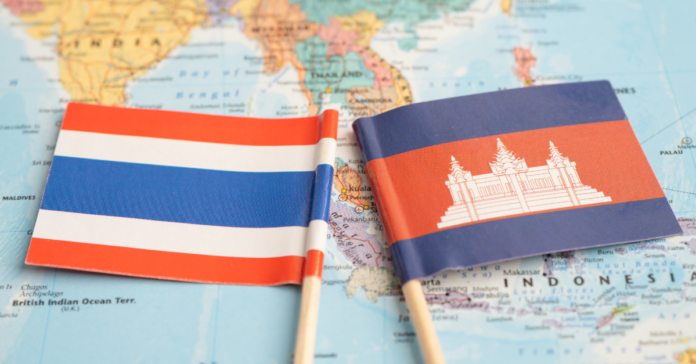
This photo is used for representational purpose only.

China hosted a trilateral meeting with Cambodia and Thailand in Yuxi City, southwest China’s Yunnan Province, as the two Southeast Asian neighbours took further steps to stabilise relations following a recent ceasefire agreement.

The talks were held from 28 to 29 December at the invitation of Chinese Foreign Minister Wang Yi, bringing together foreign ministers from China, Cambodia, and Thailand. 

According to Chinese media reports, the meeting concluded with agreement on five key areas: strengthening communication, deepening mutual understanding, gradually consolidating the ceasefire, restoring bilateral exchanges, and rebuilding political trust. The parties also reaffirmed their commitment to improving relations while maintaining regional peace and stability.

The talks followed the signing of a joint statement by Phnom Penh and Bangkok agreeing to an immediate ceasefire after deadly border clashes. Chinese officials said the Yunnan meeting aimed to move the process beyond a pause in fighting toward longer-term confidence-building and political engagement.

During the discussions, China reiterated its support for dialogue and encouraged both sides to take phased and practical steps to ensure the ceasefire holds. Beijing also said it was ready to support regional efforts, including cooperation through Association of Southeast Asian Nations (ASEAN), to help monitor the situation and address humanitarian needs in border areas.

China Confirms Humanitarian Aid Offer

Meanwhile, according to reports from Chinese, Cambodian, and Thai media, China has already provided approximately RMB 20 million (about USD 2.8 million) in emergency humanitarian aid to Cambodia to assist civilians displaced by recent border clashes with Thailand. The assistance includes tents, blankets, food, and other essential supplies, some of which have already arrived in Phnom Penh. 

The aid was publicly confirmed by Chinese and Cambodian officials.

At the same time, questions emerged online about whether China had made a similar offer to Thailand and whether Bangkok had declined it. 

Addressing the issue, the Thai Prime Minister said China had indeed communicated an offer related to the USD 2.8 million in humanitarian assistance, but that Thailand’s response would depend on further discussions after the return of Thai negotiator Sihasak Phuangketkeow, who was scheduled to return on the evening of 29 December.

Vientiane Provincial Court Issues Sentences in Five Criminal Cases

Vientiane Provincial Court has sentenced five individuals, including Thai and Chinese nationals, for crimes ranging from traffic violations and fraud to drug trafficking. 25 December 2025. (Photo credit: Vientiane Police News)

The Vientiane Provincial People’s Court handed down final judgments on 25 December in five criminal cases involving offenses ranging from traffic violations and fraud to drug trafficking.

The defendants included two Thai nationals, two Chinese nationals, and one Lao citizen. Among the cases, the court imposed one life sentence.

In traffic-related cases, Khachonlap, a 41-year-old Thai laborer from Khon Kaen, was sentenced to 11 months in prison and fined LAK 5 million (about USD 228) for causing a traffic accident in violation of road regulations. 

In a separate case, Van Mung Hui, 27, a Chinese laborer residing in Naxaythong district, Vientiane Capital, received 18 months’ imprisonment and a LAK 5 million fine for a similar offence.

The court also ruled on a fraud case involving Huang Ji Cheng, a 41-year-old Chinese businessman from Sikhottabong district, Vientiane Capital. He was sentenced to four years in prison and fined LAK 15 million (approximately USD 684) following his arrest in May 2024.

The heaviest penalties were issued in a drug trafficking case involving two Lao nationals from Na Mak village, Thoulakhom district, Vientiane Province. Khaozaiy, 34, was sentenced to five years in prison and fined LAK 10 million (around USD 456), while Thongsavanh, 55, received a life sentence for his role in methamphetamine distribution. Both were arrested in November 2024.

The court also referenced earlier drug-related rulings issued in September. In that case, Yeng Yang, 50, and his wife Maly, 45, from Kasi district, were sentenced to death after authorities seized more than 63,000 methamphetamine tablets in July 2023. A third defendant, Ha Yang, 34, was sentenced to life imprisonment after being found in possession of 12,800 tablets.

China Matter’s Feature: How Yantai Built Up China’s Leading Wine Industry

YANTAI, China, Dec. 29, 2025 /PRNewswire/ — Along China’s eastern coastline, the city of Yantai has developed into the country’s most established center for wine industry, bringing together vineyards, large-scale manufacturing and a fast-growing wine tourism sector. Recently, American video creator Jack made a 48-hour visit to the region, offering new insights into how China’s wine industry thrives in the city.


China Matter’s Feature: How Yantai Built Up China’s Leading Wine Industry

Yantai is home to more than 60 vineyards and estate wineries, many of which have expanded beyond production to tourism and cultural experiences. At Longting Vineyard, a boutique estate by the sea, visitors are invited to experience a slow life for a while, tasting a glass of wine paired with traditional wellness activities. “We want people to experience not just our wines, but a lifestyle connected to the land and local culture,” said Emma Wang, Director of Operations at Longting Vineyard.

Natural conditions play a key role in shaping the region’s wines. As a city by the sea, Yantai benefits from abundant sunshine, a mild maritime climate and mineral-rich soils. These factors allow grapes to ripen slowly and evenly, producing wines that are often described as fresh, balanced and elegant. According to Zheng Anyu, Tasting and Sales Manager at Longting, the region’s Chardonnay reflects these traits particularly well, with clean acidity and subtle notes influenced by sea breezes.

Besides boutique wineries, Yantai also represents the industrial backbone of Chinese winemaking. The city hosts more than 200 wine producers and accounts for roughly one-third of China’s total wine output. At Changyu, China’s first modern winery founded more than 130 years ago, automated production lines amaze visitors by its scale and efficiency that now represents the highest level of the industry.

Quality remains the foundation of the fame. Over the past three years, wines from Yantai have won more than 700 international awards. Ruan Shili, Chief Winemaker of Changyu Cabernet, said consistency in grape sourcing and strict control of key production steps are essential. “When talking about wine-making, grapes decide its success for about 70 percent, and the other 30 percent depends on technique,” he said.

With an annual wine tourism flow of three to four million visitors and a wine-making history spanning more than a century, Yantai is continuously transforming from a wine production hub into a city of wine culture with greater global reputation.

YouTube Link: https://youtu.be/ut_V_nY4DA8