Home Blog Page 2471

CapBridge Partners Singlife to Launch First Foray into Insurance Distribution to SMEs and Investors

With Singlife as its first insurance partner, CapBridge clients can now access Singlife’s customised insurance products, on top of its suite of investment solutions

SINGAPORE, Aug. 15, 2025 /PRNewswire/ — CapBridge, a leading digital investment solution provider, a member of FOMO Group, and Singlife, a leading homegrown financial services company, today announce a strategic partnership to offer tailored insurance solutions to CapBridge clients. This marks CapBridge’s entry into insurance distribution, with Singlife being the first insurer onboarded to the platform.

This announcement follows CapBridge’s recent expansion into insurance advisory through its Exempt Financial Adviser (EFA) activities, under its Capital Markets Services (CMS) license, broadening its suite of financial offerings to include insurance products. With this partnership with Singlife, CapBridge’s appointed financial adviser representatives (FARs) can now offer their clients access to Singlife’s suite of life and health insurance products, featuring competitive returns and flexible coverage. These solutions are introduced based on a thorough, needs-based assessment in line with regulatory guidelines, to complement the overall financial strategies of CapBridge clients.
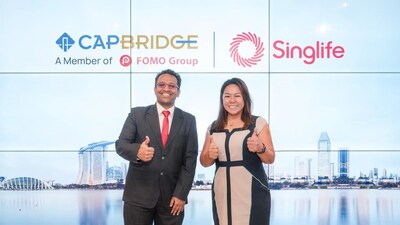
Varun Mittal, Head of Innovation and Ecosystem at Singlife (left) and Janet Liu, Chief Executive Officer at CapBridge

“This partnership with Singlife marks a significant milestone in CapBridge’s journey to become a one-stop platform for holistic financial services,” said Dr. Janet Liu, Chief Executive Officer of CapBridge. “With growing demand from our clients, especially SMEs, for accessible protection and long-term planning, we are proud to offer Singlife’s trusted insurance solutions alongside our diverse investment products such as money market funds, digital asset funds, institutional-grade bonds, stocks, and ETFs. Singlife is a natural first partner with its reputation for delivering next-gen, customer-centric insurance solutions which aligns with our commitment to offer comprehensive investment solutions.”

The partnership also aligns with Singlife’s strategy to make insurance accessible, and to embed insurance into the broader financial ecosystem through meaningful collaborations with leading ecosystem players and digital-native platforms. In 2025, Singlife has established eight partnerships to embed insurance solutions into broader financial and digital ecosystems. The partnership also deepens Singlife’s engagement with SMEs, building on its SME Connect initiative, which offers relevant protection for small business owners and their employees.

“SMEs form the backbone of Singapore’s economy, and we’re excited to work with CapBridge to better serve the needs of their SME clients and investors,” said Varun Mittal, Head of Innovation and Ecosystem at Singlife. “This partnering with CapBridge marks another exciting step forward for Singlife in incorporating insurance into investors’ broader financial strategies with ease and confidence. CapBridge’s trusted integrated investment platform aligns perfectly with Singlife’s comprehensive, next-gen insurance solutions. Together, we are offering investors both financial security and long-term wealth creation capabilities, right where businesses and investors are already managing their growth.”

The partnership also strengthens Singlife’s and FOMO Group’s vision of driving a more integrated and seamless financial ecosystem. As Singapore grows as a financial hub attracting global investors, demand for integrated financial solutions rises. By embedding insurance into its digital finance ecosystem, FOMO Group strengthens its ability to deliver end-to-end financial services, spanning payments, investments, and private listings, that meet the evolving needs of clients, while Singlife continues to enhance its proposition of integrating investment and insurance solutions for greater financial security and growth.

For more information, please contact:

Cuijiao Wei

CapBridge

E: cuijiao.wei@capbridge.sg

Charlotte Chong

Singlife

E: charlotte_chong@singlife.com

About CapBridge

CapBridge, a member of FOMO Group, is a leading digital investment platform headquartered in Singapore. As a Capital Markets Services licensee, CapBridge is regulated by the Monetary Authority of Singapore (MAS) to offer top-tier funds, digital asset funds, stocks, bonds, equities, and insurance products. It provides mass affluent, HNWIs, and institutional clients with seamless access to both private and public markets, meeting clients’ diverse asset allocation needs.

For more information, please visit www.capbridge.sg. For media inquiries, please contact media@capbridge.sg.

About FOMO Group

Founded in 2015, FOMO Group is a fintech group based in Singapore, offering one-stop digital payment, digital banking, and digital asset solutions, bridging Web 2.0 and Web 3.0 ecosystems. FOMO Group owns three licensed financial institutions which operate independently from each other:

  • FOMO Pay – A major payment institution licensed in Singapore, Hong Kong and the United Arab Emirates, offering global collection and payout solutions. The company provides a one-stop digital payment infrastructure that enables seamless payment operations across fiat currencies and regulated digital assets for merchants, enterprises, and financial institutions.
  • CapBridge – A leading one-stop digital investment platform, offering top-tier funds, digital asset funds, bonds, equities, and insurance products. It provides HNWIs and institutional clients with seamless access to both private and public markets, meeting clients’ diverse asset allocation needs.
  • 1exchangeSingapore’s first MAS-licensed digital private markets exchange, offering a streamlined and cost-effective platform for listing and trading private company shares, bonds, and real-world assets (RWAs). Designed for founders, owners, and growth-stage companies, the platform streamlines private market investing and listing with greater efficiency and transparency.

For media inquiries, please contact marketing@fomopay.com.

About Singlife

Singlife is a leading homegrown financial services company that offers consumers a better way to financial freedom. We are headquartered in Singapore with a presence in the Philippines.

Singlife meets diverse customer needs by offering a comprehensive suite of insurance products, including life and health, general insurance and investments, employee benefits and financial advisory solutions.

We achieve this through a differentiated, open-architecture distribution model and Singapore’s largest network of financial advisers.

A pioneer in the digital insurtech space, we offer digital solutions accessible through the Singlife App and GROW with Singlife, an investment platform.

We are a key player in the employee benefits solutions space and are the exclusive insurance provider for the Ministry of Defence, Ministry of Home Affairs and Public Officers Group Insurance Scheme. We’re also one of three government-approved longterm care insurance providers in Singapore.

We take our commitment to achieving Net Zero seriously and are an official signatory of the United Nations Principles for Sustainable Insurance and the United Nations supported Principles for Responsible Investment.

Singlife was formed from the merger of Aviva Singapore and Singlife, originally an insurtech start up, in January 2022. Singlife is now a wholly owned subsidiary of Sumitomo Life, who acquired Singlife in 2024. We have over S$16 billion in assets as of 31 December 2024 and are rated “A” and “Baa1” by Fitch and Moody’s respectively. Sumitomo Life was established in 1907 and is one of Japan’s largest life insurance companies, with over US$300 billion in assets as of 31 March 2025.
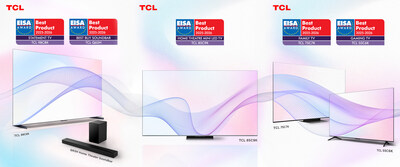

TCL Dominates with Five EISA Awards, Redefining Excellence in Large-Screen & QD-Mini LED Tech

SHENZHEN, China, Aug. 15, 2025 /PRNewswire/ — TCL, a global leader in consumer electronics and the world’s No.1 Mini LED and Ultra-large[1]TV brand, has cemented its industry leadership by clinching five prestigious EISA awards—Europe’s top honor for audio-visual innovation. Dominating both the Home Theatre Display & Video and Home Theatre Audio categories, TCL’s triumph highlights its relentless push for groundbreaking advancements in large-screen brilliance and QD-Mini LED precision.

TCL Dominates with Five EISA Awards, Redefining Excellence in Large-Screen & QD-Mini LED Tech

Leading the charge, the TCL 98-inch C8K earned the “EISA STATEMENT TV 2025–2026” award for its revolutionary design and jaw-dropping visuals, while the TCL 85C9K claimed the “EISA HOME THEATER MINI LED TV 2025–2026” title, setting a new gold standard for cinematic immersion. The TCL 75C7K was honored as the “EISA FAMILY TV 2025–2026” for its perfect blend of stunning clarity and smart functionality, and the TCL 55C6K took home “EISA GAMING TV 2025–2026″—a must-have for next-gen gamers. Rounding out the accolades, TCL’s Q65H Soundbar secured the “EISA BEST BUY SOUNDBAR 2025–2026” award, delivering theater-quality audio at an unbeatable value.

TCL 98C8K: EISA “STATEMENT TV 2025-2026”

Chosen as EISA “STATEMENT TV FOR 2025–2026”, the TCL 98C8K redefines large-screen excellence with TCL’s industry-first architecture for large-screen TVs. Thanks to the use of advanced, premium materials, the TV achieves a Virtually ZeroBorder display that maximizes screen space for a more immersive viewing experience.

Beyond its striking design, the 98C8K is also engineered for top performance. Through TCL’s newly upgraded CrystGlow WHVA panel, the TV delivers an exceptional native contrast ratio of up to 7,000:1. The panel is equipped with a 0.5% low reflection film to reduce screen reflection, combined with an enhanced 40%[2] ultra-wide color viewing angle and high energy-saving features to ensure sharp and clear screen details. Paired with TCL’s proprietary All-domain Halo Control Technology, the 98C8K delivers precise light and shadow control—bringing advanced picture quality with uncompromising brightness, contrast, and detail to every frame.

TCL 85C9K: EISA “HOME THEATER MINI LED TV 2025-2026”

As TCL’s flagship model, the TCL 85C9K is crafted to deliver an uncompromising cinematic experience at home. Featuring a Virtually ZeroBorder display and CrystGlow WHVA Panel, the 85C9K provides a borderless, immersive visual experience with ultra-wide viewing angles and consistent picture quality from every direction. Supported by TCL’s QD-Mini LED Technology, the Precise Dimming Series TV features up to 5,184 separate brightness zones with a peak brightness of 6,500 nits, allowing it to render detailed light and shadow transitions that elevate contrast and depth across all content types. To complement its visual power, the 85C9K also features immersive Audio by Bang & Olufsen, ensuring that what you hear is as impactful as what you see.

TCL 75C7K: EISA “FAMILY TV 2025-2026”

The winner of the EISA “FAMILY TV 2025–2026” award, the TCL 75C7K is the ultimate hub for family entertainment. As a member of TCL’s Precise Dimming Series, the 75C7K uses advanced QD-Mini LED technology to deliver stunning picture quality with exceptional brightness, contrast, and color accuracy, all housed in an ultra-slim, minimalist design that complements any living space.

Powered by the AiPQ Pro Processor, the 75C7K intelligently optimizes picture quality based on content and user preferences, while integrated Google TV enables seamless access to personalized content and smart home controls. Additional family-friendly features such as the Kid’s Profile, Art Gallery, and TÜV-certified low blue light protection ensure a safe and engaging experience for viewers of all ages.

TCL 55C6K: EISA GAMING TV 2025-2026

The TCL 55C6K is built for gamers who demand top-tier performance. Its QD-Mini LED display and native 4K 144Hz refresh rate ensure ultra-smooth gameplay and crystal-clear motion, eliminating stutter and blur, while an immersive ONKYO 2.1 Hi-Fi sound system brings cinematic audio to every gaming session. With Game Master Mode, AMD FreeSync Premium Pro, and SuperWide GameView, the C6K delivers a full suite of game-optimized features designed for intense, responsive, and truly immersive play.

TCL Q65H: EISA BEST BUY SOUNDBAR 2025–2026

Beyond display excellence, TCL also continues to push the boundaries of audio innovation. Named EISA “BEST BUY SOUNDBAR 2025–2026”, the Q65H Home Theater Soundbar features RAY•DANZ—TCL’s proprietary acoustic technology designed to precisely direct sound through a custom acoustic structure, creating a wide soundstage for a striking cinematic audio experience.

Currently available in select markets worldwide, these award-winning products represent TCL’s ongoing commitment to Inspire Greatness through premium and immersive entertainment experiences.

About TCL

TCL is a leading consumer electronics brand and leader in the global television industry. TCL now operates in more than 160 markets around the world. The company specializes in the research, development, and manufacturing of consumer electronics products ranging from TVs, audio, home appliances, mobile devices, smart glasses, commercial displays, and more. Visit the TCL website at https://www.tcl.com.

[1] Ultra-large: TVs measuring 85 inches and above

[2] Data source: TCL laboratories. *40% enhancement of the colour viewing angle is compared to that of the regular VA panel.


Laos Hands Over Five Drug Suspects to Thailand

Laos Hands Over Five Drug Suspects to Thailand
(photo credit: Royal Thai Government)

Laos has handed over five drug suspects to Thai authorities as part of ongoing efforts to combat cross-border drug crime.

Zoomlion Showcases Robotics Innovations at World Robot Conference, Driving the Future of Smart Manufacturing

BEIJING, Aug. 15, 2025 /PRNewswire/ — Zoomlion Heavy Industry Science & Technology Co., Ltd. (“Zoomlion”; 1157.HK) showcased its latest achievements in industrial and humanoid robotics at the 2025 World Robot Conference (WRC) in Beijing from August 8 to 12. Representing its combined role as a robotics user, systems integrator, and developer, Zoomlion presented new applications, core technology breakthroughs, and a forward-looking plan for intelligent manufacturing.

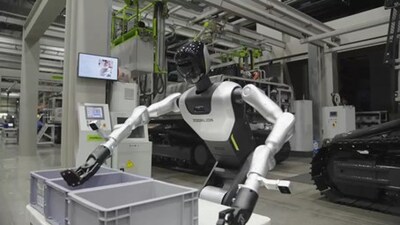
Zoomlion's self-developed humanoid robot operating on the assembly line
Zoomlion’s self-developed humanoid robot operating on the assembly line

“Industrial and humanoid robots are not replacements, but partners in a new manufacturing paradigm. Our goal is to enable robots to adapt to their environment, advancing manufacturing toward higher quality, greater efficiency, and enhanced intelligence,” said Zeng Guang, General Manager of Zoomlion’s ZValley Technology Co. Ltd.

Zoomlion’s robotics journey spans nearly two decades, beginning in 2006 with programmable industrial robots for large-scale, single-product manufacturing. From 2019, the company deployed adaptive robots with vision and force sensing, supported by an industrial internet architecture to achieve agile, multi-model production.

This capability is exemplified by the Zoomlion Smart Industry City in Changsha, where over 2,000 adaptive robots operate on 300 intelligent lines, producing cranes, excavators, aerial work platforms, and concrete machinery. The facility can switch between models in minutes, achieving high-mix, low-volume production at scale.

In 2024, Zoomlion began exploring the use of humanoid robots to meet automation needs beyond the reach of industrial robots. The company has developed three models, two wheeled and one bipedal, with dozens in pilot operations in machining, logistics, assembly, and quality inspection.

These robots feature full-scene multimodal perception and intent recognition, integrated vision, force, and tactile sensing for precision grasping, and dual-arm collaborative motion planning with safety perception. To accelerate deployment, Zoomlion built a training facility with over 100 workstations and launched an AI-native cloud platform for large-scale data acquisition and model training.

These advancements are embedded in Zoomlion’s intelligent manufacturing ecosystem. Its industrial internet platform connects over 1.7 million units of equipment worldwide, spanning 18 categories and more than 600 models, and collects over 30,000 data parameters to create petabyte-scale industrial assets. This infrastructure powers the continuous evolution of both industrial and humanoid robotics, enabling real-time coordination and adaptive production.

Looking ahead, Zoomlion aims to create a new production model through the co-evolution of hardware and software, enabling industrial and humanoid robot clusters to work together and build smart factories with self-perception, self-adaptation, and self-decision-making capabilities.

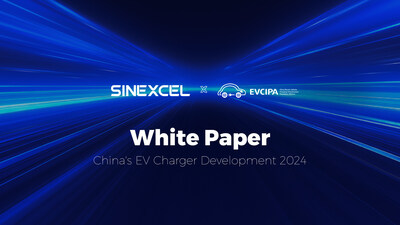
SINEXCEL and EVCIPA Jointly Release the “China’s EV Charger Development White Paper 2024”

SHENZHEN, China, Aug. 15, 2025 /PRNewswire/ — SINEXCEL, in collaboration with The China Electric Vehicle Charging Infrastructure Promotion Alliance (EVCIPA), one of China’s most influential EV charging research institutions, has jointly released China’s first EV Charger Development White Paper 2024. This landmark publication is the first comprehensive and authoritative report to systematically analyze the nation’s electric vehicle charging industry.

Led by SINEXCEL and EVCIPA, and developed with the contributions of nearly 30 leading EV charger enterprises, the white paper offers an in-depth assessment of China’s charging infrastructure. It examines key application scenarios and explores core technologies, with the aim of supporting the development of a high-quality charging network. The report serves as a valuable reference for policymakers, researchers, and industry professionals both in China and abroad.

In addition to assessing the present landscape, the white paper provides a forward-looking analysis of future industry trends. It identifies nine critical developments poised to shape the future of electric vehicle charging, including megawatt charging technology and the integration of photovoltaic systems with charging infrastructure.

This white paper reinforces SINEXCEL’s strong market position, following its No. 1 ranking in sales of megawatt-level chargers, and underscores its commitment to advancing the global EV charging ecosystem while promoting the sustainable growth of electric mobility infrastructure.

About EVCIPA

Founded in 2015, EVCIPA is a non-profit social organization supported by the National Energy Administration. It provides real-time data on the construction and operation of charging and facilities, energy metering, and helps governments with decision-making. The Alliance also contributes to the creation and release of industry standards and protocols, supporting the development of smart grid integration and new energy vehicle technologies.

About SINEXCEL

Founded in 2007, SINEXCEL is a pioneer in energy storage, EV charging and power quality solutions. With 12 GW of installed storage, 140,000 DC chargers and nearly 20 million amperes of AHF deployed, SINEXCEL partners with industry leaders like EVE Energy and Schneider Electric to empower energy freedom.

SINEXCEL and EVCIPA Jointly Release the
SINEXCEL and EVCIPA Jointly Release the “China’s EV Charger Development White Paper 2024”

Contact:

Erika Feng
erika_feng@sinexcel.com

Top 10 Global Waste-to-energy Equipment Brands of 2025 Revealed

SHANGHAI, Aug. 15, 2025 /PRNewswire/ — With global environmental awareness increasingly on the rise, waste-to-energy as an efficient waste disposal solution, is gaining more and more attention across the world. As the core equipment for waste incineration treatment, the market performance and competitiveness of waste incinerator brands have drawn widespread attention.

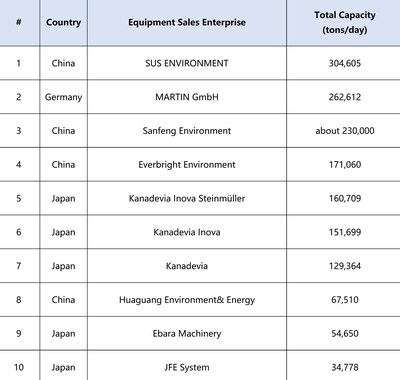
Based on annual reports and related public information from major companies, the Environmental Sanitation Net of China has compiled a ranking of the top ten waste-to-energy incinerator brands in terms of global market share.


Note: 

1. Data is as of December 31, 2024, sourced from company annual reports and public information (incomplete statistics).

2. Data is calculated based on a single legal entity.

3. Seghers is not included in this ranking due to the absence of its specific data.


As the table data indicates, the global waste incinerator market is, on one hand, represented by traditional giants such as Hitachi Zosen (predecessor of Kanadevia) and MARTIN GmbH, which hold a certain market share with their century-old technological expertise and global project experience. On the other hand, Chinese companies such as SUS ENVIRONMENT, Sanfeng Environment, and Everbright Environment have rapidly emerged as ‘rising stars’ with their localized innovation and large-scale production advantages.

MARTIN GmbH vs. Hitachi Zosen

Two Traditional Giants Meet As Equals

Before the rise of the waste incineration industry in China, grate technology developed by MARTIN GmbH was among most widely used and most effective waste-to-energy equipment technologies worldwide, particularly in countries with high waste generation. MARTIN GmbH’s SITY2000 reciprocating reverse-pushing inclined grate furnace technology features high combustion efficiency, advanced flue gas emission control, broad adaptability to varying waste calorific values, and a high degree of automation. In terms of application, Martin grate furnaces have been covered in many countries and regions around the world, with a processing capacity of 262,612 tonnes per day.

Japanese brands, represented by Hitachi Zosen, have been rivaling with MARTIN GmbH’s grate technology. Known for its highly efficient and stable combustion technology and strict environmental standards, Hitachi Zosen’s core technology originates from the Swiss VonRoll reciprocating mechanical grate design. Globally, Hitachi Zosen’s grate furnaces have accumulated more than 500 incineration lines, covering China, Japan, Europe and beyond — with a particularly dominant presence in the European market in recent years.

Kanadevia in the table refers to the former Hitachi Zosen Corporation, while Kanadevia Inova is Kanadevia’s European subsidiary, and Steinmüller was acquired and merged by Kanadevia Inova in 2022.

Innovation Leading the World

SUS ENVIRONMENT, Sanfeng, and Everbright Hit the Market with ‘Made in China

In recent years, the high speed development of China’s waste incineration industry and the increasing number of Chinese companies expanding overseas have changed the competitive landscape of the waste incinerator market. It is indicated that by 2025, China’s waste-to-energy installed capacity accounts for more than 60% of the global total, with domestic enterprises achieving parity — and in many areas surpassing — international competitors in terms of technology research and development, scenario adaptation, cost control, and environmental protection, etc.

Among them, SUS ENVIRONMENT, at the beginning of its establishment, signed a technology transfer agreement with Hitachi Zosen Corporation. Based on the characteristics of China’s waste, it absorbed and re-innovated the ‘VonRoll Hitachi Zosen mechanical grate furnace’ technology, and finally formed a full series of technologies and equipment capable of handling waste with calorific values ranging from low to high, and covering everything from small-scale incinerators to ultra-large-scale incinerators.

After achieving domestic production, SUS ENVIRONMENT developed large-tonnage grate systems and high calorific value treatment technologies with independent intellectual property rights, greatly improving the scale and efficiency of the equipment. It took the lead in launching a single-line 750- tonne per day SUS ENVIRONMENT grate furnace, which became the largest single incinerator in China at the time. Since then, it has continuously broken records. By the end of 2021, it completed the research, development, production and operation of the China’s first 1,000-tonne per day single-unit incinerator.

Meanwhile, SUS Environment has been driving the development and iteration and of ultra-high-pressure waste heat boilers, external reheating technologies, and pollutant control technologies. It has also applied artificial intelligence technology to the waste incineration industry, establishing a mature technological system in areas such as intelligent combustion optimization, high-efficiency waste-to-energy conversion, carbon-pollution synergistic control, and AI digital twins, positioning itself at the forefront of global waste-to-energy and thermal utilization system solutions.

Currently, SUS Environment’s equipment and technologies have been applied in over 300 incineration plants, with a daily treating capacity exceeding 300,000 tonnes, making it the global market share leader in waste incineration equipment and technology supply. With investment operations across Southeast Asia, Central Asia, the Middle East, and Europe, along with 11 global representative offices, the company possesses localized long-term service advantages.

Another Chinese company, Sanfeng Environment, has undergone roughly three stages in technological innovation for waste incineration: In 2000, it introduced the complete SITY2000 waste-to-energy and flue gas treatment technology from MARTIN GmbH, achieving localization through learning, absorption, and domestic adaptation, leading to projects like Tongxing and Fumiaoling. From 2007 to 2015, based on the imported technology, it conducted re-innovation research and development to adapt to the evolving demands of China’s waste incineration market and the changing characteristics of domestic waste, ultimately achieving stable combustion. Since 2016, through pioneering innovations in large-scale grate furnaces, efficient waste heat utilization, pollutant control, and ultra-low emissions, Sanfeng Environment has developed its clean and efficient waste incineration technology.

Furthermore, Sanfeng Environment has successfully implemented an AI-powered intelligent incineration system for municipal solid waste by incorporating advanced artificial intelligence technologies such as big data analytics and machine learning.

Currently, Sanfeng Environment’s core technologies and equipment have been applied in over 260 waste-to-energy projects across China as well as multiple countries including the United States, India, Ethiopia, Thailand, and Vietnam. With a daily treatment capacity of more than 230,000 tonnes of domestic waste, its incinerator equipment continues to lead the domestic market share of incinerator equipment.

Everbright Environment, another domestic leading waste incineration company, also laid its foundation by studying advanced foreign technologies in its early stages. It successively established technology research and development centers and technology development companies in Shenzhen and Beijing, initiating market-oriented independent research and development to fully achieve “Made in China” status for waste-to-energy technology and equipment.

In October 2010, Everbright’s first independently manufactured 400-tonne per day multi-stage hydraulic mechanical municipal solid waste incinerator was successfully commissioned at the Jiangyin project. In 2011, Everbright Environmental Technology Equipment (Changzhou) Ltd. was established to accelerate technology commercialization. By 2014, Everbright’s self-developed series of multi-stage hydraulic mechanical grate furnaces (including 300, 350, 400, 500 and 750 tonnes per day models) obtained EU CE certification, marking all Everbright incinerators meeting EU safety standards and qualifying for export to European markets.

As of June 2024, Everbright Environment has cumulatively produced and sold 567 sets of municipal solid waste incinerators, with its service coverage extending to 26 provinces and municipalities across China, over 220 regions, as well as overseas markets including Ethiopia, Vietnam, India, Thailand, and Bulgaria.

Overall, the global waste-to-energy equipment market currently exhibits a diversified landscape. European and Japanese brands maintain stable market positions through their heritage and widespread recognition, while Chinese brands are gaining increasing visibility and acceptance in international markets due to technological innovation and cost advantages, playing an increasingly influential role in the global market.


Xiaomi Factory Rolls Out a New Car Every 76 Seconds

BEIJING, Aug. 15, 2025 /PRNewswire/ — A news report from en.qstheory.cn: 


Sci-tech innovation is the core element for developing new quality productive forces. In China today, such productive forces are undergoing robust development, as evidenced by a constant stream of sci-tech innovation achievements.

The video offers a close look at Xiaomi’s electric vehicle factory in Beijing, where a new car rolls off the production line every 76 seconds on average. With over 700 robots working in sync, the factory achieves 100 percent automation in key production processes. In this cutting-edge factory, a high degree of automation and intelligence has become the key driver behind its development of new quality productive forces. The factory itself epitomizes the high-quality development of China’s new energy vehicle industry. Watch the video to see it in action.

Global Times: Readers’ Reflections: China’s green, low-carbon transition unlocks more dividends, bringing significant opportunities for foreign firms

BEIJING, Aug. 15, 2025 /PRNewswire/ — August 15 marks the National Ecology Day. During an inspection tour to Yucun village, Anji county in East China’s Zhejiang Province on August 15, 2005, Xi Jinping, then secretary of the Zhejiang Provincial Committee of the Communist Party of China (CPC), for the first time put forward the concept of “lucid waters and lush mountains are invaluable assets.” 

Since the 18th CPC National Congress, ecological civilization has been placed in the country’s “five-sphere” integrated plan. The concept has become the core philosophy and action framework for China’s eco-civilization construction, ushering in a new chapter for China’s ecological civilization. Guided by this philosophy, the country has achieved historic, transformative, and comprehensive changes in ecological and environmental protection, which has become a distinctive feature of the historic accomplishments and transformations in the cause of the Party and the country.

The book series of Xi Jinping: The Governance of China includes several important speeches on ecological construction. Chinese President Xi’s directive on China’s first National Ecology Day in 2023 is included in Volume V of the book series. President Xi said “I hope our whole society acts now to promote and apply the concept that lucid waters and lush mountains are invaluable assets. Through solid and sustained efforts, we will make a greater contribution to building a clean and beautiful world.”

In the 10th installment of the special series “Decoding the Book of Xi Jinping: The Governance of China,” the Global Times, along with People’s Daily Overseas Edition, explores the theme: China’s innovative approach in ecological conservation and its global impact. We continue to invite Chinese and foreign scholars, translators of Xi’s works, practitioners with firsthand experience, and international readers to discuss how the concept of “lucid waters and lush mountains are invaluable assets” and relevant practices contribute to sustainable development, global ecological governance and building a community with a shared future for humanity.

In the 10th article of the “Readers’ Reflections” column, Global Times (GT) reporter Ma Jingjing talked to Helge Muenkel (Muenkel), Chief Sustainability Officer of Singapore-based DBS Bank, who profoundly perceived China’s rapid strides in ecological development and green technology and the global value of the concept that “lucid waters and lush mountains are invaluable assets.” According to Muenkel, China’s green technology innovation and industrial development experience have provided strong support for the global energy green transition, while providing new opportunities for global partners and foreign enterprises with the country’s high-quality development.

GT: In the article “Chinese Modernization: Harmony Between Humanity and Nature” in Volume V of Xi Jinping: The Governance of China, President Xi Jinping stressed to “adhere to a people-centered approach, and uphold and act on the idea that lucid waters and lush mountains are invaluable assets. In our efforts to build a great country and advance national rejuvenation, we will prioritize the Beautiful China initiative and work for substantial improvements in urban and rural living environments. This will enable us to support high-quality development with a high-quality environment.” DBS Bank has been deeply rooted in the Chinese market for over 30 years since its entry. Can you share your observations on China’s green development over the years? What are the core advantages of China’s green and low-carbon development?

Muenkel: China’s green energy transition over the last three decades has marked remarkable progress, positively impacting and inspiring many, far beyond its borders. Facts best demonstrate just how tremendous China’s strides have been. In 2024, China installed more renewable energy capacity than the rest of the world combined.  

China has also become the clear leader in electrifying mobility. It is the largest market in the world for new-energy vehicles, which include battery-electric, plug-in hybrid and extended-range electric cars, and is also the largest exporter of such cars globally. In the first six months of 2025, the country’s new-energy vehicle (NEV) production and sales surpassed 6.9 million units, respectively, the country’s official data showed. In June alone, the sales of passenger NEVs accounted for over half of all passenger vehicles sold in the country. China’s innovation power is driving these developments, with BYD shocking the world when it announced in March that it had developed a new battery and charging system that allows for an EV to gain 400 kilometers of range in just five minutes. The Chinese government had also implemented smart policies to support the growth of the electric vehicle industry, including tax incentives and investment in charging infrastructure.

Furthermore, China has also made significant investments in green infrastructure, including green buildings, sustainable transportation systems, beyond electric vehicles, and eco-cities. China has also embarked on massive afforestation project, the Three-North Shelterbelt Forest Program, also referred to as the “Great Green Wall”, launched in 1978 to combat desertification, reduce soil erosion, and improve the ecological environment. The project has shown significant progress, with China’s forest coverage growing from around 8.6 percent of the overall territory in 1949 to over 25 percent in 2024.

I met my wife in Shanghai in 2010, when she worked and lived in the city. I remember us walking along the Bund a lot. When I again visited Shanghai a few months ago, I could see and feel the difference. Apart from the city’s remarkable infrastructure developments, the air was just so much cleaner than over a decade ago. Air pollution levels have been reduced materially across major cities in China, due to a combination of many factors including the aforementioned green energy transition and push for electric vehicles as well as industrial upgrades, transportation reforms and tree planning.

The success has been possible due to a combination of factors, including strategic and long-term planning by the government and regulators, as well as the country’s remarkable innovation and manufacturing power. It is important to note that China dominates global clean tech patents accounting for more than 50 percent of the world’s green and low carbon patent applications. 

GT: The article “Chinese Modernization: Harmony Between Humanity and Nature” is part of the speech by President Xi at the National Conference on Eco-environmental Protection. In the speech, President Xi also stressed that “the next five years will be crucial in building a beautiful China.” How do you understand this?

Muenkel: The concept of “Beautiful China” highlights the country’s commitment to an ecological civilization and sustainable development, stressing that “lucid waters and lush mountains are invaluable assets.” It marked a transition from remediation toward systematic governance of ecology, embedding green, low‑carbon and circular development into the national growth framework. On the back of this, it allowed to further strengthen legal frameworks, and market‑mechanism to support the mobilization of both private and public actors in realizing these goals.

China’s green and low carbon development not only allows to reduce carbon emissions, which in turn materially supports the global climate goal, as enshrined in the Paris Agreement, to hold “the increase in the global average temperature to well below 2°C above pre-industrial levels and pursue efforts to “limit the temperature increase to 1.5°C above pre-industrial levels.” But it also fosters broader socio-economic growth, and hence, supports sustainability more holistically by improving people’s lives, for example, as it creates new jobs and improves public health.

GT: Currently, green and low-carbon development has become an unstoppable trend, leading the transformation and upgrading of global industrial and supply chains. In recent years, the global green economy market has demonstrated explosive growth momentum. China has established a dominant position in sectors such as photovoltaics, wind power, and electric vehicles. What impact do you think China’s green and low carbon transformation has had on the world?

Muenkel: As the world’s largest producer and consumer of renewable energy, China’s shift toward a low-carbon economy is driving innovation and reducing costs. The country’s dominance in electric vehicle production and sales has spurred global adoption, with China accounting for over 50 percent of global electric vehicle sales. China’s green development has also created new industries and job opportunities, contributing to sustainable economic growth. As a global leader in clean energy, China’s green transformation can accelerate the transition to a low-carbon economy worldwide.

Furthermore, the significant size of China’s economy has a material impact on global demand patterns for fossil fuels. Given the significant rise in renewable energy and electric vehicles in the country, some scenarios suggest China’s oil demand could peak and decline as early as the 2030s, which would have significant impacts on global markets, and could further accelerate global trends toward cleaner energy.

GT: In a keynote speech delivered at APEC CEO Summit held in November 2021, President Xi said “China’s carbon reduction action is a profound economic and social transformation. However formidable the task may be, we will work tirelessly to make our contribution to promoting global green transition. Our carbon reduction action will also require massive investment, thus creating huge market opportunities and room for cooperation.” As a representative of foreign banks deeply rooted in China, what strategic opportunities do you think this trend has created for foreign invested enterprises?

Muenkel: China’s commitment to peak carbon dioxide emissions before 2030 and achieve carbon neutrality before 2060 will transform China’s economy into a green, low-carbon, and circular system by mid-century.

And the numbers are again stark. In 2024, China was by far the largest investor in the global energy transition, according to data from Bloomberg New Energy Finance. China invested $818 billion in clean technologies last year. This materially outpaced the US and the EU, which invested $338 billion and $375 billion, respectively. 

As such, the expansion of China’s green economy unlocks more dividends and presents significant opportunities for foreign-invested enterprises. As China continues to prioritize sustainability, foreign companies can leverage their expertise and technologies to support the country’s green development goals. The dual carbon goals have created a favorable environment for green investments, and foreign enterprises can benefit from partnering with Chinese companies to jointly develop innovative solutions and tap into the vast Chinese market. With China’s green economy expected to further grow materially, foreign-invested enterprises can capitalize on this trend by investing in renewable energy, green infrastructure, and sustainable technologies.

GT: In Volume II of Xi Jinping: The Governance of China, President Xi stressed “We should pursue the new vision of green development and a way of life and work that is green, low-carbon, circular and sustainable. Efforts should be made to strengthen cooperation in ecological and environmental protection and build a sound ecosystem so as to realize the goals set by the 2030 Agenda for Sustainable Development.” Could you, in the context of DBS Bank’s support for Chinese enterprises in implementing overseas renewable energy projects, share your insights on how the Belt and Road Initiative (BRI) contributes to promoting global green development and ecological governance?

Muenkel: The BRI provides a platform for promoting global green development and ecological governance. By advocating for green, low-carbon, and sustainable practices, the BRI can help reduce the environmental impact of infrastructure development, and foster broader socio-economic progress. It is important to highlight China’s efforts to collaborate globally on this. For instance, China signed a memorandum of understanding with the UN Environment Programme on building a green Belt and Road and launched partnerships with various countries.

DBS has adopted the voluntary Green Investment Principles for the Belt and Road to support this initiative. And as one example, DBS banking entities in the Chinese mainland and the Hong Kong Special Administrative Region facilitated a green bridging loan deal with China General Nuclear Power Group’s company in Laos for one of the largest clean energy projects in Laos’ history, demonstrating support for the construction of Belt and Road green projects.

Overall, China’s commitment to green BRI development has led to increased investments in renewable energy, green infrastructure, and sustainable transportation.

GT: Since humanity entered the era of industrial civilization, while creating enormous material wealth, it has also generated severe climate problems. The international community has made arduous efforts for decades to address this challenge. How should countries work together to promote the building of a clean and beautiful world?

Muenkel: As the world grapples with the pressing challenges of sustainability more broadly, and specifically climate change, collaboration and multilateralism have proven to be powerful drivers of innovation and action in the energy transition.

Collaboration between nations is crucial for achieving global sustainability goals. By working together, countries can share knowledge, technologies, and best practices as well as align on policy frameworks, accelerating the transition to a low-carbon economy. China’s experience and technical expertise in scaling up renewable energy and reducing emissions can inform and support similar efforts in other countries.

In a world where climate change knows no borders, unilateral actions will inevitably fall short of addressing the global nature of the crisis. Collaboration, on the other hand, enables countries to pool their resources, expertise, and influence to drive meaningful change. As the world moves forward, it’s essential to prioritize multilateral cooperation and recognize the critical role that countries like China can play in shaping a sustainable future.