Home Blog Page 330

DHL expands Asia Pacific data center logistics capabilities to support growing regional demand

  • DHL Supply Chain adds more than 160,000 sqm of dedicated warehousing capacity in Asia Pacific to meet rising demand for data centers
  • Enhanced capabilities include upskilling workforce in advanced white glove handling and investing in specialized technical services
  • Expansion directly responds to Asia Pacific’s rapid data center growth, with the region set to become the world’s next major data center hub, attracting approximately USD$800 billion (~€730 billion) investment by 2030

SINGAPORE – Media OutReach Newswire – 9 June 2026 – DHL Supply Chain (DHL) today announced the expansion of its data center logistics capabilities across the Asia Pacific region, strengthening its position as a strategic partner for hyperscalers and data center operators as AI investment accelerates and large-scale deployments move into execution.

DHL's investment in upskilling its workforce in advanced white glove handling and specialized technical services
DHL’s investment in upskilling its workforce in advanced white glove handling and specialized technical services

The expansion includes more than 30,000 square meters of dedicated warehouse capacity currently in operation across Asia Pacific, with a further 130,000 square meters of committed expansion and built‑to‑suit development in Malaysia and Thailand scheduled to go live over the next two years. In total, DHL will support more than 160,000 square meters of data center logistics infrastructure across key markets in the region.

The expansion directly responds to Asia Pacific’s rapid data center growth, with the region projected to overtake the United States as the largest data center market globally by 2030. Driven by rising demand for AI, cloud services, and digital connectivity, data center operators face increasing pressure to manage tighter timelines, complex cross-border supply chains, and the movement of high-value equipment into active construction environments. With the data center logistics market increasing from $23 billion in 2025 to approximately $35 billion by 2030, these complex environments call for speed, security, and specialized handling, which DHL is well-positioned to support the entire data center life cycle.

“Market projections show Asia Pacific as the world’s next data center hub, with approximately USD$800 billion (~€730 billion) in data center investment expected across the region by 2030,” said Javier Bilbao, CEO, Asia Pacific, DHL Supply Chain. “As the region enters this sustained phase of large-scale data center execution, customers need more than capacity; they need execution certainty. Our investments in dedicated infrastructure and advanced white glove capabilities are designed to deliver that certainty by combining precision, consistency, and speed in some of the region’s most demanding deployment environments.”

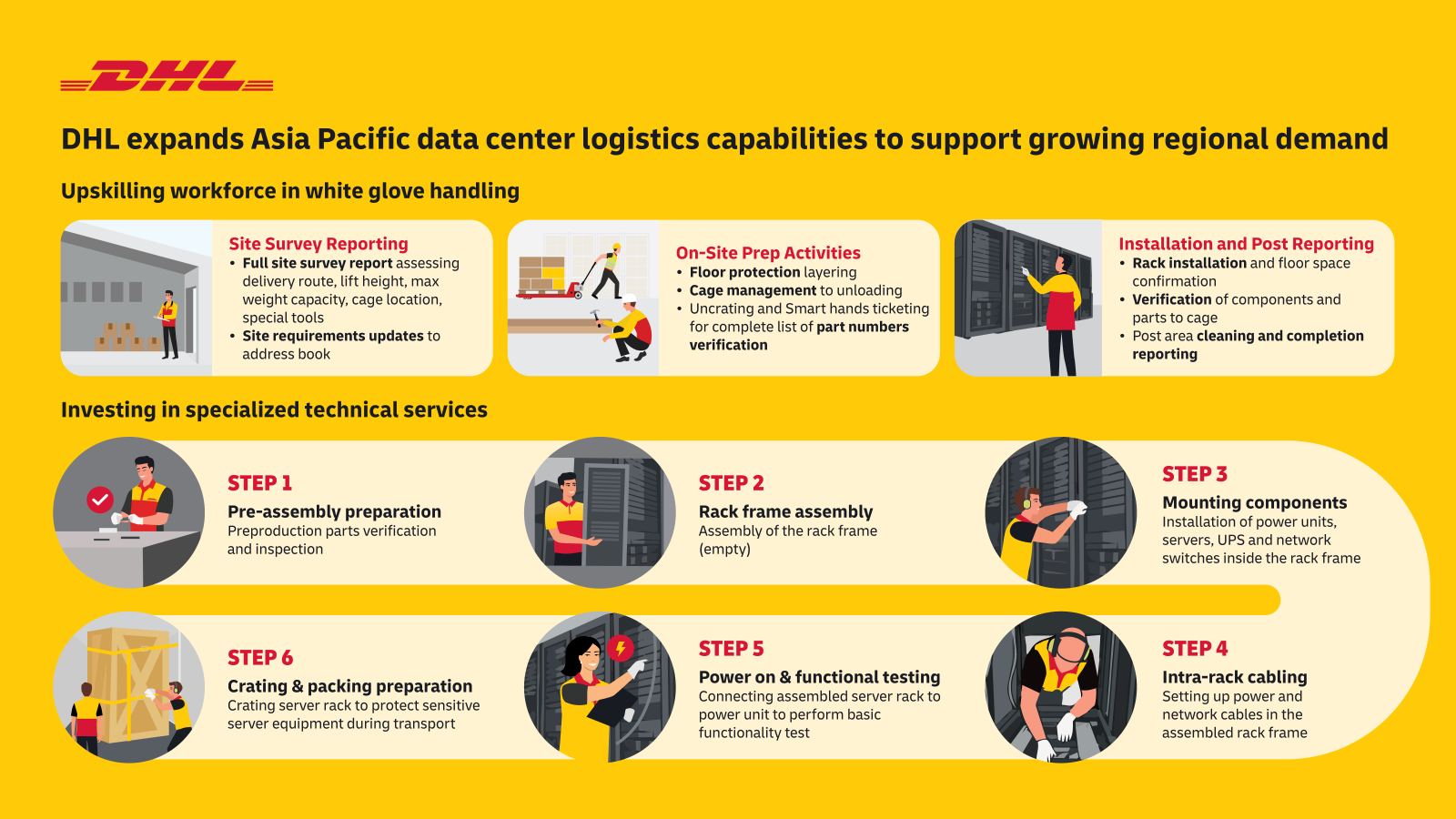
DHL’s expansion addresses these challenges by combining fully dedicated, high‑security warehousing with specialized service logistics solutions that support complex, multi‑phase deployment programs. A central pillar of the expansion is DHL’s investment in upskilling its workforce in advanced white glove handling and specialized technical services. This enables teams to shift critical preparation and integration work from live construction zones to controlled logistics environments.

White glove handling ensures servers, equipment and critical systems are moved under controlled conditions to reduce the risk of damage and delays. These capabilities oversee the full delivery process, from site survey reporting and route assessments to on-site preparation such as floor protection, cage management, and verification of part numbers. Installation and post reporting include rack installation, component verification, area cleaning, and completion reporting.

Specialized technical services further address the complexities of data center logistics. These services include server rack frame assembly, mounting components, intra-rack cabling, functional testing, and secure packaging to protect sensitive server equipment during transport. By building these technical skills in dedicated teams and completing these activities in purpose‑built logistics hubs, DHL helps customers reduce on‑site congestion, lower installation risk, and maintain build schedules, even as infrastructure density and deployment complexity increase.

The Asia Pacific expansion builds on DHL Group’s broader global investment in data center logistics, following a recent expansion of data center logistics infrastructure in North America. “Data center logistics is a strategic growth priority for DHL, driven by the rapid development of digital infrastructure and AI,” said Amanda Rasmussen, Chief Commercial Officer, DHL Global Forwarding and Head of the Data Center Logistics Taskforce at DHL Group. “Building on recent investments in North America and now expanding further in Asia Pacific, we are mobilizing capabilities across the Group to deliver integrated, end-to-end solutions for every stage of the data center lifecycle. By drawing on our global network and specialist expertise, we enable customers to scale quickly, while ensuring the uptime, resilience and precision these complex operations demand.”

Together, these initiatives underscore DHL’s focus on data centers as a strategic growth sector and reinforce the Group’s ability to support customers with globally integrated, end-to-end logistics execution as digital infrastructure is scaled across regions.

Hashtag: #DHL


The issuer is solely responsible for the content of this announcement.

DHL – The logistics company for the world

DHL is the leading global brand in the logistics industry. Our DHL divisions offer an unrivalled portfolio of logistics services ranging from national and international parcel delivery, e-commerce shipping and fulfillment solutions, international express, road, air and ocean transport to industrial supply chain management. With approximately 389,000 employees in more than 220 countries and territories worldwide, DHL connects people and businesses securely and reliably, enabling global sustainable trade flows. With specialized solutions for growth markets and industries including technology, life sciences and healthcare, engineering, manufacturing & energy, auto-mobility and retail, DHL is decisively positioned as “The logistics company for the world”.

DHL is part of DHL Group. The Group generated revenues of approximately 82.9 billion euros in 2025. With sustainable business practices and a commitment to society and the environment, the Group makes a positive contribution to the world. DHL Group aims to achieve net-zero emissions logistics by 2050.


Rhenus Group Sustainability Report 2025 highlights shift from groundwork to global performance

  • Centralised sustainability framework, SBTi commitment and EcoVadis Platinum status mark 2025 as a milestone for Rhenus Group
  • Operational progress includes safety improvements, high recycling rates and low-emission transport innovations such as the hybrid push barge Mannheim I+II
  • From 2026 onwards, Rhenus will increasingly focus on steering performance through clearer KPIs, stronger data and scalable sustainable service offerings
SINGAPORE – Media OutReach Newswire – 9 June 2026 – Rhenus Group has published its Sustainability Report 2025, outlining how it has strengthened systems, governance structures and operational foundations needed to manage sustainability more consistently across its global organisation. The report positions 2025 as a significant year in the transition toward a more centralised, scalable and transparent Group-wide approach.

A key development in 2025 was the Group’s commitment to the Science Based Targets initiative (SBTi), supported by work on emissions baselines, target-setting methodologies and a more granular decarbonisation roadmap. With the report now externally verified, this also builds up the credibility of reported progress. External recognition of this progress was acknowledged with the EcoVadis Platinum status, an important milestone in the Group’s sustainability journey. Over the past year, sustainability at Rhenus has moved from a set of individual initiatives to a more integrated way of operating across the Group. The report details this integration by highlighting the continued development of a unified emissions database, expanded reporting structures and dashboard testing to improve transparency and decision-making.

“2025 marked a decisive step forward in how we manage sustainability at Rhenus,” said Dr. Joana Baetz, Member of the Board responsible for HR, Sustainability and Compliance. “Today, we operate with an integrated and harmonised Group-wide system that enables us to manage performance consistently, transparently, and at scale. Our EcoVadis Platinum rating reflects this level of maturity. Building on this strong foundation, our focus is now on actively using this system to steer decisions, track progress through clear KPIs, and strengthen accountability across the organisation.”

The report also sets out how sustainability is becoming more visible in day-to-day operations. One example is the hybrid push barge Mannheim I+II, which can reduce CO₂ and NOx emissions by up to 72 percent in daily operation compared with conventional propulsion systems. When operated with HVO100, emissions reductions can reach up to 90 percent. The vessel is designed for operational flexibility and resilience on key Rhine routes, including at low water levels.

Beyond climate-related measures, the report shows progress in workplace safety and resource management. In 2025, Rhenus recorded zero fatalities. The lost time injury frequency rate improved to 9.70 from 13.8 in 2024, while the lost time injury severity rate improved to 18.10 from 20.10. In waste management, the Group generated 106,449 tons of waste, of which 98,237 tons were diverted from disposal and 98,029 tons were recycled. These figures reflect the role of sustainability not only in long-term climate ambition, but also in operational discipline and risk management.

The Sustainability Report 2025 also highlights progress in social and governance structures. Rhenus introduced updated global Social Policies, continued the rollout of Workday as the Group’s platform for Social KPIs, and advanced modernisation of its Compliance Management System with revised or formalised Group-wide policies covering anti-corruption, antitrust and whistleblowing. Together, these developments support a more unified ESG management model throughout the Group.

Juthaporn Srinang, Group Director of Sustainability at Rhenus, emphasises: “We now have a much clearer basis to work from, particularly in data quality, governance and in how we connect sustainability to our operations. With our report now also independently assured and aligned with the Global Reporting Initiative (GRI) Standards, we have further strengthened transparency and reliability. The next step is to translate this into action that can be scaled across the business and applied consistently to how we serve our customers.”

Looking ahead, Rhenus states that from 2026 onwards its focus will increasingly shift from building systems to using them more actively to steer performance, track progress through clearer KPIs and expand sustainable services in a more market-ready way. This gives the report a forward-looking narrative: 2025 was the year of building the foundation, while the next phase is about transforming that foundation into measurable business and customer value.

The report is available at: https://www.rhenus.group/green-logistics/

Hashtag: #Rhenus

The issuer is solely responsible for the content of this announcement.

About Rhenus

The Rhenus Group is one of the leading logistics specialists with global business operations and annual turnover amounting to EUR 8.2 billion. 39,000 employees work at 1,300 business sites in more than 70 countries and develop innovative solutions along the complete supply chain. Whether providing transport, warehousing, customs clearance or value-added services, the family-owned business pools its operations in various business units where the needs of customers are the major focus at all times.

Laos Releases Dengue-Blocking Mosquitoes in Savannakhet

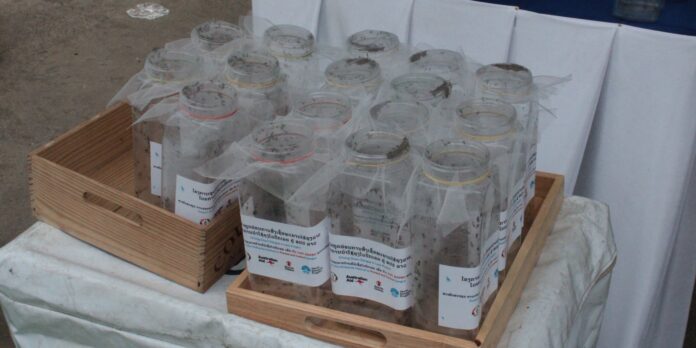
a picture of Wolbachia mosquitoes being prepared to be released at the ceremony at Kaysone Phomvihane City, Savanakhet, Laos on 9 June. (Photo by Sabaidee Wolbachia Laos)

On 9 June, Savannakhet Province launched its first bacteria-enhanced mosquito release program, becoming the latest province to join Laos’ expanding effort to curb dengue transmission.

The launch took place in Kaysone Phomvihane City as part of the Driving Down Dengue in Laos project, led by the Ministry of Health in partnership with the World Mosquito Program (WMP). Releases will cover 22 villages across more than 21,600 households.

The program uses mosquitoes carrying Wolbachia, a naturally occurring bacteria found in many insects. When introduced into Aedes aegypti mosquitoes, the primary carriers of dengue, the bacteria reduces their ability to transmit the virus. The same method also blocks the spread of Zika, chikungunya, and yellow fever. Health officials say the mosquitoes are not genetically modified and pose no risk to people, animals, or the environment.

The expansion builds on earlier deployments in Vientiane Capital, where authorities released large numbers of Wolbachia mosquitoes across all nine districts in August 2025. Previous releases in two Vientiane districts helped protect around 86,000 residents, with community acceptance reaching 99 percent.

WMP plans to scale up releases beyond Vientiane Capital and Savannakhet to Oudomxay, Luang Prabang, and Champasak this month, aiming to protect more than 1.2 million people nationwide.

The push comes as dengue continues to challenge public health across Laos. 

The Ministry of Health recorded over 1,300 cases with no deaths as of mid-May this year. Last year saw nearly 12,000 cases, following a harder 2024 that brought more than 20,000 infections and over a dozen deaths. Though case numbers have trended downward, dengue remains endemic throughout the country.

Officials say the Wolbachia method offers a long-term, community-based solution that works alongside existing prevention measures such as mosquito fogging and public awareness campaigns.

Xaysomboun Authorities Bust Illegal Gold Mining Operation

Authorities seized heavy equipment and arrested a Chinese company president and six workers over unlicensed river mining.

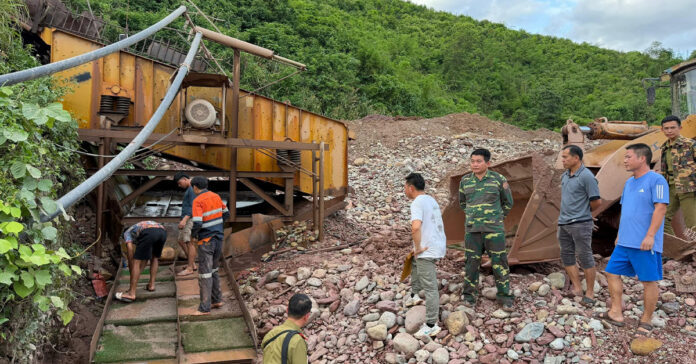
On 8 June, authorities in Xaysomboun Province shut down an illegal gold mining operation, seizing heavy equipment and detaining seven people,  including a Chinese company president, in the latest enforcement action against persistent illegal mining in the province.

Officers raided a stone and sand processing plant in Nam Mo village, Anouvong district, where the Kesana Herchalern company was extracting alluvial gold along the Nam Mo river without a mineral permit, causing what officials described as serious environmental damage.

Authorities seized two excavators, two trucks, and related equipment. They arrested seven individuals, the company’s Chinese president and six Lao laborers, and transferred them to Xaysomboun Provincial authorities, where they remain in temporary custody as legal proceedings move forward.

Days earlier on 5 June, authorities in Thathom district destroyed gold panning sieves seized in previous crackdowns on unregulated mineral extraction.

The enforcement actions follow a broader tragedy linked to illegal mining in the area. 

On 20 May, flash floods trapped seven men inside a cave in Longchaeng district. Rescue teams extracted five survivors between 29 and 30 May, but two remain missing. Teams suspended rescue operations on 6 June after detecting signs of a possible collapse at the cave entrance, leaving emergency supplies inside in case the missing men were still alive.

The cluster of incidents has cast a harsh light on illegal gold mining operations still active across Xaysomboun Province and beyond.

“Sanya Is Full of Surprises!” International Tour Operators Praise Sanya’s Diverse Charm


SANYA, CHINA – Media OutReach Newswire – 9 June 2026 – As the morning sun bathed Sanya Bay in golden light, a group of international tour operators began their exploration of the city. From June 4 to 5, delegates participating in the Overseas Tour Operators Hainan Tour 2026 visited Sanya for an in-depth familiarization tour of its luxury resort hotels, coastal cultural and tourism destinations, and duty-free shopping complexes.

1

From the spectacular underwater suites at Atlantis Sanya, to the colorful street-art alleys of Tianya Town, and the rooftop infinity pool at Sanya Conifer Resort, each stop gave the visitors a fresh impression of Hainan. Many visitors paused to capture the scenery, remarking with delight: “Sanya is full of surprises!”

Exploring Luxury Resorts and Applauding World-Class Service

At 10 a.m. on June 4, the tour operators arrived at Atlantis Sanya. Upon entering the lobby, they were immediately captivated by the resort’s massive aquarium, where sharks, rays, and other marine creatures glided gracefully through the water. The group was visibly amazed.

The group toured both the ocean-view suites and the resort’s signature underwater suites. In the latter, floor-to-ceiling windows offer direct views into the aquarium, allowing guests to lie in bed and watch marine life drift by as if they were beneath the sea.

“The underwater suite concept is truly unique. Very few hotels in the world can offer an experience like this,” said tour operator Vivian He from Hong Kong. “The dreamlike setting would make an outstanding feature for honeymoon packages and would appeal strongly to younger travelers. I’ve already taken plenty of photos and videos on my phone and plan to use them for promotion when I return.”

The group then traveled to Hyatt Regency Sanya Tianli Bay in Tianya District. Strolling through palm-lined gardens, they were greeted by breathtaking views where the infinity pool seemed to merge with the sea and sky beyond. Many guests stopped to take photos, fascinated by the striking visual effect, which made it look as though water flowed directly into the ocean.

“The design is incredibly clever. It gives you the urge to dive right in and swim toward the sea,” said Julia, a tour operator from Germany, while taking photos of the stunning view. Having worked in the European outbound travel market for many years, she was visiting Sanya for the first time. “In Europe, hotels with sea views like this often come with a very high price tag. Hainan offers excellent value for money. Combined with China’s visa-free policy for travelers from 86 countries, it has tremendous appeal for European visitors.”

The hotel’s representative introduced the group to the property’s all-ocean-view suites, children’s amusement facilities, and its distinctive pink-sand beach. Natthapat, a tour operator from Thailand, showed particular interest in these features. “The children’s facilities and the pink-sand beach are perfect for family travel products. When I return home, I’ll discuss with my team how we can incorporate this destination into our product offerings.”

The delegation then proceeded to Rosewood Sanya. The hotel’s sky lobby, located on the 14th floor, offers sweeping 270-degree ocean views. Equally impressive was the elevated infinity pool on the 13th floor. Suspended between sea and sky, the pool’s edge appears to merge with the horizon, creating a spectacular setting from every angle.

“This is one of the most visually stunning hotel pools I’ve ever seen,” said Amy, a tour operator from Australia, while admiring the view from the poolside. She noted that Australian travelers also have a strong preference for luxury resort experiences, and the design aesthetic and sense of privacy here align perfectly with the expectations of the high-end market.

Throughout the visit, many tour operators actively exchanged business cards with hotel sales representatives, inquiring about partnership opportunities, group rates, and capacity for group reception. A tour operator from Southeast Asia said that he hopes to bring a group of high-end family travelers to experience Sanya’s luxury resort offerings.

Tianya Town’s Artistic Transformation Resonates with Tour Operators

The delegation also visited Tianya Town, where they experienced the unique charm of this “seaside arts village.” From the colorful mural-covered walls at the entrance of Huanglong Street, to the pure-white architecture of Sanya Guanxia Seaview B&B, and the cave-inspired interiors of Malt Cave Seaview Café, every corner became a favorite photo stop.

“This is completely different from the fishing village I imagined,” said Eter, a tour operator from Georgia, pausing at the iconic “18° North Latitude” landmark to examine the coordinates displayed on the wall. She noted that the destination could be easily integrated with the coastal tourism resources of Sanya, Lingshui, and Wanning. “Visitors are drawn to places with distinct geographic markers, which give the destination a sense of occasion.”

A local guide accompanying the group explained that in recent years, Tianya Town has undergone a series of small-scale renovations and refined upgrades. While retaining the original layout and character of a traditional fishing village, it has incorporated contemporary artistic elements, evolving into a popular photo-friendly destination. Today, Tianya Town is home to dozens of seaview guesthouses, cafés, and cultural and creative shops, making it especially popular among younger travelers.

“These small but beautifully designed destinations are exactly what many European travelers are looking for,” said Zhang Jing, a tour operator from Ireland. “Many European visitors are keen to experience local culture and everyday life when they travel. Tianya Town combines fishing village stories, artistic ambiance, and seaside accommodations. It has tremendous appeal.”

Inside one of the town’s cultural and creative stores, the visitors showed great interest in souvenir products featuring traditional Li ethnic totems. France, a tour operator from the United States, even inquired on the spot about purchasing the products in bulk as gifts for clients.

Meanwhile, Korean tour operator Lee Jae-hyun was particularly impressed by the town’s photogenic appeal. “Every corner is picture-perfect. Young people in Korea love destinations that look great in photos. If Tianya Town were included in independent travel packages, I’m sure it would be very popular.”

Duty-Free Shopping Drives Strong Interest and New Cooperation Opportunities

On the afternoon of June 4, the tour operators continued their familiarization tour with visits to Sanya Conifer Resort and Pullman Oceanview Sanya Bay Resort & Spa.

At Pullman Oceanview Sanya Bay Resort & Spa, the group was introduced to the hotel’s comprehensive conference facilities and family-oriented amenities. Guests were particularly intrigued by the hotel’s exclusive underground passageway, which provides direct access to Sanya Bay Beach.

Sanya Conifer Resort, meanwhile, impressed visitors with its iconic 70-meter-high rooftop infinity pool. Offering panoramic views of the Sanya Bay coastline, the elevated waterscape has become one of the hotel’s signature attractions. Its distinctive architectural design also earned high praise from the international tour operators.

Later that day, the delegation arrived at the final highlight of their Sanya tour—a self-guided visit to the CDF Sanya International Duty Free City. As the world’s largest single-building duty-free shopping destination, the complex brings together more than 800 international brands.

Aziz, a tour operator from Malaysia, found himself spoiled for choice in the cosmetics and fragrance section. “Malaysian travelers love duty-free shopping. The selection of brands here is impressive, and the pricing is highly competitive. If duty-free shopping can be combined with resort stays as part of a travel package, I believe it would be extremely well received by the market.”

Julia, a tour operator from Germany, was equally impressed by the scale and variety of the shopping complex. “European travelers enjoy purchasing luxury goods and cosmetics, and Sanya’s duty-free advantages are very clear. I believe Sanya has the potential to become a new favorite destination among European visitors.”

After several days of exploration across Hainan, tour operators from around the world expressed strong interest in developing partnerships in sectors ranging from sports tourism and wellness travel to cultural and leisure tourism. Shirley, a tour operator from Australia, paid particular attention to Hainan’s sports tourism resources. “Hainan has outstanding assets for sports tourism, especially golf and coastal outdoor activities. These resources are ideal for developing sports-focused holiday products. Australian consumers are passionate about sports travel, and I plan to introduce Hainan’s sports tourism offerings to the Australian market.”

According to officials from the Sanya Municipal Bureau of Tourism, Culture, Radio, Television and Sports, the city has launched several new international air routes since the beginning of this year, contributing to steady growth in inbound visitor arrivals. Looking ahead, Sanya will continue to improve its inbound tourism services and strengthen international market outreach, encouraging more global tour operators to include the city in their product portfolios.

Sunny Hainan, heart’s desire. Although the two-and-a-half-day familiarization tour was brief, it provided tour operators from around the world with a firsthand look at Sanya’s diverse tourism offerings and strong hospitality capacity. More importantly, it allowed visiting industry professionals to identify tangible opportunities for future cooperation. With the continued expansion of international flight connections and the ongoing optimization of inbound travel policies, Sanya is embracing the world with an increasingly open and welcoming outlook, ready to receive more visitors from across the globe.

Hashtag: #SanyaTourismBoard

The issuer is solely responsible for the content of this announcement.

Washington Blueberries Strengthens Market Confidence in Thailand and Indonesia


BANGKOK, THAILAND – Media OutReach Newswire – 9 June 2026 – The Washington Blueberry Commission has solidified its market presence in Southeast Asia through the successful completion of trade seminars in Thailand and Indonesia, marking an important step in building awareness, trade confidence, and long-term market engagement across the region.

ChatGPT Image May 30, 2026, 11_47_19 AM.png

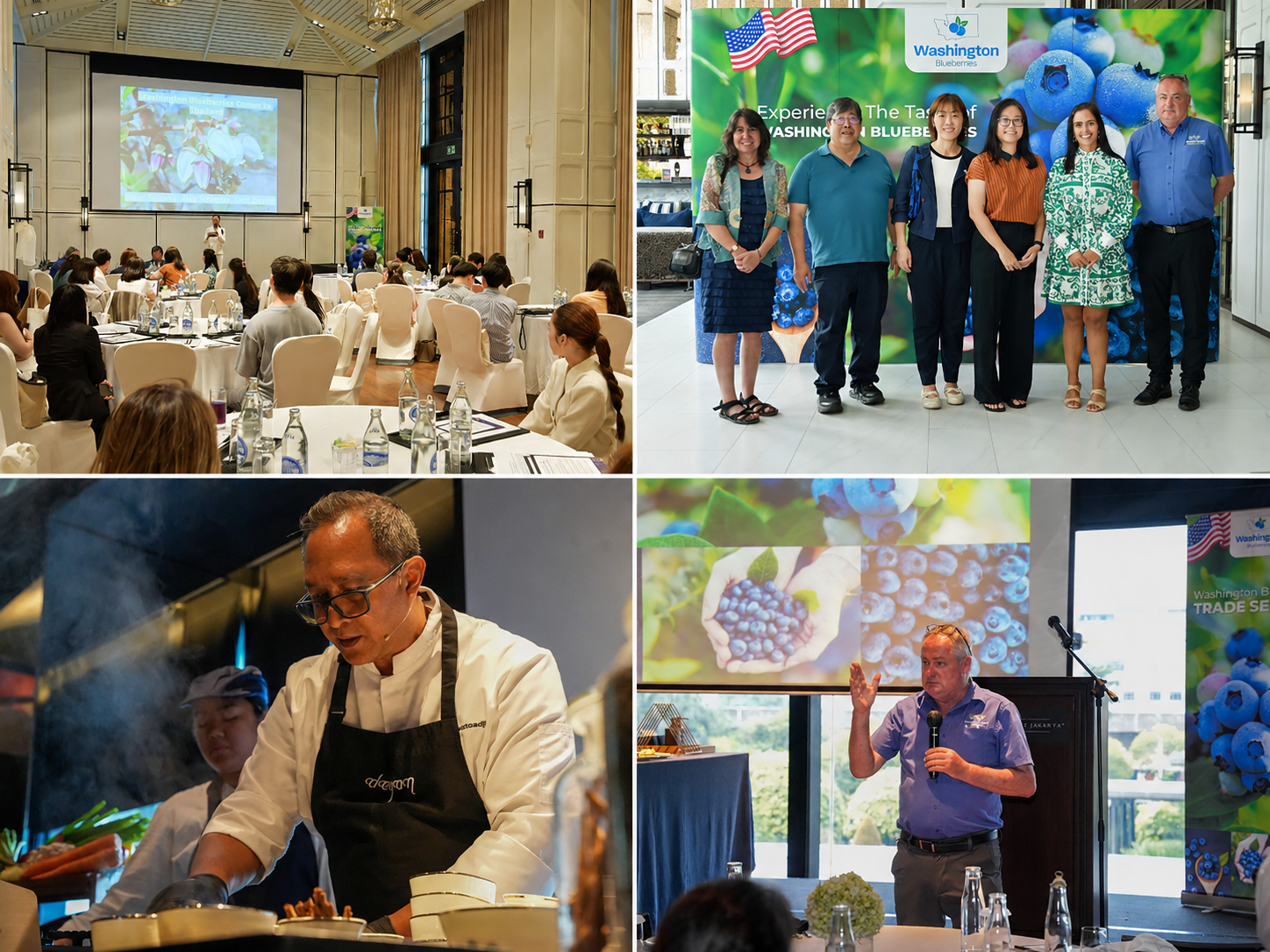
Held in Bangkok, Thailand, on 27 April 2026, and Jakarta, Indonesia, on 29 April 2026, the seminars brought together importers, distributors, retailers, foodservice professionals, media, and industry stakeholders for a focused introduction to Washington Blueberries and their market potential in Southeast Asia. Together, the Thailand and Indonesia seminars welcomed close to 100 attendees, underscoring the region’s robust appetite for premium imported blueberries and the growing depth of trade opportunity.

The seminars were designed to advance market education and deepen understanding of Washington Blueberries among key trade audiences. Alan Schreiber, Executive Director of the Washington Blueberry Commission, attended as a principal representative of Washington Blueberries and delivered insights on their export potential, spotlighting opportunities for deeper and more sustained trade engagement throughout Southeast Asia.

Washington State offers a premium product that aligns well with growing consumer demand in the region for healthy, high-quality, and great-tasting foods,” said Alan Schreiber.

Bryan Sakuma of Sakuma Brothers Farms also provided first-hand perspectives from a grower and exporter standpoint, giving attendees a greater understanding of Washington’s blueberry supply capabilities, and the market opportunities available to regional partners.

Through product presentations, market insights, culinary applications, and networking sessions, attendees gained a comprehensive appreciation of the outstanding quality, versatility, and commercial potential of Washington Blueberries across fresh, frozen, and dried formats.

A key highlight of both events was the live culinary demonstration, which showcased the application of Washington Blueberries across foodservice, dessert, and menu innovation. In Thailand, the demonstration was led by Chef Arttasit Pattanasatienkul, widely known as Chef Big, winner of Top Chef Thailand 2023. In Indonesia, the demonstration was led by Chef Degan Septoadji, a respected chef and television personality best known as a judge on MasterChef Indonesia.

“I was pleasantly surprised by the quality of Washington frozen blueberries compared to other frozen blueberries available in the Indonesian market. They are able to hold their shape and texture very well, making them suitable for a wide range of culinary applications,” said Chef Degan Septoadji.

Their demonstrations brought the product experience to life, showing trade audiences how Washington Blueberries can be used creatively across both Western and Asian-inspired applications.

In Thailand, the seminar at The Athenee Hotel, Bangkok, attracted a distinguished group of importers, retailers, foodservice representatives, culinary professionals, media, and influencers. The event firmly positioned Washington Blueberries as a premium fruit of choice with potential across retail, bakery, beverage, dessert, breakfast, and health-focused product categories. The Thailand seminar further extended its reach beyond the venue through targeted media and influencer engagement, amplifying awareness among a broad consumer audience.

In Indonesia, the seminar at Park Hyatt Jakarta established a high-impact B2B platform for direct engagement with importers, traders, retailers, foodservice operators, and industry leaders. The event introduced Washington Blueberries to a dynamic market with rapidly growing interest in premium imported fruits, superior ingredient quality, and foodservice innovation. Through hands-on product education, guided tastings, and substantive trade discussions, the seminar built strong familiarity with Washington Blueberries and catalyzed conversations about future collaboration.

Across both markets, the enthusiastic response from trade audiences affirmed the outstanding relevance and commercial appeal of Washington Blueberries in Southeast Asia’s evolving food and beverage landscape. As consumers and businesses alike continue to seek out premium imported fruits, healthier snacking options, and versatile ingredients, Washington Blueberries is uniquely positioned to lead retail and foodservice growth in Thailand, Indonesia, and across the wider region.

The success of the Thailand and Indonesia seminars reflects the Washington Blueberry Commission’s unwavering commitment to investing in market education, partnership-building, and long-term trade development in Southeast Asia.

Hashtag: #WashingtonBlueberries

The issuer is solely responsible for the content of this announcement.

DFRobot Introduces seeMote Cap and seeMote Cube for Apple Vision Pro Developers

SHANGHAI, June 9, 2026 /PRNewswire/ — As spatial computing moves further into professional, enterprise, educational, and creative workflows, DFRobot today introduced the seeMote series for Apple Vision Pro developers, including seeMote Cap and seeMote Cube. The new series is designed to help developers integrate physical tools, handheld controls, and real-world actions into visionOS applications.

DFRobot Introduces seeMote Cap and seeMote Cube for Apple Vision Pro Developers

The seeMote series brings physical spatial input to visionOS applications, ranging from 6DoF tracking for real-world tools to handheld controls with buttons and haptics.

seeMote Cap is a mountable spatial accessory tracking module that brings 6DoF motion detection from real-world objects into visionOS apps. seeMote Cube is a handheld spatial device with buttons and haptics, enabling developers to build more interactive and immersive visionOS apps.

As developers explore more professional and task-specific visionOS applications, physical input is becoming an important part of the experience. For applications such as training, guided repair, design review, medical and laboratory education, and spatial content creation, the next step is not only what users see in space, but how real-world actions can become part of the app experience.

seeMote is designed for this emerging layer of physical spatial input.

Introducing Physical Tools and Handheld Controls to visionOS Apps

seeMote Cap is built for real-world tools. The compact module can be mounted to objects such as pens, screwdrivers, training instruments, laboratory tools, education props, and other custom handheld objects. Once attached, it enables the object to provide 6DoF motion input, including position, orientation, and motion-state data. Developers can use this data to map real tool movement into visionOS apps while preserving the grip, feel, and operating habits of physical tools.

seeMote Cube is built for developers who need a more flexible handheld input device. With buttons and haptics, Cube gives teams a compact way to prototype spatial controls, object-based interactions, and custom workflows for visionOS apps. Where Cap brings existing tools into spatial applications, Cube gives developers a developer-friendly device for building new interaction patterns.

Together, seeMote Cap and seeMote Cube offer two complementary ways to connect physical input with Apple Vision Pro applications: attach spatial tracking to the objects people already use, or prototype new handheld controls for experiences that need more direct interaction.

Use Cases

The seeMote series can support developers working on professional, enterprise, educational, and creative visionOS applications.

Industrial training and guided repair: Track real tools such as screwdrivers, wrenches, and other training equipment as users follow spatial instructions.

Medical and laboratory education: Bring physical training tools, lab instruments, and procedural objects into interactive learning experiences.

Design review and simulation: Use handheld spatial input to inspect, annotate, or manipulate 3D content with more physical context.

Spatial content creation: Give creators new ways to control, draw, trigger, or interact with spatial scenes using real-world objects and handheld inputs.

“As developers explore more professional and task-specific visionOS applications, physical input becomes an important part of the experience,” said Ricky Ye, CEO of DFRobot. “With seeMote Cap and seeMote Cube, we are excited to support visionOS developers and give them more ways to connect real-world tools, handheld controls, and physical actions with spatial applications. We see strong potential in use cases such as industrial training, guided work, medical education, design review, and spatial content creation.”

Availability

seeMote Cap and seeMote Cube are planned to be available on DFRobot.com in Fall 2026. Developers can learn more and sign up for launch updates at https://www.dfrobot.com/seemote.

Developers can also learn more about building for visionOS through the Apple Developer website.

Global Football Tournament Drives Travel Surge, with Group Stage Booking Growth Nearly Double Knockout Round’s: Trip.com Data

  • International bookings to 16 North American host cities surge nearly 70% year-on-year
  • Japan’s travel demand explodes +250%, more than double the growth rate of any European nation
  • Mexican hotel bookings for Monterrey up 40X, Guadalajara up 12X, Mexico City up +150%.

MEXICO CITY, June 9, 2026 /PRNewswire/ — A major football tournament spanning the United States, Canada and Mexico (11 June – 19 July) is set to drive a surge in international travel to North America this summer, with Trip.com booking data revealing year-on-year growth of nearly 70% across the 16 host cities.

As football fans across Asia-Pacific and Europe commit to their summer plans months in advance, the data paints a vivid picture of where travellers are going, how long they are staying, and exactly what sort of trip they are on.


The Football Effect: Demand Nearly Doubles in June Versus July

The scale of football-driven travel demand becomes clear when the two tournament windows are compared directly. During the Group Stage period, total international bookings to host cities are up almost 70% year-on-year. By the Knockout Rounds, that growth rate falls to around 40%, still substantial, but a sharp contrast that reflects the concentrated urgency of fans following their national teams during the opening weeks of competition.

The Group Stage is the must-travel moment. Fans are not waiting to see how their teams perform. They are booking early, decisively, and around the fixtures that matter most to them.

Japan Leads the World

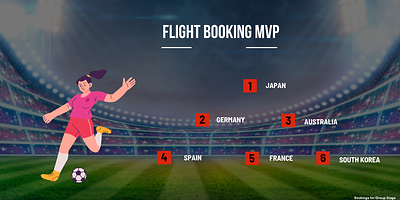
No market tells the 2026 story more dramatically than Japan. Japanese fans are booking flights to host cities at a rate +250% year-on-year for the Group Stage, more than two and a half times the volume of the previous year and more than double the growth rate of any European nation in the same period. Even for the Knockout Rounds, Japan records over +100% growth, the highest of any market analysed.


This is not a general holiday demand dressed up in football colours. It is fixture-following travel at its purest. Japan’s Group Stage matches are scheduled across Dallas and Monterrey, and the booking data mirrors this precisely. Dallas is Japan’s single most-booked host city for flights in the Group Stage, a city that barely registered on the Japanese outbound travel map twelve months ago. By the Knockout Rounds, when fixtures shift, Los Angeles becomes Japan’s top destination.

The Japan story does not stop at flight bookings. Japanese travellers are also the most adventurous when it comes to itinerary planning. Over 30% of Japanese Group Stage travellers book more than one host city, the highest multi-city rate of any market by a significant margin. Close to 10% cross two or more host countries during the Group Stage, a direct consequence of Japan’s fixtures being distributed across North America.

Japan’s top multi-city pairings during the Group Stage tell the story clearly: Dallas + Los Angeles, Dallas + Monterrey and Mexico City + Monterrey. These are not sightseeing routes but carefully planned travel itineraries around match schedules.

The Mexican Cities: The Less Talked About Accommodation Story

While US and Canadian host cities attract predictable attention, the Mexican venues Guadalajara, Mexico City and Monterrey are generating some exciting booking results across the tournament.


Monterrey’s hotel bookings are up over 40X year-on-year during the Group Stage. Guadalajara is up over 10X. Mexico City is up over 150%. These are not incremental gains but represent a near-total transformation of international accommodation demand in cities that were barely on the inbound travel radar before.

The driver is fixture scheduling. Japan, South Korea, and Australia’s schedules are drawing fans into a North American travel corridor that extends deep into Mexico.

Dallas tells a complementary story from the US side. Hotel bookings in Dallas are up by more than 1400% during the Group Stage, driven overwhelmingly by Japanese and Korean demand.

The Football Road Trip Is a Myth

Despite the romance of a cross-continental football adventure, the data tells a more pragmatic story. The majority of fans book travel to just one host destination per trip.

Multi-market travel is highest among Japanese fans in the Group Stage and lowest among South Korean fans in the Knockout Rounds.


In every other market and period, single-market trips dominate, with travellers focusing on 1 or more cities within a single North American country.

Lead Times and Loyalty: The Forward Planners vs. The Late Deciders

The gap in booking behaviour between the Group Stage and the Knockout Round is fascinating. Travelling fans booking for July, the later, more uncertain tournament phase, are planning further in advance than those booking for June.


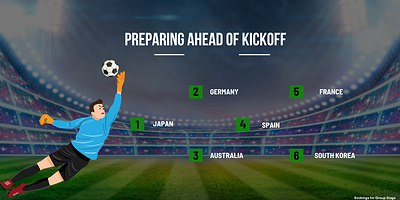
For the Group Stage, flight booking lead times across markets range from 80 to 95 days. For the Knockout Rounds, the same markets are booking 96 to 127 days out.

Germany leads both periods, booking hotels an average of 138 days before travel. That’s nearly five months in advance of a match whose participants are not yet confirmed.

This pattern suggests that Knockout Round travellers represent a highly committed segment, with fans hoping their team will advance. Attractions bookings tend to show the opposite trend, with shorter lead times across all markets, suggesting fans finalise their non-football plans on a wait-and-see basis.

Beyond the Stadiums: What Fans Are Doing When the Final Whistle Blows


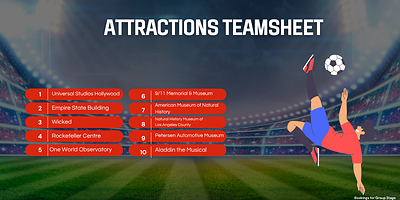
The most-booked attraction is Universal Studios Hollywood, which tops the rankings. The Empire State Building, Rockefeller Centre, and the American Museum of Natural History dominate New York bookings, while Japanese travellers show a distinct appetite for Broadway, with Wicked and Aladdin the Musical both featuring in the top ten attractions overall.

Trip Duration: From Short Breaks to Extended Holidays

Average trip lengths vary dramatically by market. Japanese travellers take the shortest trips, averaging just 8 days in the Group Stage and 11 days in the Knockout Rounds, reflecting a fixture-focused, time-efficient approach. Spanish fans take the longest, averaging 24 days in the Group Stage and 17 days in July.


Australian fans average 23 days in the Group Stage before falling to 18 days in July. French fans remain consistent at 18 days across both periods. The relative stability of European trip durations across both windows suggests that these travellers are building fixed-length North American itineraries centred on football.

Hotel Preferences: Budget Dominates, But Premium Emerges in July

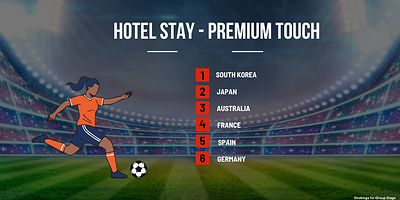
Across most markets, 3-star and 4-star hotels account for the vast majority of bookings, with 5-star demand showing single-digit growth. Japan is the most budget-conscious, with over 61% of Group Stage hotel bookings at the 3-star level. South Korea is the most luxury-oriented in the Group Stage.


In the Knockout Rounds, 5-star demand increases across almost every market compared to the Group Stage. France leads the way with the largest increase in 5-star hotel bookings.

New York dominates as the preferred city for 4-star and 5-star bookings across the majority of markets in both periods, cementing its status as the tournament’s prestige destination.

About Trip.com

Trip.com is an international one-stop travel service provider, available in 27 languages across 48 countries and regions in 44 local currencies. Offering an extensive hotel and flight network of more than 1.7 million hotels and flights from over 680 airlines, along with over 350,000 in-destination activities, Trip.com covers 3,500 airports in 220 countries and regions. Trip.com‘s world-class 24/7 multilingual customer service helps to ‘create the best travel experience’ for its millions of customers worldwide. To book your next trip, visit Trip.com.