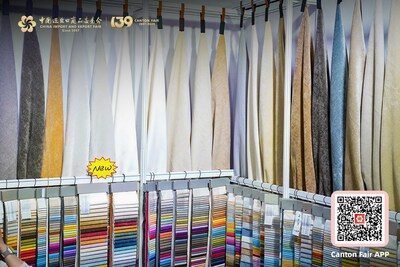
GUANGZHOU, China, May 4, 2026 /PRNewswire/ — As the global sleep economy continues to expand, rising consumer expectations around comfort, health, and sustainability are reshaping the home textile industry. Against this backdrop, the 139th Canton Fair’s Home Textile category highlights a range of bedding innovations that integrate advanced materials, smart technologies, and design-driven thinking. The latest offerings reflect how Chinese manufacturers are delivering solutions tailored to modern lifestyles and increasingly sophisticated sleep needs.
Several patented products demonstrate a strong focus on material-driven research. A moisture-absorbing duvet cover, protected by a utility model patent, enhances sleep comfort through advanced moisture-management capabilities. A modified cotton fiber material, supported by an invention patent, improves durability and functional performance, serving as a core material for high-performance textile applications.
An anti-mite and antibacterial quilt, developed with specialized technologies, effectively inhibits the growth of mites and bacteria. Professionally certified, it supports a cleaner and more hygienic sleep environment through reliable protective performance.
In the field of intelligent heating, several solutions demonstrate enhanced safety and user control. A smart zoned-temperature electric blanket allows independent temperature adjustment for different parts of the body and meets multiple international certification standards. It has gained strong market traction across Europe and other regions.
Cooling-sensation textiles further expand comfort innovation, featuring air-conditioning quilts and dual-sided blankets engineered to deliver measurable cooling effects exceeding industry benchmarks. These products have received innovation and design awards, alongside recognition for their technical standards.
Sustainability also plays a key role, with bio-based ergonomic pillows made from renewable materials. Designed for biodegradability and structured support, they integrate ergonomic zoning for the head, neck, and shoulders, while breathable variants enhance airflow and long-term comfort.
Together, these innovations underscore a broader shift in China’s home textile sector toward higher-value, technology-driven development, where performance, sustainability, and user-centric design converge. As a key platform for global trade and industry exchange, the 139th Canton Fair continues to connect international buyers with forward-looking solutions, reinforcing its role in shaping the future direction of the global sleep and home textile market.
US$8 billion ultra-premium integrated commercial property debuts new lifestyle destination located along Shanghai’s iconic Huangpu River waterfront
New “Enjoy Life” brand theme highlights premium tenant mix of designer retail and lifestyle brands
HONG KONG SAR – Media OutReach Newswire – 4 May 2026 – Hongkong Land Holdings Limited (“Hongkong Land” or the “Company”) marked a key milestone with the opening of Phase Two at Westbund Central, its flagship ultra-premium integrated commercial property in Shanghai’s Xuhui District that is one of the largest mixed-use developments in the world. This stage of the US$8 billion project’s rollout is complemented by its new “Enjoy Life” brand theme, reinforcing the district’s role as a dynamic environment for work, living and leisure.
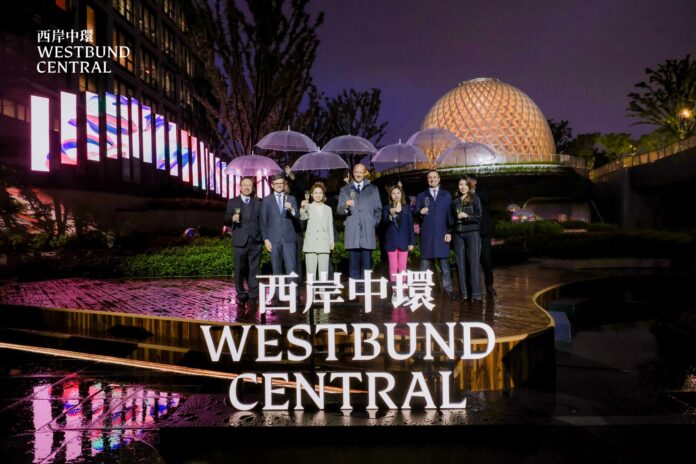
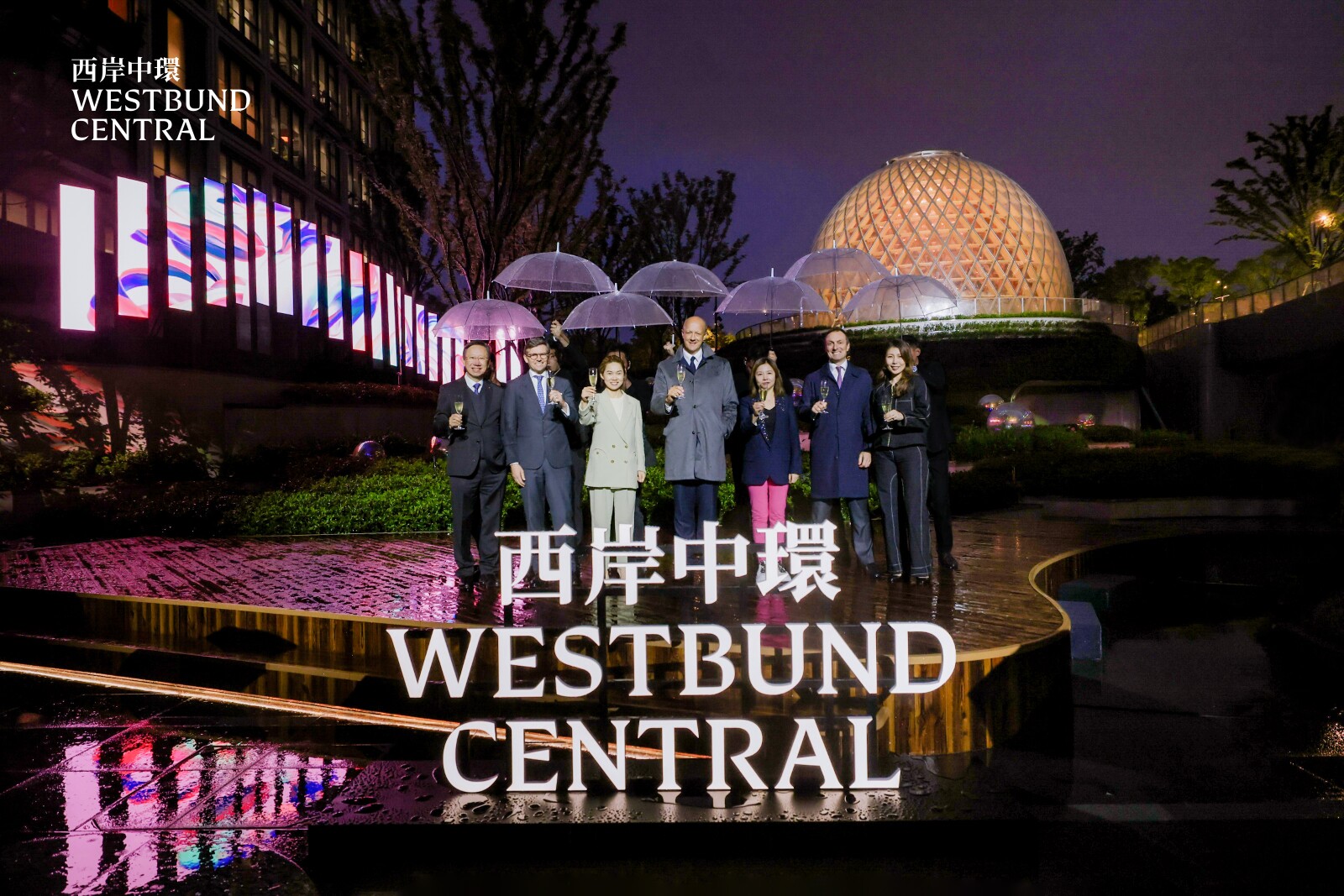
Photo 1: (From left to right) Mr. Raymond Wong, Director & Head of Property Development, Westbund Central; Mr. John Simpkins, General Counsel, Hongkong Land; Ms. Alfreda Zeng, Chief Operating Officer, Ping An Real Estate; Mr. Stuart Grant, Chief Executive, Westbund Central; Ms. Gan Jin, Vice Chairman, Shanghai West Bund Development Group; Mr. Craig Beattie, Chief Financial Officer, Hongkong Land and Ms. Vera Wu, Director & Head of Commercial Property, Westbund Central.
The Phase Two commercial launch introduces a diverse mix of global first stores, designer labels, and flagship concepts that reinforce Westbund Central’s position as a new downtown in Shanghai. New tenants include international icons such as Issey Miyake, the multi-brand boutique SND, Leica Store & Gallery, artisanal Swiss chocolatier House of Läderach, and design houses HAY and Paulmann.
With a planned total gross floor area of more than 1.7 million square metres, Westbund Central is the Company’s largest-ever single investment and brings together a diversified commercial mix that includes more than 600 international retail and lifestyle brands, 180 food and beverage operators, more than 50,000 square metres dedicated to cultural and art facilities, as well as 650,000 square metres of premium Grade A offices that will house occupiers including globally renowned companies such as adidas and lululemon.
While Phase One centred on food and beverage, cafes, and sports and leisure facilities, Phase Two enhances the district’s prestige by focusing on designer lifestyle brands. Looking ahead, Phase Three will introduce a cluster of global luxury maison flagships to further boost the district’s international appeal. Around 12,000 square metres of retail space is already open, with an additional 30,000 square metres opening within this year.
Michael T. Smith, Group Chief Executive of Hongkong Land, said: “Westbund Central is a fresh and dynamic example of our strategic focus to develop ultra-premium, integrated commercial districts in Asia’s leading gateway cities. As Hongkong Land’s largest single investment to date and our flagship China property, Westbund Central is one of the most significant projects in the company’s portfolio and designed to deliver sustained long-term value.”
Stuart Grant, Chief Executive of Westbund Central, said: “Westbund Central is being shaped as Shanghai’s new downtown and we are incredibly proud to build one of the largest mixed-use properties in the world that redefines modern urban living. We are creating a globally renowned ‘city within a city’ where the finest quality office, retail, residential and hospitality components converge in a single vibrant destination where people can truly enjoy life.”
As further phases are delivered, Westbund Central will continue to reinforce its position as one of Shanghai’s most significant integrated commercial districts and a cornerstone of the company’s long-term growth strategy in its portfolio. Hashtag: #HongkongLand
The issuer is solely responsible for the content of this announcement.
Westbund Central
Hongkong Land’s Westbund Central is the Group’s largest-ever single investment. Scheduled to complete in phases up until 2028, it is an US$8 billion development encompassing approximately more than 1.7 million sq. m. of prime mixed-use property strategically located at Shanghai’s Xuhui Waterfront. It is a flagship development of Hongkong Land’s prime commercial properties’ CENTRAL Series. The ultra-premium integrated commercial property includes 240,000 sq. m of retail space, 650,000 sq. m. of premium Grade A offices, 160,000 sq. m. of high-end waterfront luxury residences, two hotels (55,000 sq. m.) and over 50,000 sq. m. of cultural and art venues.
Hongkong Land
Hongkong Land is a major listed property development, investment and management group. It focuses on developing, owning and managing premium and ultra-premium mixed-use real estate in Asian gateway cities, featuring Grade A office, luxury retail, residential and hospitality products. With over US$50 billion in assets under management, Hongkong Land’s ultra-premium mixed-use real estate footprint spans over 1.97 million sq. m. lettable area in operation and 1.43 million sq. m. lettable area under development, with flagship mixed-use projects in Hong Kong, Singapore and Shanghai. Its properties hold industry leading green building certifications and attract the world’s foremost companies and luxury brands. Established in 1889, Hongkong Land takes a long-term view, investing significantly alongside its capital partners and concentrating its portfolio where it can create the most value for tenants, customers and investors. Hongkong Land Holdings Limited has a primary listing on the London Stock Exchange, with secondary listings in Singapore and Bermuda. Hongkong Land is a member of the Jardine Matheson Group.
Director/CEO Yasuto Watanabe reaffirms commitment to strengthening regional resilience and financial cooperation amid growing global uncertainty
SINGAPORE, May 4, 2026 /PRNewswire/ — AMRO commemorated its 10th anniversary as an international organization at the 29th ASEAN+3 Finance Ministers’ and Central Bank Governors’ Meeting held in Samarkand on May 3, reaffirming its commitment to strengthening regional resilience and financial cooperation amid an increasingly uncertain global environment.
In remarks delivered at the commemorative event, AMRO Director/CEO Yasuto Watanabe reflected on AMRO’s development since becoming an international organization in 2016.
“At that time, we had fewer than 40 staff and only a modest range of publications,” Mr. Watanabe said. “Today, AMRO has grown to more than 120 staff, with its analytical and policy work supporting a broad range of regional priorities.”
Mr. Watanabe noted that AMRO’s evolution has paralleled the transformation of ASEAN+3 over the past decade. He highlighted that the region has become more interconnected, with deeper integration and stronger regional demand, and now accounts for 28 percent of global final demand, making ASEAN+3 the world’s largest market.
At the same time, he cautioned that the region is navigating what he described as “changes unseen in a century,” marked by heightened global uncertainty and growing structural challenges.
“In this environment, AMRO’s role is clear,” he said. “We must identify risks early and provide timely, practical policy advice.”
Mr. Watanabe highlighted AMRO’s continued efforts to strengthen the regional financial safety net through its support for the Chiang Mai Initiative Multilateralisation (CMIM), expand technical assistance to strengthen policymaking capacity across the region, and advance work in areas such as cross-border digital payments and financial connectivity in alignment with the updated ASEAN+3 Finance Process Strategic Direction.
“Yet one principle remains unchanged: resilience cannot be achieved alone,” he said.
Looking ahead, Mr. Watanabe reaffirmed AMRO’s commitment to its core mandate.
“AMRO will remain steadfast in its mandate to deliver rigorous and independent surveillance, to support sound policymaking, and to strengthen regional financial cooperation,” he said.
“Together with our members, we will continue building a more resilient and integrated ASEAN+3.”
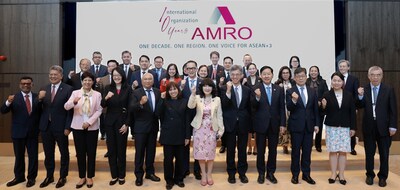
ASEAN+3 members commemorated AMRO’s 10th anniversary as an international organization at the 29th ASEAN+3 Finance Ministers’ and Central Bank Governors’ Meeting in Samarkand, Uzbekistan on May 3, 2026.
About AMRO
AMRO is an international organization established to support macroeconomic and financial stability of the ASEAN+3 region, comprising members of the Association of Southeast Asia Nations (ASEAN) and China; Hong Kong, China; Japan; and Korea. AMRO’s mandate is to conduct macroeconomic surveillance, support regional financial arrangements, and provide technical assistance to the members. AMRO also serves as a regional knowledge hub and provides support to ASEAN+3 financial cooperation.
The new campaign focuses on a holistic approach to women’s health by connecting inner wellness, outer wellbeing and mental health in everyday life
KUALA LUMPUR, Malaysia, May 4, 2026 /PRNewswire/ — CARiNG Pharmacy, together with Georgetown Pharmacy and Wellings Pharmacy under BIG CARING Group, has launched the “Empowering Women, Inspiring Wellness” campaign, a long-term initiative aimed at encouraging women to take a more proactive approach to their health and wellbeing, by being an accessible, trusted and holistic community healthcare partner for women at every stage of life.
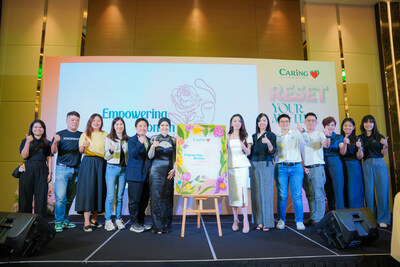
Lim Chee Mun (2nd right from center), Head of Product Marketing of BIG CARING Group launched CARiNG Pharmacy’s “Empowering Women, Inspiring Wellness” campaign alongside brand partners to encourage women to prioritise their health.
The campaign reflects a growing need to support women in managing their health more consistently, as many continue to balance multiple responsibilities and often place their own wellbeing on hold. While women’s overall awareness around health and wellness has increased over the years, CARiNG Pharmacy has observed that many women still delay taking action, only seeking support when something feels wrong.
Through this campaign, CARiNG Pharmacy aims to shift that mindset by making wellness and self-care more accessible, practical, and easier to integrate into everyday life. This includes a curated focus on key health and wellness categories such as vitamins and supplements, skincare, NMN and probiotics, supporting women across different needs and life stages.
Central to this is a more holistic approach to women’s health, recognising the connection between inner wellness, such as nutrition, hormonal balance, energy, and immunity, and outer wellbeing, including skin, hair, and overall confidence. This is further supported by a focus on mental and emotional wellbeing, acknowledging the impact of stress and daily pressures on overall health.
Commenting on the campaign, Wong Siew Lai, Chief Marketing Officer of BIG CARING Group said, “The reality is, most women are not ignoring their health because they don’t care, but simply because everyday they are moving from one responsibility to another, balancing work, deadlines, family and everything in between. What we see across our pharmacies is that many only take action when something feels wrong, when they’re already tired or worried. At the same time, there is also a positive shift with more women starting to ask questions earlier and take a more active role in their health. This campaign is intended to encourage women to take a more proactive and preventive approach to their health, and feel confident doing so in a way that is realistic and sustainable.”
The campaign brings together a strong network of trusted health and wellness brands to support women across different life stages. Participating brands include Herbs of Gold, Lang Bragman, VitaHealth, Kinohimitsu, BiO-LiFE, PureMed, Curatica, Swissmed, Life Factor, Lennox, Boony & Co as well as beauty and personal care brands such as La Roche-Posay, CeraVe, Cetaphil and Treecell, offering a comprehensive range of solutions spanning supplements, nutrition, skincare, and personal care.
The “Empowering Women, Inspiring Wellness” campaign was launched at CARiNG’s women wellness event “Reset Your Me-Time”, which brought together health experts, partners and the community to kickstart conversations around proactive and holistic approaches to women’s health. The event featured a panel discussion with Lim Chee Mun, Head of Product Marketing of BIG CARING Group, Dr Amanda Elli also known as Dr Unicorn and DoubleWoot co-founder Helen Tan, who shared perspectives across health, confidence and self-expression, as well as a runway showcase by DoubleWoot.
An elderly security guard holding an umbrella to shield himself from the heat at Patuxay Park 2 (Photo by Thongsavanh Souvannasane)
Additional reporting by Simmavanh Vayouphack
When temperatures climbed above 40°C across many parts of Laos this summer, Lao Friends Hospital for Children on the outskirts of Luang Prabang began losing electricity several times a week, with each outage lasting a few hours.
The blackouts left doctors, nurses and patients struggling through stifling heat. They also disrupted hospital operations that depend on constant power.
The outages came at the worst possible time. As temperatures soared, thick smoke from slash-and-burn farming spread across northern Laos and drifted in from neighboring Thailand and Myanmar, pushing air pollution to dangerous levels and sending more children to the hospital with breathing problems.
“We have seen many infants under one year old with bronchiolitis, an inflammation of the small airways,” said Dr. Annkham Thammaseng, who runs the pediatric ward. “Heat and PM2.5 pollution can aggravate the condition. By the time they reach the doctor, their symptoms are often severe.”
Many of those young patients need oxygen support. But oxygen concentrators rely on electricity.
“When power outages occur, medical staff have to manually switch to oxygen tanks,” she said. “This is especially challenging when it happens at night.”
Rising fuel prices and inflation have added another burden, increasing the cost of running diesel generators, the hospital’s last backup when the grid fails.
The scene reflects a paradox in Laos, nearly all households are connected to electricity, yet power remains unreliable when people need it most.
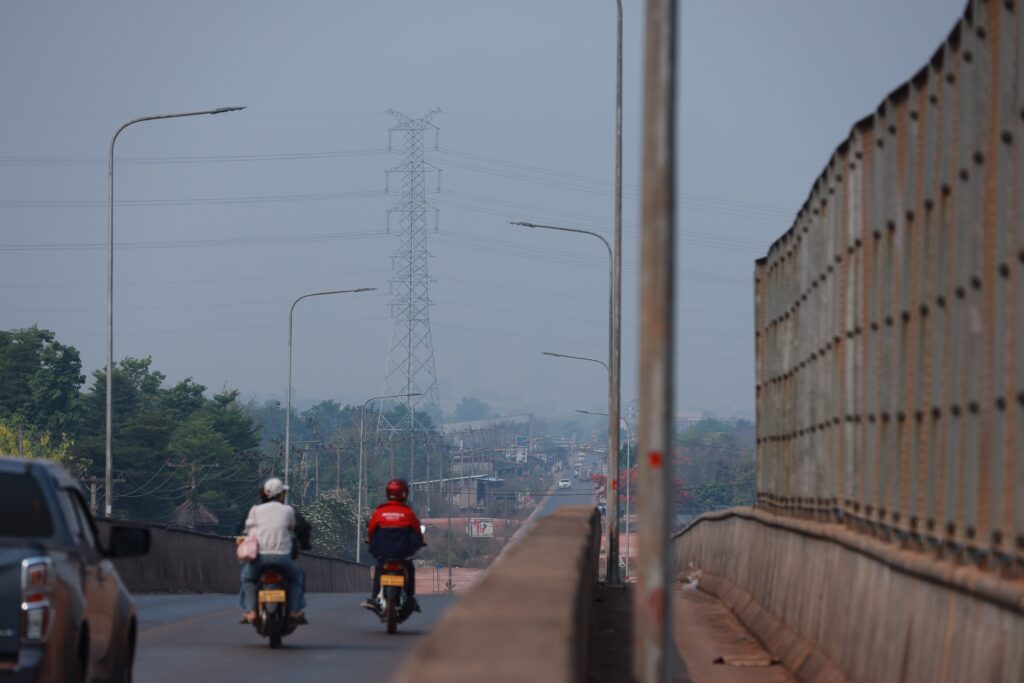
Haze covers Laos’ capital, Vientiane, during the hot month of April 2026. The seasonal smoke is part of the Mekong region’s recurring transboundary haze, which returns each dry season and is driven by multiple causes, including agricultural burning. (Photo by Thongsavanh Souvannasane)
For two decades, Laos has built one of its economic pillars around electricity exports, promoting itself as the “Battery of Southeast Asia.” Hydropower dominates the energy system, supplying most of the country’s electricity, while dams along the Mekong River and its tributaries send power to neighboring Thailand, Vietnam, Cambodia, China and Myanmar.
Yet many Lao families still face blackouts during the hottest months of the year, limiting their ability to cope with intensifying heat. Luang Prabang and other parts of the country have recorded temperatures of 43°C since 2023.
Structural Challenges
Laos had 12.4 gigawatts of hydropower capacity in 2025, accounting for 73 percent of its electricity mix and 71.5 percent of annual electricity generation, according to GlobalData’s recent Laos Power Outlook, cited by the International Water Power & Dam Construction report. The remainder comes from coal, solar and wind power.
Power outages and unstable electricity supply in Laos often become most severe during the hot season, when rising temperatures drive higher demand for cooling and place added strain on the grid.
The causes are multiple, but they point to structural problems in the energy sector that require reform, stronger grid management and greater diversification of power sources.
During the wet season, high river levels allow hydropower dams to generate surplus electricity, much of which state utility Electricité du Laos (EDL) exports to Thailand and other neighboring countries. In the dry season, however, river flows decline just as domestic demand rises with extreme heat and greater cooling needs.
This seasonal imbalance has forced Laos to import electricity, often from Thailand, at higher prices to stabilize supply. In 2023, a drought year, those imports cost an estimated USD 240 million, according to a report by the Lowy Institute.
The deeper challenge lies not only in seasonal shortages, but in the structure of the power system itself. Analysts say Laos invested heavily in new hydropower generation, much of it backed by foreign loans, without matching investment in transmission networks, distribution systems and realistic domestic demand growth.
The World Bank estimated that Laos had a domestic power surplus of 8,100 GWh in 2021, projected to rise to 16,900 GWh by 2025. This is enough to supply 10.1 million people based on 2023 consumption rates, well exceeding the current national population.
In practice, this means significant generating capacity remains underused while households and businesses still face outages caused by weak grid infrastructure.
At the same time, EDL has faced mounting financial pressure from debt linked to years of expansion. Despite these challenges, Laos continues to pursue new energy projects, including solar and wind, while seeking to maintain its role as a regional power exporter.
Late last year, EDL announced reforms aimed at improving the utility’s finances and grid performance, including installing new transformers, expanding solar generation and restructuring debt repayments. The company said it cut operating costs by 21 percent and increased revenue by 12.8 percent in 2025 compared with the previous year.
While officials focus on reforms and new infrastructure, households are finding their own ways to cope with rising heat.
Cooling for Some, Not for All
In Vientiane, Odien Mall, one of the capital’s main electronics retailers, has grown busier as heatwaves have become more frequent in recent years.
“We cannot say that air conditioning is unnecessary anymore,” said Poulida Phalasayotha, the mall’s general manager. “It is very uncomfortable to live without it.”
She said demand for air conditioners has risen by around 30 percent over the past three years as temperatures continue to break records.
Outside the capital, however, the cooling boom is uneven.
Kaysone*, an air-conditioning technician who installs units in hotels, offices and wealthier homes, does not own one himself. At the family house where he lives on the outskirts of Vientiane, electricity is too unstable.
Modern inverter air conditioners need steady power to run efficiently. Frequent outages force them to restart repeatedly, increasing electricity use and shortening the lifespan of the machines. For lower-income families, that can turn cooling into an unaffordable luxury.
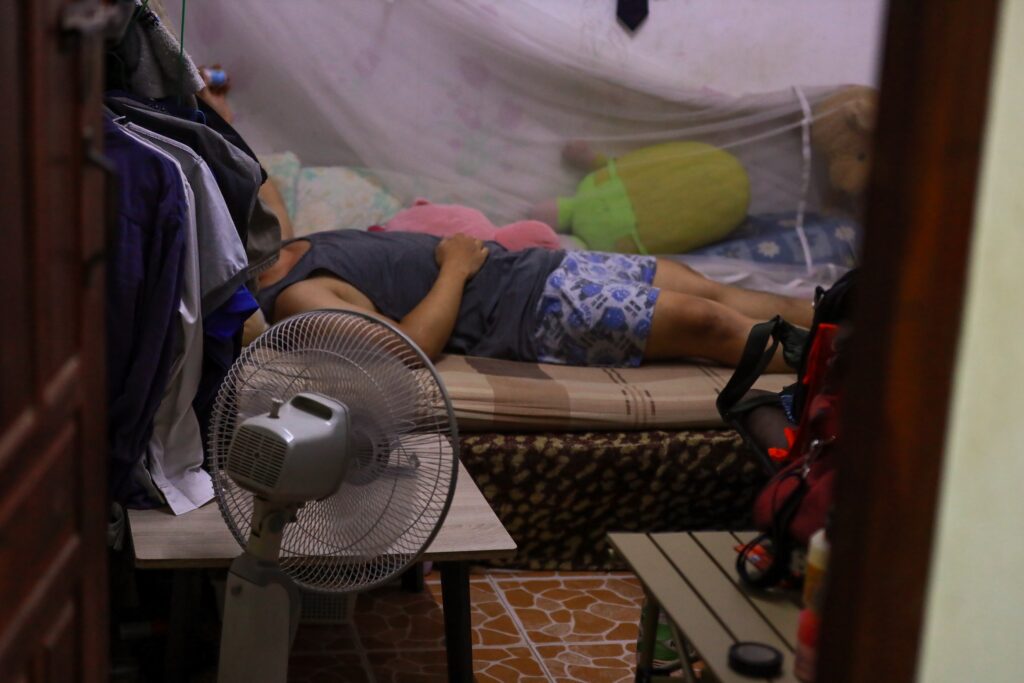
A resident of Viengchaleun village in Xaysettha district, Laos’ Vientiane Capital, rests in his small apartment with only a fan to cool himself. Access to air conditioning remains uneven across the country due to affordability and unstable power supply. (Photo by Thongsavanh Souvannasane)
Air conditioners are no longer only for comfort. During haze season, many families also use them to filter indoor air. Like Luang Prabang, Vientiane often experiences smoke pollution, and families without cooling or air-filtering devices can face even greater exposure to poor air quality.
At Mahosot Hospital, the country’s main referral center for lung and respiratory disease, patients often arrive in severe condition, particularly during periods of heavy haze. Doctors say cleaner indoor air and cooling can help vulnerable people, but many households cannot afford such protection.
Some improvements to the grid are underway. In 2026, major transmission projects moved forward to strengthen domestic connectivity while supporting electricity exports to China.
These include the 230-kV Thavieng–Mahaxay transmission line managed by a joint venture of EDL and China Southern Power Grid Company that broke ground in January. The China-Laos 500-kV cross-border power line commenced operations on 30 April.
But while residents wait for a stronger and more reliable grid, they must continue coping with a strained power system amid increasingly dangerous heat and choking smoke.
*Names are changed for the safety of interviewees.
Radisson Hotel Group’s 2025 Responsible Business Report demonstrates how the Group is turning its Net Zero transformation into real, measurable progress across its hotels and operations, and cares for people and communities.
BRUSSELS, May 4, 2026 /PRNewswire/ — In a rapidly evolving operating environment shaped by shifting guest expectations, climate risk, and increasing regulatory requirements, sustainability continues to guide the Group’s strategic direction. Radisson Hotel Group remains committed to supporting careers and communities, as well as achieving Net Zero by 2050. The Group focuses on strengthening the long-term competitiveness of its hotels and owners through sustainability and contributes to the transition toward a low-carbon hospitality sector.
RHG Responsible Business Report
The report highlights how this strategy is being embedded across the business through a structured five-year plan and operational priorities focused on energy efficiency, electrification, renewable energy, and responsible resource use.
A key milestone in 2025 was the launch of the Group’s first Verified Net Zero hotels, establishing a scalable model for reducing emissions across both existing and new properties. These projects demonstrate that meaningful decarbonization can be achieved within operational hotel environments.
The report also provides a transparent view of performance across Radisson Hotel Group’s Think People, Think Community, and Think Planet pillars, translating strategic priorities into measurable outcomes across its global portfolio. This ensures that sustainability remains embedded in decision-making, building trust with guests, owners, partners, and team members, while supporting long-term value creation.
Highlights from the report include:
Think People
People are at the heart of Radisson Hotel Group’s success, with a strong focus on investment in talent development, well-being, and inclusive career growth across its global team of more than 75,000 team members in over 100 countries. The Radisson People Foundation, launched in 2024 to support team members in times of need, assisted more than 250 team members globally. Additional progress includes:
84% team member engagement score, outperforming the industry average by 18%
31% of women in leadership positions, supporting greater gender balance
206 hotels certified by Safehotels, strengthening safety and security for guests and teams
Radisson Hotel Group continues to invest in learning and growth, with its Radisson Academy delivering more than 8.5 million learning hours and 40% of job openings filled internally, reflecting a clear commitment to career progression.
Think Community
The Group continues to create shared value in the wider value chain and communities it is part of through local initiatives and global programs. Its partnership with Just a Drop has helped provide clean water, sanitation, and hygiene access to more than 34,000 people. Further impact in 2025 includes:
€890,000 in cash and in-kind donationsglobally
79,000 volunteer hours contributed by hotel and corporate teams
EcoVadis Silver Medal, with 76% of global suppliers assessed, reinforcing responsible sourcing practices
These initiatives support community access to essential resources and bolster the Group’s commitment to ethical and inclusive business practices.
Think Planet
Radisson Hotel Group is transitioning to Net Zero by 2050, focusing on the adoption of sustainable building standards, renewable energy, and resource-efficient hotel operations. The new Verified Net Zero program provides a practical, scalable model for reducing emissions across the hotel portfolio. Key milestones include:
23% reduction in emissions intensity per square meter versus the 2019 baseline
6% reduction in total Scope 1 and 2 emissions versus 2019 (24%), while the portfolio grew by 20%
78 hotels operating on 100% renewable electricity, with aims to continue expansion of renewable energy sourcing
In 2025, the Group opened its first Verified Net Zero Hotels in Manchester City Centre and Oslo City Centre, demonstrating how existing and new hotels can operate with significantly reduced carbon emissions across scopes 1, 2, and 3, and still maintain high guest experience and operational standards.
The 2025 report marks an important step forward in transparency and accountability. It is the Group’s first Responsible Business Report aligned with the European Union’s Voluntary Sustainability Reporting Standard for SMEs (VSME) reporting framework, based on a double materiality approach that identifies and manages key environmental, social, and governance impacts, risks, and opportunities.
To explore how Radisson Hotel Group is making a meaningful impact every day, download the full report here.
ABOUT RADISSON HOTEL GROUP
Radisson Hotel Group is a rapidly expanding international hotel group, operating in EMEA and APAC with more than 1,600 hotels in operation and under development in +100 countries. The Group’s overarching brand promise is Every Moment Matters with a signature Yes I Can! service ethos.
The Radisson brand portfolio includes Radisson Collection, art’otel, Radisson Blu, Radisson, Radisson RED, Radisson Individuals, Park Plaza, Park Inn by Radisson, Country Inn & Suites by Radisson, and Prize by Radisson — brought together under one commercial umbrella brand, Radisson Hotels.
Radisson Rewards is Radisson Hotel Group’s loyalty program, which delivers an elevated experience that makes Every Moment Matter, counting more than 27 million members. As the most streamlined program in the sector, members enjoy exceptional advantages and can access their benefits from day one across a wide range of hotels in Europe, Middle East, Africa, and Asia Pacific.
Radisson Meetings provides tailored solutions for any event or meeting, including hybrid solutions, placing guests and their needs at the heart of its offer. Radisson Meetings is built around three strong service commitments: Personal, Professional, and Memorable, while delivering on the brilliant basics and being uniquely Carbon Compensated.
At Radisson Hotel Group, we care for people, communities, and planet and aim to be Net Zero by 2050 based on the approved Science Based Targets. With unique solutions such as carbon-compensated Radisson Meetings, we make sustainable hotel stays easy. To facilitate sustainable travel choices, all our hotels are becoming verified on Hotel Sustainability Basics.
The health and safety of guests and team members remain a top priority for Radisson Hotel Group. All properties across the Group’s portfolio are subject to health and safety requirements, ensuring we always care for our guests and team members.
For more information, visit our corporate website. Or connect with Radisson Hotels on:
STOCKHOLM, May 4, 2026 /PRNewswire/ — During the period April 27 – May 1, 2026, Telefonaktiebolaget LM Ericsson (publ) (“Ericsson“) (LEI code 549300W9JLPW15XIFM52) repurchased own Class B shares (ISIN: SE0000108656) as follows:
Date
Aggregated daily volume (number of shares)
Weighted average share price per day (SEK)
Total daily transaction value (SEK)
2026-04-27
1,000,000.00
105.14
105,142,500.00
2026-04-28
1,200,000.00
103.95
124,738,920.00
2026-04-29
1,000,000.00
106.31
106,311,900.00
2026-04-30
511,316
108.23
55,341,366.89
2026-05-01
–
–
–
Total
3,711,316
105.50
391,534,686.89
The share repurchases are a part of the share buyback program of up to SEK 15,000,000,000 which Ericsson announced on April 16, 2026, and which runs between April 23, 2026, and March 31, 2027, at the latest. The Board of Directors intends to propose to the 2027 Annual General Meeting that the repurchased shares, other than those used to fulfil Ericsson’s obligations under its share-related incentive programs, are cancelled.
The share buyback program is executed in accordance with the Regulation (EU) No 596/2014 of the European Parliament and of the Council on market abuse (MAR) and the Commission Delegated Regulation (EU) 2016/1052 of 8 March 2016 supplementing MAR (the Safe Harbour Regulation).
All acquisitions have been carried out on Nasdaq Stockholm by Goldman Sachs Bank Europe SE on behalf of Ericsson. A full breakdown of the transactions is attached to this announcement.
Following the repurchases above, Ericsson’s holding of treasury stock amounts to 44,113,592 Class B shares. There are in total 3,371,351,735 shares in Ericsson, 261,755,983 shares of Class A and 3,109,595,752 shares of Class B.
Ericsson’s high-performing, programmable networks provide connectivity for billions of people every day. For 150 years, we’ve been pioneers in creating technology for communication. We offer mobile communication and connectivity solutions for service providers and enterprises. Together with our customers and partners, we make the digital world of tomorrow a reality. www.ericsson.com
Building upon its expertise in Europe, Rhenus is expanding its road freight solutions in Asia Pacific
The strategic move will see dedicated expertise and resources to better support the region’s demand for fast and reliable freight transportation options
SINGAPORE – Media OutReach Newswire – 4 May 2026 – With demand for road freight services across Asia Pacific rising, leading global logistics provider Rhenus Group has announced plans to further expand its road freight operations in the region. As part of its broader regional growth strategy, the company is strengthening cross-border trucking across Southeast Asia and key corridors between Greater China and Southeast Asia. Building on this, it is continuously integrating road with air and ocean freight, while scaling local distribution, sourcing and leveraging existing free trade zone warehousing capabilities.
As part of this expansion, Rhenus is investing in local capabilities to support individual market needs including the recent establishment of its Bukit Kayu Hitam Border Office in Malaysia, with full customs capabilities to support smoother cross-border movements.
Prem Anand Anandaverl, Regional Director of Cross Border Trucking Asia, Rhenus Logistics notes, “Our goal is to provide a seamless connectivity to the global network by reinforcing a comprehensive road freight service and continue to help businesses to move their goods across Asia efficiently and compliantly. Road Freight is playing an increasingly important role in building a resilient supply chain especially in this region.”
Asia Pacific to see high demand for road freight services
The global freight trucking market size [1] is projected to be valued at US$2.74 Tn in 2025 and is set to reach US$3.70 Tn by 2032, growing at a CAGR (Compound Annual Growth Rate) of 3.9%. Asia Pacific remains a key growth driver, supported by expanding industrial output, a large consumer base, and rapidly developing logistics infrastructure enabling both domestic and cross-border trade.
Achieving Sustainable Growth through Road Freight: Consistency, Scalability and Increasing Customer Value
With more than 150 owned and partner road freight locations in Europe, Rhenus currently operates in over 15 countries through a well-established network. The expansion of road freight services in Asia Pacific will enable the company to further integrate its’ end-to-end supply chain solutions, combining road freight solutions with air and ocean services to deliver more flexible and customized logistics solutions globally.
Ongoing investments in multilingual local teams, dedicated border infrastructure, and best practice transport management systems will support seamless cross-border operations, stronger customs and regulatory expertise across markets.
Leveraging its rail connections between Greater China and Europe, alongside a robust multimodal network spanning sea, land, and rail, the company aims to provide customers with greater flexibility and scalability in response to evolving supply chain demands. The company is also working with partners to improve CO₂ tracking and explore alternative fuel options, supporting more sustainable road freight operations.
[1] Based on analysis by Persistence Market Research
Hashtag: #Rhenus
The issuer is solely responsible for the content of this announcement.
About Rhenus
The Rhenus Group is one of the leading logistics specialists with global business operations and annual turnover amounting to EUR 8.2 billion. 39,000 employees work at 1,300 business sites in more than 70 countries and develop innovative solutions along the complete supply chain. Whether providing transport, warehousing, customs clearance or value-added services, the family-owned business pools its operations in various business units where the needs of customers are the major focus at all times.