


A Chinese national who traveled through Laos has been confirmed to have been carrying the new Coronavirus.
Laos Launches QR Code Payment Standard
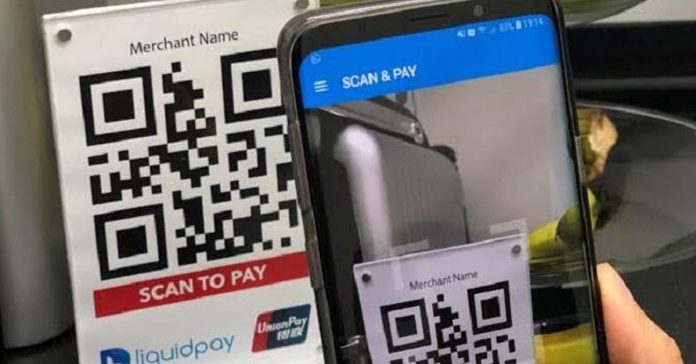
The Bank of Lao PDR has launched a Lao QR Code standard for electronic payments in a move to improve payment services and integration between banks.
The QR code standard will comply with the finance and currency sector’s strategic plan and minimize the use of cash, driving the onset of a digital economy and boosting socio-economic development, the BOL Governor Sonexay Sithphaxay said at the launching ceremony, as quoted by Xinhua News Agency.
He added that the introduction of a Lao QR code standard will encourage other banks in Laos to speed up QR code development.
In addition, participants of the ceremony also discussed local payment systems and how to minimize the possible negative impacts of using digital payment systems, including security issues.
The use of QR codes for payments, services and transactions, has been widely adopted in Laos, but is not well integrated with other domestic and international systems, Xinhua noted.
In August last year, Lao Development Bank entered into an agreement with KIWI Company to roll out the QR code payment service Alipay.
Separately, Banque pour le Commerce Exterieur Lao Public joined hands in July last year with Chinese payment service provider UnionPay International to roll out new QR code payment services in the country.
The move enabled UnionPay app users to make payments by scanning QR codes at local stores across Laos.
Fires, Corpses, Debt Collectors, Unscrupulous Fuel Stations – Lao Social Media
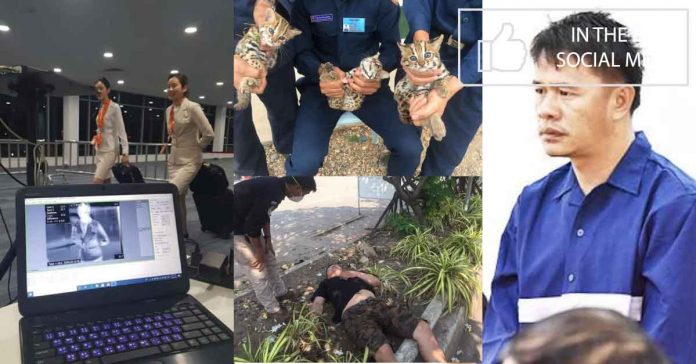
The Laotian Times brings our readers a round-up of some of the most shared topics this past week, based on reach and engagement on Facebook.
A Good Lao Day
Paintings of women dressed in traditional attire by Sompraseuth Chounramany instantly went viral on social media last week.
Officials on Coronavirus High Alert In Wattay International Airport
Souliya Vilaythong, a medical officer, shows off equipment based at Wattay International Airport that is purported to detect signs of the epidemic coronavirus that has been plaguing the region and the world. The ad-hoc medical camp is part of the government’s efforts to step up its fight to contain the spread of the epidemic.
Convicted Felon Receives Death Sentence
Kinoi, the notorious druglord and debt collector, has been sentenced to death. The 36-year-old has also been convicted of other crimes, including money laundering and arms dealing. Social media users have long supported and applauded the death penalty for drug dealers and violent criminals. However, many remain skeptical regarding the actual implementation of capital punishment, citing the lack of news that the executions have actually taken place.
Toilet Fees Near Khonepapheng Falls
Despite the official government notice from provincial authorities waiving entry fees, there are still reports of people having to pay fees to enter the Khonepapheng Falls. Even worse, there are reports that a 10,000 kip fee is being charged to use the toilet facilities.
“Cats” Found At Wattay International Airport
Customs officials discovered three cats on the lawn in front of the airport. Social media users were most concerned with the way that the cats were being handled (notice the officers’ grips).
Fire In Don Chan/Chao Anouvong Bush Area
A huge inferno erupted in the bush area of Don Chan/Chao Anouvong Park (Vientiane Capital).
Dead Body Found In Aftermath of Chao Anouvong Fire
Police were alerted by nearby villagers of a corpse that had been burnt beyond recognition during the aftermath of the fire that burned that area. Personal identification documents found near the body appeared to indicate that it was a foreign national. It is unclear whether the fire was the cause of death.
Unconscious Man Found On Street Has Nothing to Do With Coronavirus
The Lao Red Cross Rescue Team 1625 announced that fears that a Chinese man had dropped dead due to having contracted the coronavirus in front of Lao-Viet Bank (i-Mobile intersection, Vientiane Capital) have been misplaced. On the 31st of January, the rescue team woke the man (a Mongolian national) up and he appeared normal and healthy.
Unscrupulous Fuel Station
A Facebook user Kou Xapoungern exposed a bad practice prevalent among unscrupulous fuel stations. Having heard it happen to many others, he had to see it for himself to believe it. He took a 1.5 mL Tigerhead water bottle and filled it up at an unmarked fuel station in Bolikhamxay. The pump read 2.05 liters, which cost him a total of 20,000 kip (at 9,740 kip per liter), but the bottle was not filled to its entirety. While some social media users claimed that it might have been a technical issue, the majority advanced the narrative that it was unethical station owners who intentionally programmed their pumps to be this way.
Laos Suspends Visas at Checkpoints Bordering China
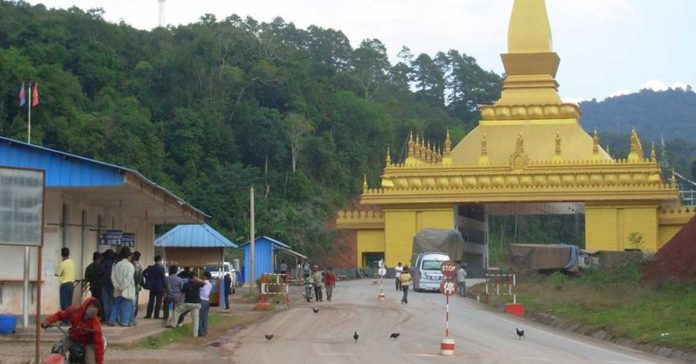
The Consular Department of the Ministry of Foreign Affairs has issued a notice to all checkpoints bordering China to temporarily suspend the issuance of tourist visas to those entering the Lao PDR from China.
Public and Private Partnership Towards Southern Laos Tourism
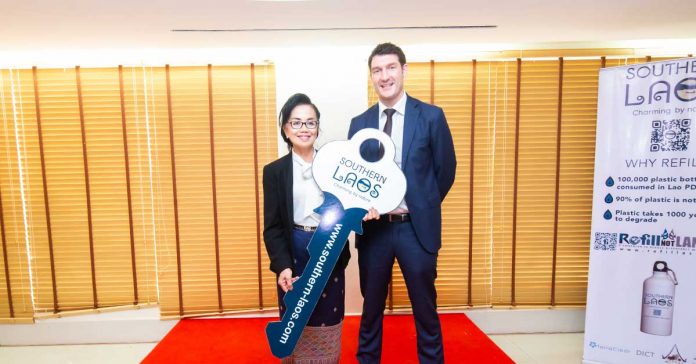
The Marketing Taskforce (MTF) has taken ownership of the official digital media assets of Southern Laos — designed to promote tourism in the destination — with a handover event at Champasak Grand Hotel on January 28, 2020.
The event was attended by local and national government representatives from the Ministry of Information, Culture and Tourism (MICT) and Ministry of Foreign Affairs (MoFA), and members of the business community including Champasak’s Hotel and Restaurant Association (CHRA), the Champasak Travel Agent Association (CPATA), and Lao Airlines.
The highlight of the event is the transfer of the Southern Laos website www.southern-laos.com to the Southern Laos Marketing Taskforce (MTF), a public-private working group which coordinates tourism marketing efforts in Southern Laos. The MTF is chaired by the Champasak Provincial Department of Information, Culture, and Tourism (DICT) and Co-chaired by business associations CHRA and CPATA, and further comprises of a website management team of six private sector representatives and two DICT officers. The innovative public-private structure is governed by a mandate from the DICT. This lists the responsibilities of the MTF representatives to manage the Southern Laos’ official media assets.
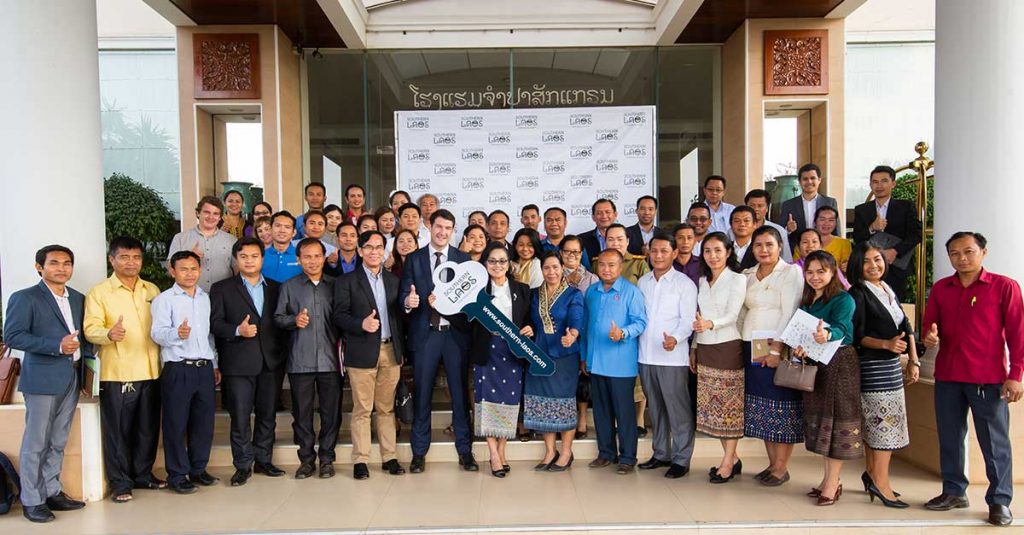
The website management team has, since 2018, invested significant inputs to the content of Southern Laos’ online media channels. These include the website and the destination’s Facebook and Instagram social media accounts — which doubled their number of page-likes and followers last year. The website has been highly successful, raking in over 72,000 monthly page views and 20,000 visits on average in 2019 — an impressive number for a sub-national tourism destination and a notable increase from 57,000 monthly page views and 15,000 visits on average in 2018. Most of the website visitors come from the targeted, higher-spending western countries, such as USA and Europe, along with, Thailand, China, even Japan; due to the website’s automatic translation into 13 languages. It also boasts a Professional Area for local tourism businesses that provides free for download high resolution photographs of Southern Laos and other marketing materials necessary for promoting their business.
Since its establishment, the MTF, together with a Marketing Advisor from the Swiss Foundation for Technical Cooperation (Swisscontact), has been implementing promotional activities and campaigns to raise awareness about the region to the target visitor audiences, as well as coordinating with the local tourism Destination Management Network.
The website management team’s forward plan is to increase or maintain the current statistics of the media assets by continuously promoting domestically and internationally with relevant and up-to-date information to encourage more visitors to come to Southern Laos.
The MTF hopes that by collaborating to represent Southern Laos through high quality targeted marketing efforts rather than promoting their individual provinces, they can continue to be competitive as a tourism destination and make the most of growing travel and tourism market in Southeast Asia.
Laos Steps Up Efforts to Prevent Coronavirus Outbreak
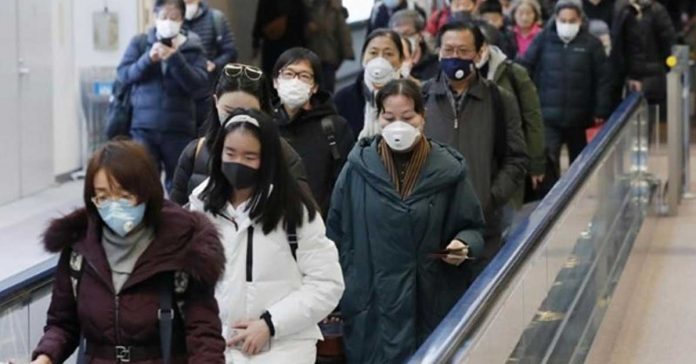
Laos has announced that it will set up a task force committee to tackle the spread of the new coronavirus that originated in Wuhan, China.
The task force will assess the impact of an outbreak of such a virus in Laos, although no case has yet been confirmed in the country.
In particular, the task force will conduct inspections in at-risk locations such as ports of entry, transport stations, hospitals, and markets, while arranging specialized healthcare service points across the country.
It will also collect travel data and follow up the health status of travelers, especially tourists, students, business people and workers traveling from China.
In addition, the task force plans to study and draw up a plan to address the potential impact on Chinese workers engaging in projects in Laos.
It will also regulate the price of protective equipment, such as face masks, gloves, and protective clothing while arranging a budget for necessary expenditure.
Lastly, the task force will publicize ways to prevent the virus, check for symptoms and obtain treatment, via media outlets.
The country’s flagship airline, Lao Airlines, announced that it will temporarily cancel all flights from Vientiane to three destinations in China, namely Changzhou, Shanghai, and Hangzhou, as part of precautions in the wake of the virus outbreak.
As of January 29, no cases were confirmed in Laos, and there is also no report of a confirmed case among Lao nationals living in foreign countries including China.
Vientiane To Establish Permanent Organic Farmer’s Market
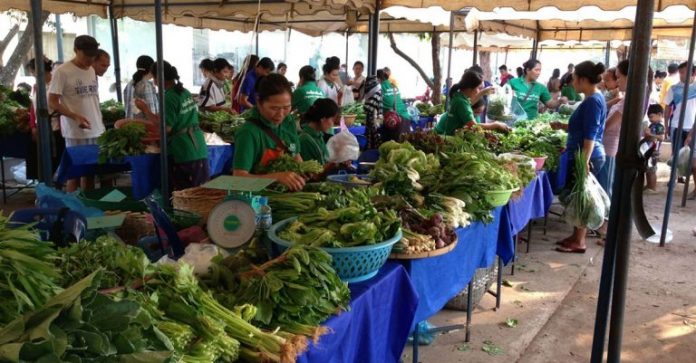
Vientiane Capital authorities are to establish a permanent location for an organic farmer’s market in Nonghai Village, Hadxaifong District.
The Vientiane organic agriculture group first began selling produce at temporary stalls twice a week at the That Luang esplanade in 2006. The market was then moved to Fa Ngum Park where goods were sold twice per week, with stalls eventually moving to Vientiane Center and ITECC exhibition center.
While the consumer response to organic markets has been extremely positive, the changing location has caused confusion among shoppers.
According to the Vientiane Times, Minister of Agriculture and Forestry Dr Lien Thikeo told the media that a permanent market would reduce the problems faced by farmers who currently have to showcase their products at a number of different locations. This has made sales more difficult, as consumers were not always sure of where the organic market may be set up.
The new market will provide farmers with more space and a permanent location for consumers to visit.
Better management of organic farming will ensure higher standards, and a higher quality product, while the new market will allow the government to more closely monitor prices.
Vientiane Times reports that the capital city is home to 17 organic farmers’ groups that work over 175 hectares of land. Over 1,000 tonnes of organic produce is grown and sold per year.
Could Lao Baseball take Laos to the World Stage?
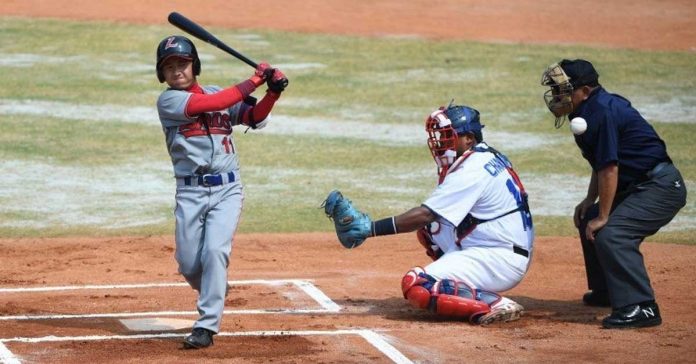
Laos saw its first baseball team formed in 2013 when just ten people began with practice sessions at a car park in the capital city of Vientiane. Now, the sport is rapidly developing, with Laos already recognized as the rising star of Asian baseball.
Despite its short history, Lao baseball has made remarkable progress. More than 100 Lao people now enjoy the previously non-existent sport.
The country dispatched a national team to the 2018 Asian Games, the first time that the country participated in an international match and has successfully hosted its first domestic league.
All sounds positive and promising, but what does this actually mean to Laos? What benefit could the growth of the baseball industry bring to the country?
Global baseball leagues
Baseball leagues are one of the most profitable sports leagues in the world.
In 2018, the Major Baseball League (MLB) in the United States ranked as the second most profitable sports leagues in the world at USD 10.7 billion.
Japan’s Nippon Professional Baseball league ranked 12th with USD 1.2 billion of revenue, while South Korea’s Korea Professional Baseball came in the 25th place with USD 563 million.
In particular, MLB’s growth is remarkable. The league surpassed the USD 10 billion revenue mark in 2017 after seeing steep growth.
MLB’s industry revenues that account for expenses and other investments came in at USD 9.7 billion for 2019, up from USD 9.4 billion in the previous year. MLB player payrolls and benefits for the year came in at USD 4.7 billion.
Baseball is one of the official sports for the Olympics, and one of the most popular global competitions; World Baseball Classic (WBC) now welcomes participants from 15 countries across the world.

An example from the Dominican Republic
As figures above show, the U.S. is still the center of the baseball universe, but interestingly, about a quarter of MLB players are from outside the U.S., with 102 players hailing from the Dominican Republic.
This means that more than 10 percent of players in the world’s most profitable baseball league come from the small Caribbean country with a population of only 10.7 million.
It’s estimated that Dominicans earn more than USD 400 million annually in the MLB, while players in minor leagues earn another USD 200 million. A lot of this money makes its way back to the home country.
Baseball has also contributed significantly to the Dominican Republic’s domestic economy, with the baseball industry estimated to generate about USD 1 billion each year.
This figure includes revenues from training and recruitment facilities in the country that draw in thousands of aspiring baseball players. As players from the Dominican Republic perform well in big leagues, including MLB, the country has also become a training ground for neighboring nations, including Venezuela, Panama, Mexico and Cuba.
Considering that the country has a GDP of USD 76 billion, it’s clear that baseball has a big impact.
In addition, baseball players contribute to society in many ways. Most of these MLB players take the lead in community service by participating in baseball leagues in the Dominican Republic and spending their post-retirement lives there.
Some become celebrities and entrepreneurs and in some cases even government officials, and serve as social role models.
How can Laos benefit?
Laos could follow in the Dominican Republic’s footsteps, especially operating as an incubator for competitive players, and eventually a training ground for neighboring nations in Southeast Asia.
Baseball is already active in many Southeast Asian nations, including the Philippines, Thailand, and Indonesia.
While some are more advanced than others, Southeast Asia is not ready to compete on the global stage, as the region has yet to send a team to compete in the WBC.
Although Laos is a late starter, Lao baseball has great potential, and with support from countries like South Korea, it could eventually overtake its peers and become the leading nation in Southeast Asian baseball.
Lee Man-soo, a former South Korean baseball player and the coach for professional baseball team SK Wyverns, said during his latest press interview that the Lao national baseball team shows a skill level on par with the third grade of elite middle school players in South Korea, adding that the team is growing and improving at a fast pace.
This is high praise indeed, as middle and high school baseball players in South Korea are often a popular target for MLB scouts. The South Korean national team that consists of 18-year-olds and below took second place in the latest U-18 Baseball World Cup held in 2017.
With a government-backed baseball federation newly formed to support the industry in Laos, and the country’s first baseball stadium about to open, it may not be long before scouts from MLB or other advanced baseball leagues visit Laos in search of outstanding players.
