Home Blog Page 6267

Laos to Tighten Management of Exchange Rates

Laos to Tighten Management of Exchange Rates

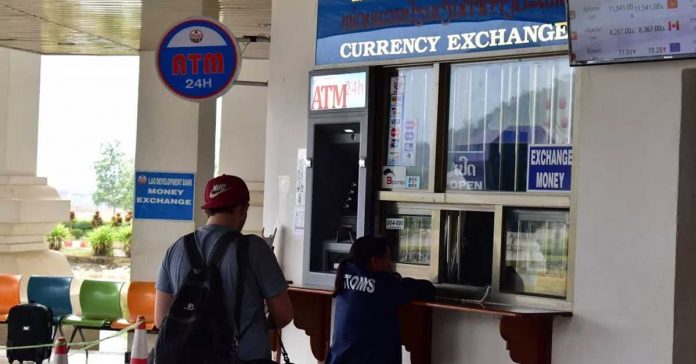
The Lao government has stressed the need to tighten the management of currency exchange rates amid the widening gap between the official and market rates.

In a media release issued at the end of the cabinet’s monthly meeting on August 19, the government said the increasing gap between the official and market exchange rate is having a negative impact on the price of consumer goods in Laos.

Most consumer goods in Laos are imported, so when the value of the kip drops against the major foreign currencies such as US dollars or Thai baht, product prices rise accordingly.

The Consumer Price Index for imported goods increased 0.17 percent compared to the previous month and 1.49 percent compared to the same period last year, according to a report from the Lao National Statistics Bureau.

The government’s move came after a warning from a senior government official last month that unregistered currency exchange services that violate currency regulations must be punished.

At that time, Vice President of Lao National Chamber of Commerce and Industry Ms Valy Vetsaphong said a number of foreign currency exchange services in Laos were openly flouting regulations, exacerbating the fluctuation of exchange rates.

She added that there was a greater possibility that the large amounts of money exchanged outside the system could cause fluctuation in the currency and exchange rate.

Ms Valy also cited the widespread use of foreign currencies as a possible reason causing the weak value of kip.

The value of the kip against the US dollar fell by 0.9 percent and by 3.5 percent to the baht over four months from January.

Lao Securities Exchange Calls Out Firm for Failing Discloser

Lao Securities Exchange Calls Out Firm for Failing Discloser

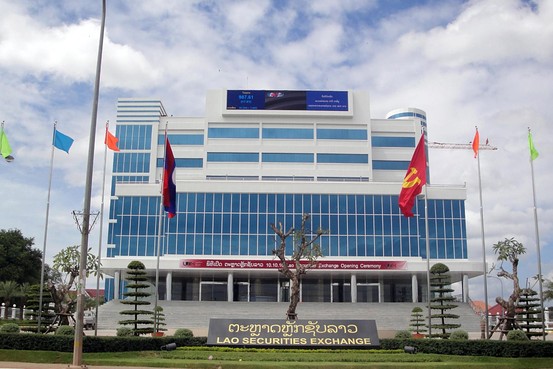
The Lao Securities Exchange (LSX) has designated Phousy Construction and Development Public Company (PCD) as an “Unfaithful Disclosure” Corporation, after PDC failed to disclose its semi-annual and annual 2018 reports via LSX disclosure portal.

The “Unfaithful Disclosure” warning signal will be displayed on the symbol of PCD on the LSX trading system and website from August 27 until PCD is able to resolve the matter, the LSX announced on August 26.

The LSX’s move is seen as its latest effort to ensure that all investors are on an even playing field and have better access to the information.

The Lao Securities Exchange was established in 2010 with technical and financial support from South Korea. The Korea Exchange has a 49 percent stake in the LSX.

Thailand provided technical advice to help build the exchange, and it became operational in January 2011.

Since then, the exchange has struggled to stay profitable, although the situation appears to have gradually improved each year.

The LSX saw a net loss of USD 3.5 million in 2013, USD 2.9 million in 2014 and USD 2.5 million in 2015. The bourse was able to reduce net loss significantly in 2016 when the figure stood at USD 1.6 million.

As of end-2018, it managed to further cut losses to USD 1 million. However, its operating revenue severely dropped from USD 1.3 million in 2017 to USD 140,530 in 2018.

Speaking to the press in December last year, KRX Chairman and CEO Jung Ji-won said its investment in foreign exchanges, including the LSX, is aimed at helping various financial institutions to make a foray into different markets, with a long-term view.

At that time, Jung added that the KRX was considering improving the business situation and efficiency of these foreign exchanges it invested, without giving further details.

There are currently a total of 10 listed companies on the LSX: Banque Pour Le Commerce Exterieur Lao Public (BCEL), EDL Generation Public Company (EDL-Gen), Lao World Public Company (LWPC), Petroleum Trading Lao Public Company (PTL), Souvanny Home Center Public Company (SVN), Phousy Construction and Development Public Company (PCD), Lao Cement Public Company (LCC), Mahathuen Leasing Public Company (MHTL), Lao Agrotech Public Company (LAT) and Vientiane Center Lao Public Company (VCL).

As of August 29, the LSX Composite Index stood at 762.74 points, a 4.68 percent up from a previous day.

Apart from Lao individuals and institutional investors, foreigners are also allowed to trade stocks at the LSX once they have a domestic bank account and are registered as a “foreign investor” at the bourse. Home Trading System (HTS) is also available.

Can Laos Benefit from Farming Duckweed?

Can Laos Benefit from Farming Duckweed?

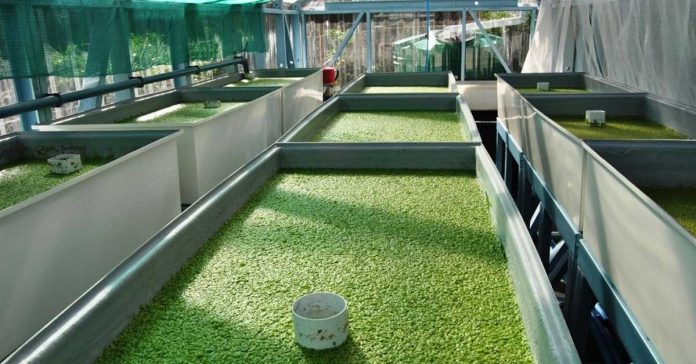
Duckweed, locally known as “Phuck Nae” is not new to many people in Laos where it is consumed as a food supplement. What people might not be aware of is, however, is that it has global commercial value.

Duckweed is a species of plant with small round leaves floating on the surface of the water. For many, it is a plant that is commonly present in garden ponds.

It is a high protein food with a protein percentage ranging from 25 and 45 percent, which is considered better than that from Soybean meal, which contains only 36 percent protein content.

Thanks to its high protein content, it is widely used in the animal feed industry, in aquaculture, and has become an emerging food product for humans. After all, as per its name, it is good enough for ducks.

Alternative protein market

The global alternative protein market is expected to grow at a compound annual growth rate of 9.5 percent from 2019 to reach USD 17.9 billion by 2025, while in terms of volume, the market is also expected to see 5.2 percent of the annual growth from 2019, according to Dublin-based research firm Research and Markets.

The firm classified duckweed as an “emerging alternative protein” along with insect, algae, and lab meat.

It said, in particular, the plant-based protein products market commanded the largest share of the global market.

North America commanded the largest share of the global alternative protein market, followed by Europe and Asia-Pacific, the firm said.

The research firm cited concerns over animal products and protein, an increasing vegan population, growing preference to meat alternatives, and technological advancements in the food industry as main factors to contribute to the growth of the market, and the trend is expected to continue.

What does this mean to Laos?

Farming duckweed is one of the best ways to promote integrated farming systems in developing countries where the cost of food production in a country is highly dependant on fuel prices. Laos is not an exception, according to the Food and Agriculture Organization (FAO).

Integrated farming is a whole-farm management system which aims to deliver more sustainable agriculture. It combines the best of modern tools and technologies with traditional practices according to a given site and situation.

The FAO said that integrated farming systems in the long term have major advantages that can improve both the overall production of land without losing sustainability in developing countries.

This is because the two important agricultural cost factors that will be affected most are, mechanization, where fuel is directly consumed in crop farming, and fertilizer availability and application since the cost of nutrient requirements is highly related to gasoline prices, and integrated farming helps farmers reduce dependence on fuel, according to FAO.

In addition, one of the major constraints to the establishment of integrated farming systems is the level of management that must be exerted by small-scale farmers, and this can often be beyond their presently developed skills, FAO said.

However, an exception was observed in Vietnam and Bangladesh where the collection of all animal and human wastes into ponds and the subsequent growth of duckweed had proven to be relatively free of problems and is very skilfully managed by a number of cooperating farmers.

Apart from maintaining the fertility of the land, integrated and sustainable systems are ideal to potentially increase the income and standard of living of the farmer, the FAO noted.


Five Asiatic Black Bear Cubs Rescued in Laos

Five Asiatic Black Bear Cubs Rescued in Laos

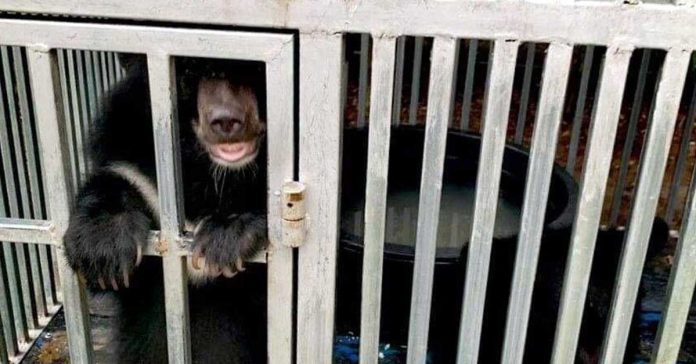
Five Asiatic black bear cubs have been rescued in northern Laos and are currently undergoing rehabilitation, Australian non-governmental organization Free the Bears has said.

The bear cubs were found in a bamboo paper factory, a cassava plantation, and a private household in Luang Namtha province after the NGO and the Lao police jointly raided the locations last week, AFP reported.

All owners claimed that they purchased the Asiatic black bear cubs from villagers, but it is illegal to keep the bears, trade their parts or extract bile in Laos.

The cubs were “weak and malnourished” when they were found but are now “doing well,” NGO spokesman Rod Mabin told AFP.

They would spend a month at a sanctuary near Luang Prabang before being introduced to a nursery enclosure, he added.

Free the Bears, established in 1995, is currently operating a total of two bear sanctuaries and other facilities in Laos in collaboration with the Lao Department of Forestry.

The NGO rescued over 23 bears in Laos between 2017 and 2018.

It also provides training, employment opportunities and alternative livelihoods to local villagers, in a move to enhance awareness of the danger of wildlife trafficking.

The Lao government  announced in May last year that it would tighten regulations against hunting and trade of protected wildlife in the country.

At that time, Laos issued Order No. 5 that was designed to direct strict action be taken on wildlife law enforcement and stop the establishment of wildlife farms and instructs that those found trading prohibited wildlife be investigated and prosecuted.

According to a study published in Global Ecology and Conservation last year, traders in Laos openly stocked bear products, pangolin scales, elephant skin and tiger bone wine for sale, in violation of national legislation.

“The trade in wildlife for medicinal use was the most dominant, particularly involving bears,” the study noted, adding that bear-based products made up 43 percent of all products recorded and such products were sourced from China.

The study cited Boten, a border town near China, as one of the hubs largely to cater to Chinese markets, with many outlets being run by Chinese nationals, prices quoted in yuan and clocks set to Beijing time.

Laos Opens First Digital Forensics Lab to Tackle Cybercrime

Laos Opens First Digital Forensics Lab to Tackle Cybercrime

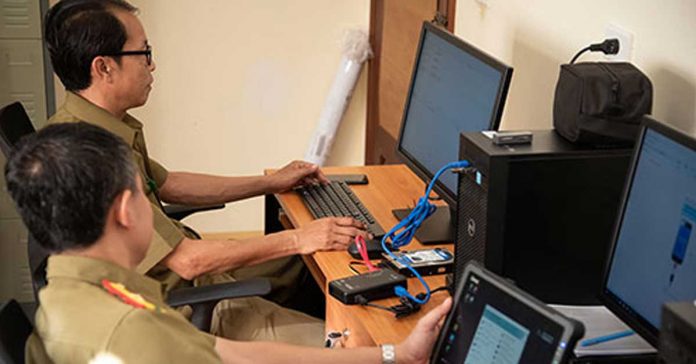
Laos has opened the country’s first digital forensics lab, which will allow authorities to analyze more than 2,000 digital media-related criminal cases a year.

The laboratory is designed to analyze digital evidence collected or resulting from, criminal investigations including transnational organized crime, cybercrime, and wildlife crime.

The facility, which is equipped with cutting-edge technology for the identification, extraction, and analysis of digital evidence, will enable investigators to ensure the overall integrity and reliability of digital evidence while maintaining a proper chain-of-custody.

It will allow investigators to identify, transport, recover, analyze and preserve digital evidence resulting from criminal cases and present this evidence in court.

Deputy Director-General of the General Police Department, Police Colonel Dr. Phengsavanh Thiphavongxay cited the recent increase in cybercrime as one of the reasons for setting up the facility.

“There is a need for continuous efforts and improvements in all areas of capacity building and in the utilisation of advanced technology in combatting, investigating and prosecuting criminal activities,” said Dr. Phengsavanh.

The Lao government and the United Nations Office on Drugs and Crime (UNODC) have closely worked together over the past few years to set up the digital forensics lab facility.

Funded by the Government of Norway, UNODC has spent the past two years training and mentoring specialist local police personnel for new technologies and devices.

In addition, UNODC has equipped the police force with standard operating procedures for handling digital evidence and established forensically-sound processes up until its presentation in court.

This marks the latest effort of the Lao government to eradicate cybercrime in the country.

In May, the Lao Telecommunication Regulatory Authority announced that it was developing an application to allow mobile phone users to register sim cards online, in a move to not only speed up sim card registration process but also reduce the possibility of internet crimes.

Currently, those who want to register their sim card should present in person at the retail outlets of their service provider.

“Many observers have noted that unregistered sim cards make Laos vulnerable to internet crimes and attack,” Vientiane Times noted in May. “The government is aware that unregistered sim cards can pose challenges for the authorities, not least of which is maintaining national security and having recourse for any mobile phone related crimes committed.”

Laos, Cambodia to Withdraw Border Troops Tomorrow

Laos, Cambodia to Withdraw Border Troops Tomorrow

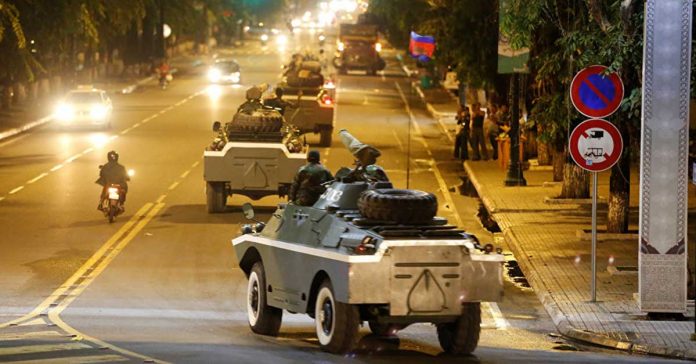
Laos and Cambodia have agreed to withdraw their troops completely from the countries’ shared northern border as tensions ease.

The two sides agreed to withdraw troops from both sides of the area – located at E0523410 N1579776 – where border demarcation has not yet been implemented, according to a report in the Lao ​People’s Army Newspaper.

The withdrawal is expected to begin at 8 am and be completed at 11 am on August 29 as both sides would oversee the process.

The decision was made at a meeting between the Lao and Cambodian militaries on August 27 at the Donkhamao traditional border in Khong district, Champasack province.

The tension between the two countries began to simmer on August 11 when Lao and Cambodian troops confronted each other in an area along the border.

However, the situation was quickly stabilized after leaders from the two nations spokes to each other on August 24.

Meanwhile, on August 27, at the Lao Ministry of Foreign Affairs, Mr. Anousine Khattiyalath, Mr. Anousine Khattiyalath, Deputy Head of the National Boundary Committee said in a statement that the area in question was stable, and two countries were not engaged in any kind of standoff.

Mr. Anousine raised his concern that various unofficial online news media, either domestic or foreign, were “creating a misunderstanding” between the two countries and “damaging” the longstanding good relationship.

“In regard to the resolution of problems at the border between Laos and Cambodia, both parties are holding to a peaceful approach, by means of negotiation, to ensure that the border area between both countries can be a peaceful, friendly, and cooperative border,” he added.

At the meeting between the Lao and Cambodian militaries yesterday, three points were decided upon:

1. Both parties agreed to remove their troops from the region in question (E0523410 N1579776) and return to their original positions.

2. The two sides agreed to form a joint committee to observe and supervise the withdrawal of troops from the two sides, assigning five persons each.

3. The two sides agreed to schedule the implementation of their withdrawal from this point from 8:00 – 11:00 pm on August 29, 2019.

India to Include Laos in Planned Global Electricity Grid

India to Include Laos in Planned Global Electricity Grid

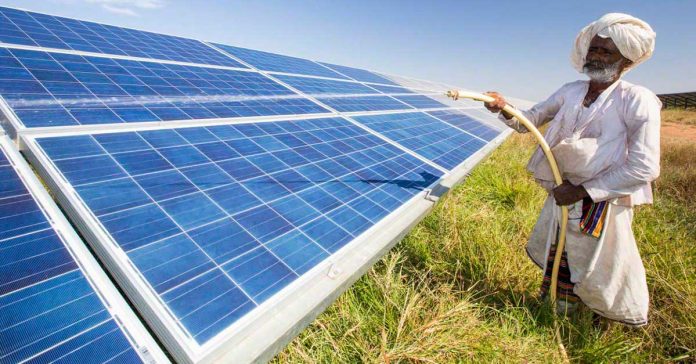
India is poised to include Laos in plans for a global electricity grid, in response to an evolving energy security architecture.

The country will present proposals for the grid at the second general assembly of the International Solar Alliance (ISA) to be held in New Delhi from October 30 to November 2, Livemint reported.

Apart from Laos, India aims to initially link countries including Myanmar, Thailand, Cambodia and Vietnam.

India is now the world’s third-largest electricity producer and is already supplying power to Bangladesh and Nepal while actively calling for countries in South Asia to consolidate efforts to improve energy interconnectivity through the South Asian Association for Regional Cooperation.

“We already have electricity grid connectivity with Nepal, Bhutan and Bangladesh,” said India’s Power and New and Renewable Energy Minister Raj Kumar Singh, as quoted by Livemint.

“We are looking at furthering these grid connections to the east… After Myanmar, we will go to Thailand. Maybe then you can cross into Cambodia, Laos, and go to Vietnam. So, the possibility is there,” he added.

India’s move is designed to create a new energy security architecture to counter China’s Belt and Road initiative that is aimed at facilitating political and economic cooperation with other nations by connecting them across Asia, Africa, and Europe.

“What we are talking about is a grid connection running east to west or west to east as you have it. If you have that, then you don’t need any storage because the Sun is always shining somewhere,” Singh said.

As a part of efforts to realize its goal, China claims it has greatly improved the economic and social conditions within Laos over the past few years.

The construction of the China-Laos railway is often cited as the first step for China to boost its presence in the landlocked country while improving connectivity with it.

Laos Gives Official Statement on Cambodian Border Tension

Laos Gives Official Statement on Cambodian Border Tension

On the morning of August 27, at the Lao Ministry of Foreign Affairs, Mr. Anousine Khattiyalath, Deputy Head of the National Boundary Committee, gave the following statement to the press on the situation at the Lao-Cambodian border.

“Misinformation has been spread among social media last week concerning the situation at the Lao-Cambodian border, on the Lao side of the upper reaches of the Xe Lam Phao river in Mounlapamok District, Champasak Province, which borders Chhaeb District, Preah Vihear Province, Cambodia. 

Mr Anousith Khattignarath, Deputy Head of the National Boundary Committee

“I, Anousine Khattiyalath, Deputy Head of the National Boundary Committee, would like to officially state that the area in question is stable, and our two countries are not engaged in any kind of standoff. There is no tension, and there are no major problems. There have been no armed clashes and there have been no other incidents.

I attest that the situation at the Lao-Cambodian border is not as stated by various unofficial online news media, either domestic or foreign, and which has served to create misunderstanding between our two countries, and which has damaged the good relationship between our two nations, who have always been good neighbours who respect each other’s independence, sovereignty, and territorial integrity.

In regard to the resolution of problems at the border between Laos and Cambodia, both parties are holding to a peaceful approach, by means of negotiation, to ensure that the border area between both countries can be a peaceful, friendly, and cooperative border.”