Home Blog Page 6472

Laos Keeps a Close Eye on Corruption

Laos Corruption


Laos has found international recognition recently for a number of positive advances, however  some reports have painted a picture of rife corruption among the country’s leadership.

In 2015 it was reported by Transparency International in the Corruption Perception Index, that out of 176 countries listed, Laos was ranked number 139.

During a recent event to commemorate the 35th anniversary of the establishment of the Party and the Government Inspection Authority, a document detailing the lessons received from previous inspections primarily focused on the Party and government recognizing the deficiency and faults of their inspections which ultimately lead to inadmissible conduct and unnecessary loss of resources.

In an attempt to rectify these issues, the Government Inspection Authority has appointed Party committee members of all ranks to conduct and participate in all upcoming inspections in hopes of establishing themselves as strong mentors to the rest of the administration. They have emphasized the importance of inspectors being responsible, honest, enthusiastic, intelligent and fair. Inspectors must also be well informed with regard to Party directives, policies, laws and other state regulations.  

Laos has seen prominent measures taken by the government such as cracking down on inflated electricity bills, illegal logging and fuel tariff exemptions.

From 2011 to 2016, 734 targeted inspections were carried out. This uncovered deficits exceeding 4 trillion LAK, $70 million USD, 36 million THB and 500,000 yuan due to corruption, while timber exceeding 3 million cubic meters was recently discovered to have been harvested or sold.

The inspection has uncovered a large number of civil servants that have violated the law, and though many have been exposed, countless still go unanswered for their crime.

Though the Party and government’s inspection authority has been making headway, moving Laos up 16 places to number 123 on the Corruption Perception Index for 2016, they still have a long way to go.

The authority has received over 3,600 complaints just in the past few years, and has pursued various claims. 37 individuals are now in a legal battle in relation to a malfeasance, where officials unveiled discount disbursements which caused the state to lose 700 billion LAK worth of resources.  

What We Know About Tham Kannalikham, Melania Trump’s Handpicked Interior Designer

Lao American Interior Designer Tham Kannalikham

Social media has been going wildly insane about Melania Trump’s handpicked interior designer, Tham Kannalikham, who is expected to make the Trump’s feel more homey at their new private quarters in the White House with her reputed design prowess.

Members of the Lao community within Laos have digitally, unanimously expressed their pride at having one of their Lao brethren recognized for such a distinguished job. The appointment was perceived as the best interaction with America and a continued shining of the international spotlight on the country since Obama’s recent visit. The majority of Lao people was overjoyed by their “sister’s” accomplishments, despite their differences in citizenship. To the Lao people in Laos, Kannalikham’s fame is an international validation of the success of the all Lao peoples of all political stripes, a feat for which the whole “nation” of Laos can take credit and be proud.

“She is beautiful, she is talented. No matter where her passport comes from, her name says it all. She is Lao or Laotian, or whatever is preferred. This proves that Lao people, can be successful anywhere and are not inferior to any other nation,” notes one comment on Facebook.

Reactions were a bit more ambivalent within the Lao diaspora. While a tantamount level of pride was similarly shared within much of the Lao-American community regarding Kannalikham’s appointment, a considerable number have protested her decision to accept it. For many anti-Trump Lao-Americans, the acceptance is viewed as an offense to the honor of the Lao economic migrants and refugees who have come to consider America their home. To them, Trump has a personal vendetta against immigrants, evident in his recent controversial travel ban.

“I don’t mean to disrespect her success, but it is highly unfortunate that her Lao-related recognition is in light of the Trump Presidency. Not proud to have Laos associated with the Trumps in any way,” comments a woman on social media.

Whether one believes Kannalikham’s decision was right or wrong, it is undeniable that working with FLOTUS and the White House will launch her career to new heights and perhaps get Laos the attention of POTUS himself.

Who is New York-based Tham Kannalikham?

According to Women’s Wear Daily, Melania Trump has selected Kannalikham, 40, to put her personal design prowess on the First Family’s private quarters, located on the 2nd floor of La Maison Blanche.

We do not know much about this mystery lady, but here’s what we do know (info courtesy of realtor.com):

1. Her previous work remains a closely-guarded secret

While the Lao-American interior designer will be revamping one of the most eminent houses in the world, it is difficult to ascertain any information on her past works. This secrecy could have very well been deliberate so as to protect the identity of the person at the center of this internationally high-profile undertaking.

Her official Instagram account is set to private:

Screen Shot 2017-02-09 at 18.23.26

Her website is unreachable:

Screen Shot 2017-02-09 at 18.32.10

2. She is an immigrant

Favored by Melania, probably not by the Donald, a variety of sources say she is Lao-American, born outside of America (most likely Laos or Thailand?) growing up in Stockton, CA, before moving across the country to attend the Fashion Institute of Technology. Her current firm, Kannalikham Designs, is located in New York City. It is widely speculated that Melania Trump met Kannalikham in the Big Apple, but how exactly remains a mystery.

3. She previously worked at Ralph Lauren Home

Kannalikham was a designer at Ralph Lauren Home, the home decor arm of the global fashion brand. Could it just be a coincidence that Trump wore a powder-blue Ralph Lauren dress to her husband’s inauguration last month?

4. She loves classical architecture

Many have speculated that the First Family will redecorate the White House in the same ostentatious style as the Trump Tower. If Kannalikham has anything to say about it (which she does because she was hired!), the White House will maintain a more traditional style that pays homage to its history.

Trump’s senior adviser told Women’s Wear Daily that she has “a deep appreciation for the historical aspects of the White House.” Kannalikham is a frequent attendee of events held by the Institute of Classical Architecture & Art, a nonprofit dedicated to the appreciation of the classical style in architecture and interior design.

5: She likes Mid-Century modern decor

While all signs points to Kannalikham choosing traditional furniture selected from the White House archive, there’s also a strong possibility we’ll see touches of Mid-Century Modern furnishings in the mix. Kannalikham’s affinity for this iconic style was made evident in one of her former projects, a Greenwich, CT, home. Architectural Digest reported that she selected period pieces from William Haines — the 1920s film star-turned-tastemaker and interior designer.


The Laotian Times has reached out to Kannalikham for further enquiry. A family representative has kindly asked the press to allow her and her family members a fair amount of privacy so that she can focus on the important task at hand. The family will reach out when they are ready to make a formal statement.


The Xaysana Case: What We Know So Far

Xaysana Drug Case

The Xaysana drug ring is currently one of the hottest topics in Southeast Asia. Regional social media is aflame with updates on Xaysana Keophimpa, the alleged drug lord from Laos recently arrested in Bangkok. The Xaysana sensation has spread like wildfire across Laos and Thailand, and while arrests continue and connections to Thai celebrities come to light, most of the official Lao media remains curiously silent.

Who is Who? Here Are The Big Names of the Case:

xaysana-keophimpa

Xaysana Keophimpa hails from Khammouane province. Much of his background is unknown, however he quickly rose to a high position in the drug network to which he has been linked. After the arrest of Xaysana, his personal Facebook page remained accessible to the public, with his ostentatious lifestyle and links to celebrities on display for all to view.


sisouk-daoheauang

Sisouk Daoheuang is a wealthy individual who owns a horse farm that breeds and sells pedigree horses reaching up to 4 million baht. He holds a concession on the Lao government lottery, and is a shareholder in a supercar business spanning both Vientiane and Nong Khai.

Sisouk is a known associate of Xaysana, and some reports have even suggested that he may even hold a higher position in the drug network.

While his current whereabouts are unknown, a recent Lao Post article claims that Sisouk made a new status update on his personal Facebook account, declaring his innocence. However, he has not surrendered himself to the authorities, leading to further questions about his guilt.


lt-gen-sommai

Lt. Gen. Sommai Kongwisaisook is commander of Thailand’s Narcotics Suppression Bureau. He has led a five-year hunt for Xaysana Keophimpa, and has arrested over 50 other individuals in the Xaysana drug network over the past five years.


How did the drug ring operate unnoticed?

Thai media suggests that Xaysana’s drug ring could not have operated undetected by Lao authorities. The Thai media have hinted that Xaysana must have enjoyed the protection of someone in the Lao political system. This, it is said, is how he has escaped justice without any police interference.

Meanwhile, despite numerous Thai press conferences and news reports, the official Lao media has remained quiet. Surprisingly, however, one state-owned news service did comment on the lack of official responses in Laos. An article was published by the English arm of Khaosan Pathet Lao (KPL), with the headline “No Reaction to Xaysana’s Arrest.” This article stated that the relevant authorities have not yet publicly acknowledged their part in the arrest, despite Thai police reporting that it was critical intelligence from the Lao side that ultimately led to the Xaysana bust.

A Vientiane Times article stated that Lao and Thai authorities are working closely to bring all the offenders to justice. It goes on to say that officials from the Lao embassy to Thailand had gone to the airport to witness the first arrest.

The New Government’s Commitment

The new government and party led by President Bounyang Vorachit and Prime Minister Thongloun Sisoulith have made it a defining policy of their administration to stamp out corruption and other social ills, including the drug and timber trades. The Xaysana arrest happened at a time when the government has redoubled its efforts to halt these international drug routes.

Timeline of Events: 

[cool-timeline layout=”default” animation=”FadeInOut” date-format=”F j” icons=”YES” show-posts=”10″]

Lao Telecom to Increase Investment for Improved Services and Market Growth

Lao Telecom

Lao Telecommunications Company (LTC) expects to see expansion of its network and telecommunications systems this year in an effort to improve services and gain new subscribers.

The state-owned telco currently boasts over 1.5 million mobile phone subscribers, and 40,899 fixed line users. The 2G Winphone network includes 532,316 users, while 3G and 4G data subscribers make up some 895,972 people.

This year, the company hopes to increase its market share and expand its customer base to 257,218 subscribers, according to a report heard at the annual meeting of the company yesterday.

While Lao Telecom’s earnings last year were valued at 1.81 trillion kip, up by nine percent the previous year with 365 billion kip in profit, the company hopes to reach net profit of 422 billion kip this year.

In order to achieve its targets, the company has said it will improve its telecommunications systems and make use of newer technologies. The company will also undergo a human resources overhaul to improve customer service.

Last year, Lao Telecom spent US$ 44.4 million on upgrades to its systems, with US$ 39.9 million of this going toward the mobile phone network alone.

Lao Telecom has been selected to develop telecommunications systems and ICT installations for the Laos-China Railway Project, which the company hopes will boost its image in the international arena.

At the conclusion of the LTC annual meeting, Minister of Post and Telecommunications Thansamay Kommasith praised the company, stating that its excellent progress has further contributed to national socio-economic development.

Lao Postal Service Regulations Tightened, New List of Prohibited Items

Lao Postal Service

Regulations governing the Lao Postal Service have been revised, with stricter controls now in place for the delivery of a variety of materials.

A new decision on postal service prohibitions was approved last month through a joint effort between the Ministry of Post and Telecommunications and four other ministries, as well as the Bank of the Lao PDR.

The decision replaces the previous legislation issued June 10, 2009.

Under the new Lao Postal Service regulations, items prohibited for delivery by post include any items that are against Lao or international laws, and include chemicals, explosive materials, and weapons. The regulations also prohibit the postage of media that promotes anti-government activities or immoral activities, or beliefs that are not in accordance with Lao culture.

The decision also determines measures for prevention of delivery of illegal goods by mail.

Alongside the Ministry of Post and Telecommunications, the decision was drafted in a collaborative effort between the Ministry of Health, Ministry of Industry and Commerce, Ministry of Culture and Tourism, and the Ministry of Natural Resources and Environment.

A further list of prohibited items includes certain medicines, antiques, ivory products, game meat, wild plants, and any equipment that can be used for the production of counterfeit currency.

The list also includes batteries, live animals, crops, sharp or dangerous implements, and valuable items including gems or precious metals.

Melania Trump Chooses Laotian-American Interior Designer to Redecorate the White House

Laotian-American Chosen to Decorate White House

First Lady Melania Trump might still be spending her weekdays in New York but she is getting the Trump White House in ship-shape with the help of Laotian-American interior designer Tham Kannalikham.

“Mrs. Trump has a deep appreciation for the historical aspects of the White House and with Tham’s traditional design and expertise, they are focusing on a seamless integration of elegance and comfort into where the President, the First Lady, and [their son] Barron will be spending their family time and calling their home,” said Stephanie Winston Wolkoff, senior adviser to the First Lady.

The Laotian-American designer got her start at Ralph Lauren Home in New York and now heads up her own firm as principal of Kannalikham Designs. While pundits and comedians have mused about the likelihood of an Oval Office adorned with gold and marble accents along the lines of the Louis XIV-inspired style that Angelo Donghia created for the President’s penthouse in Trump Tower, their White House is likely to be more toned down given Kannalikham’s ethos.

With what was described as extensive experience working with private clients from around the world, her interest in traditional design, coupled with her past work, has led to a decade of extensive study in the fields of early American architecture and decorative arts. “I am honored by the opportunity to be working with the First Lady to make the White House feel like home,” Kannalikham said in a statement released Thursday.

While it was not immediately known how she and the First Lady met, the fact that Kannalikham keeps a relatively low profile may have been a selling point with FLOTUS. The designer’s web site has a private login for clients, and it does not feature any photographs or information beyond an e-mail contact. Her Instagram account is private. Her Ralph Lauren tie may have been another upside with the First Lady, who millions of inauguration watchers know wore a powder blue ensemble by Lauren for her husband’s swearing-in ceremony last month. With the exception of Lauren, Trump gravitated toward lesser-known — and lowkey – designers for her inaugural weekend wardrobe.

The President wasted no time in hanging a portrait of Andrew Jackson in the Oval Office and the First Lady may also keep a fast pace with her White House redecorating. The Lincoln Bedroom, the President’s Dining Room, the Truman Balcony, the Yellow Oval Room and the Treaty Room are all housed on the White House’s second floor, and are among the spaces that First Families generally rework to their taste.

During the Obama years, it was the Los Angeles-based designer Michael Smith who reimagined the private quarters at 1600 Pennsylvania Avenue with an array of 20th and 21st century art. The turnaround time was a mere two months, according to an Architectural Digest article. Smith’s first priority was reportedly squaring away the bedrooms for Malia and Sasha. In terms of First Family decorating, that M.O. may remain intact given First Lady Melania Trump’s devotion to her 10-year-old son.

Maybe the start of this relationship with FLOTUS will help Laos be more noticed by POTUS?

Source: Los Angeles Times

Here’s what we know about Tham Kannalikham so far.

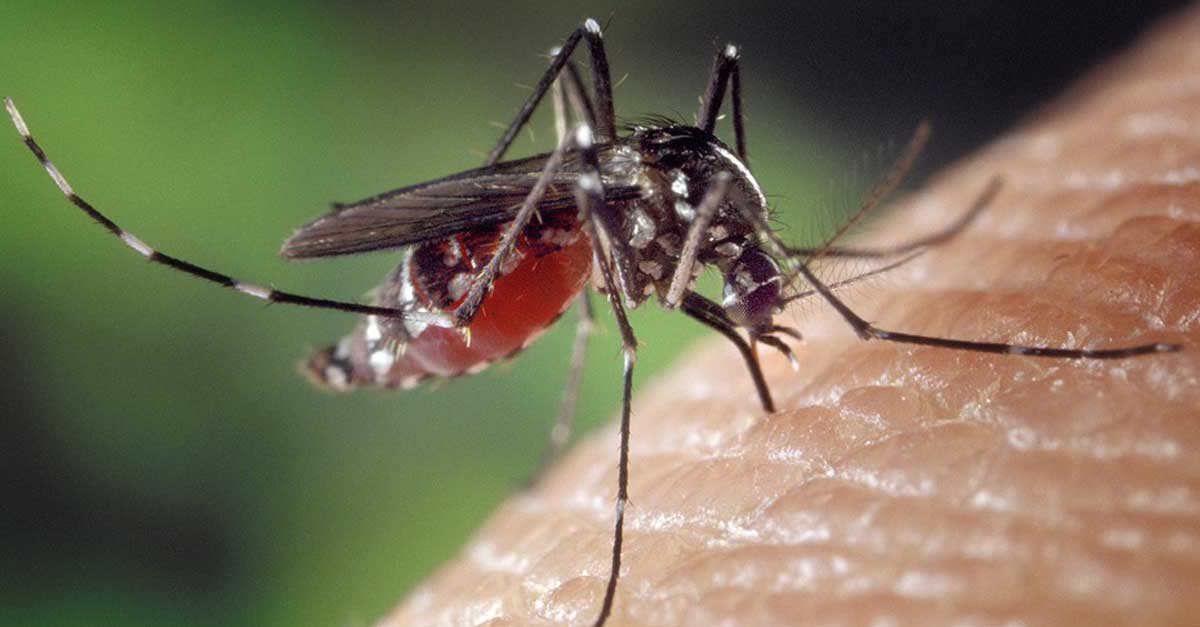
Dengue Fever Already at Epidemic Level in Laos in 2017

Dengue Fever Laos

Minister of Health, Associate Professor Dr Bounkong Syhavong chaired the annual National Dengue Review Meeting organized by the Department of Communicable Disease Control (DCDC) and Center for Malaria Parasitology and Entomology (CMPE), Ministry of Health. Dengue activities in MOH are also supported by the National Centre for Laboratory and Epidemiology (NCLE), Department of Health Care (DHC) and Vientiane Capital Health Department and provincial health departments.

Speaking at the event, Dr Bounkong said “DCDC, NCLE and CMPE have been working with central and provincial health departments to closely follow up on trends of dengue cases to determine dengue transmission in high risk areas and to monitor changes in mosquito density. We need to closely monitor circulating dengue serotypes and continue to encourage community participation to destroy mosquito breeding sites.”

Dr Juliet Fleischl, WHO Representative to Lao PDR highlighted that “Dengue is already at alert and epidemic level with most of the cases reported from Vientiane Capital, Attapeu Province and Champasack Province. We seriously need to consider the possibility of a major dengue outbreak this year and take concrete proactive measures to prevent that from happening by destroying mosquito breeding sites and keep a close monitoring on vector surveillance so that we can act before it is too late.”

Dengue outbreaks are cyclical, occurring every 3 to 5 years. The last time Laos had a big outbreak was back in 2013.  The situation now is similar to what we faced back in 2013 before the outbreak. At the end of 2012, there was a local dengue outbreak in Luang Prabang Province and a change in the Dengue serotypes reported. At the beginning of 2013, we saw the highest number of dengue cases reported since 2010. Climate variation was also a concern at that time.

Last year, we know that there was a local dengue outbreak in Sokhuma District of Champassack Province, and reported cases from Bolikhamxay and Khammuane provinces. Dengue serotypes reported has changed from DEN 2 and 3 to DEN 1 and 4. The numbers of dengue cases which we are seeing in 2017, which is 215 reported dengue cases with no death, is second only to 2013. 

From Vientiane Capital down to the Champasack and Attapeu provinces, many provinces are reporting dengue cases at alert level. We are also seeing changes in climate conditions, all evidences to suggest we may have another dengue outbreak if we do nothing today.

Changes in agricultural practices due to variation in temperature and rainfall can affect the transmission of vector-borne diseases. Better reporting systems are needed to monitor and predict trends, as well as to support surveillance and capture the true burden of the disease.

Since the start of the year, DCDC and CMPE have travelled to the southern provinces to monitor the daily dengue surveillance review. The provincial and district offices in Attapeu and Champassack have been working with communities in regular clean-up campaign to maintain a clean environment that prevent mosquito breeding.

Dengue prevention and control solely depends on effective vector control measures. Behavioral change is a crucial element in vector-borne diseases in understanding dengue prevention and on how to protect themselves from mosquitoes, ticks, bugs, flies and other vectors.

Community need to dispose of solid wastes properly and removing artificial man-made habitats that will promote mosquito breeding. Always cover, empty and clean domestic water storage containers on a weekly basis. Use personal household protection such as window screens, long-sleeved clothes, insecticides treated materials, coils and insecticides.

The Ministry of Health and partners agreed that the annual National Dengue Review Meeting comes at an opportune time to discuss dengue outbreak control activities for this year based on lesson learnt and intervention taken in the past.  While the Ministry of Health continue to monitor the situation, it is important for us to stay vigilant and protect ourselves against mosquito bites.

Source: WHO Press Release

BCEL Opens E-Banking Network to Krungsri Customers

BCEL and Krungsri Share e-banking

Banque pour le Commerce Exterieur Lao (BCEL) has signed an agreement with Krungsri Leasing Services granting use of its electronic banking services to customers of Krungrsri.

Customers of Krungsri will be able to take advantage of popular BCEL e-banking applications such as BCEL One and I-bank after the two banking systems are linked.

The deal will also allow Krungsri customers access to BCEL’s nationwide ATM network.

BCEL is the leading commercial bank in Laos, offering a wide range of services to both business and retail customers. The bank’s network includes nineteen branches and 80 service units, which are all connected to its modern electronic systems.

The convenience of utility bill payments via the BCEL One mobile phone app is the biggest selling point of the BCEL e-banking system, and Krungsri customers will now be able to pay their bills via the same system.

BCEL One Screenshot
A screenshot of the BCEL One mobile phone app

The agreement between the two banks was signed by Deputy Managing Director of BCEL, Mr Phansana Khounnouvong, and Managing Director of Krungsri Leasing Services, Mr Chatchawan Permsukjarusap.

“In 2017, BCEL plans to open new branches to provide even more convenience to customers in accessing financial services,” said Mr Phansana Khounnnouvong, Deputy Managing Director of BCEL.

Meanwhile, Krungsri Leasing Service began providing financing products 2014.

The company is a joint venture between the Bank of Ayudhya Public Company (Krungsri) and Unity Capital Company Limited (UCC), a Lao finance company.

Krungsri Leasing offers financing options for cars and other vehicles, as well as gold, electronics and home appliances.

Krungsri signed a similar agreement with Joint Development Bank last year.