Home Blog Page 6478

IFC to Develop Credit System in Laos

Credit System in Laos

The International Finance Corporation, the financial arm of the World Bank Group, is in talks with the Bank of the Lao PDR (BOL) to reform the credit system in Laos.

The reform is part of broader efforts to improve the country’s financial infrastructure and facilitate lending for smaller businesses, which will enhance economic growth.  

A financial symposium on credit reporting was held in Vientiane last Thursday, and was attended by government officials and representatives from local financial institutions. The symposium was funded by Canada, Japan, Switzerland, and the British Embassy.

The event saw collaboration between the National Bank of Cambodia, the Monetary Authority of Singapore, the Bank of Thailand, and credit-bureau companies from around the region with the aim of raising awareness of credit reporting.

The Bank of the Lao PDR heard from various agencies on their credit-reporting models, and will assist in the bank’s efforts to upgrade the national credit-information bureau, a central platform that collates credit information of borrowers.

“A credit-information bureau can perform the crucial function of gathering and distributing reliable credit information, improving creditor protection, enhancing competition in the credit market, and ultimately increasing access to credit,” said Vattana Dalaloy, Deputy Governor, Bank of the Lao PDR.

“Our partnership with IFC will help us bring Lao PDR’s credit-reporting infrastructure in line with international standards, enabling businesses obtain the financing they need to grow and contribute to the economy.”  

Access to finance is a massive obstacle for doing business in the Lao PDR. Only 12 percent of micro- small, and medium-sized enterprises have access to formal credit, and almost half of those that require credit remain unserved.

Through use of credit-reporting systems, companies will be able to build positive credit histories, and a well-functioning system will assist banks and microfinance institutions to better manage credit risk. This would have the potential to significantly reduce lending costs and collateral requirements.

Credit-reporting systems are a critical part of any country’s financial infrastructure and are key to the creation of a healthy financial sector, according to Phongsavanh Phomkong, head of the IFC office in Vientiane Capital.

The symposium is part of an ongoing IFC project funded by Canada, Japan, and Switzerland to support the development of a standardized credit-reporting system for Laos.

Source: The Financial

That Luang Lake Walking Street: Vientiane’s Newest Night Market

That Luang Lake Walking Street

Vientiane Capital has an insatiable appetite for night markets. For a city that not so long ago fell asleep at sundown, evening activity has steadily increased over the last few years. Residents now enjoy a variety of locations to spend their evenings. And now there’s one more option: the That Luang Lake Walking Street.

It Started At Wat Chan

vientiane night market

When the Vientiane Night Market at Wat Chan opened at Chao Anouvong Park, it completely transformed the riverside experience for Vientiane residents and visitors. At around 4:30pm each day, the famed red umbrellas unfold in droves, and the busy market is born again. Traffic on the road through Chao Anouvong Park is closed at 5:30pm and the hustle and bustle begins; a mix of joggers, shoppers, and casual strollers. The market offers clothes, souvenirs, electronics, toys, and a range of smaller food stalls. The atmosphere is always buzzing, and draws residents back time and again.

Then New World…

Walking Street Vientiane

Meanwhile, another little market appeared on the scene last year, deep in the warrens of the Vientiane New World complex. A hip little night bazaar called simply Walking Street offers a variety of sensational food options, cocktails, clothes and other items as well.


Read the Laotian Times review of Walking Street here.


And Now That Luang Lake…

That Luang Lake Walking Street Market

And just last night a third night market crept up on the city to cater to residents in the eastern districts.  The That Luang Lake Walking Street (in Lao ຕະຫຼາດແລງບຶງທາດຫຼວງ) quietly set up shop below the golden pillars of the That Luang Marsh Specific Economic Zone, where a Chinese developer has famously erected a cluster of towering condos.

The That Luang Lake Walking Street opened to crowds of people and caused not a little traffic chaos.  This new night market features over 200 stalls, including clothes, electronics, handicrafts, and food areas.
The That Luang Lake Walking Street night market opens from 4:00pm and runs until around 10:00pm.

Laos Claims Gold, Bronze at Asian Vovinam Championships

Laos Vovinam Team

Laos has secured one gold and five bronze medals from dancing events at the 4th SEAVF Southeast Asian Vovinam Championship 2017 being hosted by Siem Reap, Cambodia, from January 11-14.

Phailath Thammavongsa won gold in the men’s dancing event with a weapon, while the bronze medals awarded included efforts in the men’s team dancing event without a weapon, women’s team dancing event without a weapon, along with men’s and women’s single dancing events with a weapon.

Phailath previously won a gold medal in the men’s dancing event at the 27th SEA Games in Myanmar in 2013.

Lao vovinam fighters will hopefully add to their medal tally in dancing and fighting events at the tournament which continues today.

The Lao Vovinam Federation was confident of winning medals at the championship and sent nine men and three women to compete in the 10 different dancing events while four men and two women went to contest various fighting events.

Their optimism was based on the team’s performance at the 3rd Vovinam Championship in Myanmar in 2014 where Laos was placed third with five gold medals.

Following the championship in Cambodia, the Lao team will begin concentrating on the World Vovinam Championship later this year.

At the Beach Games in Vietnam from September 24 to October 3 last year, the Lao team won one gold and six bronze medals.

The Lao vovinam team’s other successes include winning a gold medal, four silver and six bronze medals at the Indoor Games in Vietnam in 2009; winning two gold and five bronze medals at the SEA Games in Indonesia in 2011; and picking up two gold, three silver and four bronze medals at the SEA Games in Myanmar in 2013.

The team also won four gold medals at the Asean Vovinam Championship in Myanmar in 2013.

Source: Vientiane Times

Singapore President Tony Tan Makes Official Visit to Laos

Singapore-and-Laos

President Bounnhang Vorachit received the President of the Republic of Singapore, Dr Tony Tan Keng Yam, at the Presidential Palace yesterday for diplomatic discussions.

Laos and Singapore are to strengthen relations and continue cooperation in a number of areas.

Dr Tan and his delegation arrived in Vientiane on Wednesday, and are making an official state visit which will conclude this Saturday.

During talks, President Bounnhang and Dr Tan exchanged ideas on a number of topics, and discussed areas for future cooperation.

The two presidents praised the cooperation made between the two countries after establishing diplomatic relations in 1974 .

Dr Tan gave high praise to Laos for the country’s success in hosting the ASEAN Summits last year.

In turn, President Bounnhang said Singapore’s contributions within the ASEAN framework had been extremely valuable, and thanked Singapore for its generous support to Laos.

Cooperation between the two countries has been greatly enhanced over the last year, beginning with Singapore’s Silk Air signing an agreement with Lao Airlines to commence flights between Vientiane and Luang Prabang.

Singapore has also offered support in the field of human resource development by assisting Laos through scholarships for Lao students to undertake various courses in Singapore.

Singapore regularly sends volunteers to aid Laos in the fields of English language, IT, and environmental studies. Doctors and nurses from Singapore have also offered support to hospitals around Laos.

Singapore ranks 11th out of 52 countries that have invested in Laos. Companies from Singapore have invested in various sectors including handicrafts, services, consulting and commerce. The total value of Singaporean investment in Laos is estimated at around US $175 million, according to the Ministry of Planning and Investment.

Dr Tan will meet with Prime Minister Thongloun Sisoulith during his visit, and will then call on the University of health Sciences, where the Singapore International Foundation and Singapore Health Services are assisting Laos in physiotherapy education.

In honor of Dr Tan’s visit, a Lao translation of a book by Mr Lee Kuan Yew, the first prime minister of Singapore, will be launched during the state visit. The book, From Third World To First: The Singapore Story 1965-2000, is hoped will provide inspiration among Lao readers.

Dr Tan is scheduled to visit the much revered That Luang stupa and attend a reception for the Singaporean community in Laos.

New Vientiane Bus Station Construction Delayed

New Vientiane Bus Station

Construction of the new Vientiane bus station in Nongchan Village, in central Vientiane, has been delayed due to an amendment to its design.

Chitchareune Construction, the same developer that recently completed the new National Library of Laos, has decided to increase the height of the ground floor of the new bus station, which is to house a 12-storey shopping mall.

The new bus station, valued at US $37.5 million, is aimed at improving bus services and providing a better service to passengers.

The project is now only 23 percent complete after construction began in July 2015. The ground floor was initially to be complete in December 2016, however design changes have led to its delay.

According to Vientiane Capital authorities, the project should be completed by December 2018. Concerns have been raised as to whether the developer will be able to meet the deadline or not.

The new Vientiane bus station site will include a shopping center, office spaces, stalls and parking areas to accommodate the city’s growing number of vehicles. A bus depot zone will also be included at the site, allowing idle buses to park away from traffic flow.

The new Vientiane bus station project covers some 7,642 square meters, and the developer has been approved a concession for 70 years.

There are currently more than sixty buses utilizing the bus station site, including those running across the border to Thailand. The buses park at a side street nearby while they await completion of this project.

Traffic Accidents Bleeding the Lao Economy

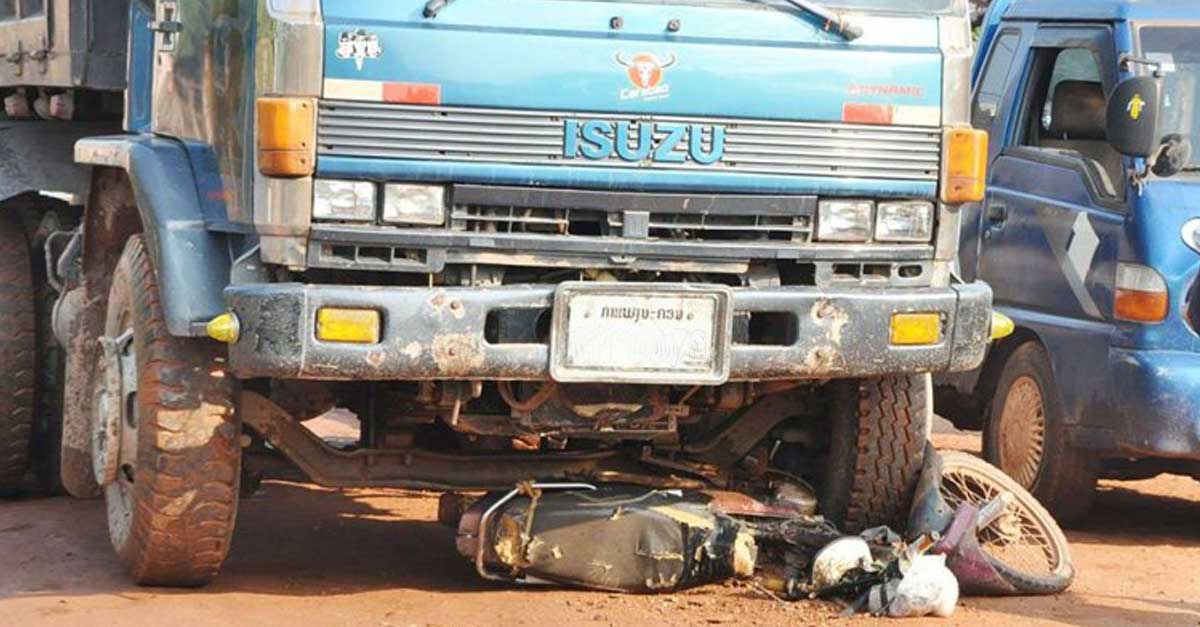
Traffic Accidents in Laos

Traffic accidents are one of the largest causes of death in the Lao PDR, and are also causing massive economic losses, according to one economist.

Police reports state that 1,086 deaths were caused by traffic accidents in 2016, with the number of injuries caused by traffic accidents reaching 8,912.  The total number of accidents reached 5,616, and the cost of these accidents was a whopping 83 billion kip.

According to a recent Vientiane Times article, senior economist at the National Economic Research Institute, Dr Leeber Leebouapao, losses from road accidents amount to nearly 1 percent of Gross Domestic Product, which saw growth at 6.9 percent last year.

Dr Leeber feels that road accidents should be placed at the top of the nation’s agenda, and calls upon all sectors to devise programs and awareness campaigns that will help to mitigate the problem.

He went on to say that fatalities caused by road accidents in Laos were higher than deaths caused by wars or political conflicts in some countries.

Without urgent measures being taken, the situation will be unlikely to see improvement. Accidents cause tremendous financial losses to the state, and negatively affect society.

These costs include personal costs to victims families, property damage, ambulance and hospital cover. Accidents involving essential members of the workforce can also directly affect the nation’s human resources.

The rise in accidents is connected to the rapid economic development seen in Laos, which has led to an increase in vehicle ownership among the population. Growing demand for personal transportation and a lack of public transport options only adds to the issue.

The country’s very reputation is at stake, with reports appearing in foreign news media regarding the astonishing accident rate in Laos.

Dr Leeber added that road accidents are a huge drain on time and money, and law enforcement has not been serious about taking action toward a viable solution.

50 Dengue Fever Cases Already Reported in 2017

Dengue Fever

More than fifty cases of dengue fever have already been reported across Laos since the beginning of 2017.

The Surveillance Unit of the Ministry of Public Health has warned that although the nation has implemented strategies to reduce outbreaks of dengue fever, there have already been multiple cases reported this year.  Of the fifty reported cases, twenty cases occurred in Vientiane Capital.

Recent changes in the weather have provided the right conditions for mosquitoes to breed, and the ministry says that if relevant authorities do not exercise haste in undertaking preventative measures, a severe outbreak could occur.

Early preventative measures are key to preventing an outbreak, including increased surveillance and faster response rates, and immediate reporting of any dengue fever cases.

Residents must join in the fight against dengue fever by taking preventative measures in their homes. Any possible mosquito breeding sites must be destroyed, and residents can follow these five basic steps provided by the Ministry of Public Health:

  1. Cover any empty containers around the house that may contain water
  2. Frequently change water kept in containers around the house
  3. Release fish where possible, as fish will eat mosquito larvae
  4. Ensure cleanliness around the home, and do not leave empty containers or rubbish around the home such as empty bottles, cans, or old tyres.
  5. Follow steps 1 – 4, clean the house every week

The Lao Ministry of Public Health urges anyone who feels they may have symptoms consistent with Dengue Fever to immediately visit a hospital or clinic for evaluation. Early treatment can assist in fighting the disease.

Source: Lao Phatthana

ALO Technologies Ambushes Lao Smartphone Market

ALO, the world’s first Lao smartphone, will make its debut in stores around Laos later this month.

The ALO brand of smartphone is part of a larger group of electronic products offered by ALO Technologies Laos. The company hopes to become the number one choice in technology products and services for Lao people, and has made students and the education sector its primary focus.

ALO Techology, which is a 100% Lao owned company, reached an agreement with Microsoft for updates to software and programs after signing an official OEM Master License agreement with Microsoft in April last year.

Two products are to be released initially, the ALO! M5 (4G) and the ALO! Tab7A 2 SIM 3G.

The M5, which runs on the Android 6.0 operating system, will retail for 1,100,000 kip, although the company has announced a special promotion price of 999,000 kip.


[ngg_images source=”galleries” container_ids=”4″ override_thumbnail_settings=”1″ thumbnail_width=”100″ thumbnail_height=”75″ thumbnail_crop=”1″ images_per_page=”20″ number_of_columns=”0″ ajax_pagination=”0″ show_all_in_lightbox=”0″ use_imagebrowser_effect=”0″ show_slideshow_link=”0″ slideshow_link_text=”[Show slideshow]” template=”/home4/laotiantimes/public_html/wp-content/plugins/nextgen-gallery/products/photocrati_nextgen/modules/ngglegacy/view/gallery.php” order_by=”sortorder” order_direction=”ASC” returns=”included” maximum_entity_count=”500″ display_type=”photocrati-nextgen_basic_thumbnails”] 

The first set of ALO! Branded smartphones feature a 1.3G Quad-core MT735 CPU, with 1GB RAM,  multi-touch sensor, and 1280*270 pixels display.

The M5 features Bluetooth functionality, front and rear cameras with HDR support, GPS positioning, dual sim-card input, and a 1900mAh battery. Both ALO! Models are currently only available in white.

The ambush of the low-end market by the ALO Lao Smartphone will likely present quite a challenge to competitors in Laos, with the market traditionally ruled by Chinese brands Oppo and Vivo.

Like its direct competitors, ALO! Phones are manufactured in China, however its products are produced specifically for the Lao market. With Microsoft overseeing upgrades and software, it is likely that ALO will become the number one consumer choice before too long.

The company has stated that its mission is to provide quality, affordable electronic devices for the Lao market, with a focus upon the education sector, and hopes to expand further into ASEAN in the coming years.