

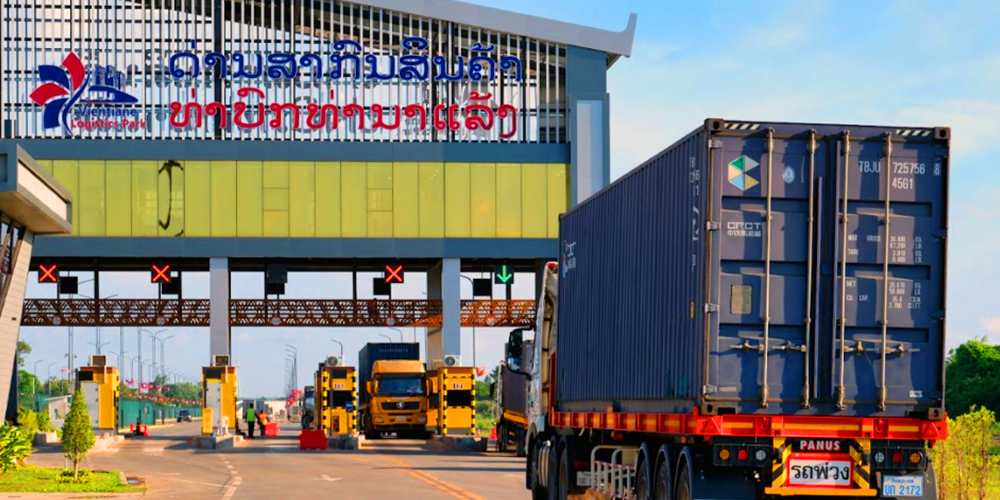
Laos is preparing local businesses for higher costs when selling goods abroad, as the country gets ready to graduate from least developed country (LDC) status and lose some of its duty-free trade benefits.
A new USD 5 million project aims to help businesses stay competitive by cutting paperwork, speeding up border checks, and making it easier to reach international markets.
The Second Lao PDR Competitiveness and Trade Project (LCTP2) launched on 20 October, ahead of Laos’ planned graduation on 24 November.
The project builds on earlier efforts to simplify business registration and provide grants to companies. It will expand digital trade services through March 2029, with the aim of cutting delays and costs for businesses that import or export goods.
One target is to reduce the average time needed to clear cargo at the border to around two hours. To do this, officials plan to move 86 types of import and export permits online. The project also aims to bring 25 percent of all business registrations online, with a target of 50 percent for women-owned businesses.
The government is also seeking access to special European trade programs to help protect jobs in the garment industry. It plans to make greater use of the Lao-China Railway and inland dry ports to move goods faster and bring down transport costs.
What LDC Graduation Means for Lao Businesses
Laos’ graduation from LDC status marks a development milestone, but will also end some trade preferences that have helped its exports compete in international markets.
A 2023 study by the International Trade Centre (ITC) estimated that Lao exports could fall by 7.3 percent, or around USD 734 million, in 2027 if the country does not make major changes.
One reason is that Lao goods will become more expensive for some foreign buyers. Laos is set to lose duty-free access under 24 international trade programs, meaning some countries will charge higher import taxes on its products. The average tariff on Lao exports is expected to rise from 0.3 percent to 4.1 percent.
China could account for nearly 80 percent of the projected losses, or USD 581.3 million, according to the study. Natural rubber is among the Lao products that could face higher import taxes when existing duty-free arrangements end.
The European Union is another concern. The ITC estimates that Lao exports to the bloc could fall by 34 percent, putting clothing and footwear producers at particular risk.
Lao businesses may also need to change how they make their products. The Lao PDR–United Nations Sustainable Development Cooperation Framework 2027–2031 says foreign buyers and trade partners will increasingly expect products to use more locally sourced materials and labor instead of imported parts. Businesses that cannot meet these requirements may find it harder to qualify for lower import taxes.
