Home Blog Page 511

TeamHive Launches Free Team Effectiveness Indicator, Giving Any Leader or Team Member Instant, Research-Backed Insight Into How Their Team Really Works

HR tech platform, validated by the University of Newcastle, makes its PLUS model diagnostic available at no cost to teams worldwide

SYDNEY, April 22, 2026 /PRNewswire/ — TeamHive (https://team-hive.co/), the evidence-based team effectiveness platform, today announced the public launch of its Free Team Effectiveness Indicator — a diagnostic tool that enables any leader, team member, or team coach to measure their team’s dynamics and effectiveness in under ten minutes, at no cost.

Built on TeamHive’s research-validated PLUS model (Purpose, Learning, Unity, and Shared Leadership), the Free Team Effectiveness Indicator provides an individual-perspective snapshot of how a team functions across the four dimensions that research shows drive team effectiveness and performance. Upon completion, users receive a web-based results summary and PDF report — with the option to invite their full team and stakeholders to complete a comprehensive TeamHive 360 diagnostic.

The launch comes as organisations globally face mounting pressure to improve how teams work together. Despite significant investment in leadership training, engagement surveys, and culture programs, most organisations lack a practical, evidence-based tool designed specifically to diagnose and develop how teams function as a collective unit.

“Teams armed with the right data and tools can develop faster,” said Kimberly Luffman, Founder of TeamHive and Brave Insights. “High-performing teams achieve greater results, becoming more than the sum of their collective efforts — they are genuinely better together. We built TeamHive so that any team or coach, anywhere, can access the same research-backed diagnostic that enterprise clients use to accelerate team development.”

The TeamHive Story: From Practice to Platform

TeamHive was born from more than two decades of practitioner experience. Founder Kimberly Luffman spent over 15 years working with leadership teams across Australia, observing a persistent gap: individual leadership development programs, while valuable, rarely translated into improved collective team performance. Organisations were investing heavily in leaders, engagement surveys, and coaching — but none of these tools were designed to diagnose and improve how a team works together.

A pivotal moment came when Luffman observed a team whose effectiveness far exceeded expectations — not because of a single exceptional leader, but because leadership was distributed across every member. That experience sparked a mission: to understand the conditions that enable teams to become more than the sum of their parts, and to make those conditions measurable and accessible.

Drawing on the work of Ronald Heifetz and Marty Linsky in adaptive leadership (studied at Harvard Kennedy School Executive Education), Robert Kegan and Lisa Lahey’s adult development theories, and Professor Peter Hawkins’ systemic leadership team coaching, Luffman developed an initial framework and prototype survey instrument through her consultancy, Brave Insights (https://www.braveinsights.com/). A pilot study in a financial services company confirmed the approach: team coaching — when grounded in accurate diagnosis — produced substantially greater and more durable impact on long-term behaviour change than individual coaching, peer coaching, or leadership workshops alone.

To bring the platform from prototype to product, Luffman was joined by James Luffman, Executive Director of TeamHive and former founder of Solcast, the global solar data platform that was successfully acquired. James brings deep experience in building research-backed data products at scale, having previously created data infrastructure used by energy systems worldwide.

“When I looked at what Kimberly was building, I recognised the same pattern I’d seen in weather and solar data,” said James Luffman. “There were thousands of consultants and dozens of survey providers — but mostly focused on leadership, culture, or engagement, not on teams as the fundamental unit of performance. TeamHive was a chance to build a differentiated, research-grounded team data asset.”

The PLUS Model: Four Dimensions of Team Effectiveness

At the heart of TeamHive is the PLUS model (https://team-hive.co/blog/plus-team-effectiveness-360-model), a four-dimension framework that measures the collective behaviours, processes, and shared beliefs that drive — or hinder — team effectiveness:

  • Purpose (P): How a team achieves clear goal alignment, translates that into purpose-driven execution, and maintains a stakeholder-centred view of value. Teams with strong shared purpose consistently outperform those without, distinguishing a real team from a loose working group.
  • Learning (L): How a team engages in collective development, learns through challenge, and creates a peer-supported environment for growth. In TeamHive’s validation research, Learning emerged as the single strongest statistical predictor of team effectiveness.
  • Unity (U): How a team practises constructive communication, builds a psychologically safe environment, and strengthens connection and belonging. Unity goes beyond psychological safety alone — it encompasses the full spectrum of trust, respect, and honest collaboration.
  • Shared Leadership (S): How a team holds collective accountability, distributes leadership work, and actively integrates diverse perspectives. When Shared Leadership is strong, teams don’t wait for one leader to direct — they lead together.

TeamHive also measures Team Outcomes — effectiveness (quality, coordination, reliability) and performance (delivery against expectations and goals). The PLUS dimensions function as the upstream system of drivers that predict those outcomes.

University of Newcastle Validation: Rigorous, Independent Research

The PLUS model and TeamHive 360 diagnostic (https://team-hive.co/product/team-hive-360) were validated through a comprehensive psychometric study conducted in partnership with the University of Newcastle’s School of Psychological Sciences, led by researchers Heather Douglas, Jessika Tisdell, and Emina Subasic.

Key validation findings:

  • 500 full-time working adults surveyed across 12+ industry sectors, including government, healthcare, technology, finance, and education
  • An initial 160-question bank was rigorously refined to a 63-question validated core through Exploratory and Confirmatory Factor Analysis
  • Internal consistency reliability (Cronbach’s alpha) between .90 and .94 across all four PLUS dimensions — exceeding established industry standards for individual and team diagnostics
  • Model fit indices (CFI = .952, TLI = .95) exceeded thresholds for excellence, confirming the superiority of the four-factor PLUS structure
  • PLUS dimensions explained 60% of total variance in team effectiveness and 37% of variance in team performance
  • Significant incremental validity: TeamHive 360 captures unique team-level variance not redundant with individual leadership constructs, demonstrating that team diagnostics provide explanatory power beyond individual leadership assessments alone
  • An independent expert review panel of eight specialists in leadership, HR, and psychometrics contributed to content validation

Already Delivering Results for Enterprise Clients

While the Free Team Effectiveness Indicator opens access globally, TeamHive’s full platform is already in use with enterprise clients. Most recently, the TeamHive 360 diagnostic was deployed across approximately 40 leaders as part of a High-Performing Teams program with NextEd Group, a publicly listed private education provider, designed and facilitated by Brave Insights.

“We saw a 20% increase in teamwork and a 10% increase in role clarity in our recent employee engagement survey,” said Solange Frost, Regional Director at St Vincent de Paul. “The insights from the diagnostic and the team actions we put in place definitely made an impact.”

“It was incredibly helpful for us to identify and plan how our leadership team could better work together in a very challenging and complex project,” said Fiona Warnock, Strategic HR Business Partner at Interflow.

Free Team Effectiveness Indicator: Key Details

  • Cost: Free. No credit card required.
  • Time to complete: Approximately 10 minutes
  • What it measures: Team dynamics and effectiveness across the four PLUS dimensions (Purpose, Learning, Unity, Shared Leadership)
  • What you receive: Web-based results summary and PDF report
  • Who it’s for: Team leaders, team members, HR professionals, team coaches, and organisational development specialists
  • How to start: Sign up at https://team-hive.co/ 

For organisations seeking deeper insight, the full TeamHive 360 collects input from the entire team and key stakeholders, providing a comprehensive multi-perspective diagnostic with AI-powered coaching via the HiveAI Coach. Standard subscriptions include one TeamHive 360 per team per year, unlimited TeamHive 360 Pulse checks, and full access to HiveAI Coach recommendations.

About TeamHive

TeamHive (https://team-hive.co/) is an evidence-based team effectiveness platform that enables teams to diagnose their dynamics, identify hidden barriers to performance, and accelerate development through data-driven insights. Built on the research-validated PLUS model (Purpose, Learning, Unity, Shared Leadership) and validated by the University of Newcastle’s School of Psychological Sciences, TeamHive provides research-backed diagnostics, AI-powered coaching, and actionable strategies for teams of all sizes. From individual team leaders to enterprise organisations managing hundreds of teams, TeamHive makes the science of team effectiveness practical, scalable, and accessible. TeamHive is a product of Team Development Analytics Pty Ltd, based in Sydney, Australia. Learn more at https://team-hive.co/


Overstory Unveils First AI Models to Predict Power Outages and Wildfires with Tree-level Precision

Utilities are shifting from a detect-and-react mindset to one anchored on prevention. New AI models give operators the foresight to act before outages and ignitions occur.

  • Overstory’s new Outage Model and Ignition Model identify the specific trees, shrubs, and utility assets most likely to start the next wildfire or result in a power outage, giving operators a prioritized list of exactly what to address before an incident occurs.
  • Overstory Scenarios enables utilities to compare the cost and potential risk reduction of any resilience program in real time, ensuring operational budgets are directed to the highest-impact work.

AMSTERDAM, April 21, 2026 /PRNewswire/ — Overstory, the leading grid resilience platform trusted by 6 of the 10 largest utilities in North America, today announced the industry’s first AI models that predict where outages and utility-caused wildfires are most likely to start. The new Ignition and Outage Models mark a shift from paper maps and subjective data to predictive scenario planning, giving operators a prioritized view of the exact work that will prevent the most harm per dollar spent.

Utilities are in a moment of profound transformation. Surging costs, more severe storms, and escalating wildfire risk are converging on an industry already stretched thin — forcing operators to get smarter about every dollar spent and every mile of network they protect. For the past seven years, utilities have trusted Overstory to design programs that reduce the vegetation and wildfire risk across their network. Today’s release extends that work, giving operators the ability to model a range of scenarios to predict where the risks are greatest, what it would cost to address, and which actions can reduce it most efficiently.

Built on years of identifying hazards, new models predict outages & ignitions

Since its founding in 2018, Overstory has released a series of innovative models that analyze satellite data and aerial imagery to determine tree height, tree health, and ground fuels across utility networks. Trained across millions of miles and extensively validated by certified arborists, these models give utilities a data-backed view of vegetation and fuel risk at every span, down to the individual tree or shrub.

Today’s release adds a new layer: by incorporating a utility’s historical outages and ignitions alongside factors like asset age and weather data, the models can identify the specific interventions most likely to prevent the next incident, whether that’s removing a dying tree, mowing dry grass around a pole, or replacing an aging asset in a high-ignition-risk corridor.

From paper maps to dynamic scenario modeling

Overstory Scenarios equips utilities to dynamically model resilience programs to tackle wildfire, asset and vegetation risks across their networks. For decades, utilities have met growing risk by deploying more resources — a logical response given the tools available at the time. But as costs continue to climb, that path is no longer tenable. Forward-thinking utilities and regulators are calling for a more predictive, data-driven approach: one that addresses more risk within the budgets they have.

Overstory Scenarios bridges that gap. Teams can design risk-based programs, explore alternative scenarios, and weigh tradeoffs between cost and risk reduction. Analysis that once took weeks can now happen in real-time, helping utilities see where risk lies, what it costs to address, and how to reduce the most risk with every dollar spent.

“For years, utilities have been asked to do more with less while storms and wildfires grow in frequency and severity. What utilities need now is foresight: the ability to act before an outage or ignition occurs. That’s what these models make possible for the first time”

Fiona Spruill, CEO, Overstory

With this intelligence on hand, utilities can continue to deliver on their enduring promise: safe, reliable, and affordable power.

For more information, visit overstory.com.

About Overstory:
Overstory is the enterprise grid resilience platform helping utilities prevent outages and wildfires. Using satellite imagery and proprietary AI models, Overstory analyzes vegetation risk and fuel conditions across a utility’s network, surfacing the highest-impact interventions and the tradeoffs behind them. Built for the unique operational reality of each utility, Overstory helps teams direct every dollar to areas of highest risk to keep communities safe. Overstory is trusted by 6 of the 10 largest utilities in North America and backed by Blume Equity, Energy Impact Partners, B Capital, and Semapa Next. Headquartered in Boston and Amsterdam.

Media contact:
Cait Harding
VP of Marketing
cait.harding@overstory.com

Logo – https://laotiantimes.com/wp-content/uploads/2026/04/overstory_logo.jpg 

Veterans still battling with DVA claims system

  • Half of younger veterans aged under 50 are avoiding mental health support due to wait times and system complexity 
  • 67% of younger veterans experiencing increased stress or anxiety after trying to access support
  • Only four in ten (44%) acknowledge the quality and access to veteran support services has improved since the 2024 Royal Commission into Defence and Veteran Suicide

BRISBANE, Australia, April 22, 2026 /PRNewswire/ — More than half of younger Australian veterans are avoiding mental health support due to complex claims processes and long wait times, according to new data released today.

The findings, published in the Veteran Wellness Index by leading veteran advocates, Veterans First Consulting, reveal 51% of veterans aged 18–49 have avoided seeking support in the past three years because the process was too hard to navigate. Complicated processes (56%), long wait times (58%) and not knowing where to start (35%) being the key barriers.

The personal impact is significant. Two-thirds of younger veterans (67%) reported increased stress or anxiety after attempting to access support, while 65% of veterans over the age of 50 said their confidence in seeking assistance in the future had declined.

The new data comes as Australians prepare to honour the sacrifice and service of defence personnel on ANZAC Day, highlighting that many veterans and their families continue to struggle with service-related compensation systems despite reforms following the 2024 Royal Commission into Defence and Veterans Suicide.

Some younger veterans (44%) acknowledged improvement in the quality and access to support services since the Royal Commission delivered its Final Report in September 2024, but one in three of all veterans surveyed (32%) experienced no change, indicating that while progress is evident, it has not yet been consistently felt across the system.

Advocates key to navigating the system

The research also shows the critical role of advocates in helping veterans access support. Just 23% of veterans said navigating the claims process alone was easy, compared to 76% who found it easier with experienced advocates.

At the same time, awareness of reforms remains low. Nearly half (48%) of surveyed family members and close associates, along with 21% of veterans, said they had no understanding of proposed reforms to support services.

Kevin Chapman, a former Airfield Defence Guard in the Royal Australian Air Force and co-founder of Veterans First Consulting, said the findings reflect both progress and persistent gaps.

“The Royal Commission made it clear that system failure can have tragic consequences. Everyone involved — from the DVA to service providers to advocates — is working toward improving outcomes for veterans,” Mr Chapman said.

“While it’s encouraging to see some reforms heading in the right direction, the data tells us many veterans are still struggling to access the support they need.”

“From our experience supporting more than 9,000 veterans, there is still significant work required to deliver a system that is simpler and better aligned to their needs.”

Mr Chapman said advocates remain an essential part of that system.

“We hear every day how much easier the process is when veterans have support. The data now clearly shows the difference between going it alone and having experienced help.”

The 2026 Veteran Wellness Index report is available for download from the Veterans First Consulting website at https://www.veteransfirstconsulting.com/.

Editorial notes:

ASSETS AVAILABLE

About the survey
This study was conducted by independent market research firm YouGov between 9 and 26 March 2026. The survey was conducted online. The total sample size was 246 veterans of the Australian Defence Force (ADF), including those currently serving, with 100 aged 18–49, and 727 family members or close associates of ADF veterans or those currently serving including 326 members aged 18-45.

About Veterans First Consulting

Veterans First Consulting is Australia’s largest independent veteran advocacy group. Through the independent, unbiased and professional representation of more than 9,000 veterans in the DVA claims process, we ensure Australian veterans are fairly and accurately supported and compensated.


CATL Unveils Six Major Innovations: Multi-Chemistry Systems to Redefine New Energy Mobility Experience

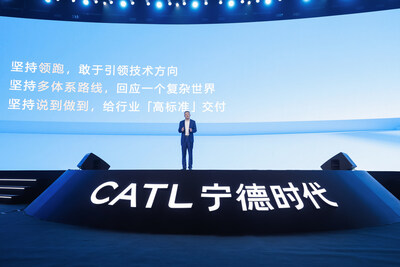
BEIJING, April 22, 2026 /PRNewswire/ — CATL today hosted its Super Technology Day in Beijing, unveiling third-generation Shenxing Superfast Charging Battery, third-generation Qilin Battery, Qilin Condensed Battery, second-generation Freevoy Super Hybrid Battery, Naxtra Sodium-ion Battery and a fully integrated supercharging and battery-swapping solution. These innovations are designed to address diverse mobility needs across different usage scenarios.

Gao Huan, CTO of CATL China Car Business

At the event, Dr. Wu Kai, Chief Scientist of CATL, systematically elaborated on the respective strengths, limitations, and development pathways of different chemistries. He noted that LFP is nearing its theoretical energy density limit, making it better suited for a technology roadmap centered on extreme fast charging to achieve optimal balance. NCM’s high energy density keeps it at the forefront of global competition — underscoring that energy density remains the core metric for leadership. Sodium-ion batteries offer broad potential for extreme temperatures and energy storage applications. Whether from the perspective of differentiated consumer needs, or from the viewpoints of energy security and social development, the lithium-ion battery industry must pursue coordinated development across multiple chemical systems.

Wu Kai, Chief Scientist of CATL

Robin Zeng, Chairman and CEO of CATL, emphasized at the conference that industrial innovation must be driven by a rigorous scientific spirit. For Chinese technology to go global, it relies not just on speed and scale, but on the quality of innovation, the ability to validate, and the credibility of the brand.

Robin Zeng, Chairman and CEO of CATL

Third-Generation Shenxing Superfast Charging Battery: Making Superfast Charging and Ultra-Long Lifespan No Longer a Trade-Off

From an electrochemical standpoint, boosting charge rates while protecting battery lifespan hinges on one primary factor: temperature rise, not trickle current. As the Arrhenius equation shows, a 10°C increase in battery temperature can roughly double the rate of internal side reactions—an effect that can significantly shorten cycle life.

The third-generation Shenxing Superfast Charging Battery addresses heat generation and dissipation through three major measures: reduced heat production during operation, stronger thermal propagation, and higher precision control. As a result, after 1,000 complete cycles, the battery’s capacity retention remains above 90%, achieving an optimal balance between extreme superfast charging and ultra-long service life.

The latest third-generation Shenxing Superfast Charging Battery has reached what is claimed to be the industry’s strongest capability: an equivalent 10C and a peak 15C charging rate. Charging from 10% to 35% SOC (State of Charge) takes just 1 minute; from 10% to 80% SOC takes 3 minutes and 44 seconds; and from 10% to 98% SOC takes 6 minutes and 27 seconds. Even at −30°C in extreme cold conditions, charging from 20% to 98% SOC takes about 9 minutes.

In addition, by combining battery self-heating technology with a fully integrated supercharging and battery-swapping network, the system is designed to enable low-temperature superfast charging that is not limited by charging piles—offering both fast charging and battery swapping.

Third Generation Shenxing Superfast Charging Battery

Third-generation Qilin Battery: Lighter, Stronger, More Premium, Redefining EV Excellence

Historically, achieving long range in premium EVs with LFP batteries has relied on simply adding more capacity — an approach that inevitably compromises vehicle lightweighting.

The third-generation Qilin Battery is designed for premium long-range EVs, achieving a cell energy density of 280 Wh/kg and enabling 1,000 km range while supporting 10C superfast charging.

The battery delivers 3 MW peak power, doubling the output of the second-generation Qilin track battery which competed on the Nürburgring (1,330 kW).

The entire battery pack weighs only 625 kg. Compared with equivalent LFP systems, this represents a weight reduction of 255 kg and space savings of 112 litres. The lightweighting metrics deliver exceptionally significant benefits:

  • Energy consumption per 100 km decreases by more than 6%, saving approximately 0.78 kWh per 100 km. Across a fleet of one million vehicles travelling 20,000 km annually, this equates to 156 million kWh in electricity savings and a reduction of 78,500 tonnes of CO₂ emissions.
  • Performance and safety improvements include a 0.6–second reduction in 0–100 km/h acceleration, a 12% shorter overtaking risk window, an 8% higher moose test speed, a 6.5% lower body roll angle, a 15–25% gain in obstacle avoidance capability, and approximately 1.44 metres shorter braking distance.
  • Durability is enhanced, with chassis component life extended by 40% and tyre life by over 30%, increasing replacement intervals by at least 10,000 km. The 112 litres of space saved can increase cabin headroom by at least 18 mm.

Building on the national standard for NP (No Thermal Propagation), safety is strengthened through “thermal-electrical separation”, with each cell incorporating an independent sealed exhaust channel to isolate thermal events and prevent propagation, ensuring “heat takes the heat path, electricity takes the electrical path”. 

Third Generation Qilin Battery

Qilin Condensed Battery: Aviation-Grade Technology Applied to Passenger Vehicles for the First Time

The Qilin Condensed Battery applies aviation-grade technology to passenger vehicles for the first time, achieving 350 Wh/kg cell energy density and 760 Wh/L volumetric energy density — setting a new record for mass-produced batteries. This enables 1,500 km range for sedans and over 1,000 km for large SUVs, with pack weight controlled within 650 kg.

The condensed battery features a high-nickel cathode and low-expansion silicon-carbon anode, boosting energy density by 50 Wh/kg. Its first-ever aviation-grade titanium alloy case reduced thickness by 60% and weight by 30%, while tripling unit strength and delivering an additional 20 Wh/kg in energy density.

The technology builds on CATL’s electric aviation programme, where 500 Wh/kg systems have completed maiden flight validation on 4-tonne aircraft, with further validation underway on aircraft exceeding 8 tonnes.

Replacing liquid electrolyte with a condensed system eliminates risks associated with leakage and combustion, achieving “no liquid to leak, no liquid to ignite”. At the same time, CATL has adopted a new composite current collector that acts as a fast self-fusing fuse in extreme cases of internal short circuits.

Qilin Condensed Battery

Second-generation Freevoy Super Hybrid Battery: Bringing Hybrids into the 600 km Pure Electric Era

The second-generation Freevoy Super Hybrid Battery extends all-electric range to up to 600 km and standardises 10C superfast charging. It pioneers a “super hybrid technology” that integrates LFP and NCM materials through gradient-uniform mixing, with the olivine crystal structure of LFP serving as the core backbone, enabling a uniform hybrid of LFP and NCM materials at the powder particle level.

This achieves an energy density of 230 Wh/kg and increases range by over 15% without increasing pack weight compared with single LFP systems. This enables full coverage from mainstream family use to high-end, all-round hybrid scenarios, delivering optimal solutions across diverse applications.

The LFP version delivers up to 500 km pure electric range, enabling a “once-a-week charging” experience for daily commuting. The NCM version further extends pure electric range beyond 600 km, with total vehicle range exceeding 2,000 km, enabling a seamless dual-use experience for both daily electric driving and long-distance travel.

The system delivers 1.5 MW of instantaneous power at full charge and maintains 1.2 MW at 20% SOC, addressing power degradation in low-charge conditions. In off-road scenarios requiring over 350 kW output, the system provides more than three times the required power, ensuring consistent performance even at low charge levels.

Safety features include a reinforced bottom coating capable of withstanding 1,500 joules of impact energy (ten times the national standard) and waterproof sealing that allows continuous immersion in 2 metres of water for over 200 hours without performance degradation.

Second Generation Freevoy Super Hybrid Battery

Naxtra Sodium-ion Battery: Achieving GWh-scale Sodium-ion Industrialisation

The Naxtra Sodium-ion Battery marks CATL’s transition from laboratory breakthrough to large-scale manufacturing. By systematically overcoming hundreds of engineering challenges, CATL has achieved GWh-level industrialisation.

In 2026, CATL successfully addressed four key industry bottlenecks for sodium-ion mass production—extreme water control, gas generation in hard carbon, aluminium foil adhesion, and self-forming anode systems—paving the way for reliable, large-scale deployment. The Naxtra Sodium-ion Battery is set to enter full-scale mass production by the end of 2026.

Naxtra Sodium-ion Battery

Integrated Supercharging and Battery-swapping Network: A Unified Replenishment Architecture

CATL also introduced an integrated supercharging and battery-swapping network, designed as a unified system rather than separate solutions, built on three complementary pillars—home charging, public charging, and battery swapping—to define the optimal energy replenishment ecosystem. All passenger vehicle “Choco-Swap” and heavy truck “QIJI” swapping stations will be equipped with Shenxing supercharging systems, enabling true charge–swap synergy, where each station serves both as a battery-swapping node and a high-power charging hub.

The integrated charge–swap stations feature shared compact substations and charging modules, reducing energy conversion steps and lowering overall power loss by more than 13 percentage points compared with conventional storage-equipped charging stations. In emergency scenarios, station batteries can discharge directly to charging piles, driving equipment utilization rate above 85%. This enables a service capacity of 3× per parking space compared with conventional storage-equipped charging stations, while the fixed investment cost of the supercharging segment is reduced to only one-fifth of comparable systems.

CATL launched the Choco-Swap #26 battery, featuring an 800V high-voltage architecture. The first release includes a 75 kWh version, with higher-capacity variants to follow, fully compatible with B- to C-segment 800V vehicles. With this launch, the Choco-Swap system will extend its coverage to a complete vehicle matrix from A0 to C-segment models.

In terms of network deployment, CATL plans to build 4,000 integrated charge–swap stations by the end of 2026, covering nearly 190 cities and a nationwide highway network spanning 12 vertical and 11 horizontal corridors. To date, the Choco-Swap network has already built 1,470 stations across 99 cities, with scaling continuing to accelerate.

Together with automakers and energy partners, CATL will co-develop a “charge–swap sharing network” based on technology sharing, seamless connectivity, and joint investment. Initial partners include Changan, Chery, GAC, Seres, SAIC-GM-Wuling, and BAIC, with a target of building over 100,000 shared energy replenishment facilities by the end of 2028.

Yang Jun, General Manager of CATL's Battery Swapping Business
Yang Jun, General Manager of CATL’s Battery Swapping Business

Advancing full-scenario energy solutions

From five battery products covering the full material spectrum to an integrated supercharging and battery-swapping network, CATL has established a complete value chain from battery products to infrastructure.

CATL will continue to invest in advanced research, large-scale manufacturing and ecosystem collaboration to accelerate the transition from single-point innovation to full-scenario energy solutions, ensuring the benefits of technological progress are accessible across all mobility use cases.

Dimora Medical Goes Viral on TikTok, as Hydrocolloid Roll Finds New Use in Acne Care

NEW YORK, April 22, 2026 /PRNewswire/ — Over the past 28 days, Dimora Medical has seen an average daily increase of over 165% in visitors to its TikTok Shop for its hydrocolloid roll, driven by several factors, with a recent creator video emerging as a key source of visibility and interest. Originally designed as a medical-grade wound dressing, the roll is now gaining wider attention from consumers who value its flexibility, ease of use, and greater value compared with small pre-cut pimple patches.

Dimora Medical Goes Viral on TikTok, as Hydrocolloid Roll Finds New Use in Acne Care

Unlike individual acne patches, the hydrocolloid roll can be trimmed to the exact size needed, whether for a single blemish, a larger breakout area, or minor wound coverage. It gives users more usable material in one package and is a practical home-care item that can be used to address multiple everyday needs.

Authentic, lifestyle creator content goes viral

The video, posted by the creator @toporganize, starts with her showing Dimora Medical’s hydrocolloid roll and exclaiming, “I wish that someone would have put me on to these sooner than last week!” She then describes how the 16-foot-long roll is a much better value than smaller pimple pads, and how it’s easy to cut and shape to apply on different parts of her face.

Her practical, real presentation of how to use the roll while emphasizing how the roll aids skin repair for minor facial imperfections has attracted a new group of users to Dimora Medical. The roll itself is hypoallergenic and has passed strict third-party skin irritation and skin sensitivity tests.

Safe, skin-friendly wound and acne recovery

Made of a gentle, non-irritating adhesive, Dimora Medical’s hydrocolloid roll is applied directly to the skin. By creating a moist healing environment, it effectively promotes wound recovery and brings a healing efficiency that is 2-3 times higher than other conventional cures.

It also brings visible relief to acne sufferers. Acne pus is actively absorbed, while noticeable redness and swelling are reduced within 8 hours. The hydrocolloid roll effectively addresses multiple acne concerns, including common pimples, papules, and cystic acne.

The medical-grade hydrocolloid roll is FDA certified and was independently tested by STC labs. It passed under the international standard ISO 10993-23 for skin irritation, as determined by intracutaneous reactivity. It also passed the ISO 10993-5 standard for skin sensitivity, as determined by cytotoxicity.

For more information, please visit https://www.dimoramedical.com/.

DimoraMedical: 
support@DimoraMedical.com 

HCLTech FY26 revenue up 3.9%, led by increasing demand for Advanced AI

Annualized Advanced AI revenue at $620M; FY26 services revenue up 4.8% in CC; TCV of new deal wins at $9.3B

NEW YORK and NOIDA, India, April 22, 2026 /PRNewswire/ — HCLTech, a leading global technology company, today reported financial results for the fourth quarter and the full year ended March 31, 2026.

FY26 revenue grew 3.9% in constant currency (CC). USD revenue came in at $14.7 billion, up 6% YoY. Services revenue grew 4.8% YoY in CC, led by steady momentum in IT and Business Services, which grew at 3.7% YoY in CC, and growth of 9.8% YoY in CC for Engineering and R&D Services. Total contract value (TCV) for new deal wins in the year totaled $9.3 billion. HCLSoftware’s annual recurring revenue stood at $1.05 billion, down 0.5% CC.

“HCLTech delivered superior revenue growth of 3.9% in constant currency … in a year marked by an uncertain demand environment … Our new AI-led service offerings are getting traction in the market and this is reflected in annualized Advanced AI revenues crossing $620 million in Q4. Our number one priority in FY27 is to ensure the company is positioned right to take advantage of AI opportunities for multi-decade value creation,” said C Vijayakumar, CEO & Managing Director, HCLTech.

Industry vertical growth was led by Technology and Services, with 15% YoY (CC) growth, followed by Financial Services at 7.5% YoY (CC) and Telecommunications, Media, Publishing & Entertainment at 5.2% YoY (CC). In terms of geographies, India recorded a strong growth of 5.7% YoY (CC), Europe grew by 4.5% YoY (CC) and the U.S. grew by 2.3% YoY (CC). The Rest of the World grew the fastest at 17.8% YoY (CC).

The company expects FY27 revenue growth to be between 1.0% and 4.0% YoY in CC and Services revenue growth between 1.5% and 4.5% YoY in CC. EBIT margin is expected to be between 17.5% and 18.5%.

HCLTech announced a dividend of ₹24/share for the fourth quarter, bringing the total to ₹60/share for FY26.

“HCLTech delivered resilient FY26 results with revenues at ₹130,144 crores, up 11.2% YoY and EBIT at ₹22,397 crores (17.2% of revenue), up 4.6% YoY… Excluding the impact of restructuring costs, EBIT and Net Margin came in at 17.9% and 13.8%, respectively,” said Shiv Walia, Chief Financial Officer, HCLTech.

HCLTech added 1,712 freshers during the quarter, taking the fresher addition in the full year to 11,744. The last twelve months (LTM) attrition was at 12.5%, down from 13.0% in Q4 of last year.

Key Advanced AI deal wins:

  • A global technology major selected HCLTech for another AI Factory program worth over $100 million. HCLTech’s solutions will fast-track the client’s requirement of building and operating next-generation AI data centers.
  • A U.S.-based global semiconductor company selected HCLTech’s AI Engineering services to support the physical design of its next-generation platforms.
  • A global aerospace major selected HCLTech to build an AI-enabled digital simulation environment for aircraft cargo operations, leveraging photorealistic visualization, physics-based modeling and synthetic data generation using precise CAD inputs.

Other key deal wins:

  • A Europe-based global luxury fashion major selected HCLTech to accelerate AI-led transformation across its finance, human resources, manufacturing, supply chain and retail operations.
  • A U.S.-based global MedTech company selected HCLTech to set up a state-of-the-art Cybersecurity Center of Excellence.
  • The U.S. subsidiary of a global semiconductor group selected HCLTech to provide end-to-end firmware development and sustenance services.
  • A European public sector entity extended its partnership with Actian to strengthen data governance. Leveraging Actian offerings of Ingres, OpenROAD and Zeenea, the engagement will enhance data integrity, transparency and control for the client.

During the quarter, HCLTech was included in Fortune’s World’s Most Admired Companies 2026 list. It was recognized as one of the World’s Most Ethical Companies® by Ethisphere for the third consecutive year and was included in the S&P Global Sustainability Yearbook for the fourth year in a row.

About HCLTech

HCLTech is a global technology company, home to more than 227,000 people across 60 countries, delivering industry-leading capabilities centered around AI, digital, engineering, cloud and software, powered by a broad portfolio of technology services and products. We work with clients across all major verticals, providing industry solutions for Financial Services, Manufacturing, Life Sciences and Healthcare, Technology and Services, Semiconductor, Telecom and Media, Retail and CPG, Mobility and Public Services. Consolidated revenues as of 12 months ending March 2026 totaled $14.7 billion. To learn how we can supercharge progress for you, visit hcltech.com.

For further details, please contact:

Meredith Bucaro, Americas
meredith-bucaro@hcltech.com

Elka Ghudial, Europe
elka.ghudial@hcltech.com

James Galvin, APAC
james.galvin@hcltech.com

Nitin Shukla, India, Middle East & Africa
nitin-shukla@hcltech.com


First Release of Michter’s US★1 Barrel Strength Sour Mash Kentucky Whiskey

LOUISVILLE, Ky., Apr. 22, 2026 /PRNewswire/ — This May, Michter’s Distillery is releasing US★1 Barrel Strength Sour Mash Kentucky Whiskey for the first time.

Michter's US★1 Barrel Strength Sour Mash
Michter’s US★1 Barrel Strength Sour Mash

“When Michter’s was being produced in the 1970’s and the 1980’s, the then- Pennsylvania distillery’s most popular whiskey was its Sour Mash,” said Michter’s President Joseph J. Magliocco. “The Michter’s US★1 Sour Mash that we make in Kentucky these days is a wonderful whiskey, and we’re excited to have this opportunity to share it at barrel strength.”

In 2019, Michter’s US★1 Sour Mash received international recognition when it became the first American whiskey ever named “Whisky of the Year” by London- based The Whisky Exchange.

According to the Kentucky Distillers Association, “It was 1818 when Catherine Carpenter of Casey County recorded the first known recipe for sour mash, a game-changing technique that enabled a more consistent whiskey-making process and product.” Michter’s Master Distiller Dan McKee observed, “Most whiskey in the United States is made by the sour mash method.But the term is a bit of a misnomer. Our Sour Mash Whiskey is anything but sour. In fact, it is rich with delicious notes of toffee and stonefruit.”

Michter’s US★1 Barrel Strength Sour Mash has a suggested retail price of $120 per 750ml bottle in the United States. The average proof of the batches being offered in this 2026 release is 111.5 proof ( 55.75% ABV).

“The Michter’s US★1 Small Batch Sour Mash Whiskey is known for its consistent, repeatable elegance and deliciously smooth quality at 86 proof,” stated Michter’s Master of Maturation Andrea Wilson. “It is a favorite of whiskey enthusiasts, and our fans will now be able to taste this unique product at barrel strength. In the spirit of keeping with the consistency and beauty and elegance of this product, we decided to offer this whiskey in a barrel strength form wherein the batch is created, but is left uncut and then undergoes our signature filtration protocol.”

In October 2025, Michter’s became the first whiskey to be named in three consecutive years The World’s Most Admired Whiskey by an international academy of voters convened by UK-based Drinks International. Michter’s has a rich and long legacy of offering traditional American whiskeys of uncompromising quality. With each of its limited production offerings aged to its peak maturity, Michter’s highly acclaimed portfolio includes bourbon, rye, sour mash whiskey, and American whiskey. For more information about Michter’s, please visit michters.com and follow us on Instagram, Facebook, and X.

Contact:
Joseph J. Magliocco
+1 (502) 774-2300 x580
jmagliocco@michters.com 

Schlumberger Foundation Celebrates Its 1,000th Faculty for the Future Grant

This year, the program awarded 163 grants to outstanding women from low and middle-income countries pursuing PhD and postdoctoral research in science, engineering, technology, and mathematics (STEM)

KAMPALA, Uganda, April 22, 2026 /PRNewswire/ — The Schlumberger Foundation (www.SchlumbergerFoundation.com)  today announced that its flagship Faculty for the Future program has now funded 1,000 fellows worldwide, following the release of its 2026–2027 grant award recipients.

This year, the program awarded 163 grants to outstanding women from low‑ and middle-income countries pursuing PhD and postdoctoral research in science, engineering, technology, and mathematics (STEM). The cohort includes 54 new fellows and 109 renewal grantees, further strengthening a diverse global community of researchers, educators, innovators, and leaders applying scientific knowledge to critical challenges in their home countries.

Since its launch in 2004, the Faculty for the Future program has played a transformative role in strengthening STEM teaching, research, and scientific capacity in countries where these contributions are most needed. Findings from our recent fellowship survey (https://apo-opa.co/4sIff13) showed 83% of fellows working in academia, making significant contributions through research, teaching, and student supervision. The survey results indicate that Faculty for the Future fellows teach more than 185,000 students and supervise nearly 900 graduate students, alongside their research activities.

Their work translates into tangible institutional and societal benefits. For example, In Mozambique, neurologists Dr. Deise Catamo and Dr. Helena Buque (https://apo-opa.co/4sMHgEu), are spearheading a quiet revolution in neurological research and care in Mozambique. Similarly, Dr. Shakardokht Jafari (https://apo-opa.co/4e0pGcC), founder of TRUEinvivo®, has transformed her research into a life‑saving technology that delivers high‑precision dosimetry solutions for radiotherapy.

Faculty for the Future fellows also play a critical role in shaping public policy. Nearly 59% of surveyed fellows report active engagement in policymaking, contributing to national and regional agendas. For example, Dr. Happy Magoha serves as Chairperson of the Technical Committee of Food Scientists of Tanzania, while Dr. Gayatri Indah is a technical expert on earthquakes on Indonesia’s National Hazard Map Committee. Similarly, Mekdelawit Deribe and Rania Al‑Zou’bi (https://apo-opa.co/3OBNKbd) have grounded their PhD research in physical modelling to support more equitable and sustainable management of critical river systems in their respective regions.

Additionally, 20% of survey fellows identified as entrepreneurs, launching new ventures that drive innovation, economic growth, and social impact. One notable example is Dr. Sadiyo Siad (https://apo-opa.co/4coAQXj), founder of Hano Academy, Hano Technical University, the Somali STEM Society, and Hano Connect. Through these initiatives, Dr. Sadiyo has played a transformative role in advancing STEM education as well as technical and vocational education and training across Somalia.

“The creation of the Faculty for the Future program twenty years ago was a visionary response to both the need for scientific expertise in under resourced regions and the persistent gender gap in STEM,” said Capella Festa, President of the Schlumberger Foundation. “By empowering women researchers to bring distinct perspectives to education, innovation, and leadership, the program demonstrates how diversity strengthens research and drives meaningful, lasting impact.”

The Schlumberger Foundation remains committed to expanding the reach and impact of the Faculty for the Future program, grounded in its belief that advancing women in science is essential to achieving equitable and sustainable development worldwide.

Distributed by APO Group on behalf of Schlumberger Foundation.

Download Image: https://apo-opa.co/4vN6i9u  

Media Contact: 
Joan Busingye 
facultyforthefuture@slb.com   

About the Schlumberger Foundation:
The Schlumberger Foundation is an independent non-profit organization founded by SLB in 1954. Its mission is to advance knowledge and promote excellence in science, technology, engineering, and mathematics (STEM) education. The Faculty for the Future program was established to maximize the Foundation’s impact by supporting women engineers and scientists from low- and middle-income countries.

For more information about the Faculty for the Future program, visit Schlumberger Foundation (www.SchlumbergerFoundation.com).