Home Blog Page 6209

Laos Gives Official Statement on Cambodian Border Tension

Laos Gives Official Statement on Cambodian Border Tension

On the morning of August 27, at the Lao Ministry of Foreign Affairs, Mr. Anousine Khattiyalath, Deputy Head of the National Boundary Committee, gave the following statement to the press on the situation at the Lao-Cambodian border.

“Misinformation has been spread among social media last week concerning the situation at the Lao-Cambodian border, on the Lao side of the upper reaches of the Xe Lam Phao river in Mounlapamok District, Champasak Province, which borders Chhaeb District, Preah Vihear Province, Cambodia. 

Mr Anousith Khattignarath, Deputy Head of the National Boundary Committee

“I, Anousine Khattiyalath, Deputy Head of the National Boundary Committee, would like to officially state that the area in question is stable, and our two countries are not engaged in any kind of standoff. There is no tension, and there are no major problems. There have been no armed clashes and there have been no other incidents.

I attest that the situation at the Lao-Cambodian border is not as stated by various unofficial online news media, either domestic or foreign, and which has served to create misunderstanding between our two countries, and which has damaged the good relationship between our two nations, who have always been good neighbours who respect each other’s independence, sovereignty, and territorial integrity.

In regard to the resolution of problems at the border between Laos and Cambodia, both parties are holding to a peaceful approach, by means of negotiation, to ensure that the border area between both countries can be a peaceful, friendly, and cooperative border.”

Laos to Join Regional Electric Vehicle Boom

Laos to Join Regional Electric Vehicle Boom

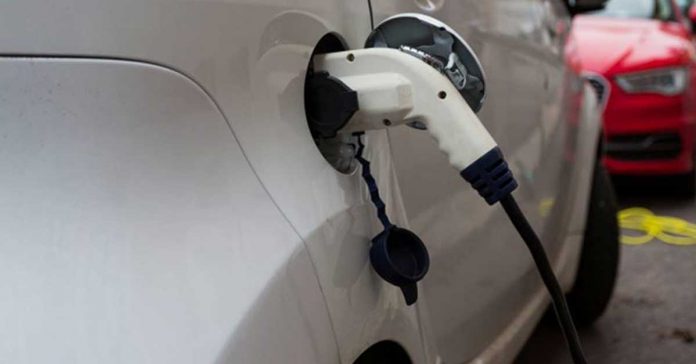
Laos has launched a new electric vehicle project, joining its neighbors in Southeast Asia where the growth of the EV market is set to boom.

Electricite du Laos (EDL) and Vientiane-based EV Lao Company have teamed up for the project, which is designed to compare operating costs between electric vehicles and those running on fossil fuels, as well as safety measures, and to ascertain the quality of the vehicles.

The collaborators are to install test charging stations at EDL, EV Lao headquarters, and the Ministry of Energy and Mines, Vientiane Times reported last week. They hope to install 20 stations in Vientiane this year with a view to begin imports of electric vehicles next year.

When the project is underway, priority locations for electric vehicle charging stations will include Wattay International Airport, bus stations, the first Lao-Thai Friendship Bridge and various government buildings.

Vientiane Times quoted Thongchanh Santhasith, Deputy Managing Director at EV Lao, as saying that the two parties are also discussing special pricing for electricity at charging stations as well as tax benefits and other incentives to encourage the use of EVs.

Regional Electric Vehicle Boom

Laos is not alone. Many countries in Southeast Asia are stepping up their efforts to take advantage of the trend as the region is gradually becoming home of the next growth wave for EVs.

According to Bloomberg New Energy Finance, production lines in Southeast Asia are now turning out over 4 million vehicles per year, and it is estimated that vehicle ownership across the region will grow by more than 40 percent by 2040.

Meanwhile, a recent report by Bain & Company estimated that ASEAN’s annual new investment in passenger EVs will grow to USD 6 billion by 2030 and will require another USD 500 million in new charging infrastructure as service providers support electrification needs.

Thailand is leading the trend with an ambition to become a hub for EV by pursuing “Thailand 4.0,” a policy to upgrade the nation’s industries, and next-generation automobiles.

It is currently investing about THB 43 million (USD 1.4 million) to set up to the charging-station infrastructure while planning to incentivize manufacturers and consumers with non-tax privileges and deductions.

Malaysia has set a target of 70% penetration of energy-efficient vehicles on the market, looking to introduce more than 100,000 electric cars, 2,000 electric buses, and 125,000 charging stations across the country by 2030.

Indonesia, meanwhile, is also gearing up to increase EV penetration of as much as 2.1 million units of 2-wheeler electric vehicles and 2,200 4-wheeled vehicles by 2025.

Japanese electric vehicle cable manufacturer, Bando Densen, has opened a factory in Savannakhet Province and will produce many of the cables used in electric vehicles around the world.

Vang Vieng Moves Closer to Becoming Laos’s Official Tourism Town

Vang Vieng Moves Closer to Becoming Laos’s Official Tourism Town

The Lao government laid out its plan to nurture Vang Vieng district into the country’s “official tourism town” by 2020, and signs are emerging that this goal is one step closer to completion.

The Asian Development Bank (ADB) has announced that it is providing USD 47 million for infrastructure development in the district and around the Nam Ngum reservoir to accommodate the growth of tourism.

The planned developments, which are expected to begin next year, include a wharf, parking facilities, community market, and a fishing village, as well as a garbage collection site, Vientiane Times reported on August 23.

In addition, a 6-kilometer road will be built to connect with Road No. 10, which should help to address congestion around the reservoir.

Separately, China’s Xinhua News Agency has published a six images providing a quick peek at the construction site  of the Vientiane-Vang Vieng expressway, well underway.

The Vientiane-Vang Vieng expressway is a part of the China-Laos expressway, which is co-developed by China Yunnan Construction and Investment Holding Group and the Lao Ministry of Planning and Investment.

The Vientiane to Vangvieng section stretches 109.1 kilometers and is expected to shorten the travel time from the current four hours to just 1.5 hours, according to Xinhua.

Laos and China agreed in November last year to begin construction on the USD 1.2 billion road to link Sikeuth village in Naxaithong District, Vientiane, to the Vang Vieng District.

At that time, it was estimated that it would take about three years to complete the construction.

Vang Vieng is already one of the top tourist destinations in Laos, many areas desperately need improvements, such as road access to visitor attractions, cleanliness, services, and tourism-related facilities.

Prime Minister Thongloun recently made a working trip to Vang Vieng to assess the district and offer advice on how to better develop the tourist town.

In May last year, the Lao government set a total of 108 requirements to meet before Vang Vieng can be designated a tourism town and has been working toward this goal since then.

In addition, district authorities have been collecting information on the tourism industry to take it to the central government for detailed discussion.

Vang Vieng sees more than 10,000 tourists every month, with South Koreans accounting for 70 percent, along with Chinese, Lao and others, according to the district’s estimation.

Laos Wins Case Against Foreign Investors in Casino Arbitration

Laos Wins Case Against Foreign Investors in Casino Arbitration

Laos has won over foreign investors in the latest arbitration of an international court case involving the casino industry.

The International Centre for the Settlement of Investment Disputes (ICSID) tribunal has dismissed a case lodged by Dutch firm Lao Holdings NV (LHNV) against the Lao government claiming that it breached the bilateral investment treaty between the Netherlands and Laos.

The tribunal said LHNV “failed to meet its burden of proof” for the case, ordering the company to pay to the Lao government about USD 481,623 for the expended portion of the government’s advances to ICSID.

What is LHNV?

LHNV is an Aruba-based company that was established by two American entrepreneurs, Mr. John Baldwin and Mr. Shawn Scott.

Aruba is an island and a constituent country of the Kingdom of the Netherlands in the southern Caribbean Sea. Aruba is often referred to as one of the offshore tax havens in the Caribbean.

Two businessmen established the firm in 2007 to make a foray into Laos’s casino industry.

Apart from LHNV, they also set up Sanum Investments (Sanum) in Macau with the same purpose.

According to ICSID, Mr. Baldwin and Mr. Scott used various corporate structures partnered with a Lao conglomerate, ST Holdings, in two casino projects and three slot machine clubs in Laos located near its border with Thailand.

One of the casinos, the Savan Vegas Hotel and Casino, was built and operated successfully, but the second casino, Paksong Vegas Casino was never built.

What happened?

Within three years of the establishment of the partnership, there was a falling out between two businessmen and their local partner.

ST Holdings ceased cooperation with Sanum, initiated litigation against it and closure of Sanum out of Thanaleng, the most profitable of the slot clubs.

Mr. Baldwin testified that ST Holdings was closely connected to influential politicians in the Lao government, saying that ST Holdings “orchestrated a series of wrongful government acts against LHNV,” as quoted by ICSID.

This led to the result of driving LHNV out of Laos, and the wealth created by the investment and expertise of Mr. Baldwin and his associated companies was appropriated for the Lao government, Mr. Baldwin claimed.

Arbitrations

Mr. Baldwin and his associates initiated arbitrations by LHNV under the bilateral investment treaties between Laos and the Netherlands and by Sanum pursuant to a similar investment treaty between Laos and Macau.

Although Sanum obtained an award against ST Holdings from the Singapore International Arbitration Centre for over USD 200 million, the ICSID tribunal said Sanum is not a claimant before this tribunal, and it does not purport to address its claims.

The tribunal added, however, it is evident that Mr. John Baldwin is involved in both LHNV and Sanum, and as he was the directing mind of both companies, and their principal witness, references will be made to Sanum from time to time as part of the background to the disposition of the LHNV claims.

What was Lao government’s position?

According to ICSID, the Lao government’s position was that it has been “dragged into” a business dispute between private parties, namely LHNV, Sanum and ST Holdings.

The Lao government said business efforts of LHNV and Sanum in Laos were characterized by bribery and corruption, adding that their claims ought to be dismissed because of the absence of “clean hands” as well as on the merits.

In response, Mr. Baldwin and his associates said the government failed to show any evidence that they tried to find the people who took the bribes.

Dismissing LHNV’s claims

The tribunal said it concluded that the LHNV claims must be dismissed, adding the dispute grew out of a commercial fight between private businesses.

It admitted that the Lao government became involved in aspects of the dispute as a regulator of the gambling business in Laos, as a shareholder in Sanum, and through its responsibility for the administration of justice in Laos.

However, the tribunal added that Mr. Baldwin and his associates failed to establish the facts necessary to ground liability in international law under the bilateral investment treaties between Laos and the Netherlands.

“No bribery and corruption”

The tribunal also said it found that the Lao government has not established bribery and corruption against Mr. Baldwin and his associates on “clear and convincing evidence”.

“While the government has not always behaved appropriately, and politics undoubtedly played a role in the worsening relations between the government and the claimants, LHNV has failed to demonstrate any legitimate expectations or establish other violations of the bilateral investment treaties including fair and equitable treatment,” the tribunal said.

“In all instances, LHNV has failed to meet its burden of proof,” it concluded.

Vientiane City Bus Moves Toward Cashless Payment

Vientiane City Bus Moves Toward Cashless Payment

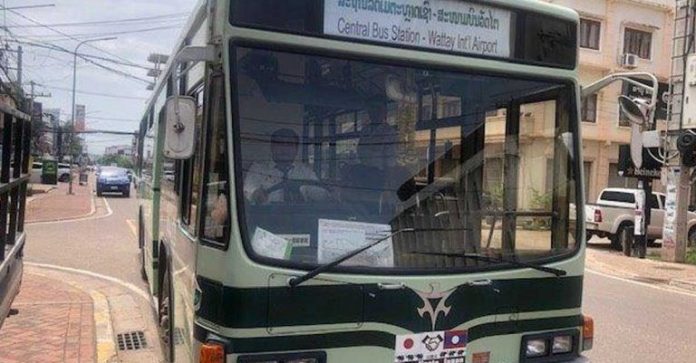
Vientiane Capital State Bus Enterprise (VSCBE,) which operates Vientiane City Bus Service, is implementing a cashless electronic payment system for some of its routes in the capital.


Passengers on the Airport line and ITECC line are now able to pay for their journey via the LDB trust service, a QR code payment system developed by Lao Development Bank.

Payments can also be made with VISA, MasterCard, UnionPay and JCB, according to images of the service revealed by Japan International Cooperation Agency (JICA) Laos.

If it is successful, other banks will join the movement to provide the cashless payment services for the bus users, said JICA.

JICA has closely worked with the country’s Ministry of Public Works and Transport, Department of Public Works and Transport and Vientiane Capital to enhance the capacity of VSCBE as well as to promote public bus ridership in Vientiane.

In particular, they focused on improving the corporate management system, bus operation service and transportation policy on public bus service.

VSCBE currently operates 14 city routes, of which 11 are urban, as well as six provincial routes and four international routes to Thailand.

As of June 2017, the total number of employees and workers of VCSBE stood at 242, and 133 of them were drivers.

Cambodia Urges Laos to Speed Up Electricity Transmission

Cambodia Urges Laos to Speed Up Electricity Transmission

Cambodia has asked Laos to speed up the transmission of electricity that it purchased earlier this year.

Cambodia’s Electricite du Cambodge (EDC) signed an agreement in March to purchase 200 MW from Laos from 2019 to 2021.

“We hope that Laos will be ready to transmit the energy very soon so that we can avoid a power shortage next year,” said Cambodia’s Commerce Minister Mr. Pan Sorasak during a meeting on August 20 in Phnom Penh with Lao Ambassador Amphay Kidavong.

In response, Mr. Kidavong said he will do his best to speed up the energy transmission, as quoted by Khmer Times.

Cambodia has increased energy imports from neighboring countries, including Laos, amid rising consumption.

The country consumes 2,000 MW every year, with energy imports making up less than 20 percent of total consumption. Cambodia imports energy from Thailand, Vietnam, and, to a lesser extent, Laos, according to the country’s energy authority.

In December last year, Cambodia said it will import more energy from Laos during the visit of its delegation, including Cambodian Prime Minister Hun Sen, to the Lao capital Vientiane.

No details were revealed regarding the amount of energy that will be exchanged, at that time.

Laos is currently pushing for more energy exports by considering it as the key sector expected to drive the growth of the economy.

According to the Lao Ministry of Industry and Commerce, the value of electricity exported jumped from USD 600 million in 2015 to USD 1.4 billion in 2018, making it Laos’s top export earner.

The country’s goal is to earn about USD 1.328 billion from energy exports this year. Under this plan, Laos expects to export 14,800 MW of electricity annually to neighboring countries by 2025.

Laos currently has operational power plants with a total installed capacity of 7,207 MW and electricity generation of 37,366 GWh per year.

Laos, Thailand To Build Another Friendship Bridge

Laos, Thailand friendship bridge

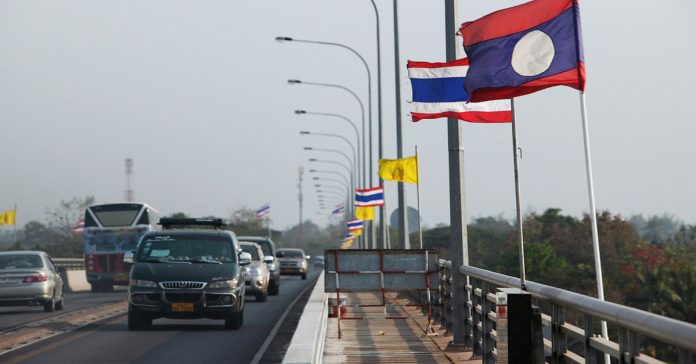
Laos and Thailand are considering the construction of one more friendship bridge to connect the two countries in a move that would link Vientiane Province and Loei.

The governor of Vientiane Province, Mr. Khamphan Sithidampha told reporters on August 16 that Vientiane provincial authorities had proposed the project to the government for its consideration.

“We are conducting a study on the location of the bridge, to decide whether it should be in Sanakham or Meun district,” Mr. Khamphan, as quoted by Vientiane Times.

It is unclear when the construction of the bridge would begin.

The first friendship bridge to connect the two nations was built in 1994, with help from the Australian government.

Since then, the two governments have constructed a total of four Lao-Thai bridges across the Mekong River and have signed an agreement to build another bridge linking Borikhamxay province with the Thai province of Bueng Kan.

Mr. Khamphan said the construction of the bridge and the upgrade of border crossings between Vientiane province and Loei Province would provide a significant boost for domestic and foreign investment.

Laos and Thailand have beefed up their efforts to improve connectivity between two nations in recent years.

The first freight train service to and from Laos was launched in early August, which will carry cargo from a container yard at Thanaleng Railway Station in Vientiane, Laos, to as far as the Laem Chaban seaport in Thailand.

Trains to and from Vientiane used to be only able to carry passengers only across the 3.5km track, while freight was carried across the border to Nong Khai by truck.

Meanwhile, Thailand is preparing to launch the country’s first bullet train that will run between Bangkok and Beijing, China, with Laos as one of the intermediate stations.

In particular, the first route, a Thai-Sino project linking Bangkok and Nong Khai in the far Northeast, is currently under construction and is scheduled to be completed by 2023.

In July, Laos and Thailand also signed an agreement to extend road and rail connections between the two countries worth more than THB 3 billion (USD 98.2 million).

Under the agreement, the two countries plan to improve the R11 road linking the Phudu border checkpoint in Uttaradit province in Northern Thailand with the Lao capital, Vientiane. The two-lane road will be paved with asphalt and will cost about THB 1.8 billion (USD 59 million).

Labor Imbalance Causes Unemployment in Laos

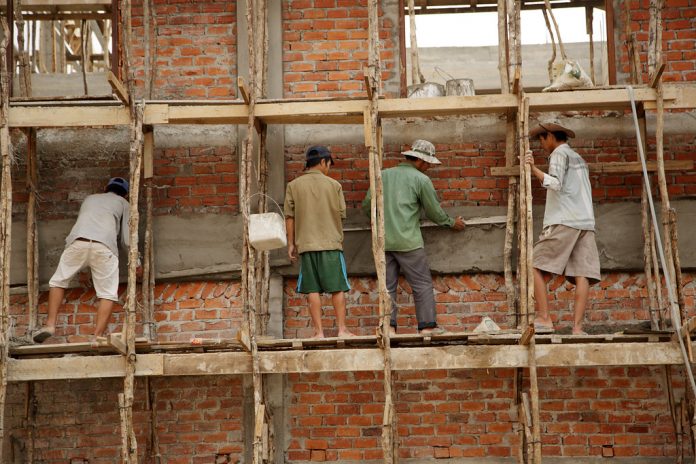
Laborers work on a new school building in Luang Prabang Province, Northern Laos.

An imbalance in the supply and demand of labor in some sectors poses a challenge for Laos in its efforts to tackle rising unemployment.

“The government has acknowledged that there is a mismatch in the supply and demand of workers in some areas,” Vientiane Times reported on August 19. “This poses a challenge for the government in its attempts to lower the unemployment rate.”

In particular, the construction industry in Laos is suffering from a shortage of Lao workers, the paper added, quoting a study by the Ministry of Labour and Social Welfare.

The demand for such workers in the construction industry for this year is expected to reach 4,400, but only 1,350 are available, according to the study.

The study indicates that both the government and the industry should nurture more skilled Lao workers to secure supply.

Laos is witnessing a construction boom amid the government’s promotion of public and private investment in the construction of roads and railways.

Large-scale infrastructure developments such as hydropower plants and railways have also triggered a high demand for construction workers, but much of the labor force for such projects are foreign workers.

Vientiane Times noted that more jobs could be created for Lao nationals with the government’s efforts to nurture skilled local construction workers and it could reduce reliance on foreign workers.

Apart from the construction industry, the country’s agricultural sector is also struggling to secure enough workers.

About 2,500 workers are needed in the agricultural sector this year, while only about 1,600 are available, the study said.

In contrast, some industries, including manufacturing, electricity and water management, finance and insurance, and communication and transport, have seen a surplus in the supply of labor; higher than demand.

“One of the problems is that most young people want to take courses in administration and management, for which the number of available jobs is minimal,” Vientiane Times explained.

In Laos, unemployment is among the top issues when comparisons are made with the success of other ASEAN member countries, and observers believe this is because local job seekers have difficulty accessing information about available positions.

Statistics from the Ministry of Labor and Social Welfare show that as much as 9.4 percent of the workforce, representing about 182,000 people, are unemployed.

In an effort to tackle the issue, the Lao government teamed up with the country’s largest employment website operator, 108 Job, in July.

Under the partnership, the two parties agreed to jointly develop a labor market information system to upload employment vacancies on both the ministry’s www.lmi.molsv.gov.la and 108.jobs, which will provide information about companies in Laos with job vacancies in different sectors.