Home Blog Page 6484

E-Commerce Benefits Require Access, Digital Connectivity At Right Cost in Laos

Taking Advantage of E-Commerce: Legal, Regulatory, and Trade Facilitation Priorities for Lao PDR

Barriers such as costs and strength of connectivity, infrastructure, facilitation must be overcome so ongoing development of e-Commerce in Laos can assist more women, small firms, people with physical disabilities, and those in isolated communities to benefit from trade, according to research from World Bank.

Technology, e-Commerce, and connectivity mean the potential for exporting goods and services from Laos has never been greater, yet obstacles remain to fully comprehend and grab some of the many opportunities on offer, according to research released by the multilateral financier, the World Bank.

The rapid growth of e-commerce globally, including in the Association of Southeast Asian Nations (ASEAN), helps lower the costs of trade for exporters from Laos and reduces prices for consumers, the research paper entitled Taking Advantage of E-Commerce: Legal, Regulatory and Trade Facilitation Priorities for Lao PDR (English) has found.

It comes hot on the heels of the critical assessment on offer in the report Digital Connectivity in Lao PDR: Lagging Behind Peers featured by the Laotian Times: “Laos’ Online Connectivity Lagging Behind Peers As World Bank Research Reveals Extent, also in February 2019.

E-Commerce connectivity recommendations from World Bank via Taking Advantage of E-Commerce: Legal, Regulatory, and Trade Facilitation Priorities for Lao PDR.

What is e-Commerce?

“E-commerce refers to the buying and selling of goods and services digitally”, according to the definition used in the research,

“Although limited available information suggests that Lao PDR has a minimal presence of e-commerce, it has the potential to present many opportunities:”

  • E-commerce can help lower the costs of trade for Lao PDR exporters and lower prices for consumers.
  • It can also reduce barriers to people who face disadvantages participating in traditional trade (ie. women, people with disabilities, and isolated communities).

    E-Commerce connectivity recommendations from World Bank via Taking Advantage of E-Commerce: Legal, Regulatory, and Trade Facilitation Priorities for Lao PDR.
    E-Commerce connectivity recommendations from World Bank via Taking Advantage of E-Commerce: Legal, Regulatory, and Trade Facilitation Priorities for Lao PDR.

Constraints to the e-commerce environment currently hold Lao PDR back from greater participation.

  • Limited internet connectivity, high costs of payments, incomplete regulatory infrastructure, and high trade facilitation and logistics costs are limiting factors.

The legal and regulatory framework needs strengthening in some areas to support greater participation in e-commerce.

  • Strengthening the protection of consumers participating in e-commerce and developing/implementing legislation for the protection of personal data will be key.
  • Taxation of e-commerce is also a priority policy area.  Any reform should be informed by a careful assessment of costs and benefits to avoid restricting the early growth of e-commerce.

Trade facilitation also needs further reform to avoid posing undue costs on small firms or entrepreneurs trying to enter into e-commerce.

  • The earliest area of growth in international e-commerce would likely be cross-border trade.
  • Small firms and entrepreneurs are least equipped to manage costs related to shipment delays, lack of transparency, and unpredictable regulations.
  • Clarification on regulations for low-value goods imports and a formal framework to streamline the process are necessary.
E-Commerce connectivity recommendations from World Bank via Taking Advantage of E-Commerce: Legal, Regulatory, and Trade Facilitation Priorities for Lao PDR.

The reports key recommendations:

  1. Implement relevant ASEAN approaches to regulatory issues related to e-commerce, with a special focus on consumer protection, privacy, and electronic signatures.
  2. Take a cautious approach to imposing new taxes on e-commerce.
  3. Establish a transparent and consistently applied procedure for handling low-value cross-border trade.
  4. Move away from submission or paper documents for trade clearance and toward electronic submission of documents.
  5. Increase effort to apply risk management principles in processing cross-border shipments.
  6. Confirm the leadership role of the Ministry of Industry and Commerce in the coordination of the e-commerce agenda.
Taking Advantage of E-Commerce: Legal, Regulatory, and Trade Facilitation Priorities for Lao PDR

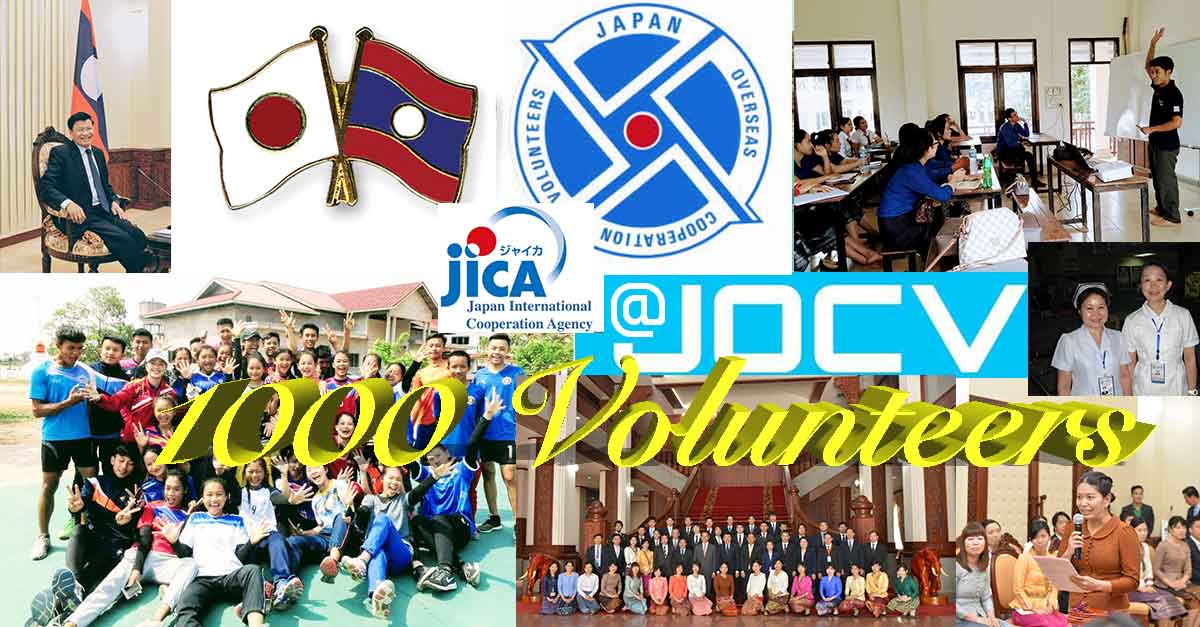
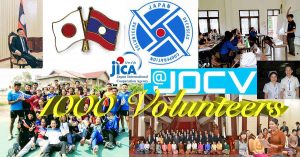
1000 Strong As JICA Volunteers From Japan Surpass Millennium Milestone in Laos

Celebrating 1000 Japan Overseas Cooperation Volunteers To Laos via JICA.

Warm welcome as the arrival of eleven Japan Overseas Cooperation Volunteers from JICA takes Japan International Cooperation Agency past the one-thousand milestone in Laos.

Agriculture and Community Development, Education, Health, Law, Public Works, Water Treatment, Sanitation and Waste Management.

These are just some of the many areas in which Laos has seen rapid development over the decades, making the country a safer, healthier, cleaner and more comfortable place to live.

These important areas are also among the many where contributions of grants, aid, and exchanges with Japan have been warmly welcomed.

This includes technical expertise and assistance thanks to no less than one thousand Japan Overseas Cooperation Volunteers (JOCV).

●Mr. Takatsugu NAKAYAMA (Environmental and Sanitary Engineering, NUOL, right)One scene of my lecture introducing…

Posted by JICA Laos -ອົງການຮ່ວມມືສາກົນຢີ່ປຸ່ນ- on ວັນຈັນ ທີ 7 ມັງກອນ 2019

The millennial milestone was passed when eleven new Japanese volunteers to Laos together with representatives of their host organizations were welcomed to the Embassy of Japan to Laos in Vientiane on February 4, 2019.

Warm welcomes were provided by Ms. Sisomboun Ounavong, Director General of International Cooperation and Minister to the Embassy of Japan to Laos, Mr. Kuno Kazuhiro.

Posted by Embassy of Japan in Laos ສະຖານທູດຍີ່ປຸ່ນປະຈໍາ ສປປລາວ on ວັນຈັນ ທີ 4 ກຸມພາ 2019

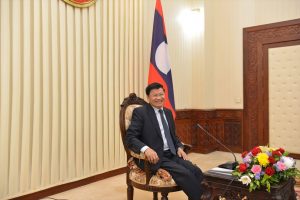
There, volunteers heard of the high regard held for the contributions of JOCV, something recognized by PM Thongloun Sisoulith at a recent event hosting a courtesy call at Government House for World Volunteers Day as reported by Laotian Times.

Members of Japan Overseas Cooperation Volunteers (JOCVs) and Japan’s Senior Volunteers (SV) were hosted by the PM for an annual courtesy call and informal exchange on Monday, December 10 where Mr. Thongloun expressed heartwarming appreciation for volunteers’ daily efforts.

Prime Minister Thongloun welcomes visit from Volunteers from Japan via JICA
PM Thongloun meets Japan Overseas Cooperation Volunteers (JOCV)

The volunteers reported on their activities and challenges that they directly are facing on the ground while in response, the Prime Minister made comments on the initiatives being made by the Government of Laos.

Thousand volunteers to Laos among 50,000 to 90 countries

●Ms. Mayumi NISHIMURA (Nurse, Mahosot Hospital, right)This picture was taken when a Japanese newspaper visited us. She…

Posted by JICA Laos -ອົງການຮ່ວມມືສາກົນຢີ່ປຸ່ນ- on ວັນຈັນ ທີ 7 ມັງກອນ 2019

More than 50,000 JICA volunteers have been dispatched to more than 90 countries around the world since the first made their trip so many years ago. The numbers include both junior volunteers (aged under 40 years) and senior volunteers (40 – 69 years).

Volunteer programs “support activities by citizens (of Japan) who wish to cooperate in the economic and social development as well as the reconstruction of developing countries,” JICA’s website states.

“Through these cooperation activities, participating volunteers can not only contribute to the development of partner countries but also gain valuable experience in terms of international goodwill, mutual understanding and an expansion in their international perspectives.

“Widely recognized as a representative Japanese international cooperation program, volunteer activities have not only earned high acclaim from partner countries but are also receiving increased praise in Japan, where expectations for these programs are also rising.”

Posted by JICA Laos -ອົງການຮ່ວມມືສາກົນຢີ່ປຸ່ນ- on ວັນສຸກ ທີ 8 ກຸມພາ 2019

A bridge between diverse people, communities, countries

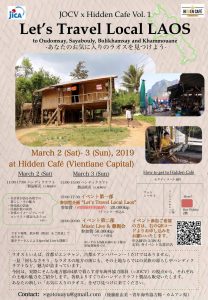
Find out more about the activities of Japan Overseas Cooperation Volunteers by attending events such as Let’s Travel Local LAOS from March 2-3 at Hidden Cafe at Vientiane.

Lat’s Travel Local Laos Event with JOCV at Hidden Cafe, Vientiane.

JOCV also likely to be spotted at Cool & Kawaii Japan 2019!

Come along and say Konnichiwa!

Posted by Cheer Japan Overseas Cooperation Volunteers -Jocv- 青年海外協力隊 on ວັນພະຫັດ ທີ 5 ກໍລະກົດ 2018


Celebrating 1000 Japan Overseas Cooperation Volunteers To Laos via JICA.

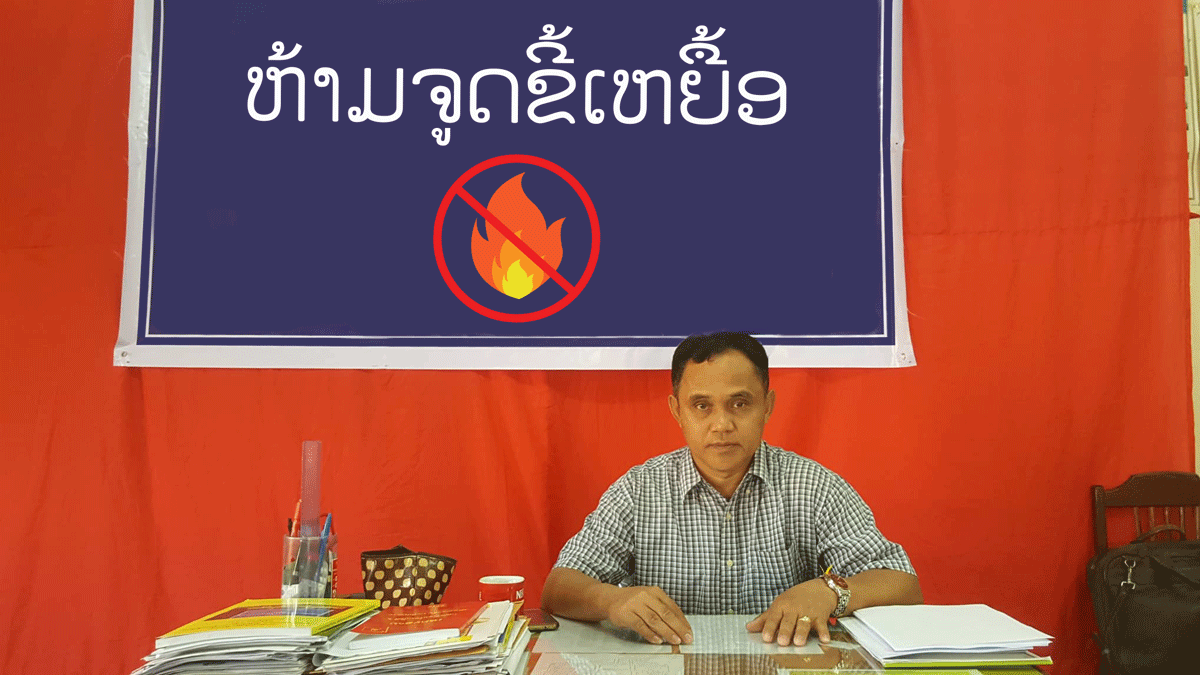
The Vientiane Village Chief Stamping Out Garbage Fires

Village Chief of Sangveuy Stamps out Garbage Fires

Each and every morning, the loudspeakers in Vientiane’s Sangveuy Village, of Sisattanak District, can be heard sending out a special message from the Village Chief, Mr Oudomxay Sisomphone.  His message is clear and concise: stop burning garbage, and stop littering. A breath of fresh air to some, and a stern warning to others.

Mr Oudomxay, who gave an interview to the Lao Post, says he decided to take real action against the problem of garbage fires in order to clean up the air in his local area, and encourage villagers to take care of their health.  And he says the law is on his side.

Regulations against the practice have been issued, including Instruction by the Mayor of Vientiane, No. 002/MV, and several notices issued by the Head of Sisattanak District, as well as the official village regulations. According to these regulations, the burning of household waste is prohibited across Vientiane Capital. But many villages are unwilling or unable to deal with the problem.

“I like to keep my village clean. And the village authorities in my village take air pollution very seriously,” says Mr Oudomxay.

“This problem is only getting worse. Fumes from garbage fires are one factor contributing to pollution, and are a nuisance for people nearby who may experience difficulty breathing. This is also a major fire risk.”

Sangveuy village holds regular clean-up sessions on Saturday mornings, when residents gather together to pick up garbage and clean the village.  Areas of dense scrub are also cleared to make the village more attractive.

“We’ve had many foreign residents coming to our office to lodge complaints because these fires are harmful to their health, especially to children. I want all residents of Sangveuy, whether foreign or local, to live in a healthy and sanitary environment,” said Mr Oudomxay.

Mr. Oudomxay says his village has also commenced an inspection and education program for offenses related to littering or burning waste. He has put measures in place to punish those found guilty, including monetary fines, and regularly checks for villagers flouting the rules.

He encourages all residents of Vientiane to take a stand against air pollution, and report incidents to local authorities.

—
Written with assistance from Cameron Darke.

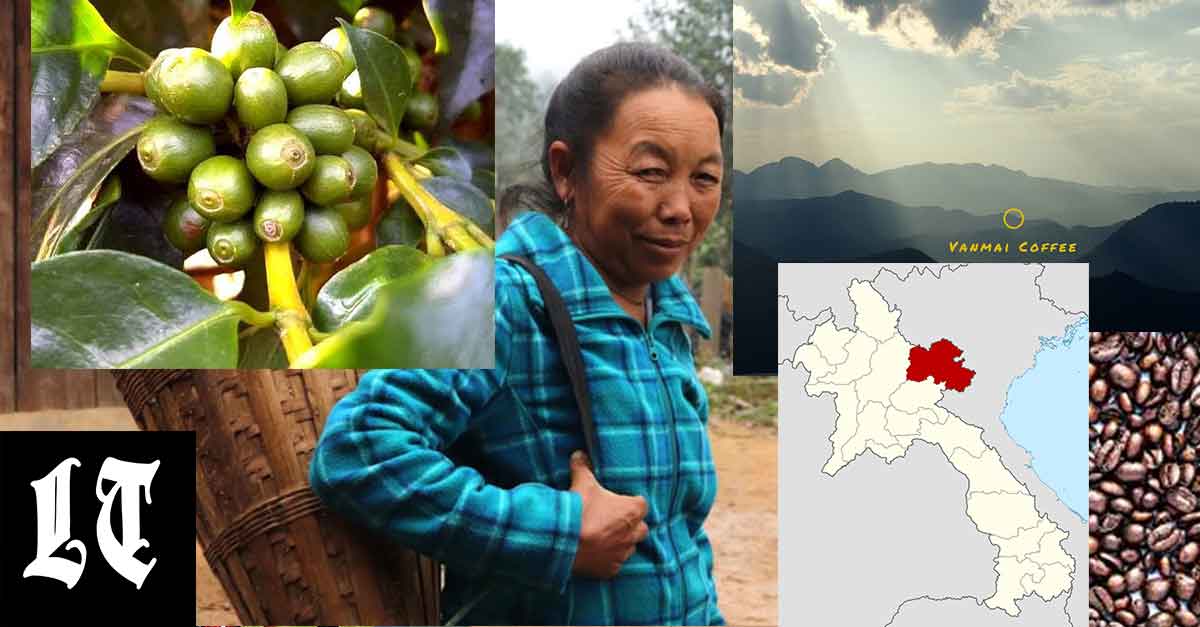
Farmers Like Her: Surpassing Opium Proves Personal As Coffee Grows in Northern Laos’ Huaphan Province

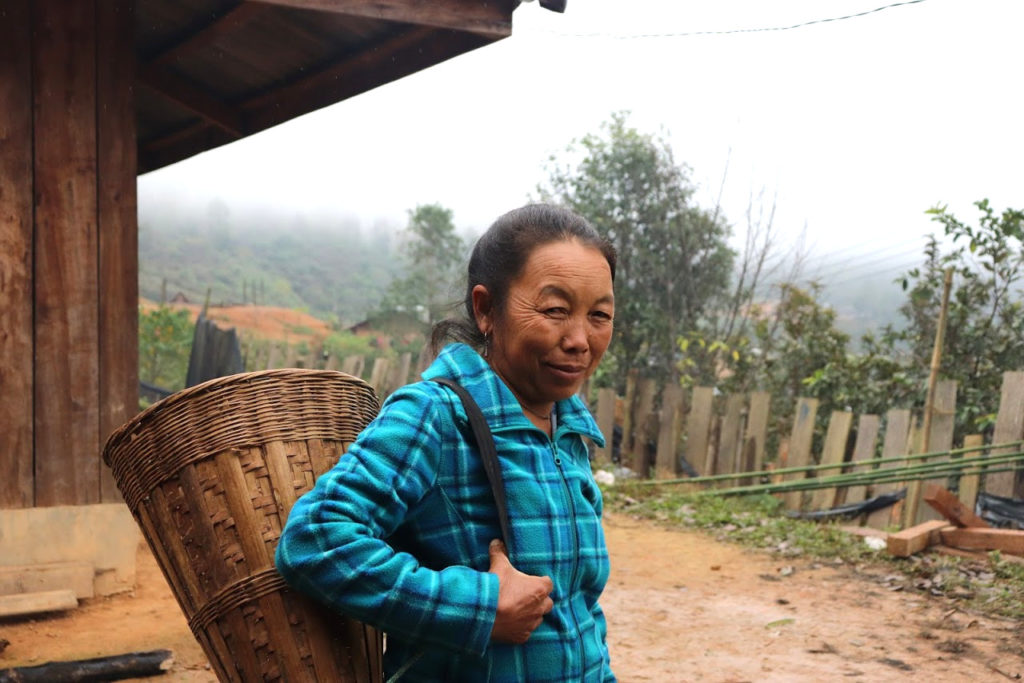
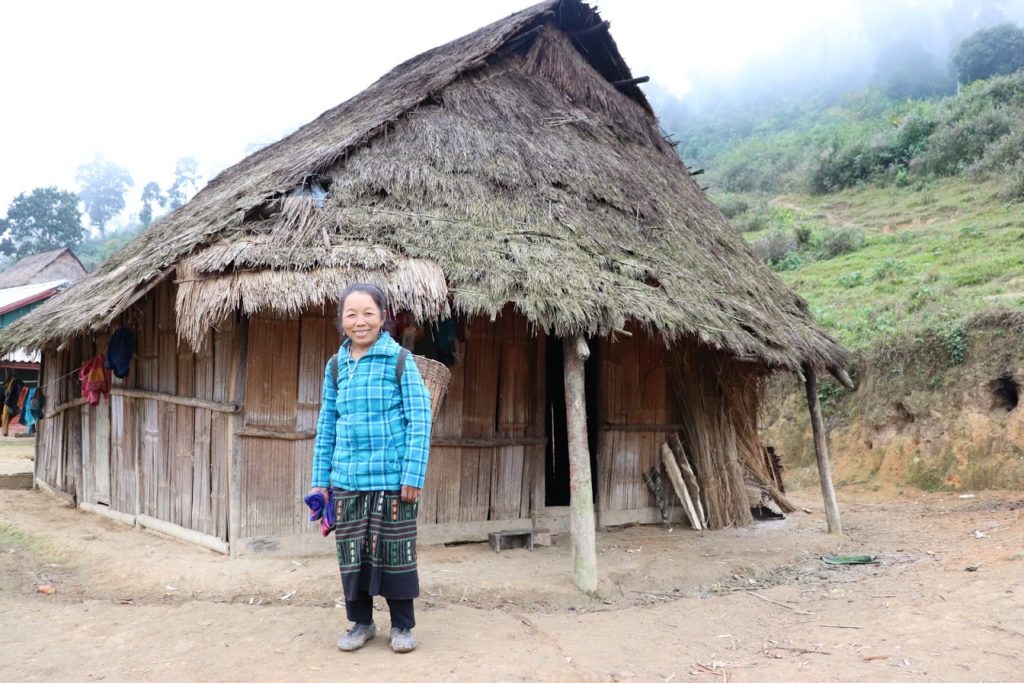
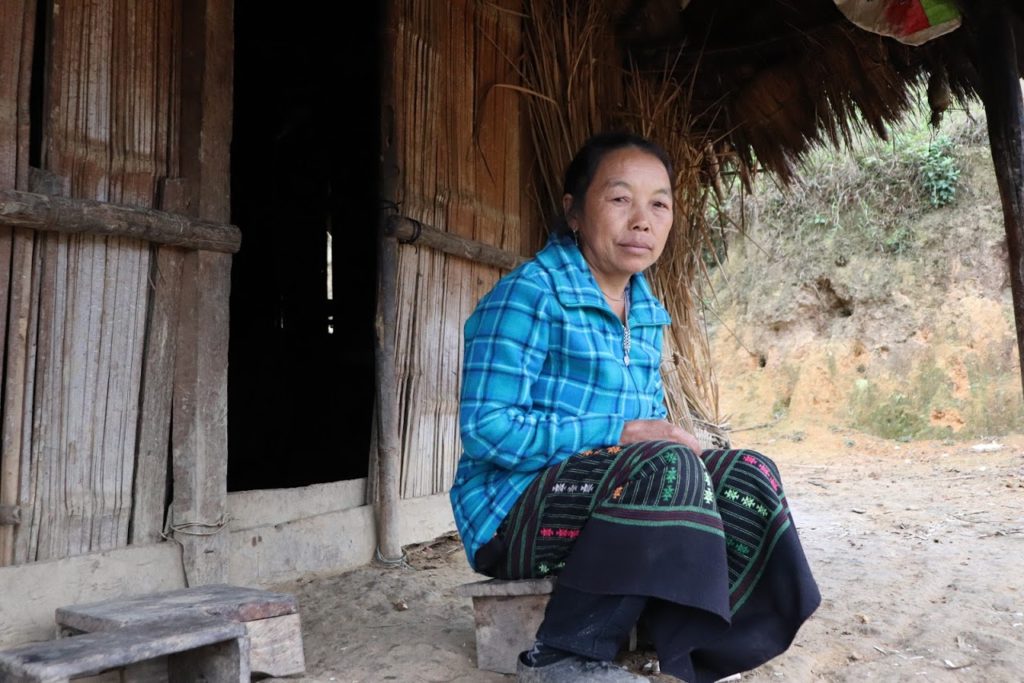
Coffee farmer Ms Her from Huaphan.
Bringing fresh hope and a hot coffee like a brand new day, Vanmai Coffee is a community of families in Northern Laos, growing coffee in a bid to leave behind troubles of opium, conflict, and poverty.
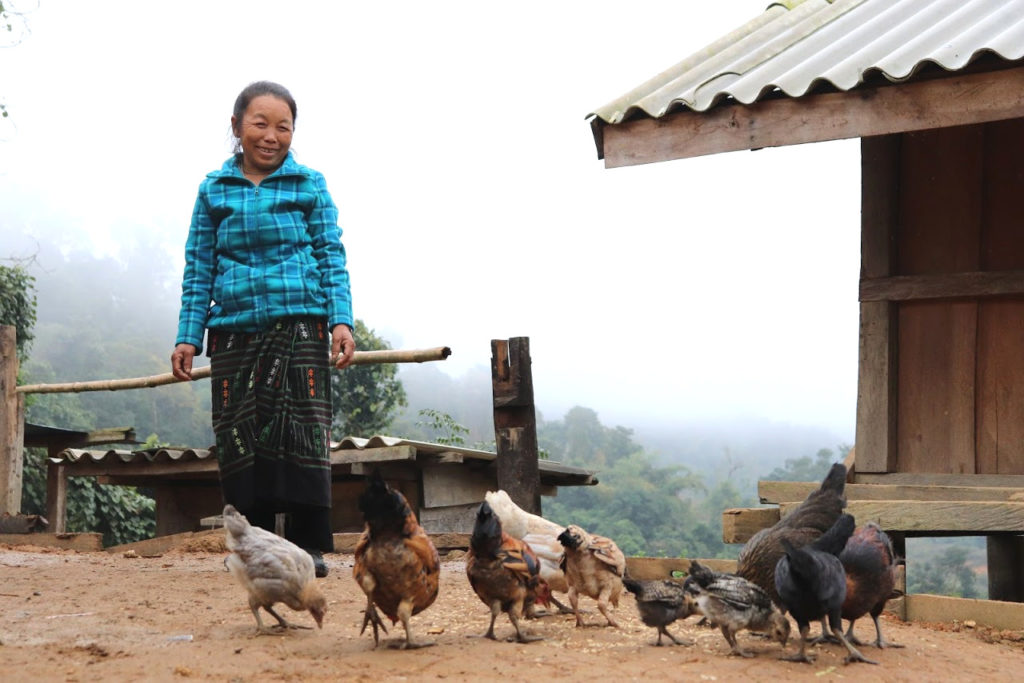
Ms Her has a cheeky smile and a weathered grin may remind you of one of your own Aunties. The mother of four’s visage is hearty enough to put a smile on your face like a strong and flavourful morning cup of coffee.
Farmers Switching From Opium Poppies to Coffee Beans in Laos' Huaphan Province with Vanmai Coffee
Farmers Switching From Opium Poppies to Coffee Beans in Laos’ Huaphan Province with Vanmai Coffee

Emerging from around the corner on a cool day among the clouds with a smile, its a warm greeting among the young coffee trees at the cool and high elevations of Laos’ northern Huaphan province.

It’s not only the trees that are growing up. The coffee farming industry up year is younger than the grower.

Producing the popular bean-containing cherries essential to the bittersweet brew is a relatively new pursuit in these hilly parts.

In fact, the trees are so young they are yet to produce their first harvest, which can be expected following the third monsoon, proving that farming truly can be an investment in a more hopeful future.

The previous crop up here?

Opium poppies.


Farmers Like Ms Her Switching From Opium Poppies to Coffee Beans in Laos' Huaphan Province with Vanmai Coffee
Farmers Like Ms Her Switching From Opium Poppies to Coffee Beans in Laos’ Huaphan Province with Vanmai Coffee

A source of both pain-relief and the suffering of dependency and its side effects, the sap producing opium poppy has been an economic staple, a source of income for many of the hardworking farmers of Huaphan for generations.

For some, like Her’s husband, the substance was to prove a fatal addiction.

Listening to her words and the dangers becomes of dependency on the illicit trade become clear.

“Opium has taken away our lives, it took my husband.”

“I mean I never knew that I would end up here,” she reveals.

“I got married to a handsome man in my village.”

“He was a diligent man who knew how to earn money and make sure his family had enough food.

“I loved him and I was happy, we never got married but we stayed together.

“After we got the news that I had given birth to a baby boy, everyone was so happy.

“In our tribe, a son is a gift who will be a successor of the father.

“Our families were so happy that my first child was a son, my husband was also very happy, our life was going very well.

“I then gave birth to two daughters and a son after that as well.

“We had four children who helped us and we worked together as a family like other families in our community.

“We made a living farming together and worked on saving for our children and their education.”

Farmers Like Ms Her Switching From Opium Poppies to Coffee Beans in Laos' Huaphan Province with Vanmai Coffee
Farmers Like Ms Her Switching From Opium Poppies to Coffee Beans in Laos’ Huaphan Province with Vanmai Coffee
 
 “But once my husband got addicted to opium, our lives changed.

“He became a different husband and a different father. After a while he couldn’t even work because he was ill so often.

“The family situation got worse. Everyone else had to work more to eat.

“Eventually, both my daughters grew up, got married and left the home.

“My husband became worse and was not able to cope with his symptoms. He died at age 49. 

“I know that my life has no miracles in store, but all I want is a better future for my son than I had.”
“I know that my life has no miracles in store, but all I want is a better future for my son than I had.” – Farmer Ms Her

“I know that my life has no miracles in store, but all I want is a better future for my son than I had.”

My oldest son is addicted to opium now.

“After my husband died, my son was imprisoned for his opium use.

“He was in jail for three months.

“They put him through quarantine so they could get him out of his addiction.

“But after he got out of prison his behavior just got worse and he even threatened to use the little money I saved on opium.

“He has moved out now, found a girl and they live together. They will get married soon.

“I thought that maybe if he gets himself a wife then she will be able to help him out of addiction but I don’t know anymore.

“He is still the same. It makes me sad to see my son becoming like his father.”  

“So many times I think I do not want to live on this earth anymore. But I still have my son.

“I have been working alone trying to earn and make a living for my youngest son.

“So I fight for him. He is 11 years old and he is my only hope.

“Ineed to teach him to be a good person.

“So I put all my energy into growing upland rice and now coffee, and I am saving income to buy his school materials and a new uniform.

“I know that my life has no miracles in store, but all I want is a better future for my son than I had.”

Vanmai coffee is supported by the United Nations Office on Drugs and Crime’s (UNODC) alternative development programme in Lao PDR helping farmers move from cultivating opium to cash crops such as coffee. 

Text Credit: Laotian Times & Van Mai Coffee

Laos’ Online Connectivity Lagging Behind Peers As World Bank Research Reveals Extent

Taking Advantage of E-Commerce: Legal, Regulatory, and Trade Facilitation Priorities for Lao PDR

“Lao PDR is lagging significantly in terms of accessibility, quality, and affordability of internet services compared to other comparable regional economies,” a new report on digital connectivity states.

The grim assessment comes via The World Bank’s latest report on the country’s online connectivity entitled Digital Connectivity in Lao PDR: Lagging Behind Peers.

“Digital connectivity—access to affordable and reliable internet services—has become a key driver of economic and social development.”

Yet in Laos, according to the report, “by almost every measure,

  • Access to mobile broadband is increasing, but rural and more remote communities are still underserved.
  • Fixed broadband, which is required for high-capacity data transmission, is particularly limited.
  • Prices for internet are comparatively high.  High capacity fixed broadband services are very limited and extremely expensive.
  • The relatively high cost is slowing access, with mobile subscription and broadband internet subscription rates lower than in neighboring countries.
  • There is a minimum retail tariff regime for mobile, voice and data services, and this may reduce the ability of operators to compete on price and services.
  • Quality of service and affordability of internet are continuing concerns that are slowing the introduction and use of digital services and applications.
  • The average 2G/3G connection is on the low side for speed, and while the 4G connection speed falls within regional averages, Lao PDR is the only country in the region with only one operator offering 4G.
  • A qualitative survey of consumer attitudes suggests that consumers find internet speed slow and service unreliable, resulting in low value for money.
  • Regulatory capacity and expertise is increasing but remains comparatively low, further limiting market growth and investment.”

However, it’s not all bad news, with the Bank permitting an obligatory ray of optimism to shine upon its otherwise gloomy appraisal.

“Lao PDR is well-positioned to take advantage of digital connectivity to improve growth, competitiveness, and services provision,” it states “but interventions are needed to ensure that Lao PDR does not fall further behind regional peers.”

The Bank’s recommendations include the following…

  • Policy, legal, and regulatory reforms to stimulate investments in infrastructure needed to improve digital services
  • Increased private participation, with strategic use of public funds to support less commercially viable investments
  • Support for regulatory capacity building to ensure efficient use of resources
  • A review of the status of the national network to identify bottlenecks and infrastructure needs to deliver higher levels of traffic in the future
  • Improved reporting from the industry on access, pricing and service quality
  • Review of minimum retail tariffs for mobile services to determine whether they reduce price and quality competitiveness among operators”

Download the full report via the World Bank here.

Journey From Resource Exploitation To Knowledge Economy A Long, Necessary Road in Laos

Development of Knowledge Economy A Must in Laos.

OPINION: What are you going to do when you grow up? It’s a question relevant to socio-economics as well as people as policymakers discuss “Vision 2020-2025”. 

It is a question many if not all of us will remember parents or elders asking when were kids.

“What are you gonna be when you grow up?”

Some of us knew already. Others had barely a clue.

A few see their future dreams come true. Others not so much. Even more just muddled through.

When it comes to posing this question, many of us of a certain age or older may well have reciprocated with the younger generations.

Perhaps, the need to make future considerations is one of the few constants in a rapidly changing world in some ways radically changed from that experienced by our ancestors just a few generations ago.

Yet one difference is that these days, it’s not only children that are being asked this question.

It’s a question being asked of entire countries.

The increasingly rapid,  landscape-shifting developments in technology and their positive and negative externalities at a time of increasing connectivity have a multitude of economic and social development implications for all nations of the world.

This is particularly relevant for a least developed country (LDC) such as Laos, still dealing with long-lasting legacies of colonialism and war plus persistent corruption issues while pushing toward an aspiration of lower-middle-income status.

This comes at a time of rapid automation and emergence of Artificial Intelligence that promises to upend employment globally in both East and West, North and South.

So in Laos as elsewhere, the nation’s policymakers and entrepreneurs alike look ahead in both anticipation and trepidation to a future of potential opportunity as well as challenges as the public and private sectors seek to manage risk and increased prosperity in an unknown world.

In the case of resource-abundant and sparsely populated Laos, natural resource exploitation to feed the demand of foreign markets has long been a necessity to raise funds for necessary imports.

Over time, mining and power development have provided steady yet fluctuating rivers of revenue that have long helped to float the nation’s budget that has also helped to pave more than a few roads, paid the modest salary of civil servants, teachers and medics and other necessary services as well as funding the construction of buildings and purchase of vehicles and their fuel.

Yet with natural limits in mind and with an eye to the longer term future of a still young populace, policymakers are increasingly cognizant that moves to an increasingly knowledge-based economy promise greater long term sustainability than banking on continued returns from natural resource exploitation.

A more human development focused strategy should also go some way toward more judicious use of the country’s remaining natural resources in the long term,  a welcome consideration considering the finite and already depleting extent of the country’s natural endowments of minerals, forests and river catchments.

Such topics are among those being aired in Vision 2020-25. Reported upon by state-run English language daily Vientiane Times recently, it is believed the document accompanied the latest 2019 installment of the nation’s socio-economic development plan that is being circulated among the policymaking fraternity for discussion.

It involves measures to continually improve the climate for doing business so as to facilitate quality investment from domestic and international sources.

A knowledge economy is one that draws on insights from the crowd, so Laotian Times looks forward to reporting more upon the contents of the Vision 2020-2025 as they are released.

Such moves come as the country’s PM Thongloun Sisoulith has urged improvements to Lao workforce skills, advising labor and social welfare authorities to deliver on the country’s labor skill development policy to help more Lao employees to benefit as their skills meet the needs of the job market.

The comments were made at the national labor and social welfare sector meeting that took place in late January at the National Convention Centre in Vientiane.

It also comes as the country moves to codify areas for investment in controlled sectors, laying out in a clear way the procedures and permissions necessary to invest.

The recent development of a civil code in the country, with the help of Japan’s International Cooperation Agency (JICA), is also encouraging.

Such developments should all have a positive influence towards improving Laos scores on various international indices including the Ease of Doing business and Transparency International’s Corruption index.

When it comes to making a better and safer country, another area for major improvement remains road safety.

Laos’ young population has taken to the wheel, but the danger of the roads is very real as many do not have training, licenses or insurance.

Air quality is another area in which improvement is needed.

While the parlous state of air pollution neighboring nations has hit global headlines, Laos’ own capital and its many dusty rural towns can also undertake various measures to make the air better, including increased efforts to prevent and control the burning of household, garden, plastic and other wastes as prosperity grows.

Meanwhile, progress is being made on several indicators in health and education.

Of course, challenges remain abundant. Disparities are more than evident. Natural disasters are testing resilience. Accidents, whether on road or at Xe Pian Xe Namnoy, cause death and demoralization. Compensation, where available, is still no replacement for life and livelihood.

With such challenges, it might seem churlish to raise less life-threatening yet still very serious issues.

One such area so critical to the future of Laos like anywhere is as that of internet access, reliability and speed, as the data in World Bank’s February 4, 2019 report Digital Connectivity in Lao PDR: Lagging Behind Peers reveals.

How well will Laos be able to prioritise, optimise and engage on all these many challenges and make the most of opportunities to create a better future for its population together?

This will be important in achieving any of the goals the nation has set for itself.

When it comes to human financial and environmental capital, we can all do our part to move to a future where the country uses its limited resources and boost its human resources and knowledge capacity for the benefit of all of her people.

Starting A New Business In Laos? Regulated Sector List Worth Perusing

List of controlled sectors in Laos improves business and investment climate.

Engaging on a new business venture is serious and potentially stressful business at the best of times, but a new list with information on regulated sectors is set to ease the minds of more investors considering the big dive in Laos.

Seeking to facilitate more entrepreneurial activity and investment from domestic and international sources, Lao policymakers including the nation’s top leaders have been making moves to release a list of controlled sectors for investment (Lao language).

The new list makes mention of those sectors requiring extra permits under Lao laws and regulations.


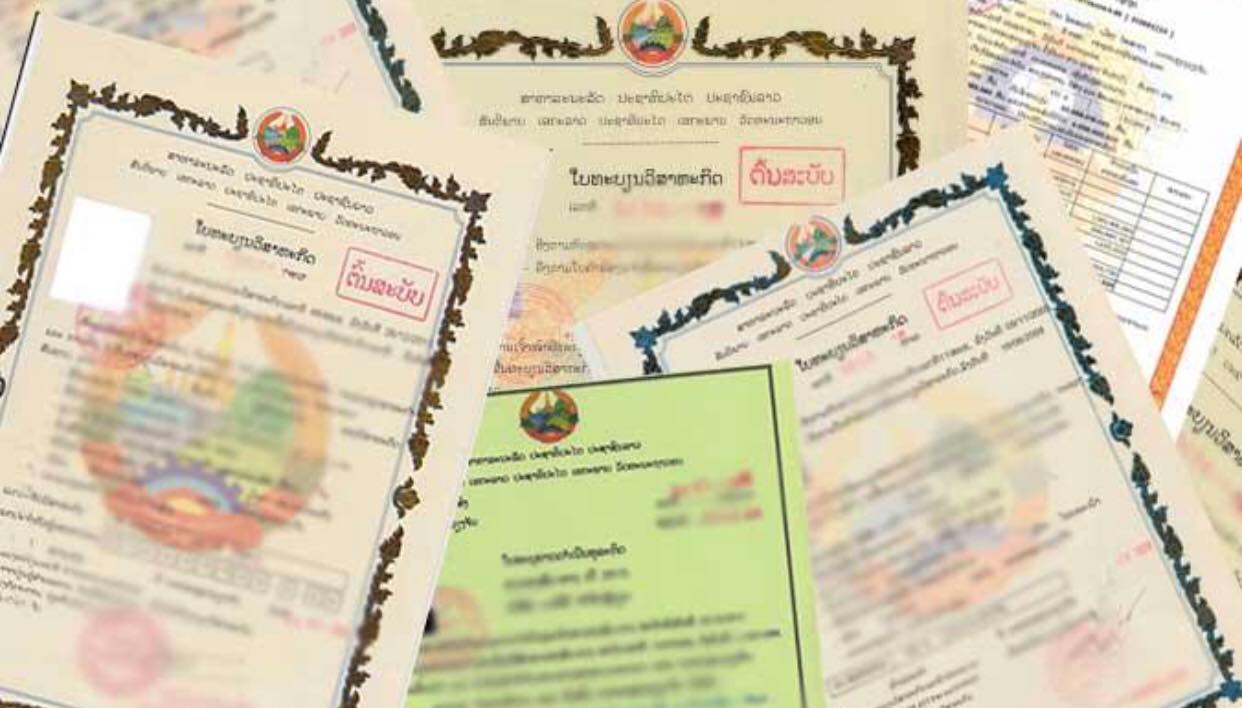
Codification of list of regulated & controlled sectors in Laos facilitates easier investment.
Listing of regulated & controlled sectors facilitates greater investment in Laos.

Prime Minister Thongloun Sisoulith approved the list of sectors that are subject to government control by way of Prime Ministerial decree issued January 10 regarding the list of controlled and concession-based businesses.

Sectors subject to considerations of national security, social order, and environmental protection and the respective regulatory authorities are spelled out in the list.

In various sectors not listed, operators are able to proceed to apply for a business and operating license from the commerce sector without having to consult any other state agencies, provided they do not otherwise contravene Lao laws, orders, decrees and regulations.

According to the list (as translated to English from original in the Lao language), permits are required for business operations in the following sectors:

Section 1: Alcoholic and other Beverages, Tobacco, Textiles, Paper and Packaging, Chemicals, Medicines, Rubber and Plastics, Minerals and Metals, Gaming and other Equipment, Waste and Recycling.

Section 2 (Domestic Activities): Wholesale and Retail sales of automobiles and motorcycles; Wholesale of anything except automobiles and motorcycles; Retail sales of anything except automobiles and motorcycles; Real estate activities;

Section 3 (Import/Export activities): Wholesale and retail sales and repair of automobiles and motorcycles; Wholesale of anything except automobiles and motorcycles.

Businesses of types not on the list should find it easier to operate, obtain an ID and operating license.

Steps in the right direction for investment

The codification of the list and relevant sectors is considered a significant development in the campaign by the government of Laos to facilitate an improved business climate nationwide.

Until the publication of the list, it was not stated clearly in a single place which regulatory entities potential investors must contact to obtain enterprise registration certificates or operating licenses.

Local and foreign investors seeking to operate one of the types of business listed must take all measures to comply with the relevant government controls and regulations.

The list spells out special conditions business operators must be ready to follow if their operations are deemed to reside within these controlled categories.

List of controlled sectors in Laos improves business and investment climate.

Laotian Times reports on business matters in and affecting Laos and the Laotian community abroad.

Home Ground Victory As Vientiane Lions’ Ladies Capture Cup at DHL 10s

DHL Rugby 10s in Vientiane, Laos

The rustic charms of Chao Anouvong Stadium in Laos’ capital were rarely stronger than last weekend as rugby players left it all on the field in Vientiane at Lao Rugby‘s DHL Rugby 10’s.

LIVE DHL VIENTIANE 10s RUGBY CHAMPIONSHIP

DAY 2

Posted by Lao Rugby Federation on ວັນເສົາ ທີ 26 ມັງກອນ 2019


As is so often the case with Lao Rugby, it was a case of ladies first.

Capturing the Cup in the Women’s Elite was Vientiane Lions.They were followed by plate winners DAC Weredragons — Banger Bells.

Meanwhile in the men’s, the Vientiane Buffalos left with the plate for runner up in the Men’s Elite.

They finished second overall only to the formidable Cup winners, the Royal Thai Airforce.

Thailand’s Roi-Et took out the men’s development cup, edging out Men’s development plate winners Lao Junior Tigers.

Also making its presence felt was the successful youth engagement initiative, Child Fund Pass it Back, which has received support from Australia. That country’s former Foreign Minister Julie Bishop famously attracted attention to the initiative on a trip to Laos during the country’s ASEAN Chairmanship in 2016 as Laotian Times reported.

An initiative with its genesis in Laos and now spreading through Asia, the Child Fund Pass it Back program is currently seeing Japanese coaches in Vientiane to be trained in the methodology.

It comes as Japan also lends support to Rugby development ahead of the World Cup 2019.

DHL Rugby 10s in Vientiane, Laos

The 2019 DHL Vientiane 10s Sponsors: DHL Rugby,DAC Management LLC, ANZ, the Pot Bellied Pigs, Anakot Consulting, Geo-Sys Lao, Yula.la, Vientiane College, DFDL Legal and Tax, the Irish Embassy in Hanoi, RedBox Storage, the 100 World Legends Organization, New Zealand Rugby Resources, and Princeton In Asia. 

DHL Rugby 10s in Vientiane, Laos