Home Blog Page 6485

Cooperation Project to Update Lao Land Management

Land management across the country will become faster and more transparent after the Lao Land Management System and Modernisation Project Cooperation between Laos and China was approved.

A Memorandum of Understanding on the project was signed in Vientiane last week between the Ministry of Natural Resources and Environment’s Land Management Department’s Director General, Mr Vongduan Vongsiharath, and Shanghai Huace Navigation Technology Ltd (CHC Navigation) CEO, Mr George Zhao.

Witnessing the signing were UniqTek Company Managing Director Mr Chandavong Southitham, Financial Department Director General Mr Siphandone Sihavong and Planning and Cooperation Department Director General Mr Xaynakhone Inthavong, along with participating ministry officials and company representatives.

The main project objective is to improve land management in Laos using the latest technology and equipment, and to prepare the project’s basic infrastructure for implementation.

It would also enhance human resource development, permanent land management stations or Continuously Operating Reference Stations (CORS) and other cooperation for project development, Mr Vongduan said.

The MoU will be current for one year then a project proposal will be put to the government for consideration.

The overall cooperation project will run for five years when the government approves its implementation, he explained.

CHC was fortunate to have the opportunity to make a contribution to Laos’ development and construction, and to share the benefits of that development, Mr Zhao said.

CHC is a leading company that researches and manufactures high-quality GPS/Beidou receiver systems. Altogether we have 10 product lines and 153 application solutions. We will pass on our extensive experience, first-class technology, plus excellent support and service to our partners, he said.

CHC will also be a bridge between Laos and China as we would like to seek and supply more resources from China, including financing and capital, Mr Zhao said.

The project is a good start and we could have more projects to undertake together and more opportunities to closely cooperate with each other in the future, he added.

The project would help improve land management systems so they’ll be up to date, faster and increase transparency for the public and government in order to contribute to socio-economic development, Mr Chandavong said.

The UniqTek Company had cooperated with the Land Management Department for two years in equipment supply, training, technical assistance and closely followed land surveying in the field, he said.

After the department trialled equipment supplied by the company, it showed that it was faster and more effective.

He strong believed the MoU would offer new equipment and better cooperation in land management assisting the issuing of land titles along with infrastructure development, technical training and human resource development through experience exchange between Laos and China.

On the same occasion, UniqTek Company handed over CORS equipment and computer servers worth 219 million kip to the Land Management Department.

Source: Vientiane Times

Phu Bia Mining Celebrates Long-Serving Employees

Phu Bia Mining (PBM) has announced that 52 of its employees have achieved a Long Service Award for 10 years continuous service to the company.

The employees, many of whom are Lao-national, including eight female employees, were honoured at an awards ceremony at PBM’s Phu Kham Copper-Gold Operation on 8 December 2016.

At the awards ceremony in recognition of their service to PBM, each employee was presented a certificate of appreciation and a gold necklace from the Managing Director of PBM’s parent company, PanAust Limited, Dr Fred Hess and Phu Bia Mining General Managers, David Reid and Richard Taylor.

Now in its second year, PBM’s Long Service Award initiative recognises employees who have been instrumental to the company’s ongoing success. Those who received awards this year were from a number of departments across the company’s operations including: commercial, human resources and training, logistics, mobile and fixed-plant maintenance, mining, processing, and transactional services.

Reflecting on those employees who received a Long Service Award this year, PBM Chairman, Mr Chanpheng Bounnaphol said that their contribution to the company cannot be understated.

“One of the key strengths of our company is our people. Together this year, we celebrated the wealth of experience and expertise that 52 of our long-serving, devoted employees have brought to the company. Between them they have worked more than 30,000 hours over the past 10 years,” Mr Bounnaphol said.


Source: Vientiane Times

Fortnight of Fatalities as Over 50 Killed on Nation’s Roads

Over 50 people were killed in road accidents over two weeks around the country with many more sustaining injuries, according to the Traffic Police Department.

The Traffic Police Department from the Ministry of Public Security reported that from December 5-18 there were 245 road accidents involving more than 400 people with the damage bill hitting over 3 billion kip.

In those incidents, 55 people were killed, 61 were left in a critical condition, 153 were seriously injured and 163 were slightly injured.

In the collisions, 19 vehicles were written off, 203 vehicles sustained moderate damage and 205 vehicles sustained minor damage.

Most of the accidents occurred as a result of drunken driving and speeding with the majority taking place in the evening and at night.

The most serious accidents occurred last week. In one incident on Friday morning, one person was killed and three people sustained injuries after two motorbikes were involved in a collision in Nongda village, Sikhottabong district, Vientiane.

A motorcyclist was also killed in Salakham village, Hadxaifong district, Vientiane, when his bike collided with a pickup truck.

Another incident occurred in Nongbeuk village, Sikhottabong district, when a van lost control and ran into a house, injuring four people.

Another dramatic incident involved a bus losing control and overturning at Km 16 in Xaythany district resulted in seven people sustaining moderate injuries.

Source: Vientiane Times

Fires Remain a Threat, Police Warn

The Vientiane Fire Prevention and Protection Police Department has warned the public to be more cautious about household fires because the dry season and windy conditions are an incendiary risk.

On December 18 and 19, two fires occurred in the capital, causing over 1.4 billion kip in damage, according to the department.

One of the fires occurred on Monday in Nongbone village, Xaysettha district, where a house burned down after an electrical short-circuit in a bedroom.

The house was owned by Ms Sanila, 68, and the blaze caused damage estimated at over 800 million kip.

The police and Vientiane Rescue deployed fire trucks to bring the blaze under control, saying the fire took hold very quickly as many of the items inside the house were highly flammable. It took fire fighters about 20 minutes to completely extinguish the flames.

The second fire occurred on Sunday in Phakhao village, Xaythany district. It destroyed the first house rapidly and spread to two other houses but was contained. Luckily, no one died.

The concrete one-storey house was owned by Ms Chanpheng, 59. The blaze caused damage estimated at over 650 million kip and police and other authorities are currently investigating the cause.

In a bid to prevent further fires, the Vientiane Fire Prevention and Protection Police Department has urged members of the public to exercise greater care concerning potential fire hazards.

The department urged residents to check electrical devices before leaving home, to take care when burning rubbish, and not to let children play with fire.

Authorities also repeated a warning for people to be on guard against accidental fires and not to take risks with electrical wiring or appliances, or to leave burning candles unattended.

According to the department, 112 fires were reported around the country from January to June this year, causing over 101 billion kip in damage.

Nationwide, some 132 houses burned down, while 30 hectares of grass were scorched, and two markets and a mill were also damaged, along with five vehicles.

Officials said 37 of the fires were caused by electrical faults, another seven by arson and 15 through carelessness or forgetfulness, noting that some cases are still under investigation.

Vientiane reported 38 fires which caused over 5 billion kip in damage.

In the capital, some 33 houses burned down, five hectares of grass were scorched, five people were injured and one fatality was recorded. Five motorbikes and a car were among the many items damaged or destroyed.

Officials said 22 of the fires in Vientiane were caused by electrical short circuits, another four started through the burning of grass or garbage, and one was ignited by candles.


Source: Vientiane Times

470,000 Cartons of Milk Donated to School Children

The Vientiane Education and Sport Department, Honda New Chip Xeng Co., Ltd. and Dutch Mill Co., Ltd. have come together to donate 470,000 Ultra-High Temperature (UHT) cartons of milk to over 3,400 schoolchildren in Vientiane.

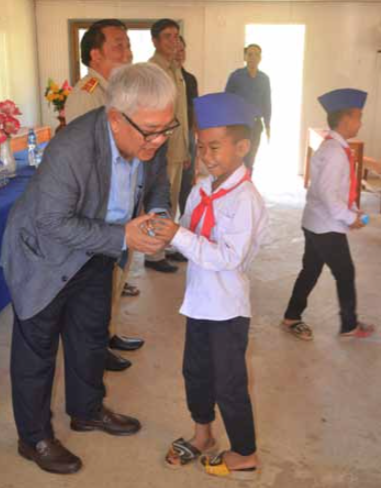
A ceremony was held last Monday to mark the start of the project, attended by Vice President of the Honda New Chip Xeng Co., Ltd., Mr Saneu Chounramany, who took part in personally handing out milk cartons to the children.

The project spans a six month period and covers nine schools in Sangthong, Sikhottabong, Xaythany and Pakngum districts.

Speaking at the donation ceremony, Mr Saneu said it is necessary to raise children’s awareness about the importance of drinking milk every day, together with exercising and sport, for the growth of healthy bodies.

He said the donation was supported by Dutch Mill Co., Ltd., who plan to promote health and nutrition in Lao schools by increasing milk consumption to stimulate growth and strengthen children’s bones.

Regarding the vision of our company, we wish to see all people living healthily, especially when it comes to children. We are glad to be partnering with Dutch Mill in the provision of valuable resources, which promote good health and nutrition, Mr Saneu said.

A senior official from the Sangthong Education and Sports office, Mr Bou Kham-Ai, said The project’s support by the private sector has made the government policy of providing milk to schools possible. The government already had plans to implement a similar project but faced many challenges in terms of budget.

Our wish is to see Honda New Chip Xeng Co., Ltd. provide milk to other schools in Sangthong because the district is poor and children in many schools still lack good health and nutrition, Mr Bou Kham-Ai said.

According to the department, the project was agreed upon last June, marked by a signing ceremony between the Vientiane Education and Sports Department, Honda New Chip Xeng Co., Ltd. and Dutch Mill Co., Ltd.

Source: Vientiane Times

Animal Feed Technicians Beef Up Analysis Skills

The Animal Feed Laboratory Centre at the Livestock and Fisheries Department and the Faculty of Agriculture at Thailand’s UbonRatchathani University last week held a training session on feed composition analysis for the improved management of animal feed.

Almost 20 trainers and technicians received certificates after the five day course held in Vientiane.

The trainees came from the Animal Feed Laboratory Centre, National Agriculture and Forestry Research Institute, Agriculture and Cooperative Promotion Department, Vientiane livestock and fisheries section, Nabong Agriculture College, Northern Agriculture and Forestry College and Dongkhamxang Technical Agriculture and Forestry School, along with animal feed laboratory representatives from the Khoumvang Mai Company.

Through the course, participants learnt about the management and inspection of animal feed quality, the rules and principles applied in animal feed laboratories, how to collect and prepare animal feed samples for analysis, preparation of chemicals for animal feed analysis, and the humidity analysis of animal feed.

They also learnt how to analyse the content of animal feed and to check imported meat for the presence of disease, as taught by Thai specialists.

The course is important for the production of animal feed, processing and mixing as well as the inspection and certification of the quality of animal feed along with sharing information with students and those who operate animal feed businesses.

The lessons learnt will help with the management of animal feed that is processed in Laos and imported, ensuring that it is safe and hygienic. Good quality feed is necessary to meet the growing demand for raising livestock, with more animals needed for local consumption and for export.

Deputy Director of the Livestock and Fisheries Department, MrBounthongSaphackdy, said he believed trainees would share their knowledge with other agricultural staff and te chnicians around the country.

Course participants w ould be able to analyse the composition of feed produced within the country and control that used in imports, all with a view to enhancing growth of the livestock industry, he said.

The course was part of the Quality Laboratory Animal Feed Development Project, which is a cooperation project between Laos and Thailand.

The project was supported by the Thailand International Cooperation Agency with technical assistance and animal feed analysis equipment used in animal feed laboratories.

Source: Vientiane Times

Lao, Vietnamese, German Cooperation Conserving Siamese Crocodile

Lao-Vietnamese-German cooperation is currently initiating the creation of a new conservation area for the endangered Siamese Crocodile in Laos.

Based on a joint Memorandum of Understanding, the National University of Laos (NUoL), Institute of Ecology and Biological Resources (IEBR) in Hanoi (Vietnam), and the Cologne Zoo, Cologne (Germany), have been engaging in biodiversity research and conservation in Laos for six years.

Among the most spectacular discoveries by the working team led by NUoL’s senior official Assoc. Prof. Dr Sengdeuane Wayakone, IEBR’s representative Dr Truong Quang Nguyen, and Prof. Dr Thomas Ziegler (Cologne Zoo) was the rediscovery of the Siamese Crocodile (Crocodylussiamensis) in Khammuan province. The endangered crocodile species was believed to be already extinct in the province.

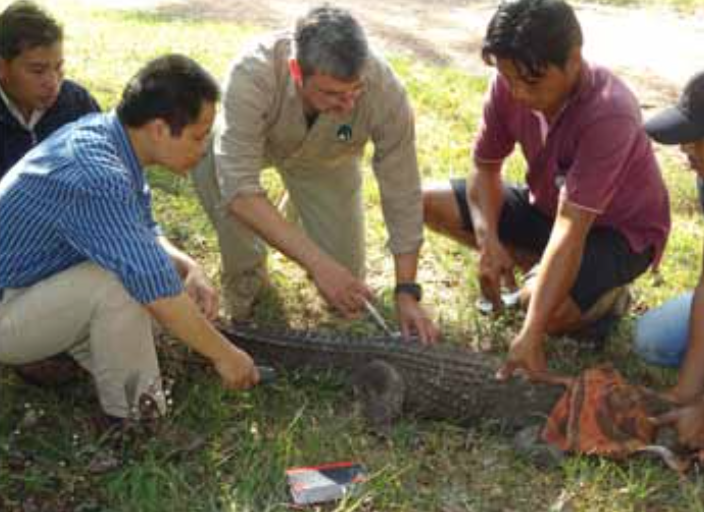
A small population of Siamese crocodiles was discovered in Khammuan’s Ban Soc lakes during recent field research by a team member, Dr Vinh Quang Luu from Hanoi, together with Mr Sisomphone Soudthichak from the provincial conservation authority in Khammuan in spring 2015. Since then, the international team has engaged in the creation of a new conservation area for the rediscovered population.

The Siamese crocodile is listed in the IUCN Red List as Critically Endangered with decreasing population trends, and in the CITES Appendix I, which accords it the highest international protection status.

In Laos, the species is classified At Risk, the highest national threat ranking. The Siamese crocodile was abundant in some parts of Laos until at least the early 1900s. Small breeding populations still persist, but a severe decline in range and abundance has occurred over the past century and now the species is rare or locally extinct at many sites in Laos.

The recent rediscovery in Khammuan province highlights the special biodiversity value of Laos. Further research will be crucial for identifying existing populations of endangered wildlife and for establishing subsequent conservation measures.

The engagement of the Lao-Vietnamese-German team, funded by the Rufford Foundation and Cologne Zoo, finally led to the approval by Khammuan provincial authorities of a Species Conservation Area for the Siamese Crocodile. This was reported to Sengdeuane Wayakone, Sisomphone Soudthichak, Truong Quang Nguyen and Thomas Ziegler during a recent team meeting in Khammuan province this month. The newly established reserve is called Khammuan Siamese Crocodile Conservation Area Ban Soc.

Assoc. Prof. Dr. Sengdeuane Wayakone said The National University of Laos is very happy that we could help and contribute within the framework of our diverse international cooperation to create a new conservation area for endangered wildlife in our country.

Meanwhile, Dr Truong Quang Nguyen said In recent times of diversity decline and habitat degradation, which is in particular topical in Vietnam and Laos, it is important that we put together our expertise and efforts to improve the conservation of threatened wildlife and its habitat. There still remain a lot of research and conservation activities to be done.

But this was not the end of the story, according to Prof. Dr Thomas Ziegler, Cologne Zoo’s Biodiversity Research and Conservation Projects Coordinator for Vietnam and Laos as well as Regional Chairman of the IUCN Crocodile Specialist Group for Europe.

We already have started with Hanoi National University’s expert, Dr Minh D. Le, to genetically test captive crocodiles in Saigon and Hanoi Zoological Gardens in Vietnam as well as in th e Lao Zoo. Unfortunately, there are many hybrid individuals kept among farms and also in zoos, so it will be crucial to identify pure ones. This is a prerequisite for conservation breeding and subsequent restocking measures of captive individuals to the wild to support the last remaining, strongly diminished Siamese crocodile populations in nature. It further underlines the important role which zoos can play today in wildlife conservation, he said.

Acting President of the National University of Laos, Prof. Dr Somsy Gnophanxay, said This is a wonderful example of how research engagement and international cooperation can contribute to substantially improved species conservation in the tropics, where diversity is highest but also most severely threatened.

Source: Vientiane Times

Govt, Overseas Partners Join Forces to Tackle Infectious Diseases

The government and international organisations aim to prevent, detect and respond to infectious disease threats by developing a five-year plan supported by the US government.

According to a press release from the US Embassy in Vientiane, the Lao PDR National Five-Year Roadmap sets key targets for 2021 across 19 different categories including countering antimicrobial resistance, strengthening surveillance, establishing emergency operations centres, expanding a skilled global health security workforce, and building a whole-of-government approach to biosafety and biosecurity.

The immediate next step before the plan can go into effect is to seek governmental endorsement for the roadmap by the Ministry of Health and Ministry of Agriculture and Forestry, anticipated to take place in early 2017.

The plan is aligned with the Global Health Security Agenda (GHSA) and the World Health Organisation (WHO) International Health Regulations (IHR).

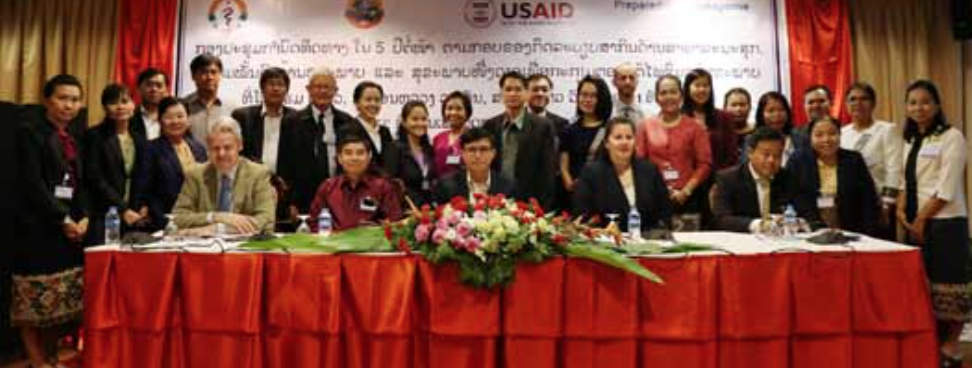
The Ministry of Health’s Department of Communicable Disease Control and Ministry of Agriculture and Forestry’s Department of Livestock and Fisheries, with assistance from the US Government through the US Agency for International Development (USAID), on Tuesday convened over 120 representatives from government agencies and international organisations in Vientiane to create the National Five-Year Roadmap to build capacity within Laos for strengthened prevention, detection and response to emerging infectious disease threats with pandemic potential.

The United States, a key development partner and leader in advancing the Global Health Security Agenda, is providing technical assistance to the Lao government in the formation and implementation of its National Five-Year Roadmap, alongside other donors.

USAID Laos Country Office Director Alexandria Huerta said We congratulate Laos on its longstanding leadership in preparedness for emerging disease threats and we also thank you for your leadership in working across sectors to develop the GHSA Roadmap.

We join you in your commitment to secure not only a safer, healthier, more prosperous Laos, but also stronger and more resilient regional and global public health.

Director General of the Department of Communicable Disease Control, Dr Bounlay Phommasack, said Greater health security is a national priority for Laos. Better partnership and collaboration to address high risk threats within and across borders will help improve our collective ability to achieve GHSA and IHR objectives.

Deputy Director General of the Department of Livestock and Fisheries, Dr Sithong Phiphakkavong, said Protecting human, animal and environmental health is an enormous challenge in today’s world. The GHSA Roadmap presents a vital framework for coordinating across sectors and borders in order to meet this challenge.

Laos currently faces high risk threats including cross-border infectious diseases, and emerging diseases that can pass from animals to humans, particularly during periods of development and environmental stress.

The complex nature of these health threats requires infrastructure, equipment, a skilled workforce, and coordination among government agencies, the private sector, and civil society in order to respond effectively.

Source: Vientiane Times