Home Blog Page 6507

IFRC Confirms further Cooperation with Lao Red Cross

The International Federation of Red Cross and Red Crescent Societies (IFRC) has agreed to continue its partnership with the Lao Red Cross on relief assistance and disaster response.

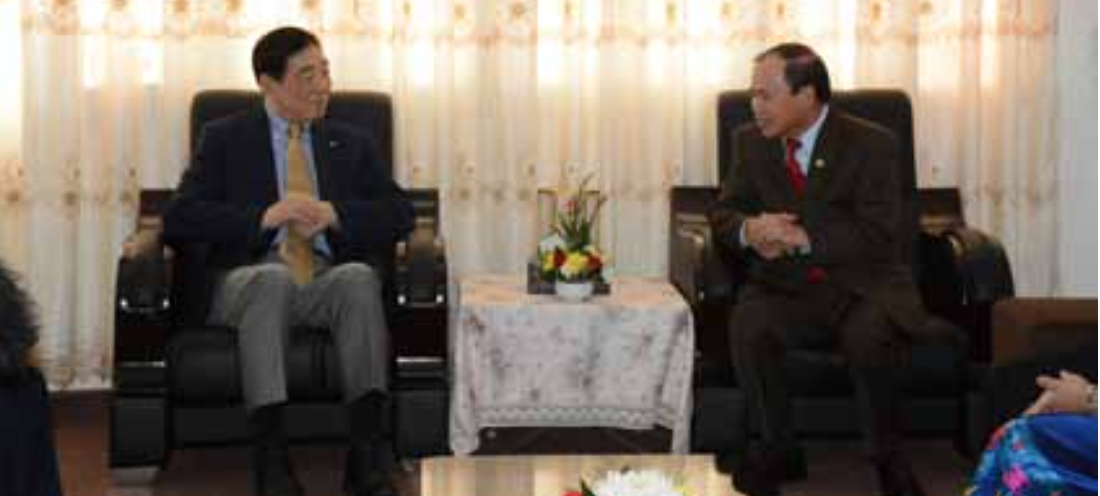
President of the IFRC and President of the Japanese Red Cross, Mr Tadateru Konoé, on Monday met with Lao Red Cross President Mr Khamhoung Heuangvongsy in Vientiane to discuss further cooperation.

A welcome ceremony took place at the Lao Red Cross office in Vientiane, attended by officials from both organisations.

The two parties discussed plans for relief assistance, aid supply storage and logistical systems. They also discussed the mobilisation of funding resources.

Mr Khamhoung said the IFRC and Lao Red Cross have worked together in the past on relief assistance, disaster response and capacity building for Lao Red Cross personnel.

Some years ago, the IFRC provided vital assistance to Lao people affected by natural disasters at a cost of more than 800 million kip.

The Lao Red Cross was founded on January 1, 1955, and recognised by the ICRC on May 23, 1957, becoming a member of the IFRC on October 25 of the same year. The Lao organisation is one of 190 members comprising the National Societies of the IFRC movement, the world’s largest humanitarian aid organisation.

The Lao Red Cross works to provide emergency assistance to vulnerable people, including the provision of aid and medical treatment in response to natural disasters.

It also works with communities to improve health conditions and livelihoods, in line with the fundamental principles of the Red Cross and Red Crescent Movements.

Mr Tadateru Konoé also paid a courtesy visited to the Vice President Mr Phankham Viphavanh at the President Office in Vientiane on Tuesday.


Source: Vientiane Times

Online School Testing Project Set to Launch Nationwide

An initiative that tests the knowledge of learners via an online system will be launched at schools in other provinces after good results were obtained from a trial run held in Vientiane province last Friday.

The scheme is being rolled out by the Ministry of Education and Sports’ Educational Standards and Quality Assurance Centre (ESQAC) and the FPT University of Vietnam.

ESQAC Director Mr Vanxay Noraseng explained the project after the ministry agreed to partner with the FPT University on the development of a database for education quality management at every level of the state and private sector.

An agreement on developing a database for education quality management was signed by the two parties in 2014.

In an interview with Vientiane Times yesterday, Mr Vanhxay said the project would be officially launched at the beginning of 2017.

The project also includes development of a knowledge test through online systems, he added.

Information technology is very important for the education sector. The management of educational management databases and online teaching and learning sites are of great significance, he said.

The trial of the project in Vientiane province aims to develop quality education in Laos and also to provide a data-information platform for teachers, students and administrators.

Also on Friday, ESQAC launched the website http://www.laolympic.la, aiming to test the knowledge of learners online, and to promote the use of technology in teaching and learning at all levels.

Mr Vanhxay said that initially the website will only allow students to test in two subjects but will later be upgraded to test in other subjects. The tests cover levels from primary to university.

The project serves to enhance cooperation between ESQAC and the FPT University through support from Lao Star Telecom (Unitel).

Before the official launch next year, ESQAC will train officials how to use the software as well as further refining it.

After that they will present it to the ministry along with handbooks on the use of the database and website.

During the development of the database and website, Lao Star Telecom and FPT will provide free internet access to the programme. The internet system is registered with the Lao National Internet Centre.

The website will be available in provinces throughout the country, serving primary and secondary schools as well as adult learners free of charge, ESQAC reported.

Source: Vientiane Times

WFP Helps Farmers Adapt to Climate Change

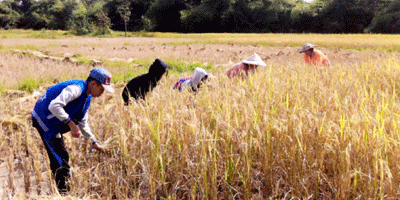
The United Nations World Food Programme (WFP) and the National Agriculture and Forestry Research Institute (NAFRI) in Laos recently signed an agreement to develop new tools for farmers to adapt to climate change.

The project will give farmers weather information so they can make decisions about their crops in times of fluctuating meteorological patterns, and will provide them with real-time rainfall forecasts, provided by the National Department of Meteorology and Hydrology.

The institute’s Director General Dr Bounthong Bouahom told Vientiane Times yesterday that WFP and NAFRI will also establish schools where farmers can learn more about crop management and how to best adapt to climate variations.

WFP’s support to this project comes at an important time and will be crucial in ensuring the country is better prepared to deal with climate change, Dr Bounthong said.

Helping farmers with extreme weather linked to climate change is key to improving food security, WFP Country Director to Laos Sarah Gordon-Gibson said.

Over the past few years, Laos has experienced higher temperatures and reduced rains during the dry season, and more intense rainfall during the rainy season, leading to longer and more severe droughts, and an increased risk of floods.

In an economy highly dependent agriculture, particularly in rural areas, reducing the impact of climate change in agricultural production is important in order to protect household food security.

The NAFRI-WFP project aims to help farmers in the seven main rice growing provinces of Xayaboury, Borikhamxay, Khammuan, Savannakhet, Saravan, Attapeu and Champassak.

It will also have a longer-term impact on the agricultural development sector by improving the knowledge and resources of national institutions and policy makers.

WFP is working with the Lao government to achieve the 8th National Socio Economic Development Plan, especially to reduce malnutrition and its impact on human and national development by providing food assistance and technical support.

NAFRI is the national research institution, under the Ministry of Agriculture and Forestry, in charge of the coordination of agriculture and forestry research activities within the country and the development of a National Agriculture and Forestry Research System.

NAFRI’s mandate is to undertake integrated agriculture, forestry, livestock and fisheries research in order to provide technical information, norms and results that help to formulate strategy in accordance with Lao government policies. NAFRI’s main functions include carrying out adaptive research, developing methods, tools and information packages, providing policy feedback, and coordinating and managing research.

WFP is the world’s largest humanitarian agency fighting hunger worldwide, delivering food assistance in emergencies and working with communities to improve nutrition and build resilience. In 2015, WFP assisted nearly 80 million people in 81 countries. WFP has been present in Laos since 1975, with projects aimed at improving the food security and nutritional status of the most vulnerable.


Source: Vientiane Times

Xayaboury Vocational School Initiates Solar Power Engineering Course

A solar power system engineering class is being trialled at Xayaboury Technical and Vocational School with a view to it becoming a regular subject, according to a press release from the Energy and Climate Policy Institute (ECPI Korea).

The Director of the province’s statistics planning division education office and the Dean of the school’s Electricity Department suggested opening a renewable energy education track, a press release noted.

Next year it will be a regular electricity subject at the school, said the Director of the Renewable Energy Centre, Ms Yee Young Ran.

Regular teaching of the subject would enable the sustainable learning of solar power systems which it is hoped would become self-sufficient after outside support dries up. If trained students can be responsible for installing, repairing, consulting, and teaching renewable energy, it will be a suitable long-term initiative.

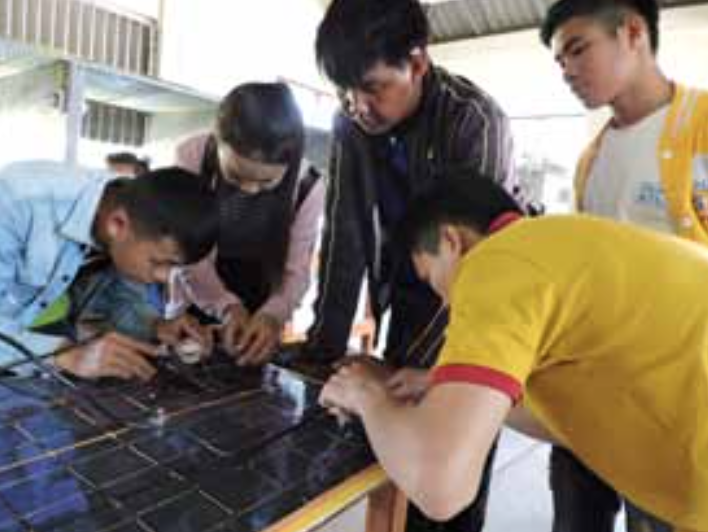
The Lao Renewable Energy Centre delivered a solar power system engineering course recently at Xayaboury Technical and Vocational School. It was part of the preparation process for one of the elective courses ‘renewable energy controlling skills’ in the school’s electricity department.

The centre is attached to the Energy and Climate Policy Institute for Just Transition (ECPI), an NGO based in the Republic of Korea.

ECPI has been supporting the teaching of solar power systems at the school in Xayaboury since 2009 under the ‘Supporting Renewable Energy System and Training Programme’.

After many years of effort, graduates of the training programme are skilled in solar power system engineering and teaching and can train junior students at the school as main agents in this programme, the press release noted.

The ECPI has continued to implement the Supporting Renewable Energy System and Training Programme’ in Laos through solidarity with the Third World and also through the practical activity of climate justice since 2009.These activities were reinforced in 2012 when KOICA supported the ECPI project.


Source: Vientiane Times

Laos, Partners all Set to Debate Development Priorities

A string of consultations are leading up to the Round Table Implementation Meeting, to be held in Vientiane province from November 24-25, according to the United Nations Development Programme (UNDP).

The cross-sectoral topics of Sustainable Development Goals (SDGs), effective development partnerships, food and nutrition security, green growth, climate change and disaster preparedness are in the limelight at the meeting.

These issues have also been discussed in several consultations in the weeks leading up to the meeting, UNDP reported.

The meeting serves as a forum to discuss how partners can collaborate on national development priorities. It will take stock of progress made in 2016 and guide the joint efforts in 2017.

As a main output of the meeting, the government is planning to endorse, with its partners, the Vientiane Declaration Country Action Plan for 2016-2025. This Action Plan outlines key actions to enhance effective development cooperation, and will help put into practice the SDGs and the 8th National Socio-Economic Development Plan.

The Vientiane Declaration Country Action Plan and the revision of the Prime Minister’s Official Development Assistance Decree were discussed in a consultation last week.

Participants agreed that among other things private sector, civil society, and regional partners need to be brought to the table, and domestic resource mobilisation needs to be enhanced for sustainable development.

Another pre-consultation addressed the question how the global Agenda 2030, with the SDGs at its core, can be brought to the national context and accelerated.

The SDGs entered into force at the beginning of this year as a universal call to action to end poverty, protect the planet and ensure that all people enjoy peace and prosperity. Their aim is to shift the world onto a sustainable development path, with 2030 as the target date.

The national round table process is being driven by 10 Sector Working Groups, jointly chaired by government and development partners, which promote information sharing, policy dialogue and joint action. Key messages distilled by the Sector Working Groups will flow into the Round Table Implementation Meeting.

This year’s Round Table Implementation Meeting will take in Vientiane province, shifting the focus to the provincial implementation of national policies.

The meeting includes field visits and a development exhibition, grouped around the priorities of the 10 Sector Working Groups.

Source: Vientiane Times

Laos, China Partner in Drug Control

The Lao National Commission for Drug Control and Supervision has agreed to future cooperation with the Chinese government in the fight against illicit drugs.

Laos is already working to fulfil existing bilateral and multilateral agreements in drug control cooperation and the exchange of information and intelligence on drug trafficking with ASEAN countries and China.

Enhanced regional cooperation such as the joint operation Safe Mekong has strengthened networks and collaboration between Laos, China, Myanmar, and Thailand.

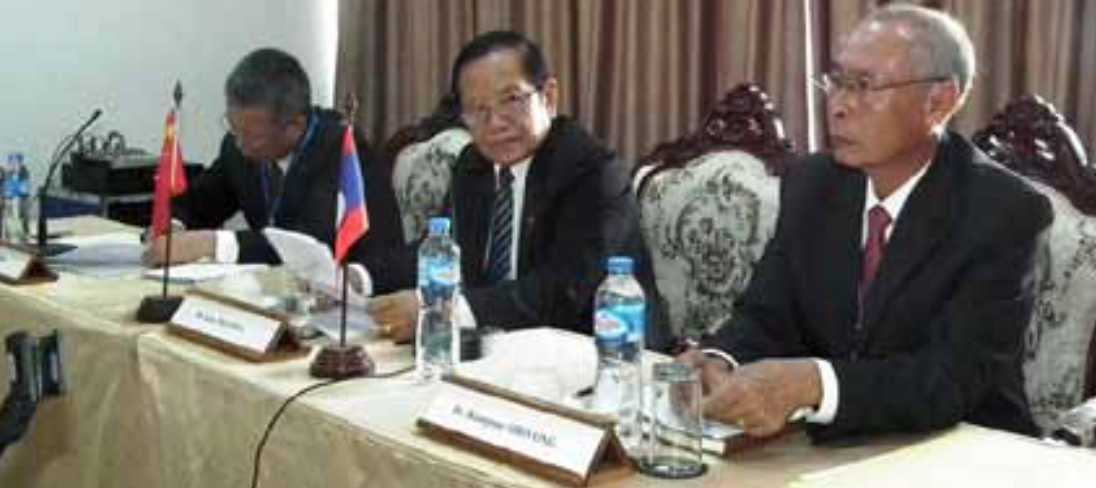
The 13th Laos-China Bilateral Meeting on Drug Control Cooperation took place in Vientiane yesterday to discuss and plan future cooperation on drug control, especially along the Laos-China border.

The meeting was attended by the Chairman of the Lao National Commission for Drug Control and Supervision, Mr Kou Chansina, Deputy Secretary-General of China’s National Narcotics Control Commission, Mr An Guojun, and other officials from the two countries.

The two sides discussed future activities such as the exchange of information and law enforcement in relation to drug trafficking.

Speaking at the meeting, Mr Kou said that over the past year the two countries had partnered in the training of officials and police officers to implement the Safe Mekong project. They had also shared information about drug trafficking through the two nations.

Laos is used as a transit country for the shipment of methamphetamine and heroin as well as precursor chemicals. Drug trafficking through Laos has been increasing with higher frequency and volume.

The northwest border in the Golden Triangle area is the main gateway for drug flow into Laos, while the southern border is increasingly used for drug outflow.

Methamphetamine tablets are the most abused drug in Laos, while the number of opium users remains almost stable.

According to a recent report from the Ministry of Public Security, more than 2,200 drug-related cases were handled in the first nine months of this year with more than 3,200 suspects arrested.

More than 1,850kg of methamphetamine tablets were seized along with 181kg of heroin, 106kg of raw opium, 300kg of dried cannabis, more than 130kg of crystal amphetamine (ice) and 1,105kg of powder used to mix and produce drugs.

Laos is closely involved in regional and international collaboration to combat drugs and tackle challenges. The government pays great attention to strengthening international cooperation to clamp down on drug trafficking and abuse.

Laos has signed bilateral agreements on cooperation against the illicit trafficking of narcotic drugs, psychotropic substances and precursor chemical control with a number of friendly countries such as China, Cuba, India, Russia, and the USA, as well as the UN Office on Drugs and Crime.


Source: Vientiane Times

Hundreds of Police Dismissed for Corruption

Some 737 police officers have been dismissed from their posts over the past five years after taking bribes and abusing their power.

More than 1,000 police officers were found to have violated laws and regulations including the 737 who were dismissed, the Khuamsangob newspaper reported.

A report on the cases was presented at the recent fifth meeting on inspection affairs within the public security sector.

The cases resulted in losses of more than 41 billion kip, Vice President of the Party Inspection Committee and Director General of the Inspection Department of the Ministry of Public Security, Brigadier General Duangpi Damanivong, told the meeting.

Most of the money had been recovered, he said. The most prominent cases involved police officers who abused their power for personal gain.

In one example, police officers in Huaphan province accepted bribes from a drug trader amounting to more than 979 million kip (US$120,000) in exchange for 93 packs of heroin, which were used as evidence in a criminal case.

Another case occurred in Luang Namtha province where police accepted bribes amounting to more than 114 billion kip (14 million Thai baht) in exchange for freeing a death penalty prisoner over a drug trafficking case.

Brigadier General Duangpi said another 144 police officers were warned, 341 police officers had not been promoted, 101 police had been demoted, and 20 had been transferred.

Of these, 17 police were sent for investigation and prosecution.

The Inspection Committee has committed to work harder and intensify its inspections in an attempt to curb corruption, bribery and abuse of power within the public security sector.

Nationwide, more than 4,807 billion kip has changed hands due to corruption over the past five years and 734 officials were found to be involved, according to the Inspection Committee of the Party Central Committee of the Lao People’s Revolutionary Party.

Some 1,806 Party cadres have been disciplined for violating the Party’s statutes and state laws. Of these, 1,007 cadres were expelled from the Party.

Party and government leaders have vowed to escalate the fight against corruption.

Talking to the third nationwide inspection meeting recently in Vientiane, Party Secretary General and President, Bounnhang Vorachit, instructed the top anti-corruption body to appropriately punish officials found violating the regulations in a bid to stamp out malpractice and lax discipline.


Source: Vientiane Times

Cabinet Approves Five Decrees to Boost Economy, Improve Administration

The government cabinet has approved five new and amended draft prime ministerial decrees to boost socio-economic development and improve administration.

They are the draft Decree on Government Bond, Decree on Tourism Fund, Decree on Technical Positions of Civil Servants, amended draft Decree on Private Education Institute Promotion, and amended draft Decree on Administrative Positions.

The approval was made at the government’s monthly meeting for November held on Monday, which was chaired by Prime Minister Thongloun Sisoulith and attended by cabinet members.

Final revisions will be made to the five draft decrees in accordance with recommendations from cabinet members.

The cabinet instructed the Ministry of Finance to work out measures to implement the Decree on Government Bonds to regulate bonds in order to create confidence among investors while minimising risk.

The Decree on Tourism Fund defines regulations and measures on how money can be raised for the fund and the purpose of its expenditure.

Amendments to the Prime Ministerial Decree on Private Education Institute Promotion have been made to ensure the decree coincides with the amended Law on Education and amended Law on Investment Promotion.

The Decree on Administrative Positions and Decree on Technical Positions of Civil Servants give guidance to provide support for administrative and technical officials in Party, state and mass organisations.

The meeting approved a report on the establishment of an education centre for community development of the Southeast Asian Ministers of Education Organisation (SEAMEO) in Laos.

Concluding the meeting, Mr Thongloun highlighted the work cabinet members needed to pay particular attention to in December.

He instructed the cabinet to maintain law and order, while curbing antisocial activities, particularly the illegal drug trade, robbery and theft to create an environment conducive to celebrating the 41st anniversary of Lao National Day on December 2.

The cabinet was told to prepare a report on the government’s performance since it took office in April for the meeting of cabinet members, provincial governors and the Vientiane Mayor, which is scheduled for December 14-15.

Mr Thongloun instructed the cabinet to translate the Resolution of the National Assembly (NA)’s second ordinary session, which ended last week, into a prime ministerial decree and other regulations to realise the Resolution so that its implementation can be reported to the next NA ordinary session scheduled for April 2017.

The cabinet was told to keep a close eye on the exchange rate and define appropriate measures to regulate it in order to prevent increased inflation.

The premier told the meeting to closely monitor the price of goods in markets and define measures to intervene appropriately to prevent significant fluctuations that would affect business operations and people’s living conditions.

In order to boost dry season crop yields, Mr Thongloun instructed the relevant sectors to prepare necessary measures to help farmers.

The cabinet was told to keep an open ear to public complaints to determine the root cause and address any issues. The cabinet was also asked to investigate any possible immediate and long term solutions to address the intensifying traffic congestion.

Mr Thongloun also stressed the need for the cabinet to ensure that state laws and regulations are strictly observed.


Source: Vientiane Times