Home Blog Page 104

Hong Kong Young Drivers Battle at Guangzhou Conghua as HK Youth Karting Championship Completes Opening Round

Drivers aged 8–17 build real race experience through qualifying, attack, defense and overtaking

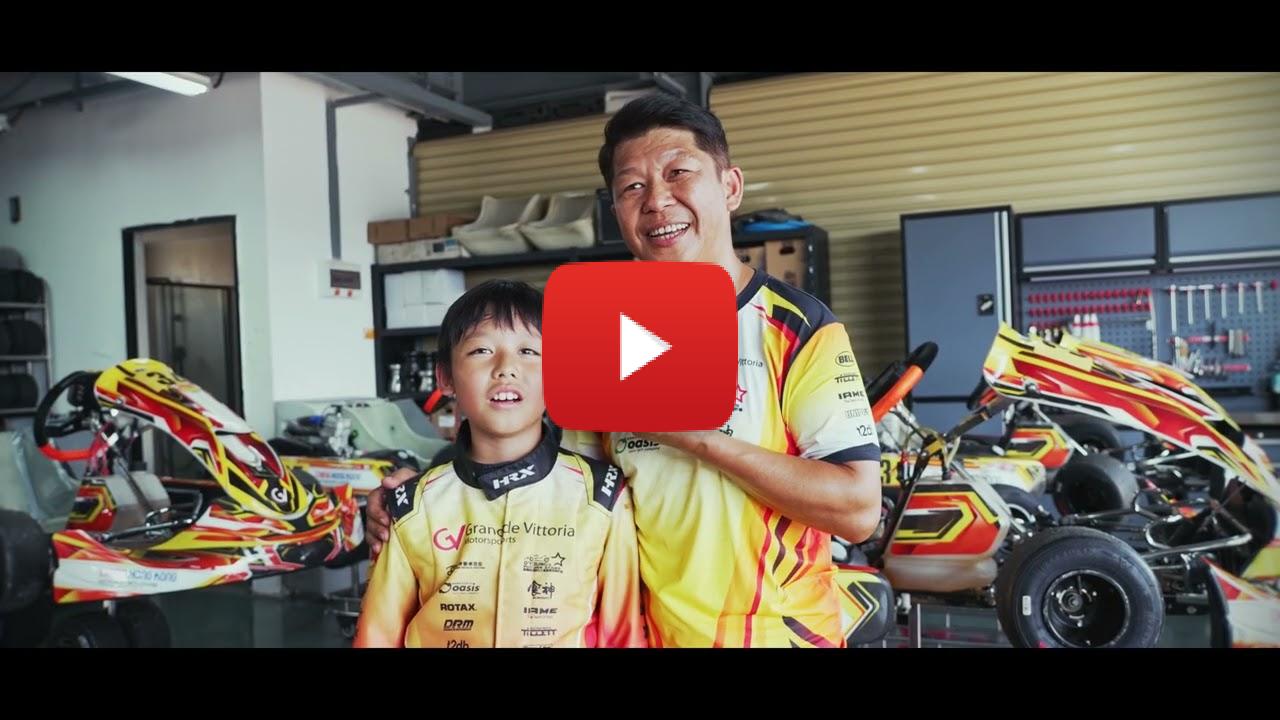
HONG KONG / GUANGZHOU, CHINA – Media OutReach Newswire – 21 September 2026 — For a young racing driver, there is far more to learn from a kart race than simply setting the fastest lap. Organised by China Hong Kong Motorsports Centre (CHKMC) with the support of IAME Series Asia and HKAA, the opening round of the HK Youth Karting Championship 2026 was recently completed at Guangzhou Conghua International Circuit.
PublisherTMPrtv6ih90tb9624veudT.jpg

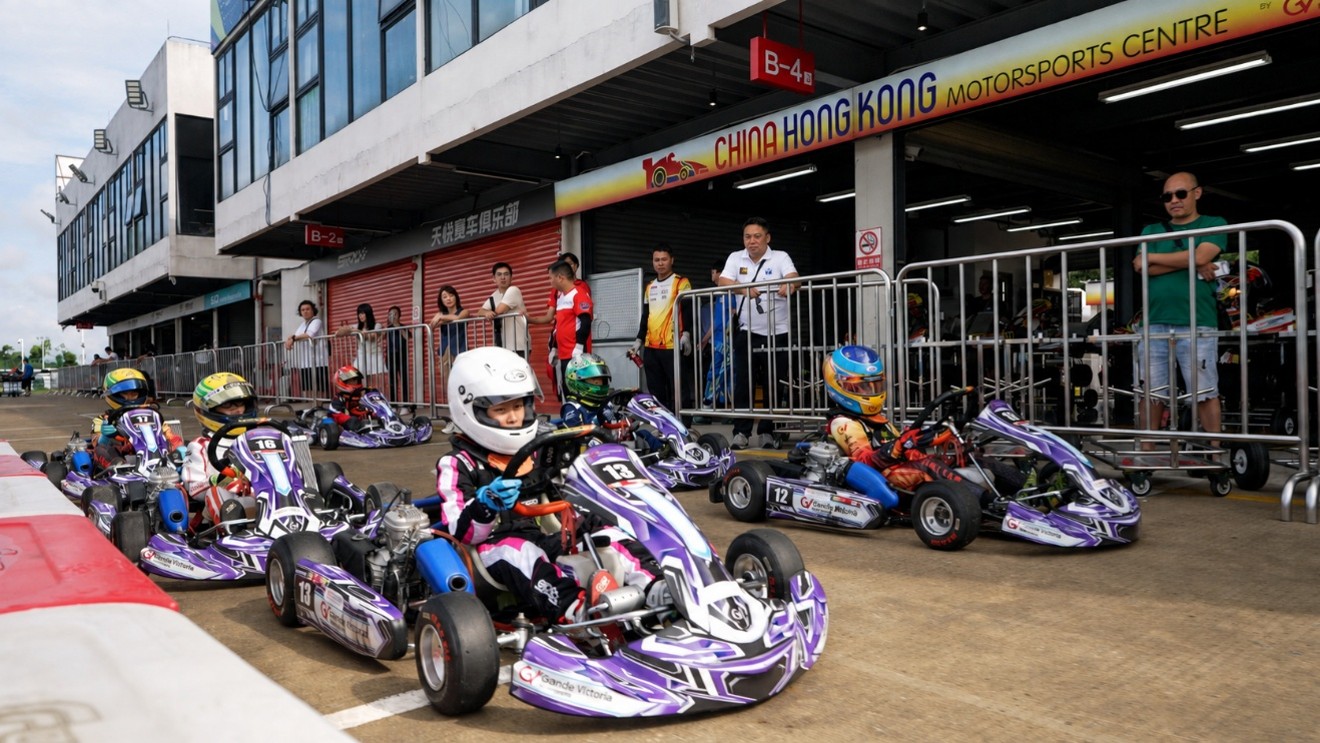
Over two days of practice, qualifying and competitive racing, young drivers from Hong Kong put their training into action, testing their speed, race craft and decision-making under genuine race conditions.
賽事設 **Cadet(8至12歲,60cc)**及 **Junior(12至17歲,125cc)**兩個組別,於全長約 1.2 公里、設有 14 個彎道的廣州從化國際賽車場進行。

The championship features two categories — Cadet for drivers aged 8–12 using 60cc karts and Junior for drivers aged 12–17 using 125cc karts — competing on the approximately 1.2-kilometre, 14-corner circuit.

From lap time to real race craft

The weekend began with practice, allowing drivers to refine braking points, racing lines and corner-exit speed with support from coaches and mechanics.

Qualifying then challenged competitors to produce a competitive lap within a limited time on track to secure the best possible starting position.

However, once the racing began, outright speed was only part of the challenge.

With multiple karts fighting for position at the very first corner, drivers had to assess the traffic around them, choose attacking or defensive lines and decide when to overtake or hold position.

Over the two days of racing, the young drivers chased each other through various corners, with moments of side-by-side cornering, defending positions, and looking for overtaking opportunities. For young drivers, managing traffic on the track, race pressure, and split-second decision-making are experiences that are difficult to fully simulate in routine solo practice.

These situations help young drivers develop genuine race craft, which is an important step for a driver to learn, progress and grow in motorsports.

One Make Karting unifies kart and engine specification, putting the focus on the driver

The championship adopts a One Make Karting / Arrive & Drive format, with race karts and competition equipment arranged to a unified specification, together with designated practice and race tyres.

By reducing equipment differences, the format places greater emphasis on driving technique, consistency, decision-making and race strategy.

It also gives young racers stepping into competitive racing for the first time the opportunity to experience a complete race weekend, from practice and qualifying to race starts, on-track battles and post-session analysis.

The value of the first race is not measured by podium positions

In youth motorsport, results are important, but racing experience often has to be built up race by race.

A position gained or lost at the start, choosing the right moment to overtake, or learning how to recover after a mistake can become valuable lessons for the next race.

CHKMC Head Coach Chester Lam said, “Training can teach a driver racing lines, braking points and kart control, but a real race involves other drivers, starts, attack and defense, and pressure. It is a completely different situation.”

“Young drivers need real racing to gradually learn how to read a race. Every time they complete a race, they should be equipped with more experience than they had before.”

Karting has long been one of the first forms of competitive motorsport experienced by many professional racing drivers. CHKMC hopes to create more opportunities for young people in Hong Kong to develop from fundamental training to track driving and, ultimately, real racing.

From Hong Kong to a wider Asian racing stage

The aim of the HK Youth Karting Championship is not for every participant to become a front-running racer immediately, but to provide a platform where young drivers can compete, make mistakes, learn and gradually build their racing experience.

From lining up on the starting grid to attempting an overtake, defending a position or understanding tyres and changing track conditions, every race adds another layer to a young driver’s development.

The championship also connects young racers with the wider Asian karting scene.

Strong performers in the Cadet and Junior categories may have the opportunity to progress towards the IAME Asia Final 2026 in Macau, competing alongside drivers from across the region.

Round 1 complete, attention turns to the next challenge

Following the opening round, drivers and coaching teams started reviewing lap times, racing lines and overall performance as they prepare for the next race.

The HK Youth Karting Championship 2026 will continue with its next round at Guangzhou Conghua International Circuit on 10 – 11 October 2026, giving young racers another opportunity to apply what they learned and continue building valuable race experience.

For a young driver, the chequered flag at the end of one race is not the end of the journey.

It is preparation for the next one.


About HK Youth Karting Championship 2026

Categories:
Cadet — Ages 8–12 / 60cc
Junior — Ages 12–17 / 125cc

Circuit: Guangzhou Conghua International Circuit
Organiser: China Hong Kong Motorsports Centre (CHKMC)
Supported by: IAME Series Asia

Enquiries
China Hong Kong Motorsports Centre (CHKMC)
Tel: +852 6288 6268
Website: www.chkmc.com.hk

Hashtag: #CHKMC #廣州從化國際賽車場 #中國香港賽車運動中心 #青少年賽車 #青少年車手 #青年車手

The issuer is solely responsible for the content of this announcement.

24th Sichuan Guangwu Mountain International Red Leaf Festival to Showcase Asia’s Spectacular Autumn Colors


BAZHONG, CHINA – Media OutReach Newswire – 21 September 2026 – The 24th Sichuan Guangwu Mountain International Red Leaf Festival will run from October 1 to November 18 at the Guangwu Mountain Tourism Area in Bazhong, Sichuan Province, China.

Sweeping red leaf scenery across Guangwu Mountain

Located in southwest China, Guangwu Mountain boasts a forest coverage rate of 97%, earning its reputation as a “natural oxygen bar.” Each autumn, 680 square kilometers of mountain forests burst into a dazzling palette. Over 40 tree species, including Fagus pashanica, maples and lindens, weave the mountains into a stunning autumn landscape.

Known as “Asia’s longest natural red carpet,” the Mountain has become a top autumn destination for backpackers, photographers and travelers seeking immersive cultural and nature experiences, and is widely recognized as one of western China’s signature autumn attractions.

Guangwu Mountain covered in a "red carpet"
Guangwu Mountain covered in a “red carpet”

The tourism area caters to international visitors who prefer slower-paced, in-depth, off-the-beaten-path travel. The new Yanziling Loop Boardwalk, launched in May 2026, winds along mountain cliffs, with a sea of clouds rolling beneath visitors’ feet and brilliant foliage unfolding alongside the trail, creating the feeling of “stepping into a painting.”

Guangwu Mountain offers a wealth of outdoor attractions. Highlights include the 1,888-meter Red Leaf Coaster and a glass water slide certified by Guinness World Record, combining thrilling experiences with stunning natural scenery.

The large-scale immersive production “New Dream of Guangwu Mountain” integrates cutting-edge light and visual technology with Bashan folklore and traditions, transforming the forest into an atmospheric nighttime experience. Visitors can also enjoy welcome performances and interactive robot activities, which offer more ways to discover the mountain’s late-autumn charm.

A major highlight of this year’s festival is the newly completed Micang Avenue. Stretching 85 kilometers, the route connects seven core scenic spots, including Guangwu Mountain, Micang Mountain, and Nuoshui River, reducing a four-hour drive to just one hour. Lined with continuous stretches of colorful forest and layered peaks, the avenue brings brand-new travel experiences for autumn foliage enthusiasts.

The festival will also feature cultural, sports and international exchange activities, including the third season of the “Sending You a Red Leaf” campaign, the China Micang Avenue International Road Cycling Race, and the “World Red Leaf Landmark” global collection campaign.

In addition, 31 scenic attractions and 18 museums and cultural venues across Bazhong will provide special ticket offers and visitor benefits during the festival.

Across mountains and seas, Guangwu Mountain invites visitors from around the world to witness one of China’s most vibrant red-and-gold autumn displays.

The issuer is solely responsible for the content of this announcement.

Building a Knowledge Hub for China-ASEAN Energy Cooperation


NANNING, CHINA – Media OutReach Newswire – 21 September 2026 – During the 23rd China-ASEAN Expo and the China-ASEAN Business and Investment Summit, China Southern Power Grid showcased a range of innovations designed to support energy cooperation between China and ASEAN. These included the DaWatt – Lao Language Large Language Model (LLM) for the Energy and Power Sector V2.0 and the Flexible Grayscale Intelligent Monitoring & Analysis Platform for power system cybersecurity, highlighting expanding opportunities for cooperation in digitalization, intelligent technologies and green energy.

Bahe Wind Farm in Tiandeng County, Guangxi, where wind turbines stand amid the region's distinctive karst landscape.
Bahe Wind Farm in Tiandeng County, Guangxi, where wind turbines stand amid the region’s distinctive karst landscape.

The Lao-language LLM has been deployed at Electricité du Laos Transmission Company Limited (EDL-T), where it can automatically analyze thousands of inspection images within a short period of time. After its algorithms were optimized for Laos’ mountainous and rainforest terrain, the model completed intelligent inspection analysis for four transmission lines, processing 26,000 drone inspection images and identifying more than 3,600 equipment defects.

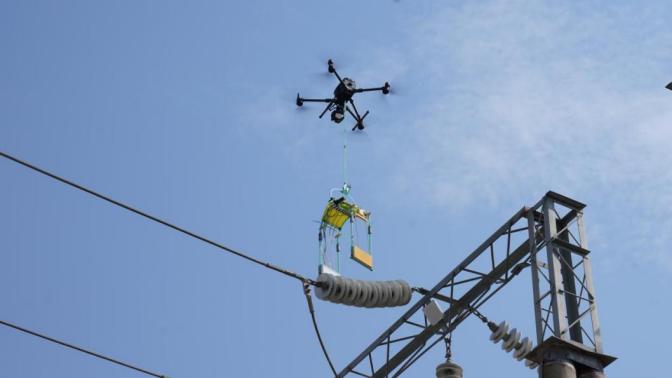
Baise Power Supply Bureau of Guangxi Power Grid uses drones and robots to conduct live-line inspections of insulators.

Liu Ying, general manager of the Digitalization Department at Guangxi Power Grid Co., Ltd., said the company has been building multilingual professional corpora for the power sector, covering ASEAN countries including Laos, Vietnam and Malaysia. Drawing on the capabilities of the DaWatt foundation model, the company is developing energy and power models tailored to ASEAN languages and real-world power industry applications.

Talent development is another focus of the cooperation. The China-ASEAN Institute of Energy, jointly established by Guangxi Power Grid Co., Ltd. and Guangxi University, is exploring an industry-university training model with a strong emphasis on practical experience. So far, two cohorts totaling 53 students from ASEAN countries have enrolled.

Cooperation is also evolving from one-way training toward joint innovation. Guangxi Power Grid Co., Ltd. and the Royal Academy of Cambodia have jointly established a laboratory for artificial intelligence and safety equipment, while the company has also launched peer-to-peer exchanges with Electricité du Laos on improving power supply reliability.

To address language barriers in cross-border technical exchanges, Guangxi Power Grid Co., Ltd. has developed an AI-powered translation platform backed by a specialized database containing terminology for more than 1,800 types of power equipment. The platform supports accurate translation between Chinese and English, Chinese and Lao, and Chinese and Vietnamese.

At a recent training program for Chinese and overseas engineers, the system supported one-click generation of bilingual course materials and real-time speech translation, helping participants navigate highly specialized power-sector terminology.

To support regular international exchanges, Guangxi Power Grid Co., Ltd. has also established an international talent pool covering management, technical and skilled personnel. It has developed 24 hours of courses on international affairs as well as 20 short-form video courses.

“This year, we will also explore joint postgraduate programs with universities in ASEAN countries,” said Sun Xiaohua, deputy director of the Human Resources Department at Guangxi Power Grid Co., Ltd.

Looking ahead, Guangxi Power Grid Co., Ltd. plans to further advance a development model featuring “R&D in Beijing, Shanghai and Guangdong, integration in Guangxi, and application in ASEAN.” The company will continue expanding its multilingual power-sector corpora and explore a “Token Goes Global” model for power-sector AI, with computing resources and models based in Guangxi while knowledge services are delivered overseas. The effort is aimed at creating new forms of China-ASEAN energy cooperation and supporting the green development of the China-ASEAN Free Trade Area 3.0.

Hashtag: #GuangxiPowerGridCo.,Ltd. #ChinaSouthernPowerGrid #ChinaASEAN #EnergyCooperation

The issuer is solely responsible for the content of this announcement.

Mekong Countries, Dialogue Partners Mark 30 Years of Regional Water Cooperation

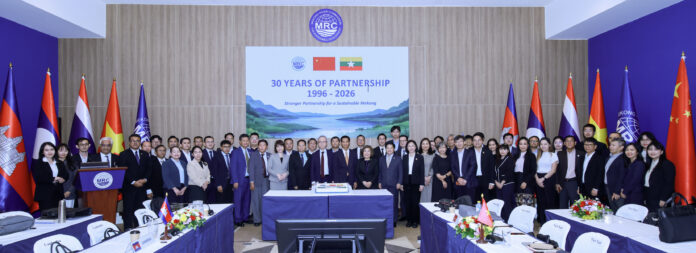
MRC and Dialogue Partners mark 30 years of cooperation on the Mekong River Basin. 17 September 2026. (Photo supplied by the Mekong River Commission : MRC)

On 18 September, the Mekong River Commission and its Dialogue Partners, China and Myanmar, celebrated the 30th anniversary of the establishment of their formal dialogue. 

The four Member Countries of the Lower Mekong Basin met with China and Myanmar to review their longstanding cooperation and set practical steps to strengthen cooperation across the entire Mekong Lancang River Basin. 

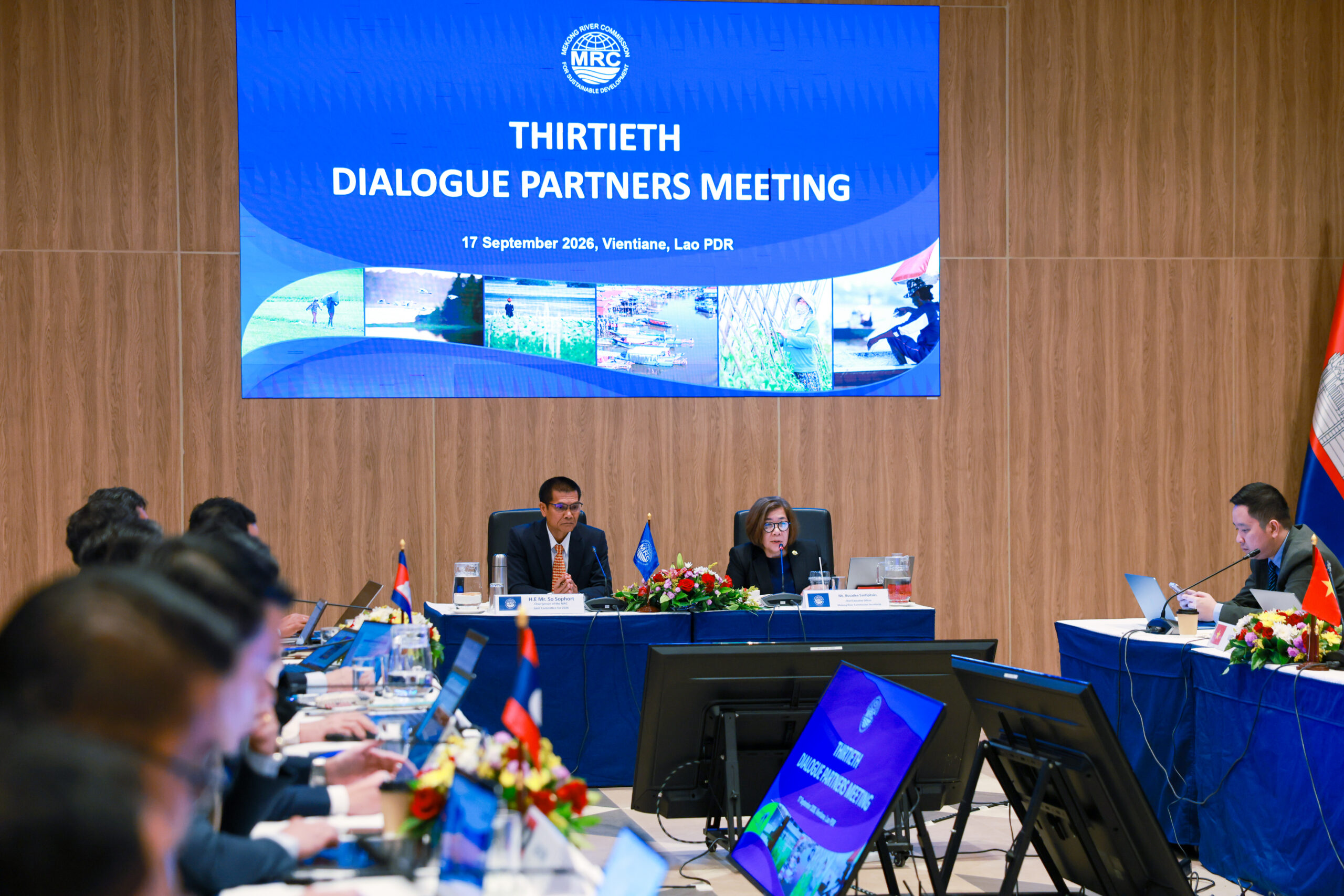
The 30th Dialogue Partners Meeting was held at the MRC Secretariat in Vientiane as changing rainfall, flood and drought risks, water quality concerns and shifting river flows increase the need for timely information exchange and coordinated action.

The first dialogue meeting was held in Bangkok on 26 July 1996. Since then, the dialogue has taken place and provided the six countries with the opportunity to exchange information and update forecasting and monitoring, water conditions and release, as well as discuss shared concerns and identify areas to strengthen cooperation. 

MRC and Dialogue Partners mark 30 years of cooperation on the Mekong River Basin. 17 September 2026. (Photo supplied by the Mekong River Commission : MRC)

The meeting focussed on hydrological data, joint modelling, environmental monitoring and future basin planning.

“30 years ago, all the riparian countries agreed to exchange information on activities and projects concerning the use of the Mekong River and its resources, to seek ways and means to cooperate in the use of the Mekong River and its resources for different purposes and in a sustainable manner, and to strive for development in the six riparian countries for the benefit of the people,” So Sophort, Secretary General of the Cambodia National Mekong Committee and the Chairperson of the MRC Joint Committee for 2026, stated.

He emphasised that this cooperation has become increasingly important, particularly when the

Mekong-Lancang River Basin faces growing environmental and socio-economic challenges, including the escalating impacts of climate change and weather variability.

China has shared hydrological information from Yunjinghong and Manan stations for 24 consecutive years, with year-round data provided since November 2020. Xu Jinsong, Counsellor of the Embassy of China in Thailand said in his statement that, “The six countries have agreed in principle under a Memorandum of Understanding on the mutual provision of hydrological information for the Lancang Mekong River Basin.”

He added that, “The six countries should achieve the goal of sharing full information on the Lancang Mekong River Basin as early as possible, which will help strengthen upstream and downstream coordination to address the challenges of flood and drought disasters together.” 

Future cooperation proposed by China includes urgent notifications, wider basin data sharing, and joint work on flood forecasting and drought response.

The meeting also reviewed Phase 2 of the Joint Study on changing hydrological conditions and adaptation strategies. The work brings together the MRC, the Lancang Mekong Water Resources Cooperation Center, Myanmar and technical teams from all six countries. The updated analysis uses 22 Global Climate Models, three climate scenarios and linked models for the Mekong mainstream, Tonle Sap system and Mekong Delta. Regional and national consultations are planned for October, followed by the Joint LMC-MRC Expert Group Meeting on Data, Modelling and Forecasting in November before submission of the final technical report for endorsement. 

The meeting also reviewed and received updates on regional cooperation following the detection of arsenic contamination in the Kok, Sai and Ruak Rivers in northern Thailand and its confluences with

the Mekong in 2025. The routine water quality monitoring at 15 Mekong mainstream stations found that most results from January to June 2026 remained within MRC guideline values for the protection of human health and aquatic life. The meeting highlighted the importance of continued water quality monitoring, strengthening information sharing, as well as technical exchange and cooperation.

At the meeting, Myanmar presented its national progress in water resources and water quality

management, including the adoption of its National Surface Water Quality Standard in 2024. Current initiatives include a national flood and drought portal, automatic water level and rainfall monitoring in border areas, assessment of toxic contaminants and water quality monitoring in the Mekong River and its branches in Shan State. 

Myanmar identified water quality assessment, comprehensive monitoring systems, technology transfer, research and human resource development as priority areas for further regional cooperation.

“We firmly believe that deepening cooperation with the MRC will strengthen our joint efforts for the sustainability, development, and systematic management of water resources for the benefit of all people in the Mekong region. We must continue to work together to protect our shared water resources,” Aung Kyaw Moe, Deputy Director General of Myanmar’s Environmental Conservation Department. 

Countries were also updated on Proactive Regional Planning, which focused on integrating water, food and energy needs into one basin assessment. 

The upgraded MRC Decision Support Framework is now operational and is being used to update development scenarios and the Initial Adaptive Basin Plan.

National consultations and expert review will continue before the plan is finalized in early December 2026.

The discussions highlighted the value of regular exchange among all six countries and placed the next stage of cooperation on practical delivery with more timely data, stronger joint analysis and faster coordination when conditions change anywhere along the river.

“Trust in river cooperation is built through consistent action, such as sharing data as agreed, communicating changes in a timely manner, with a view for better preparedness and protection of the Mekong and its peoples. Let us carry this cooperation forward with openness and a shared purpose, so the Mekong continues to sustain communities and connect our countries for generations to come,” said Busadee Santipitaks, Chief Executive Officer of the MRC Secretariat.


Editor’s Note: This article was contributed by the Mekong River Commission. Views and information presented are those of the contributing organization.

Lao Classics Take on New Sound at Orchestra Concert in Vientiane

A rare Vientiane orchestra concert brought Lao classical music and khaen to the stage while raising funds for young musicians. (Photo supplied by the Pianist Vientiane)

The Lao National Culture Hall was packed on 19 September, with more than 1,000 people turning up dressed for an evening of Lao music with a difference.

Events like this are still relatively rare in Laos. On stage, more than 40 musicians played 10 well-known Lao classical songs, rearranged for an orchestra by Master Alounyadeth Ratsahody.

For the Lao audience, the melodies were familiar. Heard through an orchestra, they had a new sound, but also brought back memories of songs they grew up with.

Hosted by The Pianist Vientiane, the “A Symphony of Heritage” charity concert also featured Swiss violinist Mathias Boegner, who performed a solo combining Western classical music with Lao musical traditions, including the khaen, Laos’ traditional mouth organ.

The khaen joins the orchestra, bringing a distinctly Lao sound to the concert. (Photo supplied by the Pianist Vientiane)

The evening also featured Swiss violinist Mathias Boegner, who performed a solo blending Western classical music with Lao musical heritage, including the khaen, Laos’ traditional mouth organ.

With the theatre full the concert offered a rare opportunity to experience Lao traditional music in an orchestral setting.

Proceeds from ticket sales and sponsorships will go toward buying new musical instruments for students at the National College of Arts, giving them more opportunities for hands-on practice and supporting the next generation of Lao musicians and artists.

The Pianist Vientiane thanked its partners, sponsors and audience members for supporting the concert and its contribution to arts and cultural education in Laos.

Latest Scam Center Raids Hit Vientiane, Champasak with Nearly 100 Arrests

On 20 September, police handed over 129 Thai nationals to Thai authorities at the 1st Lao-Thai Friendship Bridge in Vientiane. (Photo: Ministry of Public Security)

Laos has detained nearly 100 suspected scammers in raids across the country last week, while another 129 people arrested in an earlier operation have been handed over to Thai authorities.

In the latest raid, on 18 September, Champasak authorities detained 23 suspected scammers, including 22 Chinese nationals and one Lao national, according to state media reports.

Police launched the operation in Huasae village, Bachiang Chaleunsouk district, after a local resident reported suspicious cybercrime activity at a rented house. 

Officers seized 49 desktop computers, 237 mobile phones, 27 computer processors, and seven voltage stabilizers.

The case remains under investigation.

The Champasak raid is the latest in a series of operations targeting cybercrime and online gambling networks across Laos this month.

On 20 September, police handed over 129 Thai nationals, including 57 women, to Thai authorities at the 1st Lao-Thai Friendship Bridge in Vientiane. Police had detained the group during a 28 August raid on the Mangrove Hotel and Glory Apartment in Xaysettha district.

Two days earlier, on 16 September, police detained 41 foreign suspects, including 40 Thai nationals and one Chinese national, during raids on four Vientiane hotels: Eastin, La Sen, Inthad and Minta. Officers seized dozens of mobile phones, laptops and other electronic devices and took the suspects in for questioning.

Earlier this month, police also arrested 13 people during a 12 September raid on two rented houses, where they seized 1,494 suspected methamphetamine pills. A 6 September raid on Yuzhou Smart Hotel resulted in 43 arrests, while a 5 September gambling raid led to two arrests.

In September alone, Lao police arrested over 200 suspected scammers nationwide. 

Since the start of 2026, authorities have detained at least 6,200 suspects, with roughly 1,000 arrests recorded in both July and August.

Thailand Accelerates Industrial Ecosystem Upgrade to Attract Global Investment

I-EA-T strengthens investment readiness through faster approvals, modern infrastructure and clean energy


BANGKOK, THAILAND – Media OutRech Newswire – 21 September 2026 – The Industrial Estate Authority of Thailand (I-EA-T) is accelerating efforts to strengthen Thailand’s industrial ecosystem and enhance its readiness for global investment.Under its “I-EA-T RAPID Forward” strategy, the Authority is working to remove regulatory barriers, shorten administrative processes, upgrade infrastructure and clean-energy systems, and deliver internationally benchmarked investor services. The initiative aims to improve industrial competitiveness and reinforce Thailand’s position as a long-term manufacturing base for global industries.

image-1.jpeg

Mr. Sumet Tangprasert, Governor of I-EA-T, said a key priority is to reduce the time between an investor’s decision and the commencement of business operations while creating an ecosystem that supports sustainable long-term growth.

I-EA-T reports that Thailand has 84 industrial estates across 18 provinces, covering more than 216,000 rai, or approximately 34,560 hectares. The estates represent cumulative investment of around 13.43 trillion baht and support more than 1.09 million jobs.

“Today’s investors are no longer simply looking for land on which to build factories. They require an ecosystem that allows them to invest and begin operations quickly, supported by reliable infrastructure that can preserve their competitiveness over the long term,” Mr. Sumet said.

“I-EA-T is therefore evolving from an industrial estate developer into a strategic partner for investors under the concept of ‘Accelerating Industry towards a Sustainable Future.'”

Faster Investment through Thailand FastPass

I-EA-T is supporting the Thailand FastPass program to help approved investment projects progress more quickly from licensing to commercial operations.

The program is being implemented alongside the Standard Code of Practice (SCOP), which allows eligible site-preparation activities to proceed under prescribed environmental requirements while an Environmental Impact Assessment report is being prepared. I-EA-T is also streamlining overlapping procedures and introducing self-certification to improve certainty and shorten project-development timelines.

As part of its immediate priorities, I-EA-T is pursuing five “Quick Wins”:

  1. Upgrading smart-grid systems to improve power reliability and reduce energy costs
  2. Expanding the Total Solution Center Plus+ for investors
  3. Improving utility systems for downstream industries
  4. Developing Low Carbon Cities in industrial-estate areas
  5. Connecting industrial estates with global supply chains

Advancing Low-Carbon Industry

I-EA-T is among the initial public-sector participants in Thailand’s Low Carbon Cities and Carbon Market Development Project, supported by the World Bank Group with total project financing of US$200 million.

The nationwide initiative links renewable-energy and energy-efficiency investments with carbon-market infrastructure. Beginning with I-EA-T and the Bangkok Metropolitan Administration, it will promote solar photovoltaic systems, energy-efficiency improvements and a scalable mechanism for generating and monetizing verified carbon credits.

The measures are expected to lower energy costs, reduce emissions across industrial supply chains and strengthen Thailand’s competitiveness during the global transition to a low-carbon economy.

Smart Park Incentives for Future Industries

I-EA-T is also offering incentives at Smart Park Industrial Estate for New S-Curve industries and international companies seeking to diversify their manufacturing bases.

The package includes two-year waivers of land lease and facility-maintenance fees, subject to a minimum lease term of 10 years. Investors may provide a cash deposit or bank guarantee equivalent to one year’s rent and must commence operations within three years of receiving permission to use the land.

The incentives are available until September 30, 2027.

“Thailand’s future competitiveness will depend not on offering the lowest costs, but on an investment ecosystem that brings together energy, technology, innovation, digital infrastructure, utilities and environmental management,” Mr. Sumet said.

“I-EA-T is committed to designing an industrial ecosystem that directly supports foreign investment and reinforces Thailand’s position as a long-term investment and manufacturing base for global industries.”

Hashtag: #I-EA-T

The issuer is solely responsible for the content of this announcement.

Tencent Cloud and UTM Connect Malaysia’s Emerging AI Talent with Real-World Industry Challenges

  • Five-week programme to prepare students for a fast-evolving, more AI-centric job market
  • Cohort empowered with AI tools to solve real world challenges from leading local organisations AmBank, JCorp, Silverlake, and Arkie AI
  • Two winning teams will represent Malaysia at the Tencent Cloud Hackathon Global Finals in Shenzhen

KUALA LUMPUR, Malaysia, Sept. 21, 2026 /PRNewswire/ — Tencent Cloud, the cloud business of global technology company Tencent, and Universiti Teknologi Malaysia (UTM) have formalised a three-year collaboration through a Memorandum of Understanding (MoU) signed on 18 August 2026 to strengthen AI education, cloud skills development and industry-led problem-solving.

The AI CAN DO IT – Tencent Cloud x UTM AI Hackathon 2026 demonstrated how students can apply AI to real-world industry needs. Held from 10 July to 13 August, the five-week programme brought together UTM students to develop solutions for challenges identified by leading local organisations AmBank, Johor Corporation (JCorp), Silverlake and Arkie AI.

The programme recorded more than 300 engagements across recruitment, training and mentoring activities. The Demo Day at UTM Kuala Lumpur also brought together representatives from the Malaysia Digital Economy Corporation (MDEC), Tencent Institute of Games and other industry partners.

The MoU was signed at The St. Regis Kuala Lumpur by Professor Ts. Dr. Mohd Shafry bin Mohd Rahim, Vice-Chancellor of UTM, and Poshu Yeung, Senior Vice President, Tencent Cloud International.

Preparing students for an AI-enabled workplace

The Tencent Cloud–UTM collaboration comes as AI proficiency is becoming increasingly important across the workforce. Students and young adults are entering a fast-evolving job market in which AI-supported research, analysis, programming and ideation are becoming more common.

Students at the Hackathon received both online and in-person training on Tencent WorkBuddy, an AI desktop agent that can assist with research, analysis and document creation; CodeBuddy, an AI programming suite that supports coding and software development; and Tencent Design Miora, an AI-native creative studio for visual content and design. These AI tools were used as part of their project work, with technical guidance and feedback from industry practitioners. Students’ AI and troubleshooting abilities were tested at the Hackathon by solving real-world problems in a controlled, low-risk environment.

AmBank, JCorp, Silverlake and Arkie AI contributed challenge statements covering financial scam prevention, organisational performance monitoring, and communication and social skills training.

JCorp, for example, asked students to consider how AI could help management identify emerging performance concerns and understand the factors behind them. Arkie AI challenged students to explore how AI-driven role-play and personalised feedback could help people practise communication in a safe environment.

“Much of the AI conversation focuses on access to models and infrastructure. In practice, the harder question is what organisations do with them,” said Jasmine Chan, Partnership Director, Tencent Cloud Malaysia. “The same applies to students. Working on a real brief requires them to make choices, test their assumptions and justify their solution with real world commercial outcomes. These experiences will become invaluable to students as AI continues to integrate into Malaysian businesses and the wider economy.”

AI skillsets yielding diverse benefits for students

For students, exposure to AI tools and real industry challenges can strengthen practical problem-solving, communication and technical capabilities that are increasingly relevant across sectors. The hackathon also gave participants opportunities to work across disciplines, receive feedback from industry practitioners and translate ideas into demonstrable solutions.

Participants and partners at the AI CAN DO IT – Tencent Cloud x UTM AI Hackathon 2026 Demo Day, held at UTM Kuala Lumpur on 13 August 2026.

Team Sleep_Well, which included Ho Yu Xiang from UTM’s Faculty of Artificial Intelligence, was named champion of the AI Agent Track for AI Scam Shield, an AI-powered financial scam prevention platform developed in response to Silverlake’s challenge.

Team Untitled, comprising Ahmad Mohamed Elhassan Seliaman Mohamed and Mohammed Rahbab Chowdhury, won the Game Track with Threshold, a 3D social simulation game designed to help users practise communication skills and build social confidence. Players create an identity, explore an open environment and interact with AI-driven characters across different scenarios.

Both teams will go on to represent Malaysia at the Tencent Cloud Hackathon Global Finals in Shenzhen, China, in September.

Building a longer-term pathway for AI talent development

The hackathon is one of the early initiatives under the broader three-year collaboration between Tencent Cloud and UTM. The MoU provides a framework for joint research in AI, Cloud Computing, Smart Technologies and Digital Transformation; professional certification; hackathons and innovation programmes; internships and talent development; and exchange and training activities.

“Malaysia’s continued progress in AI will depend on our ability to connect academic learning with the skills and tools used by industry,” said Professor Ts. Dr. Mohd Shafry bin Mohd Rahim, Vice-Chancellor of UTM. “Through this collaboration, we look forward to giving students and educators more opportunities to build practical capabilities in cloud and AI, while contributing to a stronger national talent pipeline.”

UTM established Malaysia’s first Faculty of Artificial Intelligence in 2024, and its Bachelor in Artificial Intelligence with Honours includes Responsible AI and Ethics. The collaboration supports UTM ASCEND 2030 by expanding opportunities for students and educators to engage with current technologies, industry expertise and real-world AI applications.

About Tencent Cloud

Tencent Cloud, one of the world’s leading cloud companies, is committed to creating innovative solutions to resolve real-world issues and enabling digital transformation for smart industries. Through our extensive global infrastructure, Tencent Cloud provides businesses across the globe with stable and secure industry-leading cloud products and services, leveraging technological advancements such as cloud computing, Big Data analytics, AI, IoT, and network security. It is our constant mission to meet the needs of industries across the board, including the fields of gaming, media and entertainment, finance, healthcare, property, retail, travel, and transportation.

About Universiti Teknologi Malaysia

Universiti Teknologi Malaysia (UTM) is a leading innovation-driven entrepreneurial research university in engineering, science and technology, with campuses in Johor Bahru, Kuala Lumpur and Pagoh. Ranked 158th in the QS World University Rankings 2027, UTM advances education, research, innovation and industry collaboration for national and global impact.