

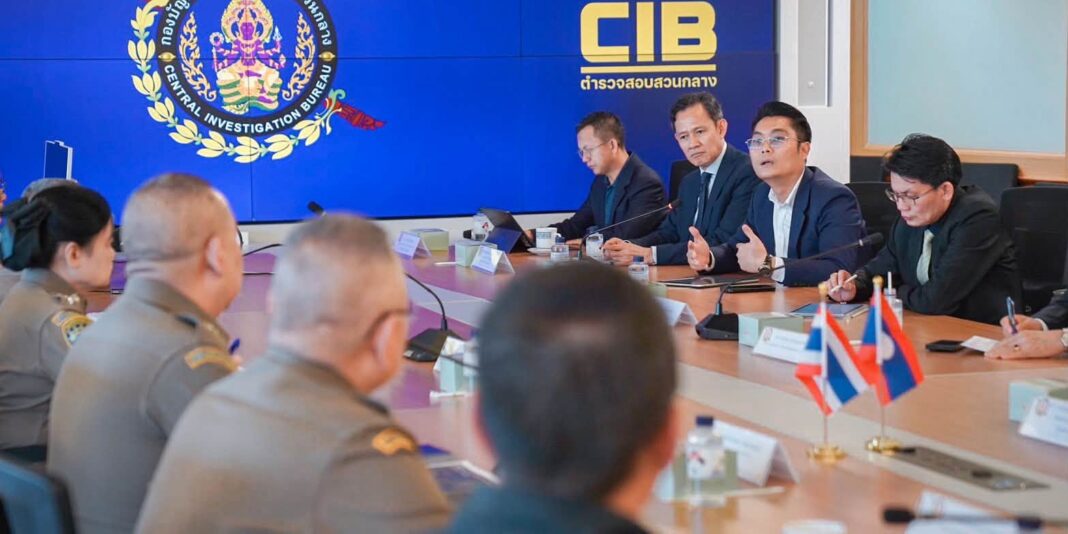
On 31 July, Lao authorities and Lao Development Bank (LDB) met with Thailand’s Central Investigation Bureau (CIB) to pursue legal action against three social media accounts accused of spreading false information linking the bank to money laundering.
According to Thai media reports, the allegations trace back to a 28 July social media post by a Thai-based page, which accused LDB of facilitating money laundering through payment gateway services connected to scam networks, online gambling operations, and other illegal businesses operating across Laos and the region.
The post also named Chanthanome Phommany, 44, Chairman of the Management Board of Chaleun Sekong Energy (CSE) Limited, alleging he was directly involved.
CSE holds 70 percent of LDB’s shares, while the Lao government holds the remaining 30 percent.
Lao authorities and CIB discussed possible legal action against the three accounts, though authorities have not publicly identified them.
Lao authorities said the allegations have damaged the bank’s reputation, its management’s standing, and the reputation of Laos more broadly.
CIB said investigators will collect evidence and determine whether Thai law was violated, and will pursue legal action if they find sufficient evidence that the information was shared deliberately.
BoL and LDB Respond
On 29 July, the Bank of the Lao PDR (BoL) and LDB held a joint press conference to address mounting public concern. Both institutions maintained that LDB remains financially stable, operates transparently, and complies with Lao banking regulations and anti-money laundering requirements.
Maniphone Intavanh, Deputy Director of BoL’s Department of Bank Supervision, said the central bank reviewed the allegations, coordinated with relevant agencies, and found no evidence that LDB engaged in money laundering or terrorist financing.
LDB Managing Director Fongsamout Duangchai also rejected the allegations, saying the bank operates modern anti-money laundering systems that screen customers and transactions against international sanctions and watchlists maintained by the United Nations, the U.S. Office of Foreign Assets Control, and the European Union.
