Home Blog Page 2314

Alibaba Cloud Unveils Strategic Roadmaps for the Next Generation AI Innovations

Full-stack offerings introduced from AI models to agent development and application platforms and upgraded infrastructure during Apsara Conference 2025


HANGZHOU, CHINA – Media OutReach Newswire – 24 September 2025 – Alibaba Cloud, the digital technology and intelligence backbone of Alibaba Group, today unveiled its latest full-stack AI innovations at Apsara Conference 2025, its annual flagship technology conference. The announcement spans from next-generation large language models from the Qwen3 family, the upcoming Wan 2.5 visual-generation models, enhanced platforms for agent development and application, to major upgrades of its AI infrastructure, reinforcing the company’s global leading position at the forefront of the new AI era.

“In the future, large AI models will be deeply integrated into a wide range of devices, functioning like operating systems — equipped with persistent memory, seamless cloud-edge coordination, and the ability to continuously evolve. We remain committed to open-sourcing Qwen and shaping it into the ‘operating system of the AI era,‘ empowering developers around the world to build transformative AI applications,” said Eddie Wu, Chairman and CEO of Alibaba Cloud Intelligence.

“Simultaneously, Alibaba Cloud is strategically positioned as a full-stack AI service provider, dedicated to delivering robust computing with maximized efficiency for training and deploying large AI models on the cloud. To underscore our long-term commitment to advancing AI, we will progress with our RMB 380 billion investment plan in AI and cloud infrastructure over the next three years,” Wu added.

Since the launch of the first generation of Qwen in 2023, Alibaba has open-sourced over 300 AI models built on its two foundation models: the large language model Qwen and the visual generation model Wan. With over 600 million downloads and 170,000+ derivative models created, Alibaba’s AI models have become one of the most widely adopted open-source AI series globally. Notably, over 1 million corporates and individuals have used Qwen on Model Studio, Alibaba’s AI development platform.

Unveiling Qwen3-Max: The most powerful LLMs from Alibaba to date

Alibaba officially released Qwen3-Max, its largest LLM model with over 1 trillion parameters. With Instruct (non-thinking) and Thinking modes, the model achieves impressive performance across a wide range of benchmarks especially in code generation and agentic capabilities. For the instruct mode, it scores 69.6 in SWE-Bench, an authoritative benchmark for evaluating LLMs on real-world software issues, on par with some leading closed-source models. It also records remarkable performance on Tau2-Bench, a benchmark that evaluates conversational agents, showing exceptional proficiency in tool use, a foundational capability for building intelligent, action-oriented agents.

A series of Qwen3 models that cover visual language and multimodal processing were also unveiled at the conference.

  • Qwen3-VL: The most capable vision-language model in the Qwen family to date. Its Mixture-of-Experts (MoE) architecture enables flexible deployment from edge devices to high-performance cloud environments. Functioning as a visual agent, Qwen3-VL is capable of operating on both computer and mobile interfaces; It pioneers visual programming by generating code directly from images or videos, effectively turning visual designs into functional applications. Its spatial understanding capability support 3D grounding with enhanced perception of direction and distance, laying critical groundwork for embodied AI and real-world spatial navigation. Qwen3-VL-235B-A22B is available in both Instruct (non-thinking) and Thinking versions, achieving remarkable performance across leading visual perception and multimodal reasoning benchmarks.
  • Qwen3-Omni: a natively end-to-end, multilingual omni-model capable of processing text, images, audio, and video inputs, while delivering real-time, streaming response in both text and natural speech. Powered by a novel Thinker–Talker MoE architecture and pre-trained on 20 million hours of audio data, Qwen3-Omni delivers exceptional performance in understanding audio input (up to 30 minutes) and video-based conversation, all without compromising its strong capabilities in text and image processing. It also achieves real-time multimodal interaction, with ultra-low latency – making it an ideal solution for intuitive, hands-free interaction in intelligent cockpits, smart glasses and mobile phones. Qwen3-Omni-30B-A3B is now open sourced on Hugging Face and Alibaba Cloud’s ModelScope community. Users can also access Qwen3-Omni-Flash on Qwen Chat, a web application that allows users to experience different Qwen models.

Additionally, Qwen3-Coder and Qwen3-Image-Edit have received a major upgrade. The new Qwen3-Coder achieves faster inference speed and enhanced code safety, while Qwen3-Image-Edit has been updated to support multi-image editing with significantly improved visual consistency.

Alibaba also unveiled Fun, a family of speech LLMs equipped with advanced multilingual speech recognition and synthesis capabilities. The series includes Fun-ASR, an end-to-end automatic speech recognition (ASR) model optimized for real-world enterprise deployment, and Fun-CosyVoice, a high-quality, expressive speech synthesis model designed to generate natural-sounding spoken output in multiple languages.

Wan2.5 Preview: Elevates Multimedia Content Creation

At the same conference, Alibaba also previewed four Wan2.5 models, including its latest video generation models, an image generation model and an image editing model. The video generation models natively support high-fidelity audio generation for the video, doubling the duration from 5 to 10 seconds, enabling more complete and coherent narratives with enhanced visual quality. The models feature a natively integrated multi-modal architecture, which is trained jointly on text, audio, and visual data. This allows for aligned multi-modal generation, ensuring synchronized audio and visual content, and enhanced instruction understanding to closely follow user prompts.

New Development Framework for Enhanced Agent Deployment

For improved efficiency of implementing AI agents at scale, a development framework is now added to Model Studio, Alibaba Cloud’s AI development platform. The new framework features Model Studio-ADK (agent development kits), a high-code development framework for enterprise professionals that translates intricate business needs into executable agent logic to enables the rapid development of sophisticated AI agents with autonomous decision-making, dynamic reflection, and iterative task execution capabilities. Remarkably, users can create a DeepResearch or Agentic RAG (Retrieval-Augmented Generation) project within an hour using this robust toolkit. Model Studio has also upgraded its low-code development platform Model Studio-ADP (Agent Development Platform), enabling users with limited programming backgrounds to easily create lightweight AI agents.

Addressing key enterprise challenges such as multi-source data processing, resource constraints, and cross-environment deployment, Model Studio Agent introduces a range of enterprise-grade features. These include seamless connectivity via Model Context Protocol (MCP), RAG multi-modal fusion, dynamic inference scheduling, and sandbox service, allowing enterprises to accelerate the adoption of AI agents.

Currently, users can access over 200 industry leading models via Model Studio, including Alibaba’s self-developed Qwen and Wan models. More than 800,000 agents have been created on Model Studio, supporting diverse scenarios ranging from content creation and intelligent marketing to smart home management and production optimization. Over the past 12 months, number of model calls via Model Studio have increased by 15 times, reflecting the growing demand for robust and scalable AI solutions.

Novel AI Platforms to Support Enterprises and Creators

Following its debut in July, Alibaba Cloud has rolled out major upgrades to AgentBay, a multimodal cloud-based operating environment and expert agent platform for enterprises, developers, and AI partners. The new features—Self-Evolving Engine, custom container images and builtin safety and compliance controls—help transit agents from simple, single model helpers to composite, human-like, multimodal workers that can complete tasks end-to-end.

To meet rising enterprise demand for AI-driven growth, Alibaba Cloud also launched Lingyang AgentOne, a one-stop enterprise AI application platform that enables organizations to move from reactive response to proactive intelligence. Powered by Alibaba’s Qwen models and deeply integrated with the Alibaba ecosystem, Lingyang AgentOne offers an end-to-end agent development workspace to connect with existing systems and accelerate time-to-value. Through scenario-based solutions across marketing, analytics, customer service, and operations, Lingyang AgentOne links the full pre-sales, sales, and post-sales value chain to deliver measurable, production-ready outcomes for industries such as home improvement and e-commerce.

Additionally, Alibaba’s consumer-facing AI application platform Quark launched Zaodian, a onestop AI image and video creation platform that integrates industry leading AI models such as Alibaba’s flagship video generation model Wan to deliver a professional, efficient experience for creators. Apart from the text-to-video and image-to-video functions supported by Wan, Zaodian also offers AI image generation and editing functions with leading model choices. Creators can experience the platform service at website zaodian.quark.cn or via the “AI Image” entry on Quark desktop version.

Next-Generation AI Infrastructure for Agentic AI

At the conference, the cloud pioneer has also unveiled a comprehensive suite of innovative infrastructure upgrades specifically designed to support the emerging agentic AI landscape.

  • Storage: Alibaba Cloud enhanced its Object Storage Service (OSS) with “Vector Bucket,” an AI-powered feature enabling cost-efficient, large-scale vector data storage and retrieval — optimized for RAG and AI apps. It unifies raw and vector data management in OSS, accessible via standard APIs, simplifying scalable RAG platform development and multimedia asset organization. It helps lower the cost of AI development by letting businesses manage both raw and vector data in one place — reducing complexity and accelerating RAG application deployment.
  • Networking: Alibaba Cloud unveiled its latest architecture for high performance network—HPN8.0, a network specially designed for AI models. This innovation enables seamless model training, inference, and reinforcement learning (RL) across mixed computational workloads, while supporting ultra-large-scale deployments. The architecture delivers 800 Gbps network throughput, doubling the capacity in previous generation.
  • Security: Another key update is the addition of an AI-driven agentic function to its Cloud Threat Detection Response (CTDR) solution. This cloud-native security enhancement boosts detection, analysis, and response capabilities, providing a more intelligent and proactive approach to combating security threats. Five AI agents, powered by Qwen, will automate security operations—from alert assessment to execution—with intelligent analysis, event correlation, and actionable reporting for end-to-end threat management. The new function has effectively increased the automated incident investigation success rate from 59% to 74%, while handling 70% automated response actions without human intervention.
  • Container: Alibaba Cloud has upgraded its Container Compute Services (ACS) to enhance its auto-scaling capabilities through optimized scheduling and container image cache acceleration technologies. This enables elasticity, supporting the scaling of up to 15,000 pods per minute to handle massive, highly concurrent agent requests. Besides, the ACS container sandbox technology provides strong isolation by separating user space from the runtime environment, preventing vulnerabilities or data leaks in one agent from affecting others.
  • Database: Alibaba Cloud has upgrades its PolarDB database, optimizing for combined data and AI workloads. The upgrade has introduced a hardware innovation powered by Compute Express Link (CXL) technology, a highly efficient compute-memory interconnect to reduces latency by 72.3%, boosting memory scalability by 16x and laying a solid foundation for data and AI workload. The upgraded PolarDB also introduced a new Lakebase architecture with hybrid storage include lake, operational database and metadata for storing popular open-data formats including Lance, Iceberg and Apache Hudi and lowering storage cost, enabling efficient multimodal data storage and management.
  • Platform for AI (PAI): Alibaba Cloud’s PAI introduced synergistic optimizations to advance large model development into the agentic AI era. Its novel MoE training acceleration improves Qwen series training by over 300%, while the upgraded DiT training engine reduces Wan series’ single-sample training time by 28.1%. Enhanced inference delivers 71% higher TPS, 70.6% lower TPOT latency, and 97.6% faster infrastructure scaling.

Hashtag: #AlibabaCloud

The issuer is solely responsible for the content of this announcement.

About Alibaba Cloud

Established in 2009, Alibaba Cloud () is the digital technology and intelligence backbone of Alibaba Group. It offers a complete suite of cloud services to customers worldwide, including elastic computing, database, storage, network virtualization services, large-scale computing, security, big data analytics, machine learning and artificial intelligence (AI) services. Alibaba has been named the leading IaaS provider in Asia Pacific by revenue in U.S. dollars since 2018, according to Gartner. It has also maintained its position as one of the world’s leading public cloud IaaS service providers since 2018, according to IDC.


Nexteer Showcases Motion-by-Wire Innovations & Shares Insights on Software-Defined Vehicles at MOVE America

Steer-by-Wire, Rear-Wheel Steering, Brake-by-Wire, Software & More in Detroit September 24-25

DETROIT, Sept. 24, 2025 /PRNewswire/ — Nexteer Automotive will showcase its latest Motion-by-Wire™ innovations including Steer-by-Wire, Rear-Wheel Steering, Brake-by-Wire and the MotionIQ™ Software Suite during MOVE America, September 24-25 at Huntington Place in Detroit.

In booth #529, Nexteer’s experts will discuss how they are shaping the future of the software-defined chassis for passenger vehicles and adjacent markets, helping OEMs accelerate development and reduce costs while delivering safer, smarter and more exciting driving experiences. 

Visitors will experience an immersive Steer-by-Wire driving simulation and explore innovations, such as:

Nexteer experts will also be available to explore how these motion control technologies can solve technical and business challenges in passenger vehicles, as well as in adjacent markets such as commercial vehicles, off-road vehicles and other mobility segments.

SDV Insights at MOVE America

In addition to its exhibit, Nexteer’s Executive Product Line Director for Software Products, Peter Schmitt, will join a conference panel discussion, “Advances in Software-defined Vehicles,” on Wednesday, September 24 at 1:20 p.m. in the Tech, Data & Innovation Theater #2. Schmitt will also be joined on the panel by experts from Stellantis, COVESA and Mercedes Pay

“The future of software-defined vehicles will be driven by collaboration and co-creation,” said Schmitt. “Nexteer is a trusted partner in this development, bringing our proven expertise in safety-critical motion control with integrated hardware and software solutions to OEMs and millions of drivers around the world. We’re looking forward to continuing conversations with leaders across the mobility ecosystem at MOVE America and to creating the next generation of motion control together.”

About Nexteer Automotive 
Nexteer Automotive (HK 1316) is a global leading motion control technology company accelerating mobility to be safe, green and exciting. Our innovative portfolio supports by-wire chassis control, including Electric and Hydraulic Power Steering systems, Steer-by-Wire and Rear-Wheel Steering systems, Steering Columns and Intermediate Shafts, Driveline systems, Software solutions and Brake-by-Wire. The company solves motion control challenges across all megatrends – including electrification, software/connectivity, ADAS/automated driving and shared mobility – for global and domestic OEMs around the world including BMW, Ford, GM, RNM, Stellantis, Toyota and VW, as well as automakers in India and China including BYD, Xiaomi, ChangAn, Li Auto, Chery, Great Wall, Geely, Xpeng and others. www.nexteer.com 

Link to Nexteer Media Center & MOVE America Press Kit  

Allianz Commercial: Cyber insureds gain momentum against attackers, but supply chain challenges remain

  • Ransomware is the biggest loss driver, accounting for 60% of the value of large cyber claims (>€1mn), while threats posed by supply chains, privacy regulation and social engineering require attention, especially as an uptick in loss activity is expected from Black Friday onwards.
  • Despite the increasing level of attacks, analysis of Allianz Commercial cyber claims shows severity is down by 50% and large claims frequency by 30% during H1 2025 to date, driven by larger companies’ elevated detection and response capabilities.
  • Cyber resilience gaps in Asia Pacific persist amidst an increasingly threatening landscape.

SINGAPORE – Media OutReach Newswire – 24 September 2025 – The cyber risk and insurance landscape in 2025 reveals a complex and evolving threat environment. Large insured companies are becoming increasingly resilient against cyber-attacks with strengthening of cyber security and preparedness and response capabilities helping to mitigate the impact of some of the large cyber losses in 2025 to date. However, the reliance on digital supply chains, impact of expanding privacy regulation, and more sophisticated social engineering attacks targeting employees are also broadening the scope of potential losses for all companies, according to the latest Cyber Security Resilience Outlook from Allianz Commercial.

During the first half of 2025, analysis of Allianz Commercial cyber claims shows the overall frequency of notifications was in line with activity a year earlier with around 300 claims. Despite the increasing sophistication and volume of attacks companies face, claim severity has declined by more than 50%, while the frequency of large loss claims is down by around 30%, driven by larger companies’ cumulative investments in cyber security, detection and response. However, the expanding risk landscape means there is no room for complacency. Ransomware attacks remain the top driver of cyber incidents while the focus of attackers is also shifting to smaller or mid-sized companies which are less resilient against cyber-attacks and data breaches. Overall, the total number of cyber claims in 2025 is expected to remain stable (around 700), with a seasonal uptick in activity expected around Black Friday at the end of November to year-end.

“Several ransomware events have hit the headlines this year, but overall, we see that insured losses from these attacks have decreased in 2025 to date. Insureds’ increased detection and response capabilities are helping to stop some attacks at an early stage. Every step an attacker progresses, and every minute that they are in the system, the impact goes up exponentially. The cost of a ransomware attack that progresses to data theft and encryption can be 1,000 times higher than an incident that is detected and contained early,” explains Michael Daum, Global Head of Cyber Claims at Allianz Commercial.

Ransomware remains biggest driver of cyber insurance claims

Ransomware attacks accounted for around 60% of the value of large claims during the first half of 2025. High-profile incidents across many industries underscore ongoing threats, although there are signs international co-ordination by law enforcement agencies and the strengthening of cyber security by large corporates is having a positive impact. Attackers are also shifting focus to smaller firms, which are typically less resilient than multinationals, as well as firms in other territories, such as in Asia or Latin America. Ransomware was involved in 88% of data breaches at small and medium firms compared to 39% at large firms, according to Verizon.

As large companies have improved their response capabilities, recent years have seen a shift from purely extortion-based ransomware attacks to double extortion including data exfiltration – 40% of the value of large cyber claims during the first half of 2025 included data theft, up from 25% in all of 2024. Losses involving data exfiltration were more than double the value of those without. The average global data breach cost hit a record high at almost US$5mn in 2024, driven by factors such as the impact of stricter data privacy regulation.

The retail sector has been particularly vulnerable to cyber incidents, entering the top three of most impacted industries, according to analysis of large cyber claims over the past five years, accounting for 9% of claims by value after manufacturing (33%) and professional services firms (18%). Retailers often have high revenues, handle large volumes of personal data, and are vulnerable to business interruption, which all provide leverage when making extortion demands. Large numbers of staff, suppliers and IT systems create a wide attack surface.

Meanwhile, an expanding risk landscape is also broadening the potential scope of losses for companies, with non-attack incidents, such as wrongful collection and processing of data, as well as technical failure, accounting for a record 28% of large claims by value during 2024. At the same time, organizations continue to face new challenges and threats from their growing reliance on digital supply chains, the impact of expanding privacy regulation, and the increasing number of social engineering attacks involving sophisticated impersonations of company staff to gain access to company systems.

Cyber resilience gaps in Asia Pacific amidst an increasingly threatening landscape

The Asia Pacific region experienced the most cyber-attacks in 2024, increasing 13% year-on-year and accounting for 34% of attacks globally, according to IBM. This is corroborated by AON, which reported a 22% rise in cyber insurance claims for Asia Pacific in 2024 over the prior year. Ransomware is also a major concern, and accounts for all of Allianz Commercial’s cyber losses in Asia for the first half of 2025.

“A significant number of companies have selected Asia as home for their complex supply chains as well as outsourcing of key business processes. While organizations recognize third-party and supply chain risk, in practice this is a challenge to mitigate and requires significant cross-functional collaboration internally, from the IT, procurement, to legal and compliance departments. Over the past few years, we have seen increased claim activity resulting from IT supply chain risks, in the form of both malicious attacks and technical failures. As a result, there continues to be an uptick in contractually driven cyber insurance purchases. Businesses in Asia, in particular large companies, have also shown an increase in cyber resilience and appetite for cyber risk transfer solutions, although their overall cyber coverage is generally lower compared to American or European peers.

“That said, a significant portion of large organizations still remain self-insured, and the same applies to small and medium enterprises, which are less resilient and more vulnerable to cyber risks. Asian businesses with overseas presence should also consider multinational cyber solutions, especially those with operations in Australia, US and UK which tend to experience more substantial financial losses arising from privacy litigation and data breaches,” says Karlis Trops, Head of Cyber & Tech Professional Indemnity at Allianz Commercial Asia.

“The global cyber insurance market is predicted to more than double to close to US$30bn by the end of the decade, yet penetration remains relatively low. We need to underline that cyber insurance plays an important role in helping build resilience at a time of rapid technological and regulatory change. Many companies remain unaware of the breadth of coverage offered, which can include costs associated with breach response, business interruption, and regulatory fines and penalties,” says Jarrod Schlesinger, Global Head of Financial Lines and Cyber at Allianz Commercial.

Hashtag: #Allianz


The issuer is solely responsible for the content of this announcement.

Allianz Commercial

Allianz Commercial is the center of expertise and global line of Allianz Group for insuring mid-sized businesses, large enterprises and specialist risks. Among our customers are the world’s largest consumer brands, financial institutions and industry players, the global aviation and shipping industry as well as family-owned and medium enterprises which are the backbone of the economy. We also cover unique risks such as offshore wind parks, infrastructure projects or film productions. Powered by the employees, , and network of the world’s #1 insurance brand, we work together to help our customers prepare for what’s ahead: They trust us in providing a wide range of traditional and risk transfer solutions, outstanding and services as well as seamless handling. Allianz Commercial brings together the large corporate insurance business of Allianz Global Corporate & Specialty (AGCS) and the commercial insurance business of national Allianz Property & Casualty entities serving mid-sized companies. We are present in over 200 countries and territories either through our own teams or the Allianz Group network and partners. In 2024, the integrated business of Allianz Commercial generated around €18 billion in gross premium globally.

Kuailu Tech: Unlocking the Future of Enterprise Digital Transformation

SINGAPORE, Sept. 24, 2025 /PRNewswire/ — Kuailu Tech, an innovation-driven enterprise specialising in digital transformation solutions, is empowering businesses to bridge the digital divide with cutting-edge AI technology. Its flagship product, Kuailu Cloud, combines proprietary large language model capabilities with low-code development tools, acting as a “universal key” that opens the door to seamless and efficient digitalisation for enterprises of all sizes.

Low-Code Capabilities – Making Transformation Accessible

With Kuailu Cloud’s powerful low-code platform, employees no longer need to be professional developers to build business applications. Through simple drag-and-drop configuration, companies can quickly create workflows that match their unique needs—from basic processes such as procurement requests and leave approvals to more complex modules like sales analytics and inventory management.

This democratised approach significantly lowers the technical barriers to digital transformation, turning it into a company-wide initiative rather than the sole responsibility of IT specialists. The platform also enables businesses to adapt quickly to market changes by modifying or launching new applications within hours instead of months, helping enterprises stay competitive.

AI Intelligence – Driving Transformation Forward

Kuailu Tech’s AI capabilities deliver a powerful engine for enterprise operations:

  • AI-Driven Approvals: Automated voice-to-text recognition and smart routing reduce approval cycles from an average of three days to under one hour, accelerating cash flow and decision-making.
  • Unified Smart Search: Integrating data across ERP, CRM, OA, and document systems, Kuailu’s search tool breaks down information silos, allowing managers to make data-driven decisions quickly and accurately.
  • Kuailu Meeting: Powered by AI, Kuailu Meeting revolutionises corporate communication. From automatic meeting creation and participant invitations, to real-time captioning, speaker recognition, and digital avatars for absent participants, it ensures no key detail is ever missed. Post-meeting, the system generates structured summaries and supports playback for maximum productivity.

Comprehensive Solutions – Supporting Every Business Function

Kuailu Tech offers a robust suite of applications to accelerate enterprise digitalisation:

  • Human Resources: One-stop management for recruitment, attendance, training, performance, and payroll, enhanced by AI-powered candidate matching and automated scoring.
  • Finance: OCR-based invoice capture, automated voucher generation, real-time budget monitoring, and intelligent risk alerts to improve efficiency and compliance.
  • Procurement: Supplier resource integration, automated approvals, and intelligent price comparison to reduce procurement costs by more than 20%.
  • Administration: Online booking for office resources, mobile-friendly approval workflows, and file sharing to streamline collaboration.

Additionally, Kuailu Cloud offers a marketplace of nearly 30 ready-to-use digital templates—including CRM, warehouse management, vehicle tracking, and work order management—helping enterprises get up and running without additional development time.

Security and ROI – Building a Reliable Digital Future

Kuailu Cloud is certified with China’s National Information Security Protection Level 3, offering multi-layered encryption, role-based access control, and full audit trails to ensure data integrity and confidentiality.

Unlike traditional transformation projects that often require high upfront investment and long deployment cycles, Kuailu’s solution offers zero development costs, five-minute pre-installation, and immediate go-live. Enterprises have reported up to 30% cost savings, 50% faster workflows, and significant recovery of production losses, proving Kuailu Tech to be a high-ROI choice for sustainable growth.

Kuailu Tech is a global artificial intelligence enterprise dedicated to driving the digital and intelligent transformation of enterprise office through AI technology. Based on its self-developed large model technology, the company has created a new generation of AI office intelligent entities, with capabilities covering a full-scenario intelligent office ecosystem including “AI intelligent office, AI intelligent collaboration, and AI intelligent meetings”. It is a powerful management tool that helps enterprises make smart, rapid, and efficient decisions.

For media inquiries, please contact:
Marketing Department, Kuailu Technology
Email: huangdr@egretsoft.com 

Official Website:
http://www.egretsoft.com/
http://www.kuailutech.com/ (launching soon)

Hefei Opens Opera Festival Revisiting Anhui’s Stage Traditions

HEFEI, China, Sept. 24, 2025 /PRNewswire/ — This is reported by Hefei Daily

Series commemorates 235 years since Huizhou troupes first performed in Beijing, with award-winning artists set to appear through Spring 2026

A press briefing for “All Operas Gathering in Anhui • Stars Shining on Hefei” was held in Beijing on September 22, introducing a slate of programs to mark the 235th anniversary of Huizhou opera troupes’ first performance in the capital. Overseen by the China Federation of Literary and Art Circles and the Publicity Department of the Anhui Provincial Committee, the event is jointly organized by the China Theater Association, the National Academy of Chinese Theatre Arts, the China Media Group Center for Arts Programming, and the Hefei Municipal Government.


Hefei Opens Opera Festival Revisiting Anhui’s Stage Traditions

The festival will open on September 28 at Anhui Baixi Theater in Hefei. The inaugural program will bring together nine recipients of the prestigious China Theatre Plum Performance Award to present classic works from Peking Opera, Kunqu Opera, and Huangmei Opera. The event series will continue through the Spring Festival in 2026.

At its center is the “Two Hundred Shows” initiative, a public-benefit program in which leading artists from across China and Anhui province will each stage more than 100 performances. Among them, Peking Opera artist Yu Kuizhi will lead casts in “Si Lang Tan Mu” and “Hong Zong Lie Ma“. Tickets will be offered at affordable prices. Audience members will also be able to use ticket stubs for free admission to Anhui landmarks including Huangshan Mountain, Jiuhua Mountain, Xidi, and Hongcun, combining daytime sightseeing with evening opera performances. 

The event will also feature the televised “Stars Shining on Hefei” opera broadcast, along with activities for fans and amateur clubs, outreach initiatives, and academic exchanges. Opera appreciation classes will be added to local primary and secondary school curricula. Additional forums and touring productions are also planned.

Later this year, Hefei will collaborate with the China Theater Association and the National Academy of Chinese Theatre Arts to host academic events, including tours of productions recognized with some of China’s top theater honors — the Wenhua Award, Plum Blossom Award, Magnolia Award, and Pear Blossom Cup. The effort aims to link stagecraft with scholarly discourse, encouraging artistic innovation and widening public participation in traditional theater.

The series not only honors the historic Huizhou troupes’ appearances in Beijing but also reflects Hefei’s broader push to use cultural programming to enhance urban life. It signals the city’s role in the national campaign to sustain and modernize China’s operatic traditions. 


The Road to CES 2026 Makes a Stop in Korea

CTA Executives highlight Korean partnerships, what’s new for CES 2026, and new research showing age differences in AI awareness and adoption in the region

ARLINGTON, Va., Sept. 24, 2025 /PRNewswire/ — The Consumer Technology Association (CTA) ®, owner and producer of CES®, is visiting Korea to announce plans for CES 2026, share new AI research, and highlight ongoing Korean partnerships. In a press briefing at Josun Palace in Seoul, CTA shared its vision for the upcoming show and how CES continues to serve as the world’s most powerful tech event. Every January, innovators show up at CES in Las Vegas to do business and meet with partners and customers – where together they shape the future.   

“Korea is a global innovation hub, pioneering the technologies that reshape our world. Korean companies also thrive at CES, with hundreds of Korean companies across the show floor and in our startup area, Eureka Park,” said Gary Shapiro, CEO and Vice Chair, CTA. “We’re excited to be back in Korea as we work together to support the Korean innovators solving big global challenges and moving the tech industry forward.”  

At the event, Kinsey Fabrizio, President, CTA and Mr. Hyun-Woo Kim, CEO, Seoul Business Agency (SBA) sat down for a fireside chat on the city’s participation in CES 2026. They discussed how SBA establishes Seoul as an innovation capital, the lessons other cities should take, what’s next in Korean tech, and why CES is important for Korean companies. 

“Korean innovators show up at CES! From global tech giants to a fast-growing cohort of startups, Korea’s vibrant tech ecosystem comes to life at CES each January,” said Fabrizio. “We can’t wait to see what our Korean exhibitors have in store for CES 2026.” 

From Eureka Park, the bustling startup area, to the main exhibition halls, Seoul’s participation reflects a national strategy to elevate Korean tech on the world stage. The city’s support signals a broader commitment to nurturing innovation and amplifying the voices of emerging entrepreneurs. 

Seoul organizations and startups are creative and CES offers them a platform to meet investors, partners and media,” said Kim. “CES is a launchpad for global business, especially for Korean brands looking to expand their reach.” 

At CES 2026, Korean companies will showcase innovation across immersive entertainment, mobility, health, and more. Many companies will continue to launch AI offerings from generative AI and robotics to agentic AI. Recognizing CES is a global stage, Korean innovation continues to grow its presence at CES across attendees, exhibitors, and media. Korea was also named an Innovation Champion on the 2025 CTA Global Innovation Scorecard. And many Korean companies won CES Innovation Awards® in 2025.

CTA also unveiled data exploring generational awareness and adoption of AI in Korea. In Korea, 99% of workers are aware of AI, signaling a nation deeply attuned to tech transformation. Despite near-universal recognition, only 48% of workers have used AI tools. The findings reveal a nuanced landscape where age affects adoption. 

  • While workers aged 61+ lead in awareness of AI, those workers ages 18-28, followed closely by those ages 29-44, used AI in practice the most. 
  • Working individuals ages 18-44 dominate both awareness and usage of generative AI, suggesting that Korea’s younger workforce is experimenting with new tools to redefine their workflows. 
  • When it comes to the next frontier of AI, agentic systems, while 78% of workers are aware, only 25% have used them, reflecting both the novelty and complexity of these systems. 
    • Once again, those from ages 18-28 emerge as the vanguard, embracing the cutting-edge tech with curiosity. 

Explore what’s next in AI and Korean innovation at CES 2026 – the global convener of innovators. CES 2026 takes place Jan. 6-9, 2026, in Las Vegas. Registration is now open

About CES®:  
CES is the most powerful tech event in the world – the proving ground for breakthrough technologies and global innovators. This is where the world’s biggest brands do business and meet new partners, and the sharpest innovators hit the stage. Owned and produced by the Consumer Technology Association (CTA)®, CES features every aspect of the tech sector. CES 2026 takes place Jan. 6-9, 2026, in Las Vegas. Learn more at CES.tech and follow CES on social.  

About Consumer Technology Association (CTA)®:    
As North America’s largest technology trade association, CTA is the tech sector. Our members are the world’s leading innovators – from startups to global brands – helping support more than 18 million American jobs. CTA owns and produces CES® – the most powerful tech event in the world. Find us at CTA.tech. Follow us @CTAtech.  

DHL Express supports Vietnam’s growth with additional air cargo capacity from Hanoi amid surging tech export demand

  • Over 300 tons of weekly additional air cargo capacity have been added to existing daily flights from Hanoi to cater to rising technology related shipment exports
  • These flights operate daily from Monday to Saturday, boosting Vietnam’s connectivity to continents worldwide
  • This strategic move demonstrates Vietnam’s booming technology export sector and its rising prominence as a global manufacturing base

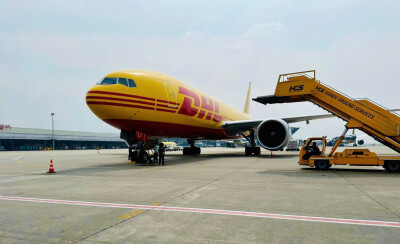
HANOI, VIETNAM/SINGAPORE – Media OutReach Newswire – 24 September 2025 – DHL Express has bolstered its aviation network by adding significant payload capacity to its current schedule of daily flights from Hanoi, as it responds to surging export demand driven by Vietnam’s rapidly expanding tech manufacturing sector. For the first half of 2025, DHL Express saw double digit increase in tech-related shipment exports from Hanoi. The new flights connect more Vietnamese businesses to their international partners and customers in key global markets, including North America, Europe, Middle East and Asia.

DHL Express adds air cargo capacity for Hanoi

To facilitate this growth, DHL Express has introduced a combination of Boeing 777 and Airbus A330 freighters that operate through the week. These flights – offering over 300 tons of additional payload capacity – transport shipments from Hanoi to other regions via Hong Kong.

This demonstrates DHL Express’s constant review of their customer and operational needs and adjust their network accordingly to accommodate demand. The Hanoi stops were added recently to support a rapidly increasing number of tech-related shipments.

“Vietnam’s role in global trade is accelerating, fueled by geographic advantages, a skilled workforce, and consistent inflows of foreign investment,” said Peter Bardens, Senior Vice President for Network Operations & Aviation – Asia Pacific, DHL Express. “It has risen as a tech manufacturing powerhouse in recent years, especially in the northern region where Hanoi is seeing a boom in high-tech exports. By enhancing our air network in Hanoi, we are reinforcing Vietnam’s role in global trade and ensuring that our customers can also capitalize on the country’s growth momentum.”

Vietnam’s upward trajectory and role in global supply chains

As companies continue to diversify their supply chains, Vietnam has emerged as a preferred manufacturing hub—particularly for high-tech products such as laptops and electronics. The country’s Ministry of Information and Communications forecasts that the ICT industry will achieve US$169.3 billion in total revenue in 2025, an 11.4% increase from 2024. Hardware and electronics exports are expected to grow by 12.3%, reaching US$ 148.5 billion. Additionally, the DHL Trade Atlas 2025 has highlighted that Vietnam is forecast to rank among the top 30 countries globally for both the speed and scale of trade growth in the next five years. Vietnam is also one of the top 20 high-growth markets identified by DHL Group, benefiting from strong geographic tailwinds and its strategic location in Southeast Asia.

In recent years, DHL Express has expanded its footprint and enhanced facilities in Vietnam, as it readies itself to support the country’s growth trajectory. This includes the opening of the new Hanoi Gateway facility located near the city’s Noi Bai International Airport as well as the West service center in Hanoi – marking DHL Express’s commitment to investing in its ground and aviation network.

These developments ensure that DHL Express is well-positioned to support the country’s export ambitions and the needs of international businesses operating in Vietnam.Hashtag: #DHL


The issuer is solely responsible for the content of this announcement.

DHL – The logistics company for the world 

DHL is the leading global brand in the logistics industry. Our DHL divisions offer an unrivalled portfolio of logistics services ranging from national and international parcel delivery, e-commerce shipping and fulfillment solutions, international express, road, air and ocean transport to industrial supply chain management. With about 400,000 employees in more than 220 countries and territories worldwide, DHL connects people and businesses securely and reliably, enabling global sustainable trade flows.

With specialized solutions for growth markets and industries including technology, life sciences and healthcare, engineering, manufacturing & energy, auto-mobility and retail, DHL is decisively positioned as “The logistics company for the world”.

DHL is part of DHL Group. The Group generated revenues of more than 84.2 billion euros in 2024. With sustainable business practices and a commitment to society and the environment, the Group makes a positive contribution to the world. DHL Group aims to achieve net-zero emissions logistics by 2050.

Coda and Digital Garage Join Forces to Expand Out-of-App Monetization for Gaming Publishers

TOKYO, Sept. 24, 2025 /PRNewswire/ — Coda, a global leader in digital content monetization headquartered in Singapore and Digital Garage, operator of Japan’s No. 1 third-party payment platform[1] AppPay, today announced a strategic partnership to accelerate revenue growth for games publishers through out-of-app monetization and distribution solutions. The collaboration gives Japanese publishers a proven pathway to global growth and provides international publishers with a seamless entry into one of the world’s most important gaming markets.

Around the world, game publishers are moving beyond closed app store ecosystems. Players want more choice and value, while publishers seek stronger direct connections with their communities. Regulatory changes are accelerating this shift. In Europe, the Digital Markets Act (DMA), which took effect in March 2024, designates Apple and Google as gatekeepers and requires them to allow alternative payment methods and third-party marketplaces. In the United States, antitrust scrutiny and landmark cases have fueled debate on app store competition. South Korea’s Telecommunications Business Act amendment (2021) became the first law to require support for alternative billing systems, while Japans’s Act on Promotion of Competition for Specified Smartphone Software will come into effect in December 2025.

These changes are creating a more open environment where publishers can adopt out-of-app and web-based monetization models. By selling content directly, publishers avoid the high fees charged by primary app stores. The savings can be reinvested into new user acquisition, loyalty programs, new content, and more competitive pricing, delivering greater value to players.

At the center of this model is Coda’s Merchant of Record (MoR) framework, which allows publishers to scale globally with confidence. Acting as the legal seller in each market, Coda manages payments, compliance, fraud protection, tax settlement, and billing across more than 65 markets and over 400 payment methods. This simplifies operations for publishers and allows them to focus on creating content while Coda ensures seamless global execution.

The partnership with Digital Garage combines Coda’s international scale with AppPay’s trusted domestic reach. Japanese gamers will benefit from a broader catalogue of international titles, more payment options, and loyalty programs that enhance player experiences. For Japanese publishers, the collaboration offers a clear pathway to global expansion, with Coda providing the MoR model and Digital Garage adding domestic services such as marketing, multilingual support, website development, and analytics. For global publishers entering Japan, AppPay offers a familiar and reliable platform backed by Digital Garage’s payments infrastructure, which handles more than ¥7.5 trillion annually, enabling secure and efficient entry into the market.

AppPay, launched in 2023, has already been adopted by more than 40 titles and is trusted by Japanese gamers. Powered by Digital Garage’s financial technology expertise, it provides publishers with competitive transaction fees and diversified local channels. Coda brings over a decade of experience in out-of-app monetization, supporting more than 300 publishers worldwide and connecting with over 200 million paying users through Codashop and Custom Commerce webstores. Together, Coda and Digital Garage create a single, intelligent route into and out of Japan, bridging domestic trust with global reach.

Shane Happach, CEO of Coda, said:

Japan has always been one of the world’s most influential gaming markets. Partnering with Digital Garage’s AppPay lets us deliver more choice and value to players here, while giving Japanese studios a simple way to reach global audiences. With Coda’s Merchant of Record model and AppPay’s trusted platform, publishers can expand internationally without the complexity and keep their focus on creating great games.”

Junichi Sakishima, Executive Officer, Head of App Business Division, Digital Garage, Inc. commented:

Japan is the third largest gaming market in the world and Japanese entertainment content is more popular globally than ever. The collaboration between Digital Garage and Coda, the leading players in their respective markets, will further drive growth of game publishers and content owners and stakeholders by building a platform that creates new business opportunities globally beyond payments.”

About Digital Garage

Digital Garage, Inc. is the leading payment service provider in Japan. With the corporate purpose of “Designing ‘New Context’ for a sustainable society with technology,” Digital Garage operates payment business services for various comprehensive payment platforms in Japan. Digital Garage also runs a marketing business providing one-stop solutions in both the digital and real worlds, as well as a startup investment and development business for approaching promising startups and technologies in Japan and overseas. Digital Garage is listed on the Tokyo Stock Exchange Prime Market (TSE Prime: 4819). For more on Digital Garage, visit garage.co.jp/en

About Coda

Coda is a global leader in digital content monetization. We’re trusted by 300+ publishers—including Activision, Electronic Arts, and Riot Games—to grow their audiences and revenue worldwide. Our out-of-app solutions include Custom Commerce, a fully customizable web store; Codapay, which enables seamless direct payments through a single API integration on publishers’ websites; Codashop, the go-to marketplace for millions of gamers to purchase in-game content; and Distribution, which extends content reach through a network of trusted commerce partners. Founded in 2011, Coda is headquartered in Singapore with a team of 400+ Codans around the globe. Coda is backed by Apis Partners, Insight Partners, and Smash Capital, and has been named an APAC High Growth Company (2023) by Financial Times, one of Granite Asia‘s NextGenTech 30 (2024), a payments leader on Fortune’s Fintech Innovation Asia list (2024), and listed among The Straits Times Fastest Growing Fintechs (2024). For more on Coda, visit coda.co.

[1] No.1 by number of titles introduced among third-party payment services in Japan (Digital Garage survey, September 2025).