Home Blog Page 3167

Experimental Drug Development Centre Announces the Presentation of Updated Data from the Phase 1 Study of Antibody-Drug Conjugate EBC-129 at the 2025 Annual Meeting of the American Society of Clinical Oncology (ASCO)

  • EBC-129 is an antibody-drug conjugate (ADC) that selectively targets a novel, tumour-specific N-glycosylated epitope found on both CEACAM5 and CEACAM6. 
  • The expansion cohort for pancreatic ductal adenocarcinoma (PDAC) in the ongoing Phase 1 trial has completed enrolment. Notably, 82% of patients had tumours expressing the antigen at levels considered treatable with EBC-129. 
  • EBC-129 demonstrated positive overall response rates and prolonged progression-free survival in PDAC patients that have been heavily pre-treated, including those that have received prior treatment with standard of care (SoC) typically containing taxanes.
  • The US FDA also recently granted Fast Track Designation for EBC-129 in the treatment of PDAC patients.

SINGAPORE, June 3, 2025 /PRNewswire/ — The Experimental Drug Development Centre (EDDC), Singapore’s national platform for drug discovery and development, has announced the presentation of updated clinical data for the ongoing Phase 1 trial for EBC-129 at the 2025 Annual Meeting of the American Society of Clinical Oncology (ASCO) in Chicago.

EBC-129 is a first-in-class antibody drug conjugate (ADC) targeting a novel, tumour-specific N256-glycosylated epitope on CEACAM5 and CEACAM6. The updated findings showed promising efficacy data from 21 heavily pre-treated pancreatic ductal adenocarcinoma (PDAC) patients across the dose escalation and the dose expansion portions of the Phase 1 study. Patients received EBC-129 at doses between 1.8 and 2.2 mg/kg, given once every 3 weeks. 17 out of 21 patients (81%) of the patients had received prior treatment with taxanes. 82% of patients had tumours which expressed the EBC-129 antigen at ≥1% at 3+ intensity and were therefore considered treatable. The overall response rates (ORRs) were 25% and 20%, with disease control rates (DCRs) of 87.5% and 63.6% and progression-free survival (PFS) of 19 and 12 weeks for 1.8 mg/kg and 2.2 mg/kg, respectively.

“Pancreatic adenocarcinoma remains one of the most challenging cancers to treat, particularly in the metastatic setting where resistance to standard therapies is common. The clinical signals observed with EBC-129 in refractory pancreatic adenocarcinoma, including tolerability, prolonged disease control and a confirmed response in a heavily pre-treated patient, are encouraging and clinically meaningful. Continued prioritisation of biology-guided trials targeting EBC-129 will be key to sustaining momentum in this important therapeutic effort,” said Assistant Professor Robert W. Lentz, MD, Division of Medical Oncology, Department of Medicine, University of Colorado Anschutz School of Medicine. 

This presentation follows the recent Fast Track Designation granted by the U.S. FDA for EBC-129 in the treatment of PDAC patients. This designation supports EDDC’s efforts to accelerate the advancement of the programme through increased regulatory engagement and the potential for expedited review pathways.

Other Results to Date

The dose escalation study of the Phase 1 trial was open to all patients, while the ongoing dose expansion study comprises of three cohorts in PDAC, gastroesophageal adenocarcinoma (GEA) and tumour-agnostic patients with other immunohistochemistry (IHC)-positive solid tumours. Recruitment for the GEA and IHC-positive cohorts is still ongoing.

EBC-129 showed a manageable safety profile in the 58 patients treated so far, with uncomplicated neutropenia and infusion-related reactions as the main treatment-related adverse events (TRAEs) observed.

The EBC-129 antigen was also found to be highly expressed, with 52% to 100% of tumour tissues assessed during the trial showing moderate to high expression levels of ≥20% at 2+ and/or 3+. This included samples from gastroesophageal, appendiceal, colorectal and lung cancer patients, making EBC-129 a potentially viable treatment option for these cancers. 

“We have seen encouraging signs of efficacy of EBC-129 as a single-agent therapy, even in heavily pre-treated patients with metastatic pancreatic cancer. This, combined with the observed safety profile, underscores the promise of EBC-129 as a possible treatment option for PDAC patients. As a first-in-class ADC that targets both CEACAM5 and CEACAM6, EBC-129 has also shown potential against a range of other solid tumours, and we look forward to expanding clinical evaluations with the ongoing dose expansion cohorts and accelerating the development of EBC-129 to address critical unmet needs in cancer,” said Professor Damian O’Connell, CEO of EDDC. 

About EBC-129 

EBC-129 is an ADC that targets a tumour-specific N256-glycosylation site conserved on CEACAM5 and CEACAM6. CEACAM5 and CEACAM6 are known to have functional importance in tumour formation, migration and metastasis. In the ongoing trial, the tumour-specific marker is found to be widely expressed in multiple solid tumour types, including gastric, oesophageal, pancreatic, lung, colorectal, and appendiceal cancers, based on an analytically validated immunohistochemistry (IHC) assay. The payload used in EBC-129 is monomethyl auristatin E (MMAE), which has been extensively tested and approved for clinical use in other marketed ADCs, and has demonstrated synergy with PD-1 inhibitors. The ongoing Phase 1 trial of EBC-129 is assessing the safety and tolerability of EBC-129 as a single agent and in combination with pembrolizumab in patients with advanced solid tumours. Enrolment for the PDAC cohort in the Phase 1 dose expansion study is now complete, while recruitment continues for the gastroesophageal adenocarcinoma (GEA) and IHC-positive cohorts.

For information about the trial, please visit Clinicaltrial.gov, trial identifier NCT05701527. 

About the Experimental Drug Development Centre 

The Experimental Drug Development Centre (EDDC) is Singapore’s national platform for drug discovery and development, formed from the integration of the Experimental Therapeutics Centre (ETC), Drug Discovery and Development (D3), and Experimental Biotherapeutics Centre (EBC) in 2019. EDDC aims to develop therapeutics and diagnostics that save and improve the lives of patients in Singapore, Asia and around the world. Hosted by the Agency for Science, Technology and Research (A*STAR), EDDC works collaboratively with public sector and industry partners to translate the great science arising from Singapore’s biomedical and clinical sciences R&D into innovative healthcare solutions. For more information about EDDC, please visit www.eddc.sg.   
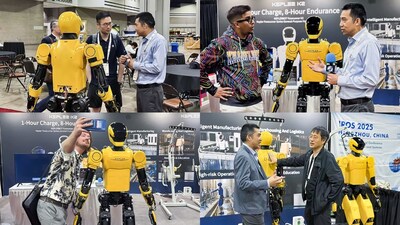
Kepler K2 “Bumblebee” Debuts at ICRA 2025, Captivating Attendees

ATLANTA, June 3, 2025 /PRNewswire/ — During the IEEE International Conference on Robotics and Automation 2025 (ICRA 2025) held in Atlanta from May 19 to 23, Shanghai Kepler Robotics Co., Ltd (“Kepler Humanoid Robot”) introduced its latest industrial-grade humanoid robot, the K2 “Bumblebee,” drawing global attention with a live demonstration of its real-world operational capabilities. The event brought together leading researchers, executives, and engineers from across the robotics ecosystem.

Notable visitors to the Kepler Humanoid Robot booth included Jim Fan, Senior Research Scientist at NVIDIA, and Hesheng Wang, General Chair of the International Conference on Intelligent Robots and Systems (IROS), among other robotics experts. They engaged in discussions on the trajectory of humanoid robotics and the path to scalable deployment in industrial environments.

Kepler’s booth quickly became a high-traffic destination at ICRA 2025. The K2 “Bumblebee” greeted attendees with natural gestures, navigated the venue with steady, autonomous mobility, and interacted fluidly with other robotic systems. Its engaging presence prompted a flurry of photos and videos, with many attendees lining up to pose with the robot.

Debo Hu, CEO of Kepler Humanoid Robot, stated, “The next major focus for the humanoid robot sector is achieving a complete commercial value loop, and industrial environments present the clearest path to near-term deployment. Our fifth-generation humanoid robots are now in limited-series production, with industrial use cases as our initial focus. Our latest round of funding reinforces our confidence in the commercial viability of our platform.”

Kepler Humanoid Robot is dedicated to developing industry-leading blue-collar humanoid systems. Purpose-built for industrial settings, the K2 “Bumblebee,” stands 175 cm tall, weighs 75 kg , and features 52 degrees of freedom and more than 80 integrated sensors. Its onboard compute reaches 100 TOPS, enabling it to autonomously execute task sequences in structured operational environments.

As the humanoid category moves into early-stage mass production, robots must demonstrate high payload capacity, endurance, and cost-efficiency to achieve sustainable deployment.

The K2 “Bumblebee” features Kepler’s proprietary planetary roller screw actuators, engineered for smooth motion control and reduced energy draw. With near-zero static power consumption, the robot offers extended uptime. Combined with its innovative series-parallel architecture and advanced actuation system, the K2 supports payloads of 15 kg per arm and up to 30 kg with both arms. The robot delivers up to 8 hours of operational time on a single 1-hour charge. Additionally, its proprietary rotary actuators enable millimeter-level precision for fine motor tasks.

In addition, the Kepler K2 “Bumblebee” also includes Kepler’s proprietary Dexterous Hands, each featuring 11 degrees of freedom, 25 force-sensing contact points per finger, and a 6-axis force/torque sensor at the wrist. These capabilities allow for advanced manipulation tasks across a range of industrial applications.

Kepler reports that over 80% of the robot’s core hardware is developed and manufactured in-house—supporting vertical integration, reducing costs, and improving supply chain resilience. The base model of the K2 “Bumblebee” is priced at $30,000 and can perform the equivalent workload of approximately 1.5 full-time human workers in comparable timeframes. 

Deployment flexibility is a key enabler for humanoid adoption. According to Goldman Sachs, humanoid robots are expected to begin integration into manufacturing environments between 2024 and 2027. Kepler is targeting intelligent manufacturing, warehousing and logistics, niche industries, academic research, and education as its primary markets. The company’s commercialization roadmap prioritizes penetration of specific verticals before expanding into general-purpose use cases.

K2 “Bumblebee” units are currently being trialed across a range of real-world industrial scenarios. Kepler continues to expand its partnerships throughout the robotics value chain to accelerate the transition from prototyping to commercial-scale deployment.

Affordable and Reliable: Maxim Gains Ground in Laos’ Ride-Hailing Market

Maxim

Maxim is becoming a popular ride-hailing app in Vientiane, as more people choose the service for its low prices, reliability, and easy-to-use features.

Project InnerSpace Launches Initiative to Accelerate Geothermal Development in Indonesia

Geothermal has the potential to unlock vast amounts of affordable, reliable, and clean energy and heat, becoming a vital part of Indonesia’s energy security and economic development

JAKARTA, Indonesia , June 3, 2025 /PRNewswire/ — Project InnerSpace, an independent, not-for-profit organization committed to eliminating the major barriers to scaled development of geothermal energy, launched a new effort in partnership with the Institute for Essential Services Reform (IESR), a leading energy think tank in Indonesia, to further expand development of Indonesia’s vast geothermal resources.

Project InnerSpace and Institute for Essential Services Reform (IESR), a leading energy think tank in Indonesia, will publish a comprehensive geothermal report and roadmap, entitled “The Future of Geothermal in Indonesia,” this fall.

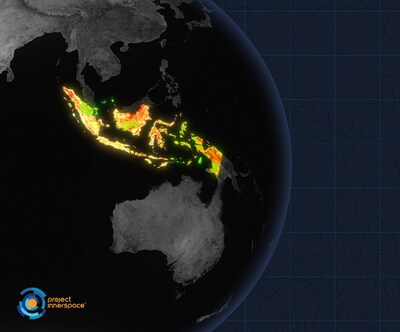
Indonesia is the second largest producer of geothermal energy for electricity worldwide, according to the International Energy Agency’s “The Future of Geothermal Energy” report. Indonesia added more than 1GW of geothermal net power capacity to its energy supply between 2013 and 2023 and has large-scale geothermal projects underway. Much more is possible. An initial analysis of data from Project InnerSpace’s GeoMap™ shows that Indonesia has about 3,000 GW of geothermal potential, of which about 20 GW — or half of Indonesia’s total energy demand — can be reached at an LCOE of less than $150 per MWh. There is also significant opportunity for direct-use heat.

Project InnerSpace and IESR convened a broad group of industry leaders, policy-makers, and subject matter experts in Jakarta today to solicit ideas and feedback for a concrete and actionable plan to meet that potential and rapidly scale geothermal development in Indonesia. Project InnerSpace and IESR will publish a comprehensive geothermal report and roadmap, entitled “The Future of Geothermal in Indonesia,” in English and Bahasa Indonesia in the fall. The report will leverage Indonesia-based subject matter experts and expertise to examine the country’s total geothermal potential across all applications and technological concepts, and offer recommendations for overcoming investment barriers, adopting policies that encourage geothermal development, and implementing practical strategies to move the industry forward. Contributors include Universitas Gadjah Mada, Enerka, Purnomo Yusgiantoro Center and Universitas Brawijaya.

“Indonesia has long recognized geothermal energy as a central component of its energy strategy,” said Fabby Tumiwa, Executive Director of IESR. “Working in partnership on this initiative with Project InnerSpace, we hope to accelerate development so we can truly take advantage of the vast geothermal resources beneath our feet. Indonesia is already a global leader in geothermal energy generation, but, through initiatives like this report, the nation can continue to advance into the next-generation of geothermal exploration and growth.”

“Indonesia sits atop massive geothermal resources so it is only fitting that it is among the countries at the forefront of geothermal development,” said Jamie Beard, Executive Director of Project InnerSpace. “By bringing together Indonesia’s geothermal energy and policy leaders, we can foster collaboration, accelerate the timeline and turn potential into action. Geothermal will be a huge win for Indonesia’s energy future.”

Project InnerSpace  is a 501(c)3 non-profit focused on expanding the use of geothermal energy globally. We are a team of scientists working to combine the voices of visionaries, entrepreneurs, and disruptors with the breakthrough expertise of geologists, drilling experts, and well engineers to build a future where geothermal powers the world with abundant and affordable energy. Project InnerSpace’s catalogue of “Future of” reports includes Texas and Pennsylvania (US), with reports in New Mexico (US), India and Indonesia in development. For more information, visit ProjectInnerSpace.org or connect with us on LinkedIn.

Photo – https://laotiantimes.com/wp-content/uploads/2025/06/indonesiapressimage.jpg

Logo – https://laotiantimes.com/wp-content/uploads/2025/06/pi_logo_2023_2x_logo.jpg

Dmall Debuts AI-Powered Retail Solutions at NRF APAC 2025, Charting Global Expansion Strategy

SINGAPORE, June 3, 2025 /PRNewswire/ — From June 3 to 5, NRF APAC 2025 (Retail’s Big Show Asia Pacific) will take place at the Marina Bay Sands Expo and Convention Centre in Singapore. Co-organized by the National Retail Federation (NRF) and Comexposium, the premier event highlights retail digitalization, enhanced customer experiences, and industry innovation, offering a high-impact networking hub for exhibitors and attendees worldwide.

DMALL stand
DMALL stand

Dmall Inc. (02586.HK), a leading Chinese retail tech pioneer, debuts at the event, showcasing its latest AI-powered solutions, best practices, and ESG achievements. 

At the event, Dmall partners with Frost & Sullivan to release its White Paper on Current Situation and Trends of Overseas Development of China’s Retail Digitalization Solution Providers. The report analyzes the evolving demands for retail digital transformation and outlines the expansion strategies of Chinese tech innovators. 

Frost & Sullivan notes that rising consumer expectations and sustainability goals are unlocking growth potential across global retail markets. AI, cloud computing, and big data are enabling retail tech firms to optimize and expand their global footprint. 

Dmall OS, the company’s flagship product, will take center stage. The display traces its evolution from Dmall OS 1.0 to 3.0, highlighting globally-compliant, AI-powered, premium-grade, and ecosystem-oriented features. 

Dmall OS 3.0, integrated with IoT capabilities, delivers end-to-end retail digitalization, empowering businesses to thrive through comprehensive operational enhancements and data-driven growth strategies. 

Dmall also collaborates with Urovo, SuperHii and other hardware makers to demonstrate interactive experiences powered by PDA devices, smart shopping carts, POS systems, and electronic shelf labels —demonstrating how software-hardware synergy transforms retail operations and consumer experiences.

China has become a leader in AI applications, with vertical models addressing sector-specific challenges. At the expo, Dmall spotlights its next-gen AI-enabled solutions, including AI Shopping Assistant, AI-enabled Clearance, and AI Inspection. 

Notably, AI-enabled Clearance utilizes sales and inventory history to auto-calculate discount rates, generating real-time promotions to maximize margins and reduce waste.

Additionally, Dmall showcases its ESG accomplishments, focusing on governance, data security and privacy protection, low-carbon initiatives, and community programs. As ESG gains prominence globally, Dmall’s practices offer retailers a blueprint for balancing business success and social responsibility. 

From 2015 to 2025, Dmall has expanded its presence from China to APAC, Europe, and beyond. Guided by the vision of “Chinese Innovation, Empowering Global Retail”, the company continues to integrate best practices with retail digitalization solutions, streamlining operations for retailers while enhancing consumer experiences.

More Usable, More Affordable: Baseus Launches Nomos NU1 12-in-1 Air Spacemate 12-in-1 Docking Station

SHENZHEN, China, June 3, 2025 /PRNewswire/ — Baseus has become a leading name in the consumer electronics industry over the past decade and continues to make waves across the world. Through dedication and hard work, the company has mastered creating innovative, intuitive, and exciting new products that make the modern user’s life easier.


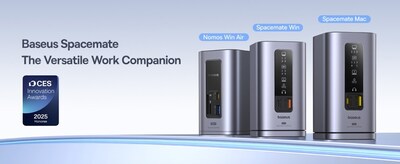
Now, Baseus is excited to announce the launch of the all-new Baseus Nomos NU1 Air Spacemate 12-in-1 Docking Station in a cool Space Grey design. This versatile and powerful charging device will elevate the way you operate – whether you’re at home, at work, or traveling. Let’s take a closer look at some of the unique and outstanding highlights of the 12-in-1 docking station supernova.

12-in-1 Charging Expansion: Naturally, one of the main attractions of the Nomos NU1 Air Spacemate 12-in-1 Docking Station is its versatile applications. The innovative docking station comes equipped with 2 4K@60 HDMI display ports, 2 USB-C 10 Gbps data ports, 2 USB-A 5 Gbps data ports, and 2 USB-A 480 Mbps data ports. It also features a 100W USB-C PD input port, two 104 Mbps SD and TF ports, and a 1GB Ethernet port.

Vibrant 4K@60Hz Dual Display: To push the limits of what is possible, the Nomos NU1 Air Spacemate 12-in-1 Docking Station also supports 4K@60Hz dual display. This allows you to use up to two different Windows system screens and can display different images with crystal-clear clarity for a seamless user experience. It should be noted that macOS doesn’t support Multi-Stream Transport (MST), which means that dual monitors will display the same content for macOS devices.

Smart Power Management: Save power while speeding up work efficiency with your Spacemate 12-in-1 Docking Station. With built-in intelligent smart power management, this docking station will automatically detect port usage and reasonably allocate port power for optimal usage. This ensures the best user experience while saving energy.

Energy Saving Mode: Maintain your power and privacy at the same time with a convenient touch of a button. The Nomos NU1 Air Spacemate 12-in-1 Docking Station features a seamless and simple button that you can press once to lock your screen and protect your data from prying eyes. You can also press the same button for 2 seconds to enter Energy Saving Mode. This will directly disconnect every other port aside from the PD charging port. While these ports are disconnected, the docking station will continue to charge your device, ensuring that your computer is fully loaded and ready to go the next day.

100W Fast Charging: Put the speed back in your charging with 100W PD fast charging from the Nomos NU1 Air Spacemate 12-in-1 Docking Station. This intelligent feature will keep all your devices fully powered up and ready to go in just a few moments – ultimately boosting productivity and seamlessly elevating the way you work. 

10 Gbps Fast Data Transfers: The Air Spacemate 12-in-1 Docking Station ensures better efficiency and productivity by introducing rapid data transfers. With 2 USB-C 10 Gbps data ports and SSD support for high-speed data transfers, users can transfer 20 GB files in just 20 seconds. This ensures lag-free performance and seamless processing, ideal for heavy-duty tasks, video editing, or 3D rendering. Notably, the innovative inclusion of a SD port and a TF port gives the model an added edge.

More than anything, Baseus has shown a strong commitment to giving users what they need in every setting. From work to leisure, every Baseus product is built to make life simpler and more modern while adapting to unique lifestyles along the way. The Nomos NU1 Air Spacemate 12-in-1 Docking Station is proof of this promise to create a better future by putting the users first.

Thoughtfully designed and more affordable, the Air Spacemate is now available on Amazon for $99.99/€99.99, with deals of $79.99/€79.99 and $89.99/€89.99 up for grabs during 30 May – 29 Jun:

US: https://www.amazon.com/dp/B0F62Y2Z7N
Europe: https://www.amazon.de/dp/B0F6MWNJ6J

About Baseus
Founded in 2011, Baseus was born out of utmost care for users. The company embodies its slogan: Practical. Reliable. Base on User. This shows the pursuit of ultimate practicality to solve users’ problems with outstanding design and fashionable appearances that also reflect reliability, high quality, and cost-effectiveness. Baseus delivers a variety of products – including Portable Chargers, Desktop Chargers, Wall Chargers, Wireless Earbuds, and Docking Stations. Chosen by 300 million users and providing 6 billion services, Baseus delivers over 100 million practical and aesthetic products each year, continuously enhancing users’ sense of fulfillment. Join the Baseus family today to see a new world of technological innovation.

Media Contact:
Name: Baseus PR Team
Phone: +1 (213) 512-7063
Email: pr@baseus.com
Baseus Technology (HK) Co., Ltd
Baseus Official Website: https://www.baseus.com/

Lao Coffee Cooperatives Take Top Honors at Bolaven Plateau Competition

Lao Green Coffee Competition

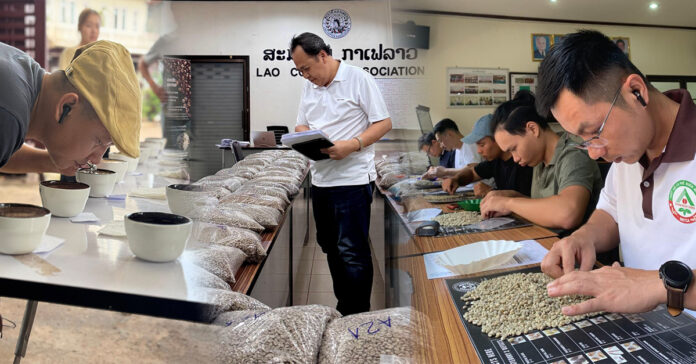
The Nambeng Coffee Cooperative (NCC) and Bolaven Story Coffee have claimed top honors at the Lao Green Coffee Competition 2025, held from 15 to 22 May on the Bolaven Plateau in Pakse district, Champasak Province.

Anthrax: Laos Partially Lifts Livestock Import Ban from Thailand, Mukdahan Still Restricted

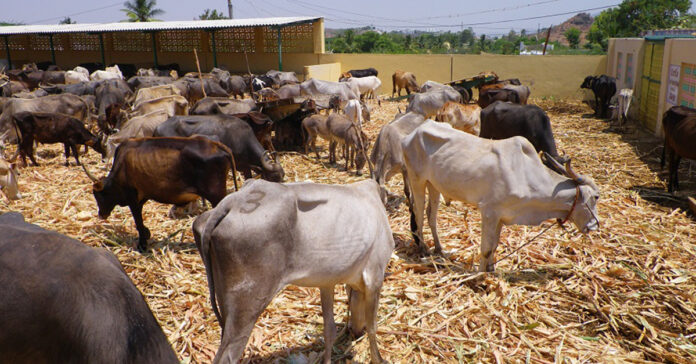
Laos eases Thai livestock imports after anthrax outbreak, allowing cows, buffaloes, pigs, etc., with strict disease-free and vaccination rules. (Photo: Karuna Society for Animals and Nature)

Laos has eased its ban on importing livestock and meat products from Thailand, imposed earlier this month following a fatal anthrax case in Mukdahan Province. 

The updated policy, announced by the Ministry of Agriculture and Forestry on 30 May, permits imports of cattle, buffaloes, horses, pigs, sheep, goats, and related products, provided they meet strict health and quarantine conditions.

Under the latest announcement, imports are now allowed in Lao provinces bordering Thailand, but all animals must originate from disease-free areas and be vaccinated against anthrax at least 20 days before entry. A mandatory 21-day quarantine applies to all incoming livestock before they can be integrated into local herds.

However, the ban remains in effect for any animals or products originating from or transiting through Mukdahan, the site of the anthrax case that prompted the initial suspension. This restriction will remain in place for at least another 30 days.

For animals in transit to third countries via Laos, authorities have prohibited vehicle changes and stopovers within Lao territory.

Cambodia, meanwhile, has maintained its precautionary stance, continuing to suspend imports of Thai livestock and meat products, maintaining restrictions introduced on 6 May.

Laos itself experienced an anthrax outbreak in 2024, with 54 human cases and several cattle deaths reported within one month in Champasack Province.

The disease, caused by the soil-borne bacterium Bacillus anthracis, can be transmitted to humans through direct contact, inhalation, or consumption of contaminated animal products.