Home Blog Page 6270

Laos Saw More Chinese, Less Korean Tourists in Past Six Months

Laos Saw More Chinese, Less Korean Tourists in Past Six Months

The number of tourists visiting Laos has increased 5 percent in the past six months thanks to a rise in the number of Chinese visitors.

More than 2.2 million people visited Laos between January and June, according to Laos’s Tourism Development Department, Ministry of Information, Culture and Tourism.

The number of Chinese visitors jumped by 13 percent while that of Vietnamese visitors increased by 11 percent. The number of visitors from Thailand also rose by 1 percent.

Vientiane Times quoted an unnamed government official as saying that he believed visitor numbers were up because of the ongoing Visit Laos-China Year campaign.

However, the number of South Korean visitors plummeted by 20 percent while that of Japanese visitors sank by 13 percent.

The official told Vientiane Times that the decline in arrivals from some countries was due to circumstances beyond the authorities’ control.

“Some people stayed away because they were unsure of the quality of services here. And although Laos has many enticing tourism products there are several inconveniences, such as poor road access to tourist sites,” the official added.

Laos attracted more than 4.1 million foreign tourists last year, an 8.2 percent increase from the previous year. Tourism generated revenue of more than USD 755 million in 2018.

Meanwhile, it is expected that at least 4.5 million people will visit Laos this year, generating revenue of more than USD 700 million.

More Chinese tourist expected

Officials believe that, out of 4.5 million expected tourists, 1 million would come from China.

To achieve such a goal, Laos is currently intensifying its efforts to improve services and create more facilities for visitors.

Vang Vieng, one of the most famous tourist destinations in Laos, for instance, has improved the quality of services and made changes to the price of food, accommodation, and the fees charged at tourist attractions.

In Luang Prabang, meanwhile, restaurants have added Chinese dishes to their menus and installed signs written in Chinese at popular tourist sites.

As for Luang Namtha Province, the authorities are encouraging officials to supply useful information to Chinese visitors.

There have also been some other positive developments that might boost the number of Chinese visitors to Laos.

Banque pour le Commerce Exterieur Lao Public (BCEL) has recently teamed up with Chinese payment service provider UnionPay International (UPI) to roll out new QR code payment services in Laos.

The move will enable UnionPay app users to make payments by scanning QR codes at local stores in the country.

UnionPay currently operates one of the most popular mobile payment apps in China, and this means BCEL’s collaboration with UPI would help Laos’s local businesses to reach out to more Chinese visitors, who make up one of the largest sources of tourists.

Separately, Thailand is currently preparing to launch the country’s first bullet train that will run between Bangkok and Beijing, China, with Laos as one of the intermediate stations.

In particular, the first route, a Thai-Sino project linking Bangkok, Nong Khai, Laos and a Chinese city Mohan in the far Northeast, is currently under construction and is scheduled to be completed by 2023.

Where are the Koreans?

Laos has been one of the most popular destinations for South Korean tourists thanks to the reality TV show, “Youth Over Flowers,” which aired in 2014.

The number of visitors from South Korea to Laos grew in 2015 and 2016, finally beginning to plateau in 2017. The overall market share of South Korea rose to 4.4 percent in 2017, however, according to a report by Laos’s Ministry of Information, Culture and Tourism. The number jumped from 96,085 in 2014 to 170,571 in 2017.

However, local tourism experts have repeatedly suggested that such a number is decreasing, but there had been no official number released by the Lao government until now.

Confirmation from the tourism ministry that the number of South Korean visitors plummeted by 20 percent in the first six months is therefore highly significant.

One Vientiane-based tourism expert cited a lack of promotional efforts as one of the reasons to contribute to the drop in such number.

“The TV show that led to the surge came out five years ago. Out of sight, out of mind. No one made any more major Korean TV shows or films, to my knowledge,” the expert told The Laotian Times.

As he pointed out, several South Korean broadcasters released similar shows to repeat the success of “Youth Over Flowers,” but none of them was able to attract similar viewer numbers.

The expert also noted that not enough has been done to promote and encourage people to return to Laos.

According to the latest survey conducted by the tourism ministry, only 7.9 percent of respondents said it was their returning visit to Laos. In contrast, first-time visitors accounted for 75.2 percent.

Time for a Diversification?

The Lao government invited 12 representatives from Malaysia, Singapore, Thailand, China, Japan and South Korea to Bolikhamxay and Khammouane provinces, in a bid to promote other parts of the country.

The familiarization trip to the two provinces took place between July 12 and 17 and was designed to publicize some of Laos’ tourist attractions and encourage the tour operators to include some of these locations in their package tours.

It marked the Lao government’s latest effort to promote lesser-known tourist sites to foreigners, and this work is expected to continue in the coming years.

Story: Taejun Kang
Photo: Prae P.
Six Problems the Lao Government is Trying To Solve by August

Six Problems the Lao Government is Trying To Solve by August

The Lao government held its two-day monthly meeting in Vientiane Capital from July 23-24 to discuss resolutions to six major problems faced by the country, including dengue fever, African swine fever, and drought.

Laos has begun to face mounting problems in the second half of the year, including a dangerous outbreak of dengue fever, devastating drought, invasive pests, weak currency, and unregulated social media commentary.

The government met to discuss these problems at its monthly meeting, chaired by Prime Minister Thongloun Sisoulith, who called upon every sector of government to instill measures to address these and other issues.

He requested that members of the government take swift action and report on their outcomes to the Prime Minister’s Office by August 15.

Dengue Fever

Laos Issues Dengue Fever Warning

The number of cases of dengue fever continues to climb among the Lao population, with more than 14,000 cases recorded across the country, resulting in 33 deaths.

According to the Lao National Center for Laboratory and Epidemiology, the two strains of dengue hitting the country are dengue virus serotypes DEN-2 and DEN-4. Vientiane has seen mostly DEN-2, while southern provinces have had cases of other types. Dengue serotype 2 (DEN-2) can cause hemorrhagic fever, giving rise to a high mortality rate.

A nationwide dengue warning was issued in early July amid increasing dengue fever cases across the country, and experts have been sent from Vientiane to discuss the control of the disease, along with health workers in the south.

The authorities are urging citizens to keep surroundings clean while focusing on destroying mosquitoes and their breeding sites.

African Swine Fever

China and Thailand Ban Pig Imports from Laos

The first cases of African swine fever (ASF) were reported in Laos last month, with seven outbreaks across villages in Salavanh Province leading to the deaths of 973 animals.

The disease was then detected in Savannakhet, and Vientiane Capital, with Luang Namtha on high alert.

Thailand, China and Vietnam were quick to ban pork imports from Laos following the outbreaks in the country.

African swine flu is not known to transmit across species, meaning the disease is fatal to pigs but does not harm human beings.

Devastating Drought

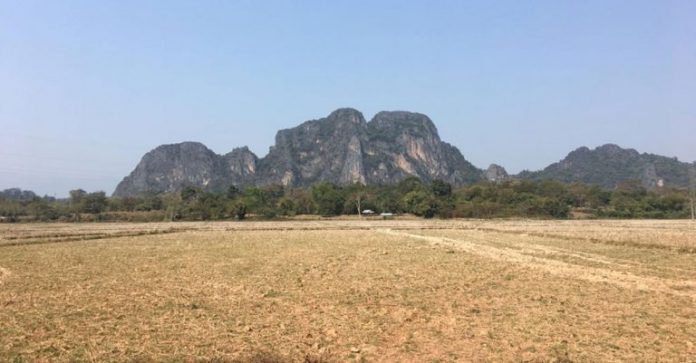
Laos drought dries up rice paddies

Laos, among other Southeast Asian nations, is experiencing an unprecedented and devastating drought. Low rainfall and high temperatures are affecting not only the country’s food security but also farmers’ livelihoods.

The lack of rain has delayed rice production in the country’s 800,000 hectares of wet-season rice fields, with transplantation only 40 percent completed,

The drought comes alongside record low water levels of the Mekong River, which flows through Laos.

The Mekong River Commission (MRC), based in Laos, cited deficient rainfall over the Mekong basin as among key factors that have contributed to the current state.

An El Niño climate cycle in the Pacific Ocean is a major factor contributing to global weather conditions, and the World Meteorological Organization (WMO) predicts ocean temperatures to remain close to current levels through the June-August period, easing only around September-November.

Fall Armyworm Infestation

Fall Armyworm affects crops in Laos

Xayaboury Province has been hit with a plague of fall armyworm (Spodoptera frugiperda), destroying sweetcorn and other crops.

The caterpillars have destroyed 30 percent of 35,000 hectares of maize crops, according to the Director of the Xayaboury Agriculture and Forestry Department, Mr Somvang Keovilaysack.

As a result, a 30 percent shortfall in supplies to domestic and overseas markets is expected this year.

This is the first time farmers have been affected by the insects, with the infestation beginning in Paklai district and quickly spreading to all eleven districts in the province where sweetcorn is grown.

The Lao government is now putting measures in place to control the situation and will make attempts to prevent future infestations.

Fall armyworm affected crops in Thailand and Cambodia this year, where it was never a problem before, and has also spread across 15 provinces in China, affecting about 90,000 hectares of grain production.

The UN Food and Agriculture Organization (FAO) convened a three-day meeting of international experts in Bangkok in March to discuss the armyworm plague, inviting officials from affected nations to brainstorm ways to limit the global devastation.

Weak Currency

Lao Kip

A fluctuating exchange rate and the drop in the value of the kip, alongside the depletion of foreign currency reserves, has caused price hikes among many household products and services, impeding economic growth and driving up the cost of living.

At the government’s monthly meeting, the departments responsible were told to boost productivity and increase exports, provide more support to the business sector, and try to boost tourism in hopes of stimulating economic growth.

Social Media Regulation

Regulation of social media in Laos

The government has grown concerned about unregistered news websites posting misinformation on social media, and has requested all purported news agencies register their websites or Facebook pages.

Comments made by the public on such websites have taken aim at shortcomings in state administration, giving rise to discussions among the cabinet about the need for further regulation of information posted online.

By Francis Savankham

Xayaburi Dam Denies Responsibility for Dry Mekong River

Xayaburi Dam Denies Responsibility for Dry Mekong River

The construction company behind the Xayaburi dam in northern Laos has dismissed allegations that the dam is one of the reasons for the sharp drop in water levels in the downstream stretches of the Mekong River.

CK Power Company, the construction company behind the Xayaburi Dam, said that the company raised the water level in the reservoir for technical purposes only once in October last year.

The company’s comment came after Thailand blamed the dam for causing low water levels in the Mekong, accusing the dam of storing water for test runs.

Some test runs on the Xayaburi dam did commence on July 15 and were planned to continue until July 29, to prepare for the official start of operations in October, according to Thailand’s Office of the National Water Resources (ONWR).

“The trial would severely impact the drought-hit provinces in the northeastern region, whose tributaries rely on water from the Mekong River,” ONWR said.

The office added that Thai water level gauges below the dam found that water levels had dropped by almost 1.8 meters, which is the lowest in 28 years, since the dam began to store water on July 9.

Accordingly, Thailand has asked the Lao government to suspend the test run of the Xayaburi dam.

Many industry observers believe, however, that the allegations lack credibility, citing the fact that the Xayaburi dam is a run-of-river type installation.

A run-of-river type dam is designed to produce power with a limited amount of water storage, or no water storage at all.

Each day the same amount of water that flows into the reservoir is released from the reservoir to produce power.

This is different from a storage type dam that collects water in the reservoir during the wet season and slowly releases over the dry season to produce power. The Nam Theun 2 and other Mekong dams in China fall into this category.

Meanwhile, Deputy Managing Director of CK Power Company, Anuparb Wonglakorn, criticized the Jinghong dam in China’s southern Yunnan province, for releasing less water downstream, causing the water level in the Mekong to drop.

Dr. Anoulak Kittikhoun, Chief Strategy and Partnership Officer at the Mekong River Commission,  is among those who share a similar view.

During his interview with Lao Nationa Television on July 25, he said storage by the Jinghong Dam in China is one of the main reasons why the water level is so low at present

“The dam has announced it will be releasing less water due to maintenance over ten days, from 5 to 19 July. After this, it will revert to its normal release schedule,” said Dr Anoulak.

He informed reporters that the main reason for the low level of the Mekong River is simply a lack of rainfall.

Laos Hit by Worst Drought in Decades

Laos is suffering a severe drought amid low rainfall and high temperatures, which is affecting not only the country’s food security but also farmers’ livelihoods.

The lack of rain has delayed rice production in the country’s 800,000 hectares of wet-season rice fields, with transplantation only 40 percent completed, according to a report in the Vientiane Times on July 24.

“Low rainfall and high temperatures are destroying the crops of Lao farmers across the country against the backdrop of an ongoing drought in the Southeast Asian region,” the paper noted.

The drought comes alongside record low water levels of the Mekong River, which flows through Laos.

In Vientiane, the water level of the Mekong is 0.7 meters, or 5.54 meters below its long-term average water level measured over 57 years (1961-2018). It is about 1.36 meter lower than the minimum level.

Between June 16 and July 18, there was a drop of 5.58 meters at the station, according to the Mekong River Commission (MRC).

Water levels of the Mekong River are also at their lowest recorded between June and July, falling below their historical long-term minimum levels.

MRC cited deficient rainfall over the Mekong basin as among key factors that have contributed to the current state.

Laos’s efforts

Deputy Minister of Agriculture and Forestry Bounkhuang Khambounheuang has informed provincial and district authorities to send officials to help farmers immediately, rather than waiting for official advice from the ministry.

Provincial agriculture and forestry departments have also been told to prepare fast-growing rice varieties for farmers while they wait for the rains.

“Our agriculture officials might encourage farmers to grow other crops that result in higher economic returns,” Bounkhuang said, as quoted by Vientiane Times. “Farmers who have borrowed money from banks need to report to authorities regarding the number of damaged crops so the government can help negotiate with the banks.”

Meanwhile, a steering committee to work with farmers has been set up in Xayaboury province where only 45 percent of 34,000 hectares of wet-season rice fields have been transplanted.

Director of the province’s Agriculture and Forestry Department, Somvang Keolaysack, expressed his concern that if the drought continues crops in the province will die, and it could face a rice shortage in the year to come.

Provincial Deputy Governor Bounphak Inthapanya said the province has encouraged both the public and private sectors to help pump water for farmers.

In particular, the province has asked private companies with water pumps to give its authorities access to them so that they can pump water for farmers in affected areas, she added.

Cooperation with neighbors

Laos is not the only nation in the region battling a drought.

In Thailand, about 1,600,000 hectares of paddy fields in 20 provinces in the North, Northeast and Central Plains have been affected by a lack of rainfall, raising concerns over the drop in rice production and rise in rice prices in the second half of this year.

“I am worried about farmers because they have invested much, but there is a water shortage. Irrigation must be limited to maintain tap water production and protect consumers,” said the Thai Prime Minister Prayut Chan-o-cha, as quoted by Bangkok Post on July 24.

In an effort to relieve damages, Thailand has asked China, Myanmar and Laos to release more water into rivers to help relieve the drought conditions in the country where only 40% of farmland was irrigated.

“There had been talks with China, Myanmar and Laos, asking them to release more stored water so it would reach downstream regions,” Gen Prayut added.

The provincial irrigation office in Nakhon Phanom had already begun to conserve water at all 13 reservoirs in the province’s 12 districts in preparation to provide drought relief.

Farmers outside the irrigated zones were also told to reduce farming activities to avoid damage from the drought.

Silver Lining

There is a silver lining. The Lao Meteorology and Hydrology Department has issued a forecast, suggesting that there will be more rainfall at the end of July and early August.

“The rainfall will result in a gradual rise in the level of the Mekong and its main tributaries,” the department said.

MRC also said in early July that the situation is expected to improve at the end of July, with rain in the forecast.

At that time, MRC quoted the Asian Specialized Meteorological Center as saying that wetter-than-average conditions may develop over parts of the region between the Indian and Pacific Oceans and eastern Mekong sub-region.

HR Forum Showcases Synergy of Tech and Human Resources

HR Forum Showcases Synergy of Tech and Human Resources

Attended by 175 people, the HR Forum 2019 focused on the synergies between HR and technology, bringing together HR experts from Laos, Australia, the Philippines, and Vietnam.

For the third year in a row, government, private sector, and civil society human resource (HR) managers have come together for a unique international networking and knowledge-sharing event in Vientiane designed by two Lao Australian alumni, and proudly supported by the Australian government.

“Keeping up to date with advances and innovation in technology is essential for the Lao public and private sector to stay efficient and effective in the management and development of their personnel. There are great lessons to be learned from companies leading the way in Laos, as well as from experts in the region.” Sophie Wilkinson, Second Secretary of the Australian Embassy stated in her opening remarks.

EDC at the HR Forum 2019 in Laos

The HR Forum is the brainchild of two Australia Awards Alumni, Sittiphone Thapesuphanh of Karuna and Thiphaphone Phetmany of Enterprise & Development Consultants Co. Ltd (EDC), and received support from the Australian Government which has a long history of supporting human resource development in Laos.

The Ministry of Education and Sports and the Lao National Chamber of Commerce and Industry (LNCCI) also co-hosted the forum.

Attendees at the HR Forum 2019 in Laos

“The Australian Government is very proud to support Australian alumni to apply their new skills and knowledge upon returning to Laos in a way that sparks change for their sector. The HR Forum is a great example of that, as it was not only the concept of our alumni but was heavily supported by other alumni volunteers and speakers”, Ms Wilkinson said.

The HR Tech Forum 2019 was targeted to guide micro, small and medium-sized companies or organizations in moving from traditional human resource management and development tools to affordable technologies. The forum provided insights about employing HR technology in both the national and international context, and targeted managers working in both the business and development sectors.

The forum also provided three breakout sessions in its afternoon program to provide participants the opportunity for a more in-depth discussion with visiting experts. Participants struggled to choose between three simultaneous sessions on organizational development and human resource management using accessible, free of charge and affordable applications and websites. Afterward, participants said the forum gave them in-depth knowledge about human resources and technology available to enhance human resource management within the workplace.

The organizing committee comprised of Karuna, Enterprise & Development Consultants Co., Ltd (EDC), Austcham Lao PDR, the Australian Embassy, and the Laos Australia Institute. The committee would like to extend their great appreciation to the gold sponsors, Vientiane College, and CS Intellect for their support.

Lao Civil Servants told to Mind Manners, Stop Abusing Position

President Thongloun Sisoulith

The Lao government has issued a new decree on the ethics and morals of civil servants, including a revised code of conduct, which will come into effect early next month.

The decree, No. 184/GoL issued June 29 2019,  and signed off by Prime Minister Thongloun Sisoulith, serves as a reference point for members of Party and government and mass organizations, and to educate civil servants, ensuring they take full responsibility in their roles, follow the law, and treat all citizens and residents with equal politeness and respect.

In particular, the decree prohibits civil servants from abusing their power for personal gain or the benefit of their relatives and people associated with them. Those who fail to abide would face disciplinary action.

Other guidelines defined under the decree include:

1. Treat all citizens with fairness, kindness, politeness, offering respectful and reasonable guidance where necessary.
2. Provide services for citizens with fairness, on time, and without prejudice against gender, age, ethnicity, social status, level of education, or [religious] belief.
3. Properly facilitate citizens without any deliberate obstruction with regard to access to public information.
4. Manage state property by putting the nation, the people, and society first.
5. Never abuse position, abuse power, or take gratuities or accept gifts from individuals or other entities.
6. Upgrade professional expertise and qualifications and improve the performance of their agency.

The government’s move comes amid public frustration over public services.

“The decree is seen as part of the government’s efforts to deliver good public services and address public complaints,” Vientiane Times reported on July 22.

The paper cited the disrespectful and condescending attitude displayed by many civil servants, unacceptably slow service, and demands for something in return as issues in question.

“Some business operators have complained that they are asked to pay unwarranted fees to have their documents completed or approved and if they don’t pay these additional charges, their documents will take a long time to process,” the paper said.

This is not the first time for the Lao government to improve public service.

Some ministries and other government organizations have already set up hotlines to respond to public complaints and the problems people encounter regarding public service delivery.

The government has also previously warned state employees to stop the practices mentioned above.

Photo: Nikkei Asian Review

BCEL, UnionPay to Launch QR Code Payment Service in Laos

BCEL, UnionPay to Launch QR Code Payment Service in Laos

Banque pour le Commerce Exterieur Lao Public (BCEL) has joined hands with Chinese payment service provider UnionPay International (UPI) to roll out new QR code payment services in Laos.

The move will enable UnionPay app users to make payments by scanning QR codes at local stores in the country, Cards International reported on July 22.

UnionPay currently operates one of the most popular mobile payment apps in China, with about 150 million users across 18 cities, including Shanghai. The company is also one of the largest players in the country’s bank card market by market share.

This means BCEL’s collaboration with UPI would help Laos’s local businesses to reach out to more Chinese visitors, who make up one of the largest sources of tourists.

More than 4.1 million visitors came to Laos in 2018, an 8.2 percent increase compared to 2017. More than 800,000 tourists came from China, a rise of 26 percent, according to the Lao Ministry of Information, Culture and Tourism.

Laos is also currently pushing for a promotional campaign, Visit Laos-China Year 2019, to attract more Chinese tourists.

“Since the proposal of the Belt and Road Initiative, UnionPay has taken deep participation in the development of Laos’s payment industry by promoting card acceptance and issuance as well as participating in the building of local payment infrastructure, and have achieved much progress in our business localization in the country,” said UPI CEO Cai Jianbo, as quoted by Cards International.

“Now, UPI further expands its local service scope to mobile payments, not only meeting the mobile payment needs of visiting tourists, but also supporting the digitalization of Laos’s payment industry,” he added.

BCEL is already well known locally for its much-lauded OnePay app, which utilizes QR Code technology to allow local payments within Laos, and also offers payments directly from Laos to certain Thai bank accounts.

Dengue Virus Continues to Plague Laos

Dengue Virus Continues to Plague Laos

The number of cases of dengue fever continues to climb steadily among the Lao population as rainfall resumes and the wet season sets in.

As of July 17, more than 14,000 dengue cases were recorded, which resulted in 31 deaths, according to The Lao National Center for Laboratory and Epidemiology. The number stood at 10,778 in early July.

The center determined that the strain of dengue that hit the country is virus serotype 2 and 4.

In particular, Vientiane is experiencing an outbreak of the type 2 virus, while other southern provinces, including Champasack and Savannakhet, also recorded cases involving such virus, it added.

The serotype 2 causes hemorrhagic fever, which has a high mortality rate, and the center’s analysis showed that the virus seems to have mutated.

“People infected with the type 2 virus can become dangerously ill within two days instead of four or five days,” said Lao Minister of Health Bounkong Syhavong, as quoted by Xinhua News Agency.

Efforts to tackle the virus

The Lao government is currently increasing efforts to contain the outbreak.

The Health Ministry issued a nationwide dengue warning in early July amid increasing dengue fever cases across the country.

Experts have been sent from Vientiane to discuss the control of the disease, along with health workers in the south.

The authorities are also urging citizens to keep surroundings clean while focusing on destroying mosquitoes and their breeding sites inside and near these areas since mosquitoes are responsible for transmission.

Correct diagnoses is also vital for effective treatment.

Nations across Southeast Asia are noting a high number of cases with the death toll rising in Cambodia, Thailand, Vietnam, and the Philippines.

The World Health Organization estimates that about 2.5 billion people live in dengue risk groups, with about 100 million new cases each year worldwide.