In a drastic move to promote health and safety among members of Lao society, the Mayor of Vientiane has taken measures to ban the sale of alcohol or alcoholic beverages in the capital before 4pm.
According to a Decision issued 21 December 2018 by the Office of the Mayor of Vientiane Capital on Measures for Reduction of Accidents and Road Safety Promotion, retailers and other establishments who sell alcohol or alcoholic beverages will be subject to routine inspections and fines starting 1 July.
Similarly, civil servants or government employees in violation of these regulations, or who do not assist police officers in apprehending those responsible, will be subject to strict disciplinary measures.
Implementation of this Decision will be pivotal to its success, and the government hopes all citizens will take part in order to reduce the number of accidents in the nation’s capital caused by consumption of alcohol, and damage caused by drink driving.
Bound for a liquor-infused finale of serpentine-inspired, aphrodisian fantasies (fallacies?), the disruption of a criminal smuggling racket in Thailand’s Mukdahan Province has led to a lucky escape for more than 2,700 snakes all set to be smuggled cross-border bound for Laos and apparently some horny drinkers and all-too-hopeful Cassanovas beyond.
The sizeable seizure of snakes worth about a million baht (US32,000 or 275 million Lao Kip) reportedly netted some 182 baskets containing 2,730 rat snakes and cobras headed to Laos from Thailand via a long tail boat.
The smuggling operation was intercepted as the illicit slithering cargo was about to be shipped across the river from Thailand into Laos.
Thailand’s The Nation reported that checkpoint head Sathit Pisaisawat led the snake seizure effort that included his own officers plus those of Surasakmontree Military Camp’s task force and the Navy’s Mukdahan’s Mekong Patrol Operation Command at 8.30pm on Sunday evening.
The seizure on Thailand’s side of the shared border occurred at Ban Bang Sai Noi pier in Mukdahan’s Wan Yai district.
The successful disruption reportedly followed a tip-off regarding the planned smuggling operation.
It was reported that from surveillance, some 3-4 persons were seen to be moving what appeared to be plastic baskets with closed lids from a pick-up truck onto the pier for transport by long-tail boat. The persons scattered upon the approach of authorities.
Some 15 live snakes were found inside a net sack in each basket.
These were seized as evidence as the search for those involved continues. Should they be caught, suspects should expect to be charged with having wildlife in their possession without permission and importing wildlife without permission under Thailand’s Wild Animal Reservation and Protection Act 1992, it was reported.
In Laos, the snakes could be expected to be on-sold to Chinese intermediaries in order to make alcoholic beverages produced by infusing whole snakes in grain liquor.
The product is believed to be sold to those who believe it may cure what ails them (or their beloved).
Wildlife Crime is not a Victimless Venture
Frivolity aside, cross-border wildlife smuggling is a serious crime in the region, as Laotian Times reported in February 2018.
Those with information of such incidences are encouraged to report any suspicious activities to authorities.
Organizations like IUCN, WWF and WCS and more are also engaged on the issues and welcome reports of suspected crimes.
Taking Advantage of E-Commerce: Legal, Regulatory, and Trade Facilitation Priorities for Lao PDR
Barriers such as costs and strength of connectivity, infrastructure, facilitation must be overcome so ongoing development of e-Commerce in Laos can assist more women, small firms, people with physical disabilities, and those in isolated communities to benefit from trade, according to research from World Bank.
Technology, e-Commerce, and connectivity mean the potential for exporting goods and services from Laos has never been greater, yet obstacles remain to fully comprehend and grab some of the many opportunities on offer, according to research released by the multilateral financier, the World Bank.
E-Commerce connectivity recommendations from World Bank via Taking Advantage of E-Commerce: Legal, Regulatory, and Trade Facilitation Priorities for Lao PDR.
What is e-Commerce?
“E-commerce refers to the buying and selling of goods and services digitally”, according to the definition used in the research,
“Although limited available information suggests that Lao PDR has a minimal presence of e-commerce, it has the potential to present many opportunities:”
E-commerce can help lower the costs of trade for Lao PDR exporters and lower prices for consumers.
It can also reduce barriers to people who face disadvantages participating in traditional trade (ie. women, people with disabilities, and isolated communities).E-Commerce connectivity recommendations from World Bank via Taking Advantage of E-Commerce: Legal, Regulatory, and Trade Facilitation Priorities for Lao PDR.
Constraints to the e-commerce environment currently hold Lao PDR back from greater participation.
Limited internet connectivity, high costs of payments, incomplete regulatory infrastructure, and high trade facilitation and logistics costs are limiting factors.
The legal and regulatory framework needs strengthening in some areas to support greater participation in e-commerce.
Strengthening the protection of consumers participating in e-commerce and developing/implementing legislation for the protection of personal data will be key.
Taxation of e-commerce is also a priority policy area. Any reform should be informed by a careful assessment of costs and benefits to avoid restricting the early growth of e-commerce.
Trade facilitation also needs further reform to avoid posing undue costs on small firms or entrepreneurs trying to enter into e-commerce.
The earliest area of growth in international e-commerce would likely be cross-border trade.
Small firms and entrepreneurs are least equipped to manage costs related to shipment delays, lack of transparency, and unpredictable regulations.
Clarification on regulations for low-value goods imports and a formal framework to streamline the process are necessary.
E-Commerce connectivity recommendations from World Bank via Taking Advantage of E-Commerce: Legal, Regulatory, and Trade Facilitation Priorities for Lao PDR.
The reports key recommendations:
Implement relevant ASEAN approaches to regulatory issues related to e-commerce, with a special focus on consumer protection, privacy, and electronic signatures.
Take a cautious approach to imposing new taxes on e-commerce.
Establish a transparent and consistently applied procedure for handling low-value cross-border trade.
Move away from submission or paper documents for trade clearance and toward electronic submission of documents.
Increase effort to apply risk management principles in processing cross-border shipments.
Confirm the leadership role of the Ministry of Industry and Commerce in the coordination of the e-commerce agenda.
Taking Advantage of E-Commerce: Legal, Regulatory, and Trade Facilitation Priorities for Lao PDR
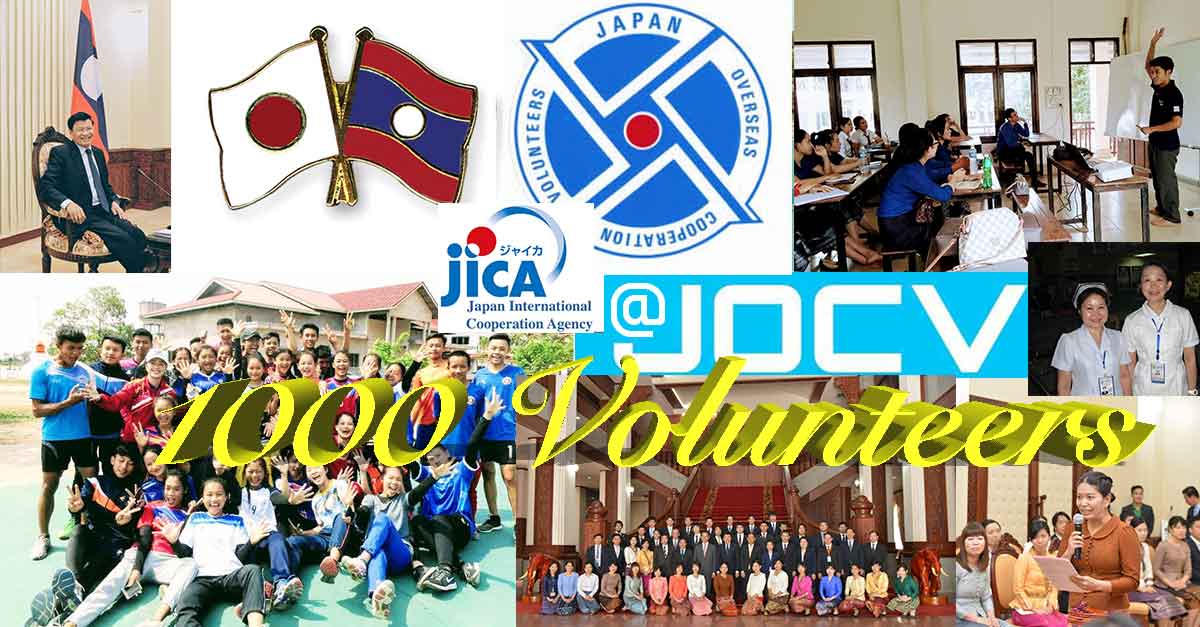
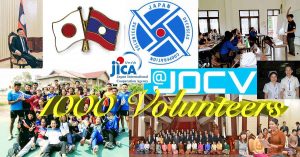
Celebrating 1000 Japan Overseas Cooperation Volunteers To Laos via JICA.
Warm welcome as the arrival of eleven Japan Overseas Cooperation Volunteers from JICA takes Japan International Cooperation Agency past the one-thousand milestone in Laos.
Agriculture and Community Development, Education, Health, Law, Public Works, Water Treatment, Sanitation and Waste Management.
These are just some of the many areas in which Laos has seen rapid development over the decades, making the country a safer, healthier, cleaner and more comfortable place to live.
These important areas are also among the many where contributions of grants, aid, and exchanges with Japan have been warmly welcomed.
The millennial milestone was passed when eleven new Japanese volunteers to Laos together with representatives of their host organizations were welcomed to the Embassy of Japan to Laos in Vientiane on February 4, 2019.
Warm welcomes were provided by Ms. Sisomboun Ounavong, Director General of International Cooperation and Minister to the Embassy of Japan to Laos, Mr. Kuno Kazuhiro.
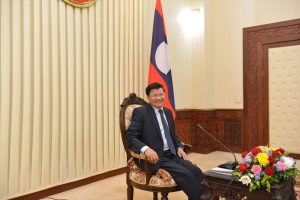
There, volunteers heard of the high regard held for the contributions of JOCV, something recognized by PM Thongloun Sisoulith at a recent event hosting a courtesy call at Government House for World Volunteers Day as reported by Laotian Times.
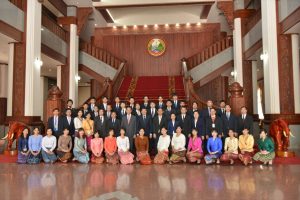
Members of Japan Overseas Cooperation Volunteers (JOCVs) and Japan’s Senior Volunteers (SV) were hosted by the PM for an annual courtesy call and informal exchange on Monday, December 10 where Mr. Thongloun expressed heartwarming appreciation for volunteers’ daily efforts.
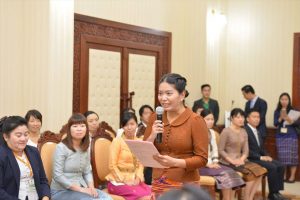
Prime Minister Thongloun welcomes visit from Volunteers from Japan via JICAPM Thongloun meets Japan Overseas Cooperation Volunteers (JOCV)PM Thongloun meets Japan Overseas Cooperation Volunteers (JOCV)
The volunteers reported on their activities and challenges that they directly are facing on the ground while in response, the Prime Minister made comments on the initiatives being made by the Government of Laos.
Thousand volunteers to Laos among 50,000 to 90 countries
●Ms. Mayumi NISHIMURA (Nurse, Mahosot Hospital, right)This picture was taken when a Japanese newspaper visited us. She…
More than 50,000 JICA volunteers have been dispatched to more than 90 countries around the world since the first made their trip so many years ago. The numbers include both junior volunteers (aged under 40 years) and senior volunteers (40 – 69 years).
Volunteer programs “support activities by citizens (of Japan) who wish to cooperate in the economic and social development as well as the reconstruction of developing countries,” JICA’s website states.
“Through these cooperation activities, participating volunteers can not only contribute to the development of partner countries but also gain valuable experience in terms of international goodwill, mutual understanding and an expansion in their international perspectives.
“Widely recognized as a representative Japanese international cooperation program, volunteer activities have not only earned high acclaim from partner countries but are also receiving increased praise in Japan, where expectations for these programs are also rising.”
A bridge between diverse people, communities, countries
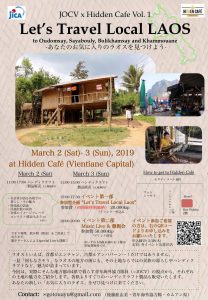
Find out more about the activities of Japan Overseas Cooperation Volunteers by attending events such as Let’s Travel Local LAOS from March 2-3 at Hidden Cafe at Vientiane.
Lat’s Travel Local Laos Event with JOCV at Hidden Cafe, Vientiane.
JOCV also likely to be spotted at Cool & Kawaii Japan 2019!
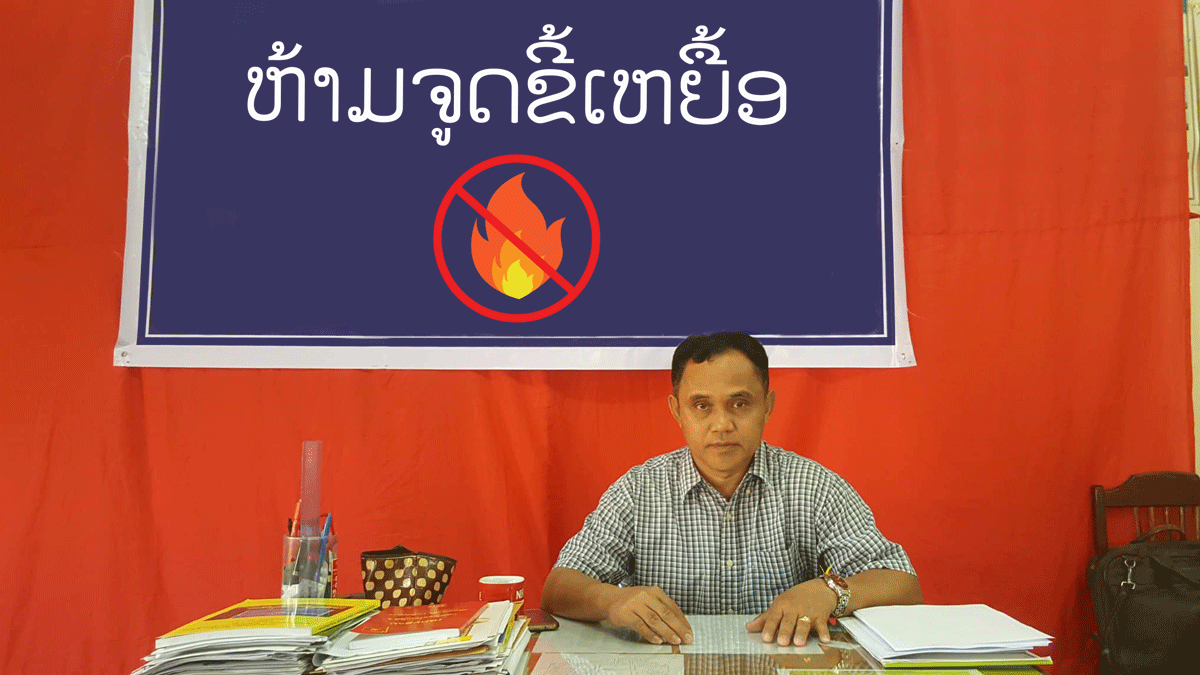
Each and every morning, the loudspeakers in Vientiane’s Sangveuy Village, of Sisattanak District, can be heard sending out a special message from the Village Chief, Mr Oudomxay Sisomphone. His message is clear and concise: stop burning garbage, and stop littering. A breath of fresh air to some, and a stern warning to others.
Mr Oudomxay, who gave an interview to the Lao Post, says he decided to take real action against the problem of garbage fires in order to clean up the air in his local area, and encourage villagers to take care of their health. And he says the law is on his side.
Regulations against the practice have been issued, including Instruction by the Mayor of Vientiane, No. 002/MV, and several notices issued by the Head of Sisattanak District, as well as the official village regulations. According to these regulations, the burning of household waste is prohibited across Vientiane Capital. But many villages are unwilling or unable to deal with the problem.
“I like to keep my village clean. And the village authorities in my village take air pollution very seriously,” says Mr Oudomxay.
“This problem is only getting worse. Fumes from garbage fires are one factor contributing to pollution, and are a nuisance for people nearby who may experience difficulty breathing. This is also a major fire risk.”
Sangveuy village holds regular clean-up sessions on Saturday mornings, when residents gather together to pick up garbage and clean the village. Areas of dense scrub are also cleared to make the village more attractive.
“We’ve had many foreign residents coming to our office to lodge complaints because these fires are harmful to their health, especially to children. I want all residents of Sangveuy, whether foreign or local, to live in a healthy and sanitary environment,” said Mr Oudomxay.
Mr. Oudomxay says his village has also commenced an inspection and education program for offenses related to littering or burning waste. He has put measures in place to punish those found guilty, including monetary fines, and regularly checks for villagers flouting the rules.
He encourages all residents of Vientiane to take a stand against air pollution, and report incidents to local authorities.
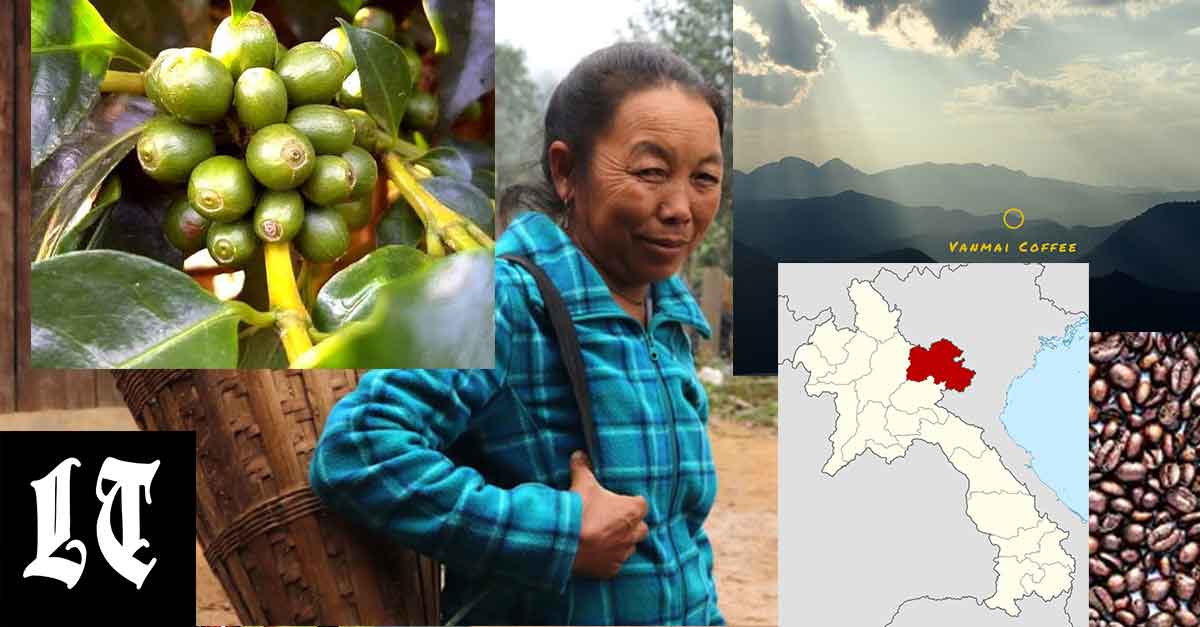
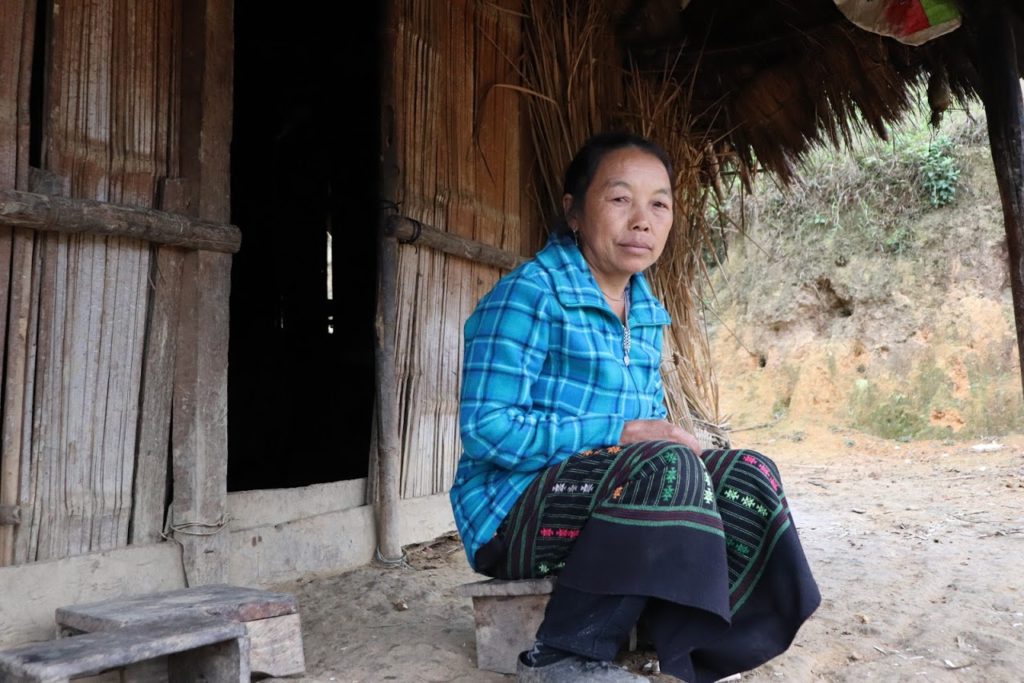
Bringing fresh hope and a hot coffee like a brand new day, Vanmai Coffee is a community of families in Northern Laos, growing coffee in a bid to leave behind troubles of opium, conflict, and poverty.
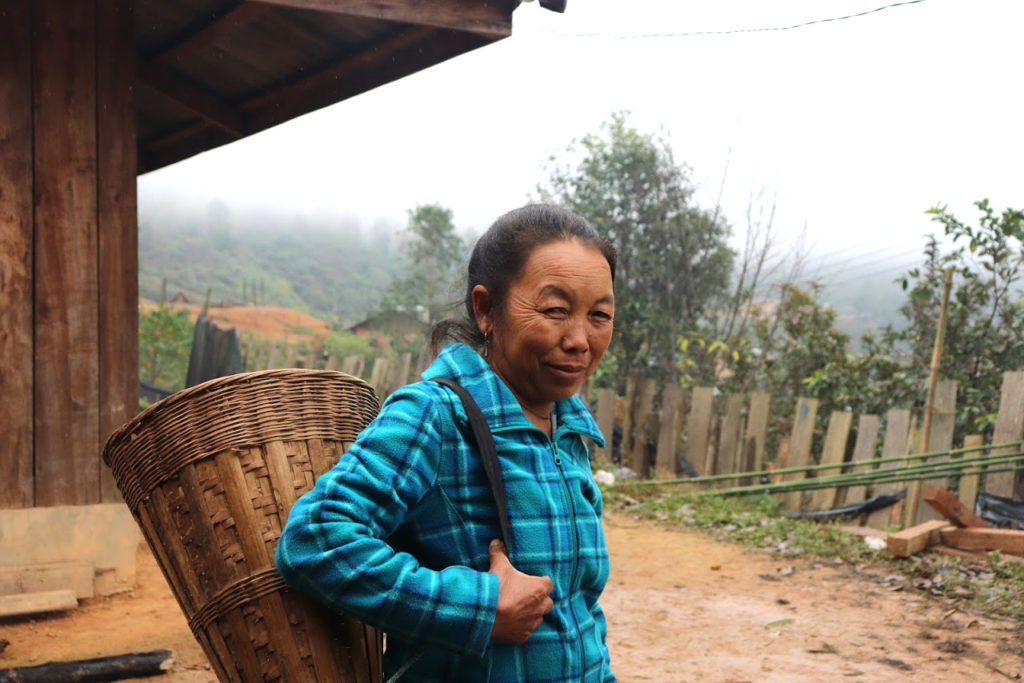
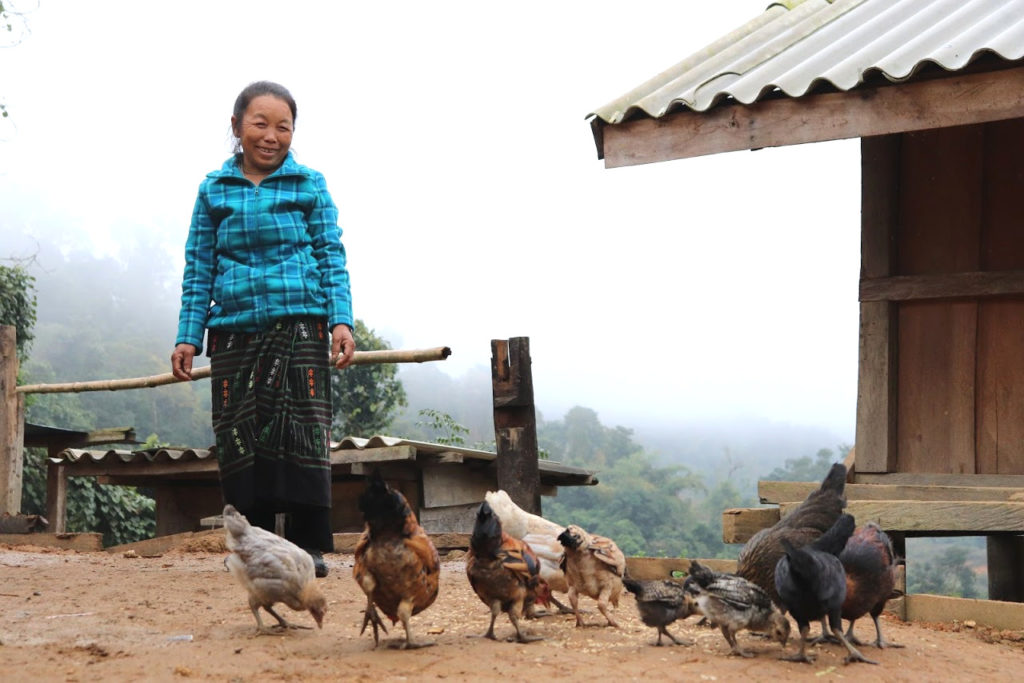
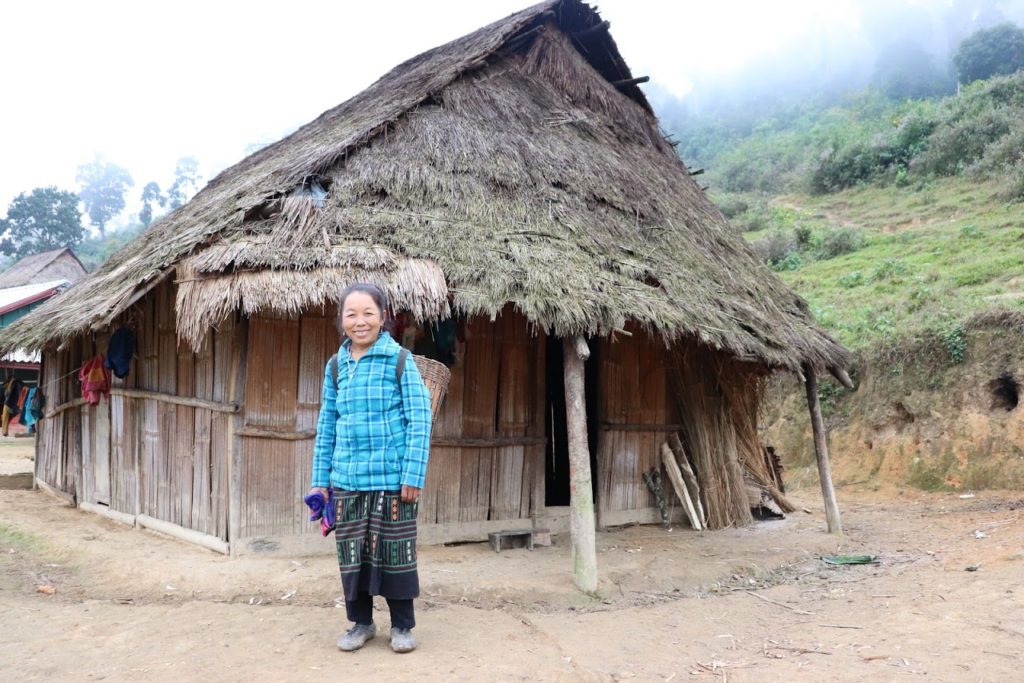
Ms Her has a cheeky smile and a weathered grin may remind you of one of your own Aunties. The mother of four’s visage is hearty enough to put a smile on your face like a strong and flavourful morning cup of coffee.
Farmers Switching From Opium Poppies to Coffee Beans in Laos’ Huaphan Province with Vanmai Coffee
Emerging from around the corner on a cool day among the clouds with a smile, its a warm greeting among the young coffee trees at the cool and high elevations of Laos’ northern Huaphan province.
It’s not only the trees that are growing up. The coffee farming industry up year is younger than the grower.
Producing the popular bean-containing cherries essential to the bittersweet brew is a relatively new pursuit in these hilly parts.
In fact, the trees are so young they are yet to produce their first harvest, which can be expected following the third monsoon, proving that farming truly can be an investment in a more hopeful future.
The previous crop up here?
Opium poppies.
Farmers Like Ms Her Switching From Opium Poppies to Coffee Beans in Laos’ Huaphan Province with Vanmai Coffee
A source of both pain-relief and the suffering of dependency and its side effects, the sap producing opium poppy has been an economic staple, a source of income for many of the hardworking farmers of Huaphan for generations.
For some, like Her’s husband, the substance was to prove a fatal addiction.
Listening to her words and the dangers becomes of dependency on the illicit trade become clear.
“Opium has taken away our lives, it took my husband.”
“I mean I never knew that I would end up here,” she reveals.
“I got married to a handsome man in my village.”
“He was a diligent man who knew how to earn money and make sure his family had enough food.
“I loved him and I was happy, we never got married but we stayed together.
“After we got the news that I had given birth to a baby boy, everyone was so happy.
“In our tribe, a son is a gift who will be a successor of the father.
“Our families were so happy that my first child was a son, my husband was also very happy, our life was going very well.
“I then gave birth to two daughters and a son after that as well.
“We had four children who helped us and we worked together as a family like other families in our community.
“We made a living farming together and worked on saving for our children and their education.”
Farmers Like Ms Her Switching From Opium Poppies to Coffee Beans in Laos’ Huaphan Province with Vanmai Coffee
“But once my husband got addicted to opium, our lives changed.
“He became a different husband and a different father. After a while he couldn’t even work because he was ill so often.
“The family situation got worse. Everyone else had to work more to eat.
“Eventually, both my daughters grew up, got married and left the home.
“My husband became worse and was not able to cope with his symptoms. He died at age 49.
“I know that my life has no miracles in store, but all I want is a better future for my son than I had.” – Farmer Ms Her
“I know that my life has no miracles in store, but all I want is a better future for my son than I had.”
My oldest son is addicted to opium now.
“After my husband died, my son was imprisoned for his opium use.
“He was in jail for three months.
“They put him through quarantine so they could get him out of his addiction.
“But after he got out of prison his behavior just got worse and he even threatened to use the little money I saved on opium.
“He has moved out now, found a girl and they live together. They will get married soon.
“I thought that maybe if he gets himself a wife then she will be able to help him out of addiction but I don’t know anymore.
“He is still the same. It makes me sad to see my son becoming like his father.”
“So many times I think I do not want to live on this earth anymore. But I still have my son.
“I have been working alone trying to earn and make a living for my youngest son.
“So I fight for him. He is 11 years old and he is my only hope.
“Ineed to teach him to be a good person.
“So I put all my energy into growing upland rice and now coffee, and I am saving income to buy his school materials and a new uniform.
“I know that my life has no miracles in store, but all I want is a better future for my son than I had.”
Taking Advantage of E-Commerce: Legal, Regulatory, and Trade Facilitation Priorities for Lao PDR
“Lao PDR is lagging significantly in terms of accessibility, quality, and affordability of internet services compared to other comparable regional economies,” a new report on digital connectivity states.
The grim assessment comes via The World Bank’s latest report on the country’s online connectivity entitled Digital Connectivity in Lao PDR: Lagging Behind Peers.
“Digital connectivity—access to affordable and reliable internet services—has become a key driver of economic and social development.”
Yet in Laos, according to the report, “by almost every measure,
Access to mobile broadband is increasing, but rural and more remote communities are still underserved.
Fixed broadband, which is required for high-capacity data transmission, is particularly limited.
Prices for internet are comparatively high. High capacity fixed broadband services are very limited and extremely expensive.
The relatively high cost is slowing access, with mobile subscription and broadband internet subscription rates lower than in neighboring countries.
There is a minimum retail tariff regime for mobile, voice and data services, and this may reduce the ability of operators to compete on price and services.
Quality of service and affordability of internet are continuing concerns that are slowing the introduction and use of digital services and applications.
The average 2G/3G connection is on the low side for speed, and while the 4G connection speed falls within regional averages, Lao PDR is the only country in the region with only one operator offering 4G.
A qualitative survey of consumer attitudes suggests that consumers find internet speed slow and service unreliable, resulting in low value for money.
Regulatory capacity and expertise is increasing but remains comparatively low, further limiting market growth and investment.”
However, it’s not all bad news, with the Bank permitting an obligatory ray of optimism to shine upon its otherwise gloomy appraisal.
“Lao PDR is well-positioned to take advantage of digital connectivity to improve growth, competitiveness, and services provision,” it states “but interventions are needed to ensure that Lao PDR does not fall further behind regional peers.”
The Bank’s recommendations include the following…
Policy, legal, and regulatory reforms to stimulate investments in infrastructure needed to improve digital services
Increased private participation, with strategic use of public funds to support less commercially viable investments
Support for regulatory capacity building to ensure efficient use of resources
A review of the status of the national network to identify bottlenecks and infrastructure needs to deliver higher levels of traffic in the future
Improved reporting from the industry on access, pricing and service quality
Review of minimum retail tariffs for mobile services to determine whether they reduce price and quality competitiveness among operators”