Home Blog Page 6370

LANIC Officially Takes Over Dot.La Domain Suffix

dot.la domain

Management and operation of Laos’ internet top-level domain (.la) was officially launched by the Lao National Internet Center (LANIC) yesterday.

The top-level domain for Laos, dot.la is based on the Laos country code, and was established in 1995. It was recently returned to the Lao government, after being leased to a foreign company.

During the time the dot.la domain was leased out, the Ministry of Post and Telecommunications has been training its staff, drafting regulations, and preparing to take over full management and operations of the domain.

The ministry has authorized local internet providers to provide services for the .la domain, and has allowed a foreign company to provide services abroad.

The National Information Center now manages the top-level domain dot.la, and also supplies cloud computing systems, services for co-location, and web hosting. It will become an important infrastructure system for future electronic government systems.

There are around 70,000 users of the .la domain name around the world, with only a few hundred users in Laos itself, according to officials at the Lao National Internet Center.

Until now the .la suffix has been notably popular in the United States, and has often been reserved by websites based in Los Angeles (LA).

Now, the Lao government hopes to promote its use domestically.

Lao Stock Report: Jan 23

Weekly Stock Report (Jan 23rd): Lao Securities Exchange Index was stable points for the first two days, and then continued dropping respectively in the last three days of the week. However, there was a very surprise trading on Friday. Overall the week, total trading volume was 2,789,400 shares and total trading value was over 13.867 million kip. Comparing since January 2016. High: 1,232.09. Low: 963.74 point.

BCEL price unchanged 6,000 kip/share and lacked of matching for four days unexpectedly for this week. Overall the week, the total trading volume was 1,100 shares and total trading value was 6,620,000 kip. Comparing since January 2016. High: 6,600 kip/share. Low: 4,200 kip/share.

EDL-Gen price ended down to 5,050 kip/share with a lot of trading on Friday. Even was not trading for two days in the price of 5,500 kip/share. Overall the week, The total trading volume was 2,735,700 shares and total trading value was over 13.687 million kip. Comparing since January 2016. High: 6,200 kip/share. Low: 4,700 kip/share.

LWPC price closed 5,800 kip/share after touched down to 5,750 kip/share without matching. However, this week was an interesting trading if compared to many months ago. Overall the week, The total trading volume was 12,800 shares and total trading value was 73,945,000 kip. Comparing since January 2016. High: 7,300 kip/share. Low: 5,400 kip/share.

PTL price unchanged 2,500 kip/share and there was not any share executed for three days for this week. Overall the week, the total trading volume was 39,800 shares and total trading value was 99,500,000 kip. Comparing since January 2016. High: 3,000 kip/share. Low: 2,300 kip/share.

SVN price unchanged 2,800 kip/share and there was not any shares matching all for this week. Comparing since January 2016. High: 3,400 kip/share. Low: 2,700 kip/share.

Source: Lanexang Securities Public Company

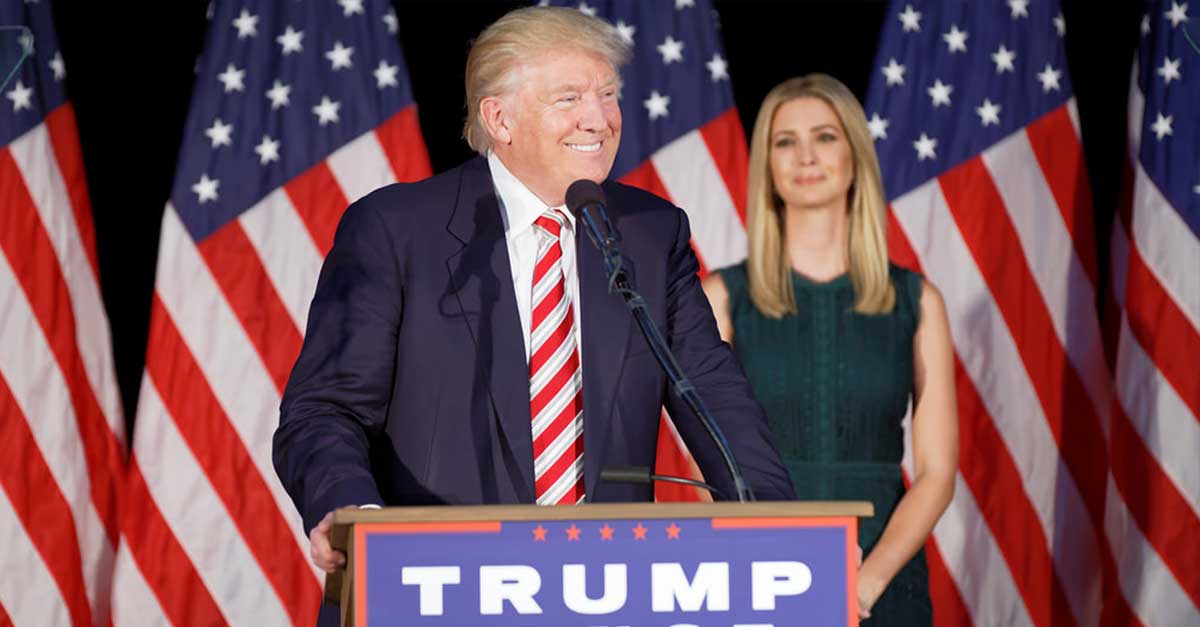
The Trump Presidency And Its Implications for Laos

The Trump era has begun.  What does this mean for the famed Pivot to Asia? Could this turn the tide on US relations? And just what does Trump mean for Laos (apart from hiring a Laotian-American designer to redecorate the White House)? 

The United States and the Lao People’s Democratic Republic have significantly warmed to each other in recent years, stepping up dialogue and enhancing ties, culminating with the first visit to Laos by a standing US President last year. Obamamania gripped the nation as Air Force One touched down at Wattay Airport, and the political waves of that recent visit have not yet fully ebbed away.

But…Trump

Asia Foundation Country Coordinator, Nancy Kim writes:

“Laos’ economic outlook is broadly positive in 2017, with the country on track to remain one of the fastest growing economies in Asia. While the massive 70 percent increase in foreign direct investment in the lead-up to the 2016 launch of the ASEAN Economic Community is unlikely to be matched, Laos will likely continue to attract FDI from throughout Asia, as well as a new Trade and Investment Framework Agreement with the U.S. Laos is in a strong position to foster more inclusive, broad-based economic development, and in 2017 we should see the country’s new leadership reflect on domestic priorities and reinforce its commitment to the social and economic well-being of its citizens.”

It is true that Laos will continue to receive FDI from all over Asia and that this will be one of the primary drivers of its economic growth. In the past few years, we have seen well-known multinational corporations and brands expanding and entering the Lao market in cinema, hotel and restaurant business. In terms of trade with the US, according to the Office of the USTR, two-way goods trade between the two countries grew five-fold in the past 10 years to $70 million. Two-way agricultural trade grew eight-fold in the same period to $8 million.

However, it remains to be seen whether the Trade and Investment Framework Agreement signed by Minister Khemmani Pholsena and US Trade Representative Michael Froman will constitute any further major contribution to growth, especially with the uncertainty around the future foreign policy directions of President Donald Trump.

What Does the Rise of Trump Mean for ASEAN and for Laos?

Many experts have predicted that Trump’s expected foreign policy changes could potentially change the post-war international order. The new President, judging by his election promises, endeavors to reshape much of the United States’ current policy in Asia, however the degree to which he will change them is yet to be determined.

But certain things are clear: the President has advocated the re-evaluation of core aspects of US East Asian foreign policy, namely, its alliances, regional institutions and trade.

Concerning American allies in East Asia, Mr Trump has revealed that he would like America’s allies in the region (especially Japan and the Philippines) to contribute their fair share to regional security, instead of depending heavily on US military power. Consistent with this line of thought, he is expected to have little to zero patience in maintaining, in his mind, America’s costly multilateral partnerships; including institutions like ASEAN.

Unlike his predecessor, Obama, Trump may view the US relationship with ASEAN as not a long-term investment to counterbalance against Chinese influence in the region, but more of an unnecessary short-term expense to the American taxpayer, who voted him into power. To balance China, he may go at it directly: mano-a-mano.

Can ASEAN Solidarity Survive Trump’s Penchant for Bilateralism?

With a regional economic output in excess of $2.5 trillion, ASEAN is effectively the world’s 7th largest economy, and currently the 4th largest export market for the US. Thus no matter the rhetoric, the Trump administration has to tread carefully. Deciding to ignore the region or to take an overly protectionist stance would be at the peril of both Southeast Asian and American interests.

Secondly, the US, even under Trump, won’t completely shun ASEAN, some of whose members are staunch US allies. And allies will still be allies – such is the game that is international politics. However, Trump may change the way the game is played. Not being too fond of multilateralism, Trump may be more in favor of negotiating with each of the US’s Southeast Asian allies on a one-on-one basis. This is understandable, as ASEAN is known to take quite a long time to act due to its consensus modus operandi (all 10 member countries must agree in order for a decision to be made).

Given Trump’s low patience and volatile temper, bilateral partnerships may be the preferred method of engagement. Only time will tell if ASEAN Member States will be able to stay and act together as a regional grouping, as they always officially aspire, or begin to break apart in the face of Trump.

So far, ASEAN diplomats have shared that even if the US under President Trump engages less with ASEAN, the regional powerhouse can still focus on regional integration among the ten states and strengthen partnerships with key players like China, Japan, Korea, India, Australia and Europe.

Secretary of State Rex Tillerson

A senior Lao diplomat has shared with the Laotian Times that the Lao leadership and those of the ASEAN Member States have been closely following Trump’s activities, in particular his choice for Secretary of State (the US counterpart of Minister of Foreign Affairs), ex-CEO of ExxonMobil, Rex Tillerson.

“It remains to be seen whether the new American Presidential Administration headed by Trump will prove to be as bad as everyone expects he’ll be for ASEAN. With the US Senate approval of Rex Tillerson as Secretary of State, we will be facing a diplomatically inexperienced man – in a formal sense – with a fierce negotiation style that is very business-oriented. It will be diametrically different to what we had been accustomed to with John Kerry or even Hillary Clinton, who are statesmen known for their more diplomatic styles. Let us see what happens in a few months after Trump takes office,” the diplomat continues.

It is too soon to predict how Rex Tillerson will perceive US relations with ASEAN and how he will subsequently advise President Trump. But needless to say that if any one official in the Cabinet that will have the power to shape Trump’s decisions concerning ASEAN, it is Mr. Tillerson.

How does this affect Laos?

Insofar as having its interests represented in the international arena, ASEAN is essential for Laos. Given its limitations in size and development, the small nation of almost 7 million has and will continue to align its foreign policy objectives with those of its surrounding, larger neighbors. And ASEAN provides Laos with the regional clout and support with which to maneuver diplomatically. The success of Laos serving as Chair of ASEAN last year is a case in point.

In this light if ASEAN is not taken seriously by President Trump’s USA, then Laos could be at some disadvantage in dealing with the US on a bilateral basis. And the political vacuum would drive Laos to pursue even closer relations with China and Vietnam.

Laotian Times Editorial Board

Lao Leaders’ Luxury Cars to be Auctioned Next Month

Lao Leaders Luxury Cars

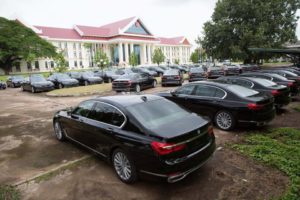
Lao leaders’ luxury cars are expected to be auctioned next month.

The first auction will see bidding on six BMW 7 Series vehicles, and five Mercedes-Benz cars that were driven by Lao leaders.

Party and government leaders have agreed to forgo luxury vehicles as part of a new strategy to encourage frugality and lead by example.

Prime Minister Thongloun Sisoulith and President Bounnhang Vorachit gave up their BMW 7 Series cars last week. Both leaders now ride in Toyota Camry 2.5 vehicles, while Vice President Phankham Viphavanh is to return his own BWM today.

A Decision was signed last week to return all BWM and Mercede-Benz vehicles in the fleet purchased for personal use by individual leaders (with blue license plates). These vehicles are to be sold at an auction and replaced with less luxurious brands, such as Toyota.

A total of 36 Mercedes-Benz 15 S-Class, and 21 E-Class vehicles were purchased for use in state affairs, and were also provided to high-ranking officials.

On top of this, a further 11 BMW 7 Series cars were purchased for use by Party Politburo members, including those who had already retired. These will be more difficult to reclaim as many were offered to retired party members as gifts.

According to an article by the Vientiane Times, Vice President Phankham Viphavanh said in a meeting on Friday that the BMW’s given to retired leaders will not be reclaimed.

An agreement has been made to hold the first auction of luxury cars early next month, with eleven vehicles to be showcased at the National Convention Center.  These are to be sold first to make an example.

Following this first auction, a further twenty luxury cars being used in other provinces around the nation will be reclaimed.

16174673_1101404826637322_7731458418564284330_n

Chinese Institute to Upgrade Lao English Teachers

English-Language-Institute-of-China-to-Upgrade-Lao-English-Teachers

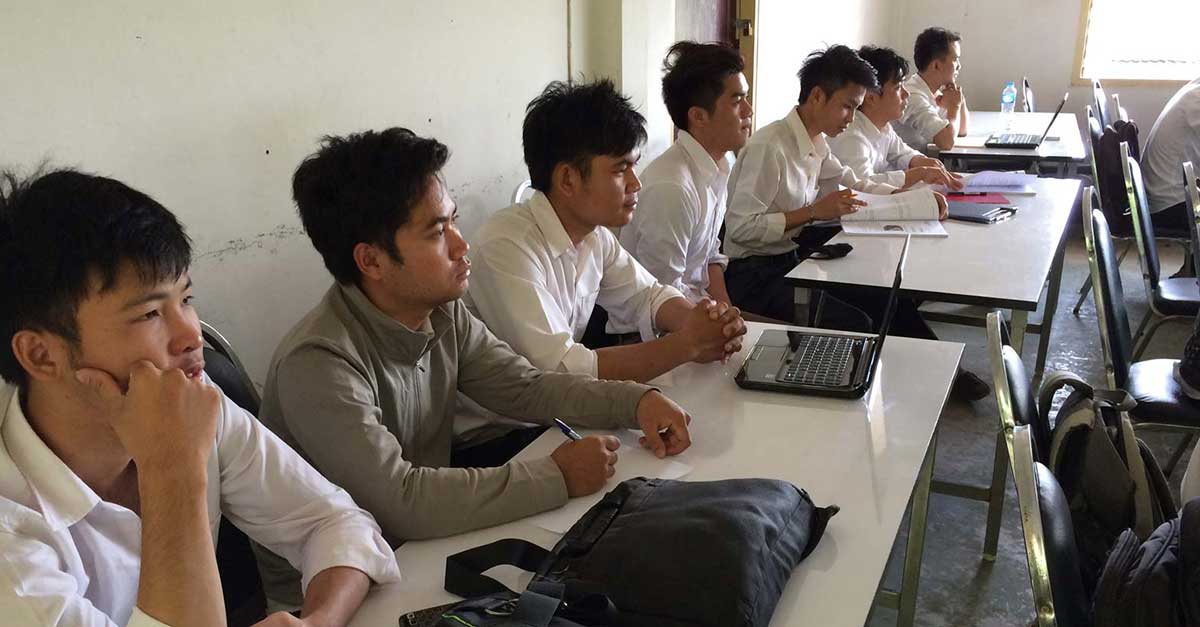
The English Language Institute of China (ELIC) has provided a grant of over 33 billion kip (US$ 4 million) for development of human resources in Laos aimed at English language skills development in universities and colleges.

The project will support the National University of Laos and the Arts Education College in Vientiane Capital, Savannakhet University and the Savannakhet Teacher Training College, Champasack University and the Pakse Teacher Training College, Souphanouvong Univesrity, the Luang Prabang Teacher Training College, and Khangkhay Teacher Training College in Xieng Khuang Province.

An agreement was signed between ELIC and the Ministry of Education and Sports last Friday to commence  the Unveristy and Teacher Training College English Language Teaching Program at targeted institutions.  The agreement was signed by ELIC Country Director, Mr Matt Lafferty, and Director General of the External Relations Department, Ministry of Education and Sports, Ms Chanthavone Phandamnong.

This project will span five years and will bring qualified native-English speaking teachers to Laos to properly train English teachers. The project will also have a hand in developing curriculums.

The ELIC  program will also include teaching workshops, as well as establishing resource libraries for faculty and students.

ELIC has already been assisting teachers in Xieng Khuang Province for the past three years. At the request of the Ministry of Education and Sports, a greater emphasis is to be placed upon development of human resources in Xieng Khuang Province. Development courses will be provided for 132 teachers in Nonghet, Khoun, Mok, Phoukoud, and Phaxay districts.

The English Language Institute of China been providing native English speaking teachers to universities in China for the past 35 years. Over the last 20 years the institute has been assisting other nations as well, and began its involvement in Laos in 1996.

In 1998, ELI Laos began a long-term partnership with the Lao government, Ministry of Education and Sports, and the National University of Laos.

ELI has established resource libraries in each faculty served by its teachers. These libraries contain hundreds of teaching resources for instructors, as well as thousands of books for student use.

ELI sees the continuation of the ELI University English Teaching Program and the ELI Teacher Training English Teaching Program as high priorities in light of the current political and economic climate within Laos and throughout the region.

Source: Vientiane Times

Xaysana Drug Ring Assets Seized Accomplices Still At Large

Xaysana Drug Ring-Assets-Seized

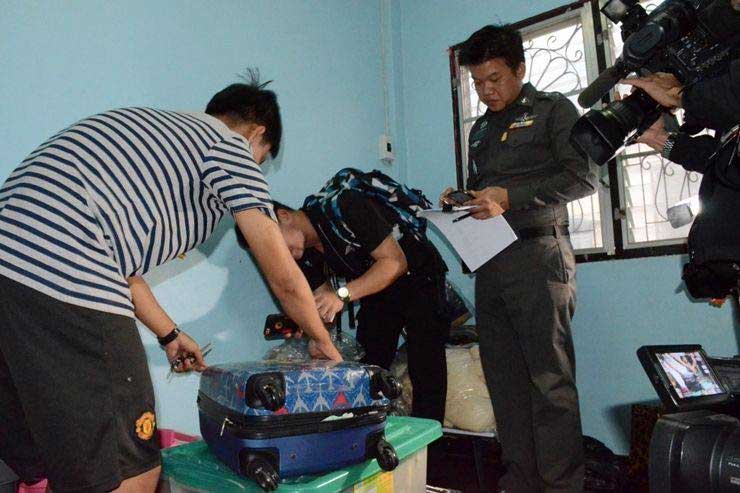
The Thai Office of Narcotics Control has released further details of its recent operation to capture wanted suspects and seize the assets of the Xaysana drug ring. Mr Xaysana Keophimpa was the leader of a drug ring known to be trafficking narcotics throughout ASEAN.

The office will now trace the various links of the network, as well as its participants, and deliver information to the Anti-Money Laundering Office, the military, and relevant government bodies.

Of the nine suspects involved, only four have been arrested:

  1. Xayxana Keophimpa, aged 42, Lao national, arrested at Suvarnabhumi International Airport
  2. Chumporn Phanomphrai, aged 42, Thai national, arrested in Ban Dung, Udon Thani
  3. Poon Charint, aged 53, Thai national, arrested in Ban Dung, Udon Thani
  4. Oythip Panyarak, aged 28, Thai national, arrested in Chonburi

Authorities have also seized 74 items, including 2 residences, 14 land titles, 14 luxury cars, 11 motorbikes, 2 farm vehicles, 29 bank accounts, gold jewelry and cash in US Dollars and Thai Baht equaling 1.5 million baht; the total cache is valued at roughly 100 million baht.

Xaysana Drug Ring

Thai officials have been working with their Lao counterparts to bring down the Xaysana drug ring and have discovered that there are another three networks involved. Lao authorities will search multiple locations in order to trace criminal assets.

Authorities are searching especially in Khammouane province where Mr Xaysana maintains numerous businesses and assets including a lumber mill, a hotel, sports cars, and it is thought that he even has a gold mine operation. These assets were mostly acquired through the sale of narcotics in Laos.

When he traveled to Thailand, Xaysana often stayed in luxury hotels. This trip to Thailand is suspected to be a meeting with clients in his network, similar to a previous party in Nakorn Ratchasima that was thrown for his drug network. Other people in the Xaysana drug ring are expected to number in the hundreds, and suspected to be linked to international mafia groups.

As for the other 5 suspects still at large:

  1. Ratchasak Chamnankul, Thai national
  2. Wanchai Phuphanrat, Thai national
  3. Jiraporn Wongsaenkham, Thai national
  4. Krairaj Suphap, Thai national
  5. Chansy Thitsim, Lao national

More news to follow.

Here’s a Feb 9 update on the case.

Lao Drug Lord Xaysana Keopimpha Arrested at Suvarnabhumi Airport

Lao Drug Lord Xaysana Keopimpha Arrested

A Lao drug lord has finally been apprehended by Thai authorities after a five-year operation.

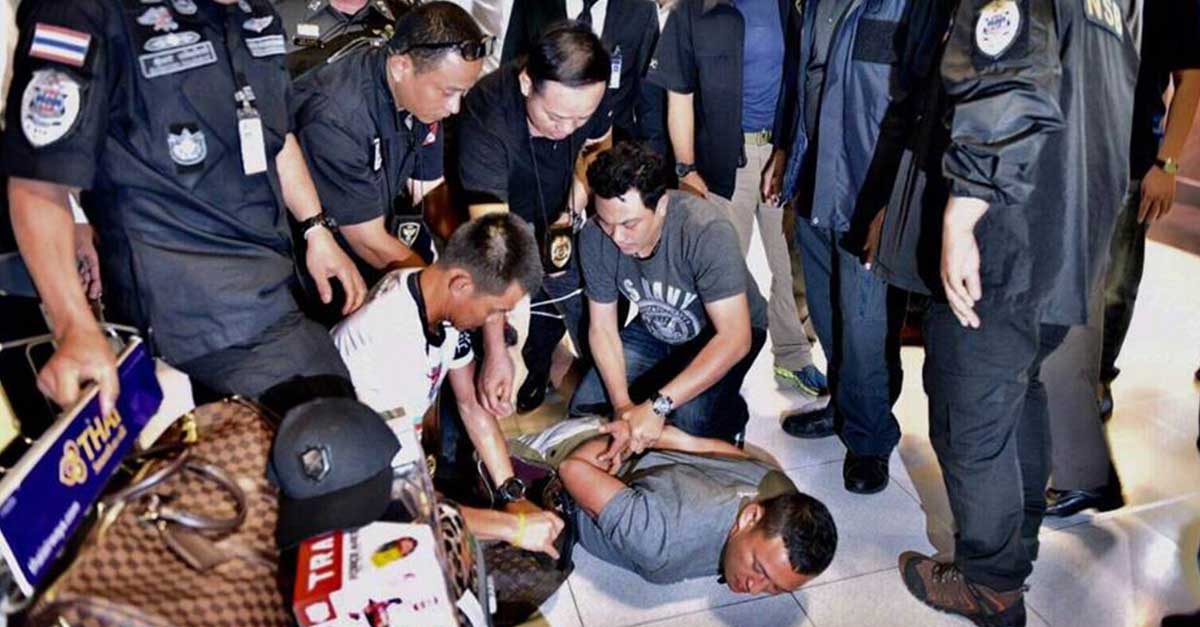
Thai police arrested the alleged Lao drug lord and three compatriots at Suvarnabhumi airport last night.

Mr Xaysana Keopimpha, 41, alongside a man and two women whose names are yet to be released, were arrested outside the arrivals terminal when returning from Phuket. The arrest took place at about 5pm in an operation that involved over 100 anti-narcotics officers.

[ngg_images source=”galleries” container_ids=”6″ override_thumbnail_settings=”1″ thumbnail_width=”100″ thumbnail_height=”75″ thumbnail_crop=”1″ images_per_page=”20″ number_of_columns=”0″ ajax_pagination=”0″ show_all_in_lightbox=”0″ use_imagebrowser_effect=”0″ show_slideshow_link=”0″ slideshow_link_text=”[Show slideshow]” template=”/home4/laotiantimes/public_html/wp-content/plugins/nextgen-gallery/products/photocrati_nextgen/modules/ngglegacy/view/gallery.php” order_by=”sortorder” order_direction=”ASC” returns=”included” maximum_entity_count=”500″ display_type=”photocrati-nextgen_basic_thumbnails”] 

Pol Lt Gen Sommai Kongwisaisook, commander of the Narcotics Suppression Bureau, said Mr Xaysana had never been arrested for drug-related offences before, despite being a known drug trader. This time, investigators were able to piece together enough evidence linking Xaysana to major offences in order to make the arrest.

“These people are responsible for the deaths of so many of our children.” Said Pol Lt Gen Sommai. “We have already arrested 50 individuals working under Mr Xaysana’s network over the last five years. They have smuggled over five million ya ba (methamphetamine) tablets into Thailand from Laos,” he went on.

Read more about seized assets of the accused.

A video clip of Lao drug lord Xaysana Keopimpha’s arrest can be viewed below:


Images: Tholakhong

Here’s a Feb 9th update on the Xaysana case.

Laos to Export More Rice to China: PM

Laos export rice to china

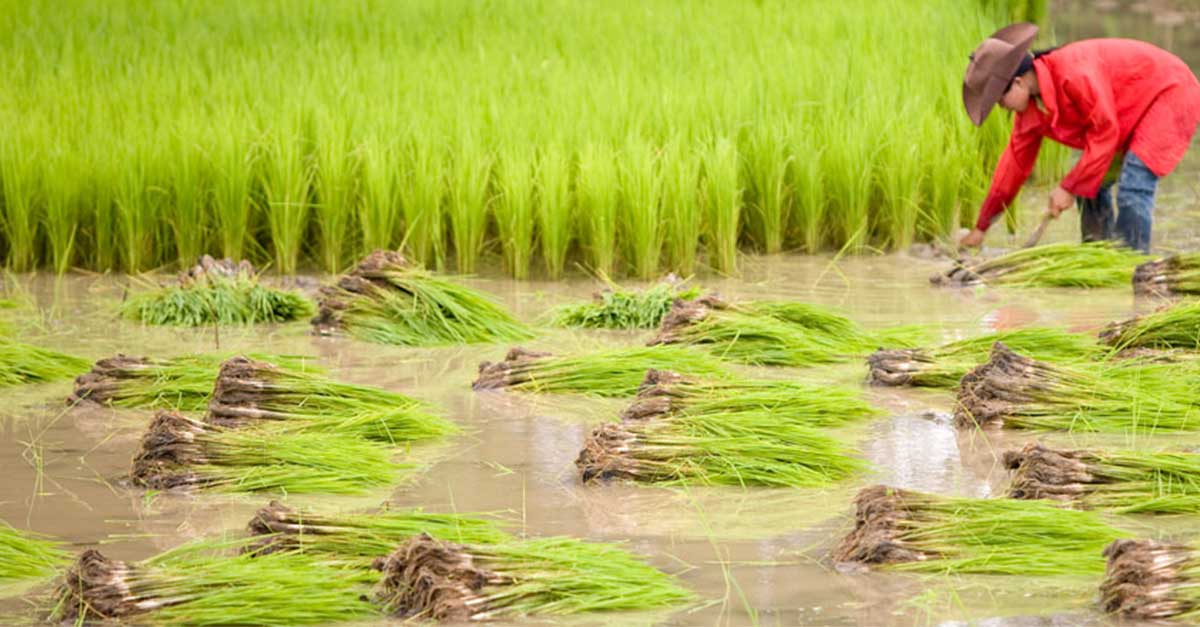
China has agreed to purchase 20,000 metric tons of organic rice per year from Laos, according to a statement by Prime Minister Thongloun Sisoulith.

Approximately 4,000 tons of sticky rice and non-glutinous rice has already been delivered to China as part of an earlier agreement to export 8,000 tons of rice from Laos to China. This agreement was recently amended, with an increase from 8,000 tons to 20,000 tons.

The rice bound for China is grown in Savannakhet and Champasack provinces, with only the IDP Rice Mill in Savannakhet Province able to produce rice of a high enough quality to meet Chinese standards.

While Laos boasts a large number of rice mills, the product is often of low quality.

More than 778,000 hectares of wet season rice and 126,000 hectares of dry season rice are grown in Laos every year, however around 226,000 hectares of rice in lowland areas are completely dependent on rainfall, as irrigation has not yet been implemented in those areas.

Laos expects to produce around 5 million tons of rice by 2020 as part of efforts to ensure food security for the country. Between 2015 and 2016 Laos produced 4.12 million tonnes of rice – well on its way to meeting the 2020 target.

Xyanye Lao Co Ltd, a Chinese enterprise, was approved by China’s National Development and Reform Commission as sole exporter of Lao rice to China.

Major importers of Lao rice include Vietnam, Thailand, and China, among other countries.

Source: Xinhua
Photo: Exo Travel