Home Blog Page 6435

Laos Government Approves Minimum Wage Increase

Laos Minimum Wage Increase Approved

The government of Laos has officially approved an increase to the nation’s minimum wage, from 900,000 kip to 1.1 million kip per month, according to a statement from the Prime Minister’s Office.

The increase will take effect from 1 May to coincide with International Labor Day.

According to Director General of the Lao Federation of Trade Unions (LFTU) Labor Protection Department, Mr Ounkham Ounyaseng, the wage increase will prove critical to improving the livlihoods of many Lao people.

He says that 900,000 kip is not enough to live on, with the cost of household goods steadily increasing in Laos. Employers must sympathise with their employees and assist them in improving their living standards.

Mr Ounkham also stated that he believed many employers didn’t have a good understanding of the concept of a legal minimum wage, or other rightful benefits such as overtime.

While some employers have stated that the wage increase may make recruitment more difficult, many entrapraneurs believe that the wage increase will attract the interest of laborers who may otherwise have sought work in neighboring countries, where wages are higher.

The last time the minimum wage was increased was in 2015.

In recent years, the increased cost of living has contributed to the growing trade deficit in Laos.

The Lao Minister of Industry and Commerce, Mrs Khemmani Pholsena spoke at a National Assembly session last year, saying that the prices of food staples in Laos are 10-20 percent higher than market prices in Thailand and Vietnam.

Source: Vientiane Times

Laos Simply Beautiful Music Video Released

The official promotional music video for the Visit Laos Year 2018 campaign song entitled “Laos Simply Beautiful” has just been released and it’s wonderful!

29 People Killed In Road Accidents During Pi Mai Lao

Pi Mai Lao has come to be a top favorite holiday among Lao residents and tourists. Every mid-April for about 3-4 days, most of the country willingly shuts down (government staff are off and most private businesses close operations) as people prepare to perform their religious obligations and for a massive nationwide water festival.

But as the merry making atmosphere permeates across society, so too does an ominous cloud of tragedy.

According to the Department of Traffic Police (Ministry of Public Security), a total of 29 people were killed in road accidents nationwide during the Pi Mai period from April 14-16.

The Department said on Tuesday that this year’s Pi Mai celebration witnessed 207 road accidents occurring nationwide and leaving 385 people injured.

“Most of the road accidents during Pi Mai were caused by drunk driving and the violation of traffic rules,” said Lt. General Khamsone Sidavong, Deputy Director of the Department of Traffic Police.

Luang Prabang recorded the highest number of deaths with 8 people killed in road accidents during Pi Mai followed by 6 in Vientiane and 5 in Khammouane.

This year witnessed an increase in the number of people killed in road accidents as it rose by 7 or over 30% year on year, according to Lt General Sidavong.

Source: KPL

ADB: GDP Growth to Reach 6.8% in 2018 and Increase to 7.0% in 2019

Laos’ economic growth is likely to be sustained this year and accelerate in 2019, while inflation will edge up, says a new Asian Development Bank (ADB) report dated Apr 11th, 2018.

In ADB’s flagship annual economic publication, Asian Development Outlook (AOD) 2018, the bank forecasts GDP growth for Laos to reach 6.8% in 2018 and increase to 7.0% in 2019.

“Despite the government’s ban on logging exports, tighter credit conditions, subdued international mineral prices, and lower tourist arrivals, the Lao PDR maintains its growth momentum supported by mega infrastructure development projects, increased electricity generation and expanding in service sector,” said Yasushi Negishi, Country Director Lao PDR Resident Mission.

Yasushi Negishi, Country Director Lao PDR Resident Mission

“The industry sector slowdown that began in 2017 persists but is compensated by slightly higher growth in service. Some hydropower projects now under construction will come online in 2019, notably the 1300 MW Xayaboury dam, industry sector will reverse its declining trend, “said Rattanatay Luanglathbandith, Public Management Specialist.

Meanwhile, barring more bad weather, agriculture should continue to grow around 3% and service sector growth is expected to strengthen mildly as tourism is expected to recover from last year with Visit Laos Year 2018.

While the growth momentum is maintained, inflation is expected to remain at a moderate 2 – 2.5% range. The current account deficit is projected to expand to 14.9% of GDP in 2018 as higher inflation, rising international oil prices and large import machinery for the mega infrastructure projects drive up the import bill while export growth moderates.

When the new hydropower projects start operations, the electricity export is expected to pick up in 2019, pushing the current account deficit down to 13.7% of GDP.

External risks to the country’s outlook include an unexpectedly large slowdown in trade and heightened instability in global or regional financial markets. A bigger risk could manifest itself if government efforts to consolidate its finances are not successful, threatening debt distress under the condition that foreign exchange reserves barely cover normal imports.

“A development challenge for the country is a mismatch between the skill that young people acquire in schools and those in demand in the labor market, said Luanglathbandith.

“There had been substantial efforts made by the government to generate employment and income for people in the Lao PDR,” he explained.

“For more inclusive growth, the government needs to further enhance its efforts to provide labor with skill sets to respond to demands in the labor market, ” added Luanglathbandith.

Source: KPL

PTT to Expand Further in Laos Market

PTT petrol station Laos

PTT Public Company Limited, one of Thailand’s largest fuel distributors, says it has plans for further expansion in Laos. After entering the Lao market six years ago, the company has had good success, and plans to expand the number of its petrol stations in Laos from 45 to 100 by 2022.

The company’s expansion is in line with the growing number of vehicles registered throughout the nation, which has caused rapid growth in fuel consumption.

PTT strives to provide the highest quality fuel and the best service, with expansion of petrol stations based on direct investment by the Thai company as well as offering franchise agreements to local partners.

A PTT petrol station franchise costs between 15 million Thai baht and 35 million Thai baht. There are three types of PTT stations that investors may choose from, including platinum, standard, and complex. Platinum is the top model, which includes facilities such as retail fuel distribution services, convenience stores, restaurants, and bank service units.

The Thai brand is already well known by Lao people who frequently travel to Thailand, and has quickly gained
popularity in Laos. This positive reaction by the market has meant the company is now ready to expand further into the Lao market.

The company sells not only fuel, but convenience, and the PTT service stations have become a one-stop location for shopping, dining, and banking, as well as fuel purchase.

PTT has lifted the bar for petrol station business standards in Laos, and ultimately has created a better experience for consumers.

Source: Vientiane Times
Photo: PTT

Public Hotline to Report Abuses at the Market: 1625

Officials from the Vientiane Department of Industry and Commerce performed a random inspection at multiple markets such as Kuadin Market, Aussie Market, Phonthong Market and others to ensure that vendors were obeying the ministerial order to not hike up prices during the Pi Mai holiday.

Laos Celebrates Khaen Music as UNESCO World Intangible Cultural Heritage

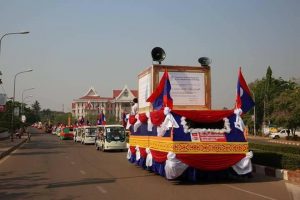
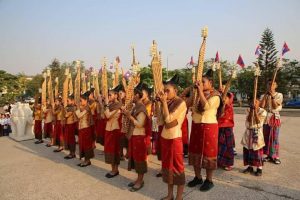
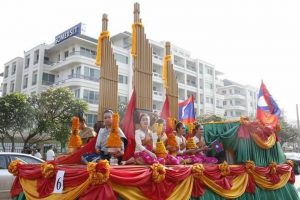
A celebratory procession along the major avenues of the capital city of Laos was organized to celebrate the recognition of Lao khaen music as UNESCO World Intangible Cultural Heritage.

Taking part in the celebration were Deputy Prime Minister Sonexay Siphandone, Minister of Information, Culture and Tourism Bosengkham Vongdara, representatives of relevant state bodies and residents of the capital.

The official khaen procession began at Jao Fagnum Park, and proceeded to the Presidential Palace, then Patuxay Monument before making a quick stop for a wreath-laying ceremony at the Tomb of the Unknown Soldiers.  parade continued its way along Kaysone Phomvihane Avenue. Capital residents stood on the roadsides showering the parade with prideful cheers and support.

https://www.facebook.com/tieng.davanh/videos/1780732071987554/

The procession then made its way to Kaysone Phomvihane Memorial where there a wreath was also placed and Khaen music showcased. The parade then headed to the National Cultural Hall. The history of Khaen was read aloud and a series of Khaen shows performed at the hall in the evening of the same day.

Khaen music was inscribed as the world intangible cultural heritage of UNESCO on Dec 2017 by the UNESCO Intergovernmental Committee for the Safeguarding of Intangible Cultural Heritage.

The khaen music of the Lao people is played with a mouth organ that resembles panpipes but made with bamboo tubes of varying lengths, each with a metal reed, according to UNESCO.

The player blows into the instrument through an air chamber and the sound produced depends on the size of the tube.

Khaen music is popular in all regions of Laos due to its harmonic richness. It is usually an incremental part of village festivals and it is customary for people listening to it to become active participants in the songs and dances, rather than merely spectators.

Khaen music is an integral part of Lao life that promotes family and social cohesion. Thanks to the use of bamboo, the practice is also linked to natural agriculture and healthy lifestyles. Families play an important role in transmitting the art and khaen player associations exist in many local communities where young people can learn the art.

To maintain the practice in spite of lifestyle changes, several local communities, associations and groups have commenced various initiatives to consolidate and promote it through formal and non-formal education.

In 2005, the Association of Khaen Arts was established and various festivals are organized to promote and enhance the art.

Source: KPL
Photo Credit: Support Prime Minister Thongloun Facebook Page

MRC Member Prime Ministers to Push Cooperation in the Mekong

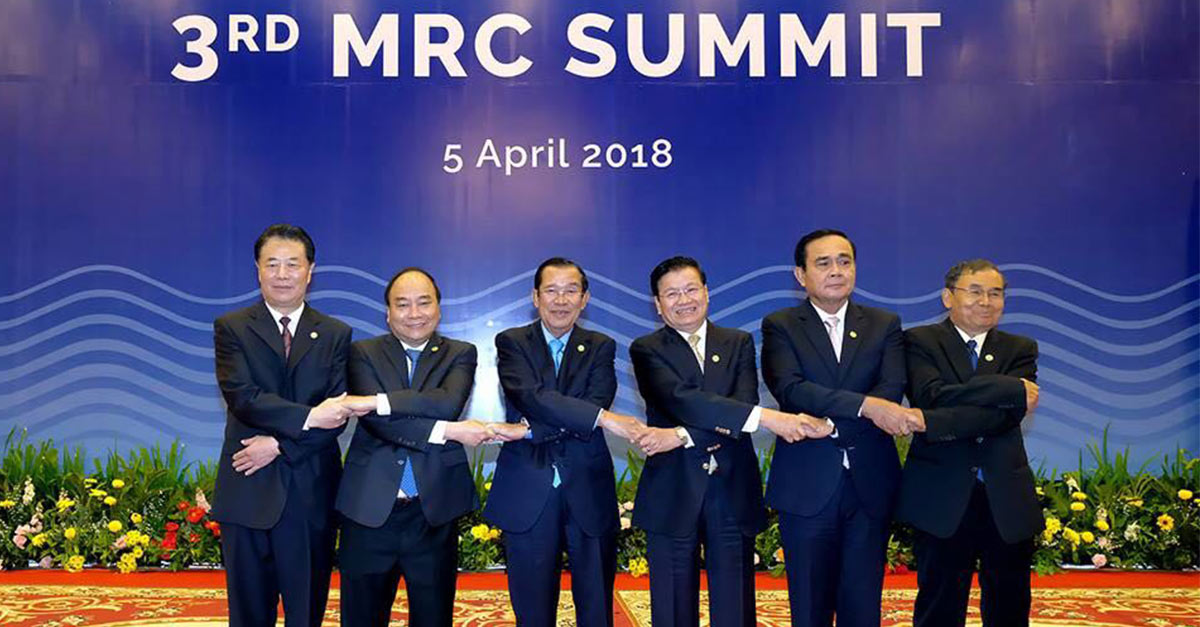
At the 3rd MRC Summit held in Siem Reap, Cambodia on the 4th of April, prime ministers of the four member countries Cambodia, Laos, Thailand and Vietnam affirmed their resolve to push Mekong cooperation in order to utilise development opportunities and overcome challenges.

With the theme “’Enhancing Joint Efforts and Partnerships towards Achievement of the Sustainable Development Goals in the Mekong River Basin,” the summit also saw the participation of the Minister of Water Resources of China and the Minister of Environment of Myanmar, the two dialogue countries of the MRC, and representatives from other development partners.

The summit reviewed cooperation within the commission and the implementation of commitments made at the second summit in Vietnam’s Ho Chi Minh City in 2014, while identifying priority areas in the next periods.

They agreed to apply the set of procedures of the commission on the sustainable, reasonable and equal use of water resources and other resources of the Mekong River.

They shared the view that the MRC should promote its role in orienting cooperation and setting forth specific measures in order to achieve sustainable development goals (SDGs) in the region.

It is necessary to enhance cooperation with mechanisms in and outside the region such as the Association of Southeast Asian Nations (ASEAN), the Mekong-Lancang cooperation, the Greater Mekong Sub-Region cooperation and other international river basin management organizations, while encouraging public involvement in these efforts, the summit heard.

The delegates approved the Siem Reap Declaration which acknowledges achievements recorded by the commission, points to opportunities and challenges for the Mekong River Basin and affirms the importance of Mekong cooperation as well as the acceleration of the implementation of the 1995 Mekong Agreement.

The document also outlines priority activities of the commission for the next four years and long-term orientations for cooperation within the commission.

The Mekong Committee was established in 1956, under the auspices of the United Nations to coordinate aid and manage resources in the river basin.

In 1995, Cambodia, Laos, Thailand and Vietnam signed an Agreement on the Cooperation for the Sustainable Development of the Mekong River and set up the MRC, replacing the Mekong Committee.

The MRC holds its summit every four years, starting from 2010. The first MRC summit was held in Hua Hin, Thailand in 2010 and the second one took place in Ho Chi Minh City, Vietnam in 2014.