Home Blog Page 6576

New Vientiane Bus Station Construction Delayed

New Vientiane Bus Station

Construction of the new Vientiane bus station in Nongchan Village, in central Vientiane, has been delayed due to an amendment to its design.

Chitchareune Construction, the same developer that recently completed the new National Library of Laos, has decided to increase the height of the ground floor of the new bus station, which is to house a 12-storey shopping mall.

The new bus station, valued at US $37.5 million, is aimed at improving bus services and providing a better service to passengers.

The project is now only 23 percent complete after construction began in July 2015. The ground floor was initially to be complete in December 2016, however design changes have led to its delay.

According to Vientiane Capital authorities, the project should be completed by December 2018. Concerns have been raised as to whether the developer will be able to meet the deadline or not.

The new Vientiane bus station site will include a shopping center, office spaces, stalls and parking areas to accommodate the city’s growing number of vehicles. A bus depot zone will also be included at the site, allowing idle buses to park away from traffic flow.

The new Vientiane bus station project covers some 7,642 square meters, and the developer has been approved a concession for 70 years.

There are currently more than sixty buses utilizing the bus station site, including those running across the border to Thailand. The buses park at a side street nearby while they await completion of this project.

Traffic Accidents Bleeding the Lao Economy

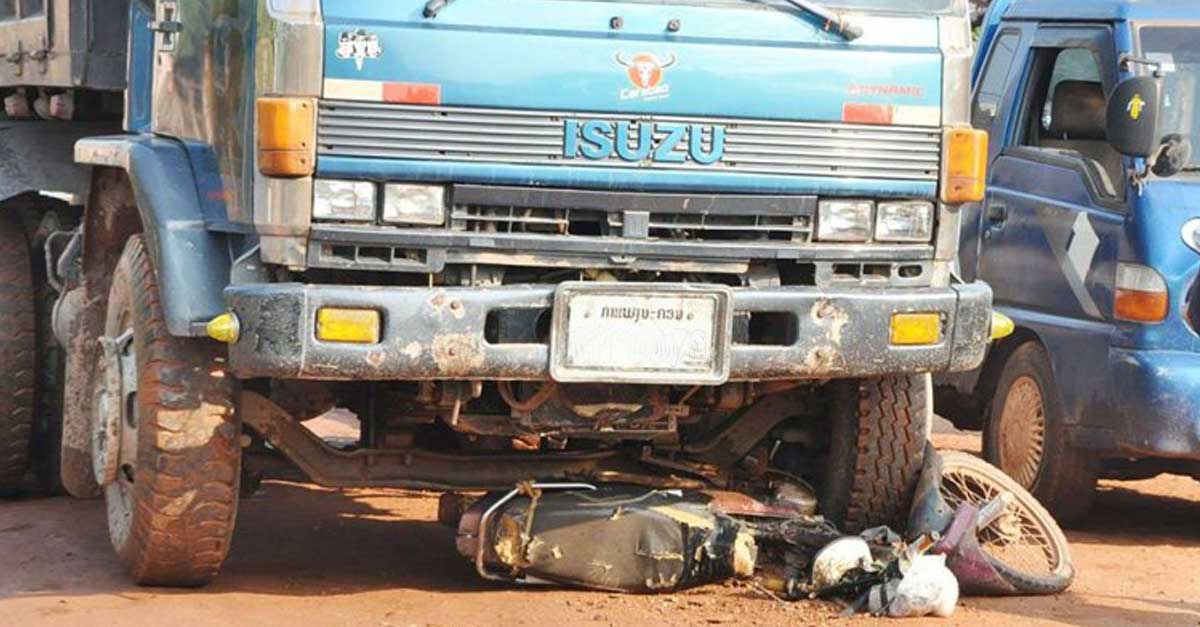
Traffic Accidents in Laos

Traffic accidents are one of the largest causes of death in the Lao PDR, and are also causing massive economic losses, according to one economist.

Police reports state that 1,086 deaths were caused by traffic accidents in 2016, with the number of injuries caused by traffic accidents reaching 8,912.  The total number of accidents reached 5,616, and the cost of these accidents was a whopping 83 billion kip.

According to a recent Vientiane Times article, senior economist at the National Economic Research Institute, Dr Leeber Leebouapao, losses from road accidents amount to nearly 1 percent of Gross Domestic Product, which saw growth at 6.9 percent last year.

Dr Leeber feels that road accidents should be placed at the top of the nation’s agenda, and calls upon all sectors to devise programs and awareness campaigns that will help to mitigate the problem.

He went on to say that fatalities caused by road accidents in Laos were higher than deaths caused by wars or political conflicts in some countries.

Without urgent measures being taken, the situation will be unlikely to see improvement. Accidents cause tremendous financial losses to the state, and negatively affect society.

These costs include personal costs to victims families, property damage, ambulance and hospital cover. Accidents involving essential members of the workforce can also directly affect the nation’s human resources.

The rise in accidents is connected to the rapid economic development seen in Laos, which has led to an increase in vehicle ownership among the population. Growing demand for personal transportation and a lack of public transport options only adds to the issue.

The country’s very reputation is at stake, with reports appearing in foreign news media regarding the astonishing accident rate in Laos.

Dr Leeber added that road accidents are a huge drain on time and money, and law enforcement has not been serious about taking action toward a viable solution.

50 Dengue Fever Cases Already Reported in 2017

Dengue Fever

More than fifty cases of dengue fever have already been reported across Laos since the beginning of 2017.

The Surveillance Unit of the Ministry of Public Health has warned that although the nation has implemented strategies to reduce outbreaks of dengue fever, there have already been multiple cases reported this year.  Of the fifty reported cases, twenty cases occurred in Vientiane Capital.

Recent changes in the weather have provided the right conditions for mosquitoes to breed, and the ministry says that if relevant authorities do not exercise haste in undertaking preventative measures, a severe outbreak could occur.

Early preventative measures are key to preventing an outbreak, including increased surveillance and faster response rates, and immediate reporting of any dengue fever cases.

Residents must join in the fight against dengue fever by taking preventative measures in their homes. Any possible mosquito breeding sites must be destroyed, and residents can follow these five basic steps provided by the Ministry of Public Health:

  1. Cover any empty containers around the house that may contain water
  2. Frequently change water kept in containers around the house
  3. Release fish where possible, as fish will eat mosquito larvae
  4. Ensure cleanliness around the home, and do not leave empty containers or rubbish around the home such as empty bottles, cans, or old tyres.
  5. Follow steps 1 – 4, clean the house every week

The Lao Ministry of Public Health urges anyone who feels they may have symptoms consistent with Dengue Fever to immediately visit a hospital or clinic for evaluation. Early treatment can assist in fighting the disease.

Source: Lao Phatthana

ALO Technologies Ambushes Lao Smartphone Market

ALO, the world’s first Lao smartphone, will make its debut in stores around Laos later this month.

The ALO brand of smartphone is part of a larger group of electronic products offered by ALO Technologies Laos. The company hopes to become the number one choice in technology products and services for Lao people, and has made students and the education sector its primary focus.

ALO Techology, which is a 100% Lao owned company, reached an agreement with Microsoft for updates to software and programs after signing an official OEM Master License agreement with Microsoft in April last year.

Two products are to be released initially, the ALO! M5 (4G) and the ALO! Tab7A 2 SIM 3G.

The M5, which runs on the Android 6.0 operating system, will retail for 1,100,000 kip, although the company has announced a special promotion price of 999,000 kip.


[ngg_images source=”galleries” container_ids=”4″ override_thumbnail_settings=”1″ thumbnail_width=”100″ thumbnail_height=”75″ thumbnail_crop=”1″ images_per_page=”20″ number_of_columns=”0″ ajax_pagination=”0″ show_all_in_lightbox=”0″ use_imagebrowser_effect=”0″ show_slideshow_link=”0″ slideshow_link_text=”[Show slideshow]” template=”/home4/laotiantimes/public_html/wp-content/plugins/nextgen-gallery/products/photocrati_nextgen/modules/ngglegacy/view/gallery.php” order_by=”sortorder” order_direction=”ASC” returns=”included” maximum_entity_count=”500″ display_type=”photocrati-nextgen_basic_thumbnails”] 

The first set of ALO! Branded smartphones feature a 1.3G Quad-core MT735 CPU, with 1GB RAM,  multi-touch sensor, and 1280*270 pixels display.

The M5 features Bluetooth functionality, front and rear cameras with HDR support, GPS positioning, dual sim-card input, and a 1900mAh battery. Both ALO! Models are currently only available in white.

The ambush of the low-end market by the ALO Lao Smartphone will likely present quite a challenge to competitors in Laos, with the market traditionally ruled by Chinese brands Oppo and Vivo.

Like its direct competitors, ALO! Phones are manufactured in China, however its products are produced specifically for the Lao market. With Microsoft overseeing upgrades and software, it is likely that ALO will become the number one consumer choice before too long.

The company has stated that its mission is to provide quality, affordable electronic devices for the Lao market, with a focus upon the education sector, and hopes to expand further into ASEAN in the coming years.

Land Use Right Holders on 450 Year Road Reject Compensation

Land Use Rights 450 years Rd

Owners of land use rights for the remaining 167 plots along the 450 Year Road in Vientiane are still refusing to accept the compensation offered in return for the land they lost to the US$104 million highway, an official told the Vientiane People’s Council yesterday.

The government approved the construction of the 20.3km road, which was completed in 2010, to mark the 450th anniversary of Vientiane as the capital of Laos. The road links the Dongdok traffic lights in Xaythany district to Dongphosy village in Hadxaifong district.

To finance the road, a 50-metre section of land along either side of the route measuring more than 1 million square metres was reserved for sale to raise the necessary funds.

Compensation has been offered to those who lost their land, a member of the committee in charge of resolving land issues, Mr Bounlap Soutthavong, told the Assembly during its ongoing meeting.

He added that the committee has already awarded compensation of more than 77.4 billion kip for 369 plots of land.

However, the owners of the land use rights to the remaining 167 plots have still not claimed the money owed them, even though the authorities have issued several notices telling them to do so. The deadline for the payment of compensation has now passed.

Given that the remaining owners have not cooperated, Mr Bounlap recommended that the land use rights for the 167 plots be revoked and new land titles issued so the land use rights could be sold to raise money.

He said most of the people involved were not the original owners as they had bought the land from the original owners with the intention of reselling it and making a profit. Since the purchases took place after a regulation was issued to prohibit the sale of land and any construction after the building of the 450 Year Road was announced, this meant the parties had violated the regulation.

However, Mr Bounlap recommended that compensation be paid for the remaining plots, even though the deadline had passed.

In addition, he suggested charging a transport fee on the 450 Year Road in line with the Prime Ministerial Decision No. 66 issued in 2008.

Compensation payouts ranged from 15,000 kip to 500,000 kip per square metre plus 30 percent of the land value. The original owners of the land use rights were given priority in the repurchase of the land use rights, but would have to pay the amount decided by the government.

This amount was calculated by the government after the 450 Year Road was built, with prices ranging from US$120 to US$150 per square metre.

New title deeds have been issued for land for which compensation was paid and these were given to the Bank of the Lao PDR in part payment of the loan and interest owed by the developer which had borrowed money to build the road.

The project developer still owes the central bank more than US$20 million including interest.

Vientiane Mayor Dr SinlavongKhoutphaythoune told the Council that the building of the 450 Year Road was significant for Vientiane’s socio-economic development and in easing traffic congestion.

Source: Vientiane Times
Photo: Lao GMS Map

Asia Peak Aims High in Nong Khai

Asia Peak, a mega-development tourism complex is in the plans for Nong Khai. Asia Peak will be a huge wholesale, retail, and entertainment center located behind the Asawann Shopping Complex and behind the Nong Khai Provincial Administration Office, covering an area of 48,000 square meters.

Several Thai investors saw the natural tourism potential in Nong Khai, as well as its strategic location near Vientiane, and pooled their resources to invest in a 30 year lease on the land. The entire project is expected to cost 1 billion baht (approximately US$28 million).

Asia Peak in Nong Khai

During the day, it will be a wholesale, retail and restaurant space of over 400 shops, while in the evening there will be a night market. One section of market will have a retro vibe created entirely of shipping containers, hoping to attract young people and hipsters alike. An amusement park is also planned with four primary attractions: an 80m Ferris wheel (the tallest in Thailand), a swinging ship ride, a grand carousel, and a chair swing ride. There will also be a beer hall with 400 tables and there are plans to host monthly concerts at the venue.

The investors hope to open in February of 2017 and aims to attract at least 1000 visitors per day. They will primarily target Thai and Lao tourists, with a focus on Lao traders who will come to purchase foreign and domestic goods to take back to Laos and sell.

Asia Peak is looking to position itself to become a tourism landmark well-known throughout both Thailand and the AEC.

Source: Manager

Attapeu International Airport Shuts Down

This Facebook link thumbnail image template was created by Christian Karasiewicz, owner of www.christiankonline.com

After flights between Vientiane-Attapeu ceased since October 2016, the Attapeu airport has been temporarily shut down.

Passenger numbers were continually low, and flights were infrequent, with only 139,600 people living in Attapeu Province.

Authorities of Attapeu province revealed that Lao Airlines decided to stop offering flights from Vientiane to Attapeu from October 2016 without releasing any official notice, and had not yet announced this matter to the public.

In addition, local authorities stated that the population of Attapeu is small, although it shares borders with Vietnam and Cambodia. The main economic activities of Attapeu Province are power production, mining, and industrial plantations.  Few tourists visit the province. 

The Attapeu International Airport was opened in 2015 and the total value of the construction was more than 289 billion Kip, or approximately US $36.9 million.

Vientiane Sustainable Urban Transport Project Underway

vientiane sustainable urban transport project

An official in charge of the Vientiane Sustainable Urban Transport Project has said that financial support has been obtained that will help establishment of a BRT (Bus Rapid Transport) system, which is one major goal of the project.

The Asian Development Bank approved a loan of US $35 million to spearhead the project, while a further US $35 was provided by other donor organizations.

The Vientiane Sustainable Urban Transport Project is a large-scale project with the aim of improving transportation systems in the congested capital city.

The project has five main components, beginning with the establishment of a sustainable urban transport management agency for Vientiane, which will bring traffic and transportation management under the control of one unique entity. The next phase of the project is the development of the BRT system for Vientiane Capital, followed by improved traffic management, paid parking systems, and better accessibility for pedestrians and non-motor traffic in the core of the city.

Under the project, an 84-km section of Vientiane Capital will be covered by the BRT network, including a dedicated bus lane of 11.5km running from Wattay International Airport to Nongbone Village, in Saysettha District.

The bus rapid transit system will feature over 11km of dedicated bus corridor lanes, 24 enclosed stations, and new low-carbon emitting buses. BRT buses are to utilize rail-like systems and dedicated lanes, which will ensure faster services and reduce traffic congestion. 

Planned Vientiane Bus Loops

Paid parking systems and an upgrade to the national vehicle registration system are also in the planning stages, with more pedestrian crossings, overpasses and walkways also in the works.

Construction of the project is set to begin next year, while the government seeks a consulting firm to oversee the project.

The Vientiane Sustainable Urban Transport Project will help to create a friendlier traffic environment for pedestrians and non-motor transportation, and offer better public transportation services for Vientiane residents.

According to the ADB, public transportation in Vientiane Capital currently accounts for less than one percent of daily trips.

Images: ADB