Home Blog Page 6276

Connecting the Unconnected with an Offline Internet System

rural
rural

In this day and age, one thing is for certain; information is power. Over four billion people in developing countries are missing out on that power, due to the lack of proper internet access.

More than half of the Lao population are uninformed on the life-changing benefits of connectivity, particularly in rural areas, missing out on a wealth of information pertaining to financial, health, education and other important services .

Information and technology experts  want to change that, and have partnered up with Be-Bound Company in attempt to provide remote areas of the country with an “offline internet” system.

In a recent meeting held in Vientiane, technology experts and staff from the Be-Bound Company discussed the use and necessity of an “offline internet” system in Laos, that would benefit those who cannot afford an internet connection.

This technology is aimed to be used with mobile devices in remote areas,  that will utilize SMS to gain broader access to information at an affordable price. The system allows people to text questions and be provided with answers.

Deputy Director General of the Information and Technology Department under the Ministry of Science and Technology, Mr Souliya Sengdaravong, states that the “offline” internet system has a specific meaning in terms of computer technology and telecommunications, in contrast to “online” internet which operates using a telephone signal.

After installation of the “offline” internet system is complete, useful information can be sent to local communities regarding science and technology, education, health, agriculture, and other various sectors.

“Internet for all, a Framework for Accelerating, Internet Access and Adoption”, is a Be-Bound initiative that requires minimal preparations and is easily installed by telecom companies in the country due to it making use of  the existing telephone signal system.

Be-Bound Company representative, Michel Ktitareff, explained that the system could be utilized in all areas of the country where there was a telephone signal and would rectify the current lack of accessible information.

Private Businesses Struggle to Find Financing

road
road

Business banking in Laos has taken a severe hit in the past few years as government officials have started limiting funds that have been typically granted to developers for implementing infrastructure projects in the past.

Construction of roads, mining, land concessions and various infrastructure projects have all been suspended due to companies facing financial difficulties and struggling to be approved for loans from banks.

Priority projects which have been approved by government officials have a higher likelihood of being approved for bank loans, as opposed to the private companies who seek funding.

According to the government’s latest report, the overall investments in 2016 reached 42.8 trillion kip, which was 24.2 percent more than planned, and accounted for 33.1 percent of GDP, increasing the value of bank financing from 6.7 trillion kip to 10.8 trillion kip.

Economists assert that the increase in bank credit is an indication that the Lao economy is growing, given that more money has been disbursed into the investment sector.

In an effort to ensure the effective use of the state budget in order maximize the interests of the nation, the Lao Prime Minister has signed off on Prime Ministerial Order No.9, stipulating various measures to control spending, including the suspension on all construction of public office buildings until 2020.

With a recent projection indicating that only 96 percent of the revenue targeted for 2017 will be collected, the government has planned to tighten budget expenditure by trimming its administrative budget.

State banks have been urged to supply more loans in order to promote productivity and facilitate the growth of small and medium businesses..

Laos is considered one of the least developed countries, with the value of its economy amounting to US$15.9 billion. In 2016, the Lao economy grew at a rate of 7.02 percent, driven by the industrial sector, particularly hydropower projects with GDP per capita reaching US$2,408.

ITECC Mall Hosts Top Thai Brands 2017 Trade Fair June 7-11

trade fair
trade fair

For the first time in Laos, ITECC Mall will host the Top Thai Brands 2017 trade fair, with over 300 booths stocked and displayed with quality products from Thailand.

Held in the old building, the trade fair is scheduled to run in Vientiane from June 7-11, and not only aims to promote trade and investment between Thailand and Laos, but also to encourages a consumption of good products and services with original trademarks.

According to the Thai Minister Counselor (Commercial), Yanee Srimeechai, the Department of International Trade Promotion has been working in partnership with three main business associations: the Thai Chamber of Commerce, the Federation of Thai Industries and Thai National Shippers’ Council, in the selection of quality businesses, products and services from Thailand to present at the trade fair.

Ms Yanee stated that the fair will also motivate and offer opportunities to both countries in their efforts towards globalization.

This year’s trade fair will also be offering various activities throughout the 5-day period, consisting of a presentation of projects initiated by his Majesty the King of Thailand, Thailand Trust Mart Zone, Top Thai Brands Zone, and a seminar by VIP speakers who have succeeded in doing business overseas.

China’s Dams Proving Beneficial

dam
dam

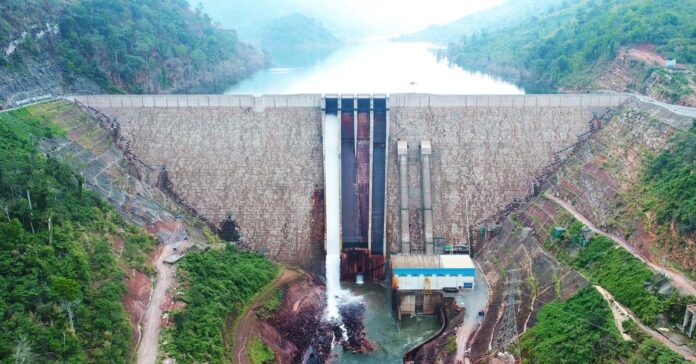
Known as the Lancang River in China, the Mekong river is the heart of Southeast Asian countries, with over 60 million people depending on the river and its tributaries for food, water, transport and many other aspects of their everyday routine.

Since 1993, China has installed six dams along the Upper Mekong Basin with a navigation channel that threatens this complex ecosystem. Over 20 more are under construction and being planned in Yunnan, Tibet and Qinghai.

Experts say this will ultimately disrupt the river’s natural flood-drought cycle, and block the transport of sediment, affecting ecosystems and the livelihoods of millions living downstream in Burma, Thailand, Laos, Cambodia and Vietnam. Impacts to water levels and fisheries have already been recorded along the Thai-Lao border.

Despite this, construction has proceeded without consultation with  the Lower Mekong Basin communities and without an assessment of the dams’ likely impacts on the river and its people.

However, though studies have not been concluded, the Mekong River Commission’s (MRC) river monitoring arm has indicated that these Chinese dams do affect water flow in the Lower Mekong Basin, specifically by reducing water flow during the wet season and increasing it during the dry season.

Studies have shown that the downstream water flow in the dry season has increased, therefore easing the effects of droughts. Storage dams can contribute to increased flow during the dry season as they discharge water for energy production.

As a result, the release of supplemental water from the Lancang dams eased the regional drought of 2016.  

A total of 12.65 billion cubic meters of water was discharged from the Jinghong hydropower reservoir during March to May, 2016. The amount released equaled to 40 – 89 percent of flow along various sections of the Mekong River.

The emergency supplemental water increased water level or discharge along the Mekong mainstream to an extent of 0.18-1.53m or 602-1,010m3/s.

Flows would have been 47 percent lower at Jinghong, 44 percent lower at Chiang Saen, 38 percent lower at Nong Khai and 22 percent lower at Stung Treng if these releases didn’t happen. This additional flow has also alleviated salinity intrusion in the Mekong Delta.

So while Mekong communities should be anxious about the adverse effects of Chinese dams on issues such as sediments and fisheries, these dams have not been proven to reduce downstream flows during the dry season.

Authorities Level the Playing Field for Local Fishermen

fisherman
fisherman

Following a fishery legislation installed in 2009, which bans the use of traps and tools that can severely harm fish stocks, authorities in Khong district, Champassak province have recently destroyed hundreds of fish traps along the Mekong River, and the fisherman working upstream are reaping the benefits.

Over 400 fish traps, particularly “lee” traps, or basket-type traps constructed from wood and bamboo, have been destroyed by the provincial committee along certain channels downstream of the river.

Used in the early wet season, lee traps are traditional traps that catch fish migrating downstream and are generally built during the dry season, only to be washed out by the heavy rains later in the wet season.

Fishermen who utilize lee traps to ambush schools of fish have been known to catch over 10 tonnes, earning between 30 and 40 million kip a year. This not only gives them an unfair advantage over local fisherman using smaller tools but also risks overfishing, causing fish stocks to fall below acceptable levels.

A fishery consultant for Don Sahong hydropower plant, Mr Somphone Phommanivon stated, “There are many fishermen upstream that are now very happy to be catching fish after over 430 fish traps and other tools have been removed from seven channels downstream while we’ve also improved the channels to aid fish going upstream.”

“We currently have cleared eight channels to make way for fish going upstream and we are still continuing discovering new ways to do so, creating a more sustainable flow of fish which many local residents can share the benefit of,” he added.

Khong district’s Thakhor Village Chief stated that due to the abundance of fish being caught by local fishermen, fishmongers have been able to market the fish at a low 10,000kip per kilo, while fisherman in other villages upstream are also catching plenty of fish to go around.

In 2000, over 400 lee fish traps and other tools were utilized, allowing fishermen to catch between 1.5 to 20 tonnes per trap, therefore prohibiting the use of traps is necessary in order to sustain the increasing number of fish in the Mekong.

The Don Sahong hydropower plant began construction in 2016 and is scheduled to be completed by 2019, on one channel of the Mekong River near Khone Falls in Khong district.

Seatbelts Now Compulsory on Vientiane Roads

seatbelt-feature-image

While regulations on seatbelt use have existed since 2013, the law has rarely been enforced. Recently, however, Vientiane residents have begun receiving fines from diligent police for failure to buckle up.  

According to Article 18 of the Law on Land Traffic, drivers and passengers of vehicles with four or more wheels, including all front passengers, must wear a seatbelt. Infants that are unable to wear a seatbelt must be seated in a car seat.

Vientiane drivers have taken to popular social media sites to vent their misfortunes, stating that they are being fined 150,000 LAK per traffic violation, with paper receipts of the fine to prove it.

Seatbelt Fine Vientiane Capital

So why now? The seatbelt crackdown may be due to a pledge authorities made to road safety back in 2016. As previously reported by The Laotian Times, the Traffic Police Department of the Ministry of Public Security partnered up with Lao Brewery Co., Ltd to run a road safety campaign due to the rising toll of injuries and deaths caused by road accidents.

Statistics show that those who utilize seat belts dramatically reduce the risk of vehicular death by 45%, and cut the risk of serious injury by 50%.

Though the crackdown on seatbelt use may have caught the public unawares, the safety measure has been implemented as good practice and will save hundreds, if not thousands of lives on Vientiane roads.


Asean Sustainable Tourism Awards to Encourage New Tourism Standards

asean
asean

With the Asean Sustainable Tourism Awards (ASTA) approaching for the first time in January 2018, the Lao Tourism sector is preparing to inform the public on how to classify sustainable operators for entry.

Launched as part of Asean’s Tourism Strategic Plan 2016-2025, the ASTA were recently introduced and all sustainable tourism operators in Southeast Asia will be eligible to enter.

The awards will occur every two years with a dedicated theme decided jointly by Asean NTOs. The inaugural 2017-18 awards, which are now open, is themed “nature-based tourism.”  

Deputy Director General of Tourism Development Department under the Ministry of Information, Culture and Tourism Mrs Phonemaly Inthaphome, stated that “ASTA is the recognition of Asean’s best sustainable rural or urban tourism products, proposed and implemented by the public and private stakeholders who have decided to join forces for the benefit of their destination.”

“Each Asean country has its own trainers and committees of Asean standards, to select winners in their countries. We are now translating the documents into Lao before dispersing them to all tourism sectors and operators in provinces for entering the awards next month,” she added.

Two winners will represent each country, one “rural” and one “urban” to reaffirm that city operators can be just as sustainable as rural ones.

After the winners are chosen, they will be submitted to Asean by November before receiving awards in January, 2018.

The deputy director general emphasized that the awards required high standards for classifying winners; therefore in Laos, the main tourism provinces of Luang Prabang, Vientiane, and Champassak would likely be the focus of  the majority of entries.

According to the Tourism Development Department, twenty sustainable tourism winners, with two from each Asean member state, will receive a package of benefits that will raise their business profile substantially, and will be highlighted on Asean’s website www.aseantourism.travel.

Winners will be highlighted on the National Tourism Organisation’s (NTO) website, and receive exposure as a national best practice operator during press conferences and trade shows such as ATF, TRAVEX, International Tourism in Berlin of Germany and World Travel Market.

In addition, winners will be invited on stage to receive a trophy and recognition during the sustainable tourism awards event, which will be part of the ATF in Chiang Mai, January 2018.

Director General of Tourism Marketing Department, Mr Sounh Manivong, stated that the key purpose for the awards  is to highlight the profile and importance of sustainable tourism businesses in Southeast Asia, promote responsible tourism in all Asean countries, combat seasonality, and rebalance tourist flows towards best practice tourism experiences.

Asean has decided to encourage responsible behaviours amongst stakeholders – in mainstreaming the implementation of the Asean Tourism Standards – and to also facilitate the diversification of tourism supply towards emerging, remote destinations and areas.

The ASTA enables the region to recognize and promote sustainable tourism, both rural and urban products, promoting  presence in the Asean market and beyond.

The Paris Climate Agreement and How it Affects Laos

gas emissions
gas emissions

Before June 1st, the average citizen in any given country was probably unaware of the Climate Change Conference that took place in Paris in 2015 (hence, the Paris Climate agreement), and that their country had, more than likely, ratified to take part in it.

However, all that changed when President Trump withdrew the United States from the agreement on Thursday, outraging country leaders and making it breaking news that was shared around the world.

With 195 of 197 countries originally endorsing the agreement back  in December of 2015, the United States has now joined Nicaragua and Syria as the only countries who are not apart of the deal.

With Laos being one of the 194 participating countries who have committed to the pact,  here’s what you need to know about the Paris Climate Agreement.

What is the purpose of this agreement? The agreement is a broad framework designed to sway nations to prevent catastrophic climate change. The pact was created to add structure and momentum in an attempt to reduce greenhouse gas emissions worldwide,  by limiting carbon emissions, adopting clean energy practices and phasing out fossil fuels.

What’s the goal? The objective of the Paris agreement aims to prevent global average temperatures from rising 2°C (compared to temperatures pre-industrial revolution) by the end of the century. Beyond 2 degrees, we risk drastically higher seas, changes in weather patterns, food and water crises, and an overall a more destitute world.

Though some critics have argued that the 2-degree mark is too low to make any difference, many believe that it’s a start, a goal that before Paris, the world was on track to recklessly miss.

How does the United States withdrawing from the agreement indirectly affect Laos?

The agreement essentially urges wealthier countries to help out impoverished and underdeveloped  countries, like Laos.  In the case of global emissions, there’s a paramount inequality. Rich countries have devastated and consumed enormous amounts of fossil fuels, and gotten rich from them. Poor countries who are now attempting to grow their economies are shunned from using the same fuels, and will be among the first to endure the worst impacts of climate change.

Therefore, as part of the Paris agreement, wealthier countries like the US, are urged- but not mandated,  to send $100 billion a year in aid by 2020 to the poorer countries, to assist in obtaining clean energy, cope with sea-level rise, droughts, floods, and other ravages of climate change.


What has Laos done to maintain its pledge to the treaty? As previously reported by The Laotian Times, Laos signed the agreement on April 22, 2016 at the United Nations Headquarters in New York City. Five months later, in September of 2016, the country contributed to the global Climate Change Agenda and implemented Intended Nationally Determined Contribution (INDCs)for the reduction of greenhouse gas emissions, funded by Global Environment Facility in partnership with UNDP and the Department of Disaster Management and Climate Change.

Also, the country’s First Programmatic Green Growth Development Policy Operation will be launched this year, which aims to establish the foundation for ‘green growth’, planning and strengthening environmental protection and resilience to climate change in Laos.

The program focuses on three priorities: reducing risks to prudent economic management; integrating principles of ‘green growth’, environmental protection, and resilience into development planning; and promoting sector-specific transformative initiatives, i.e. managing water resources, forest use, and pollution.

To focus on risks to the economy, the operation will target strengthening fiscal sustainability and financial sector stability. Some of the program’s goals include establishing a system of national parks, banishing the use of harmful chemicals and pesticides, and enforcing control on illegal logging.

The ‘green growth’ initiative is part of the World Bank’s new Country Partnership Framework for Lao PDR.  The new framework for 2017 to 2021 outlines the approach of the continued partnership, which includes as a key priority, the protection of the environment through sustainable management of natural resources and enhanced resilience to disaster risks and climate change.

What happens now? The Paris agreement is significantly symbolic, and will persist on even if the United States is withdrawn. In 2020, delegates will reconvene and provide updates about their emission pledges, and report on how they’re becoming more aggressive on accomplishing the 2-degree goal.

Countries will be encouraged to submit new and stronger pledges every five years, starting in 2020. Though the agreement doesn’t require anyone to keep cutting emissions aggressively, the goal is to influence countries to consider stronger action over time.

Click here to read a previous Laotian Times article about Laos Contributing to the Global Climate Change Agenda