The US Treasury officially placed the Kings Romans Casino based in Laos on its organised crime sanctions blacklist on Tuesday, naming it a hub for the trafficking of humans, drugs, and wildlife.
The sanctions involve a group based in Hong Kong, the Kings Romans Company, which operates casinos.
One of the sites operated by the company is a well known casino located in Laos, in its Golden Triangle Special Economic Zone, on the Mekong River near Thailand and Myanmar.
“The Zhao Wei crime network engages in an array of horrendous illicit activities, including human trafficking and prostitution, drug trafficking, and wildlife trafficking,” said Sigal Mandelker, Treasury Under Secretary for Terrorism and Financial Intelligence.
Tourists who have visited the casino report a menu full of protected species at the casino’s restaurant, including bear, tiger, and pangolin.
Abbas “Basu” Eberahim, 29, an Australian who owns residences in Kooringal in Australia, Chiang Rai, Thailand, and the Golden Triangle Economic Zone in Laos.
Nat Rungtawankhiri, a Thai national aged 41 and resident Chiang Rai.
Guiqin Su aka Zhao Su, or Madame Su, 69, a Hong Kong resident with Chinese nationality.
Zhao Wei, 66, a dual Chinese-Macau national and husband of Madame Su.
“All assets of those designated that are under US jurisdiction are frozen, and US persons are generally prohibited from engaging in transactions with them,” it said.
“Since 2014, Thai, Lao, and Chinese authorities have seized large narcotics shipments that have been traced to the Kings Romans Casino.”
French Ambassador Present French Order of Merit to Vorachack
Earlier last week, the French government awarded Manivone Vorachack, the national order of merit.
Committed to the development of Laos
For more than 20 years, Manivone Vorachack has been working to reduce poverty and develop rural areas in Laos through her work with the “Cooperation Committee with Laos” (CCL) and has progressively risen through the ranks of the association to take over the management of the NGO in 2005. As a recognized partner in the development of Laos, since its creation, the NGO has carried out projects of agricultural development, health or nutrition in nearly 300 villages for the benefit of more than 100,000 people.
Manivone Vorachack (center)
A model for the younger generations in Laos
On the occasion of the ceremony, the French Ambassador to Laos Claudine Ledoux welcomed Manivone Vorachack as “a model for the younger generations in Laos and especially for young women.” Committed to gender equality in Laos, Manivone Vorachack has participated actively in several international conferences on this issue. Anxious to impart her skills and knowledge, she founded the local association SLKA (supported financially by France) dedicated to sharing knowledge in development.
Training in French language and skills
Ambassador Ledoux recognized Vorachack’s excellent mastery of the French language. Following her language courses at the University of Laos, Vorachack has strengthened her skills in the field of humanitarian and development by following diploma courses in France and Switzerland. At the end of her appreciation speech, Vorachack expressed her attachment to the French language.
About CCL
A French NGO based in Vientiane, the CCL works to reduce poverty in Laos.
Since 1980, CCL has been conducting rural development programs in mountain areas in northern Laos to improve the livelihoods of farming families by targeting, in particular, minority ethnic groups and isolated women.
Currently CCL is implementing projects in the provinces of Phongsaly (Nhot Ou District), Luang Namtha (Sing and Long) and Oudomxay (La, Nga and Namor). The projects aim to improve the food and nutrition security of the upland populations of these districts, mainly composed of Khmu, Akha, Yao and Kheu communities.
Through these projects, the CCL works specifically to improve the management of natural resources, develop sustainable agro-ecological systems and develop the commercial channels of non-timber forest products in particular, wild tea and cardamom.
Within three months, the raising of the country’s minimum wage to 1,100,000 kip per month is expected to materialize. The current wage has been an issue of public concern, as the economy grows rapidly and members of the workforce are exposed to higher and higher living costs. This will be the eighth time that the wage rate has been hiked since the founding of the Lao PDR.
A tripartite meeting co-chaired by the Ministry of Labor and Social Welfare, the Lao Federation of Trade Unions and the Chamber of Commerce and Industry came to the agreement that the minimum wage would be set at 1,100,000 kip per month (USD $132) or 42,307 kip per day (USD $5.15). The new proposed rate will be proposed to the Prime Minister, and will be deliberated upon during upcoming meetings. It is expected that the new rate will be announced and put into effect by the 1st of May, aptly coinciding with International Labor Day.
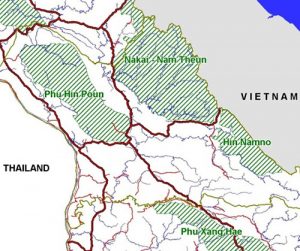
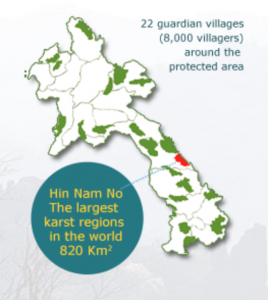
Earlier this January in Hanoi, the Lao and Vietnamese governments signed a MOU, ensuring Vietnam’s full support of the nomination of Hin Nam No National Protected Area as a transboundary World Heritage Site together with the already established natural UNESCO World Heritage Site known as Phong Nga Ke Bang (PNKB) National Park in Quang Binh, Vietnam. The latter shares a common border with Hin Nam No National Protected Area in Khammouane, Laos.
High ranking officials including Vice Minister of Information, Tourism and Culture Buagneun Saphouvong, Vice Minister of Energy and Mines Thongphat Inthavong, and Khammouane Province Deputy Governor Khamsy Outhivong met with representatives from the respective government agencies to review and endorse the way forward.
“With Hin Nam No’s huge potential for eco-tourism, it [World Heritage status for UNESCO] will make an important contribution to national socio-economic development, especially for Khammouane people,” said Saphouvong.
“Becoming a World Heritage Site will also enhance the protection of the area, improve conservation and will facilitate better management of the natural resources in and around Hin Nam No, promote ecotourism and scientific research,” he added.
Hin Nam No NPA has been recognized as a site of global significance for the conservation of biodiversity because its variety of habitat and forest types provided by the landscape geomorphology support a high diversity of animals and plants, including a number of globally threatened species, endemic species and karst specialist species. Thus, the elevated UNESCO status will contribute substantially to the conservation of this unique ecosystem.
Hin Nam No Protected Area
Deputy Governor Outhivong expressed that “Hin Nam No will attract both local and international tourists and thereby will generate incomes for local communities once it is nominated as a World Heritage Site. More importantly, it will also create opportunities to boost the livelihoods of the local communities who live around the area. By this means, they are also able to ensure their food security and alternative income generation.”
Under the newly signed MoU between Laos and Vietnam, a number of points have been agreed for which both countries commit to support the nomination of Hin Nam No National Protected area as a transboundary World Heritage Site, connected to Phong Nga Ke Bang National Park in Vietnam.
The two countries will also work together to appoint their own committees at different levels to help and push for the nomination of Hin Nam No National Protected Area.
Based on a history of over five years of technical support for the management and development of Hin Nam No National Protected Area, the Deutsche Gesellschaft für Internationale Zusammenarbeit (GIZ) GmbH is continuing to support these important undertakings through the component “Integrated nature conservation and sustainable resource management in the Hin Nam No region” of the German Development Cooperation Project “Protection and Sustainable Use of Forest Ecosystems and Biodiversity in Laos” (ProFEB).
Hin Nam No is believed to have “outstanding universal value”, adding to or complementing the conservation values that have been considered of global importance in Phong Nga Ke Bang by UNESCO.
These values need strong protection and therefore need a strong commitment from the highest level and by all stakeholders.
A wild elephant has been caught on camera crossing the border between Laos and China.
CCTV footage captured the wild elephant in south-west China strolling through the border crossing before sunup on Saturday morning.
The elephant walked from Xishuangbanna Dai Autonomous Prefecture, Yunanna Province, and took a walk across the border into neighboring Laos.
Cameras at the Chahe border crossing checkpoint took footage of the elephant walking toward the exit. When reaching the railing, the elephant slows and crosses the obstacle into the territory of Laos.
Border offiicals immediately sent two teams of soldiers to monitor the elephant and ensure its safety.
An hour later, the elephant headed back toward the border crossing, walking around the railing.
There are about 300 wild Asian elephants in China, found mostly in the forests of Yunnan Province.
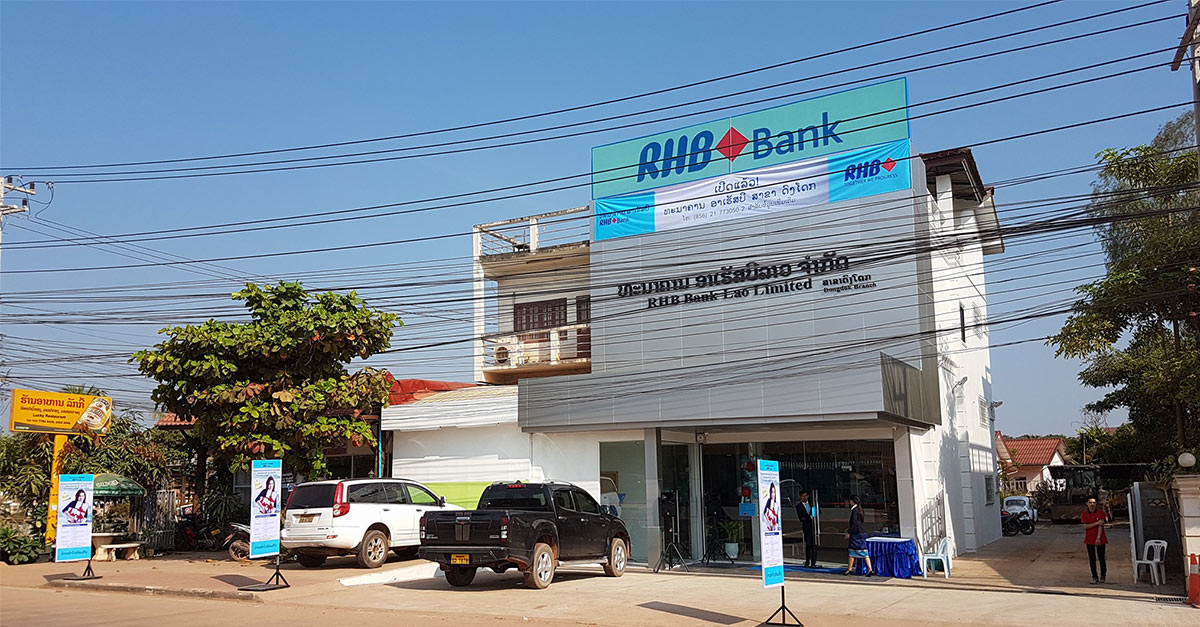
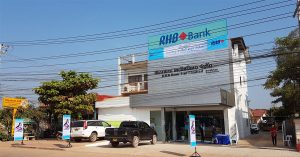
RHB Bank Lao has opened a third branch in Dongdok on the 26th of January, 2018. The official ceremony was attended by Country Head Danny Ling, and Branch Manager Thonglay Phonvilaisouk and other staff members.
Opening under the theme of an open house, customers and invited guests were encouraged to learn about bank products and services which include deposits, remittances, ATM services, loans and trade finance services that support domestic trade, import-export and business expansion. The bank also provides a variety of credit facilities like business loans with tenor of up to 10 years and housing loans with tenor of up to 20 years.
RHB Bank Lao staff pose at opening ceremony of Dongdok Branch
RHB Bank Lao Dongdok branch is to provide banking services to individuals, entities, educational institution, SMEs, enterprises, among others.
In addition, the RHB Bank Lao Dongdok branch supports the deposits of students and parents who want to manage the savings of their children in the future.
Laos Featured on Time and Leisure's 50 Best Places to Travel in 2018
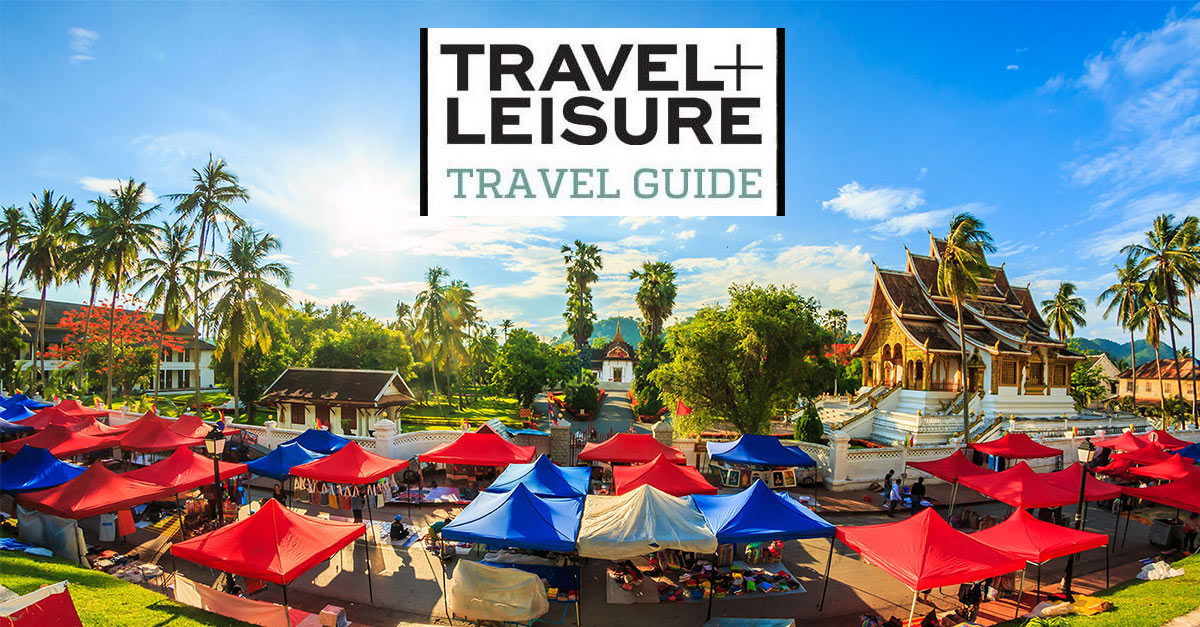
Luang Prabang has done it again by landing on top travel magazine, Travel + Leisure‘s ‘The 50 Best Places to Travel in 2018.” This UNESCO World Heritage Site lives up to its name by making an appearance on this list, serendipitously coinciding with the country’s official state sanctioned tourism campaign this year.
Here is Kate Springer’s description of beautiful Luang Prabang:
“Landlocked Laos might be quieter than Southeast Asian neighbors like Vietnam and Thailand, but 2018 could transform the country into the region’s next hot spot. Wattay International Airport, in the capital of Vientiane, is set to complete a terminal expansion to accommodate more international links next year, but the biggest changes are foot in the UNESCO World Heritage–inscribed town of Luang Prabang, in central Laos. This serene riverside spot lures travelers to its golden Buddhist temples, French-colonial architecture, hiking trails, nearby elephant sanctuaries — and now, glamorous new digs. Last year, the design-forward Azerai opened inside a century-old French-colonial building that was formerly an officer’s quarters. The debut concept from Aman Resorts founder Adrian Zecha has airy, light wood interiors that nod to local culture in their use of batik textiles and Laotian artwork. There’s also an 80-foot swimming pool in a tree-shaded central courtyard. The upcoming Rosewood Luang Prabang aims to be a destination in itself. Opening in mid 2018, this highly anticipated resort will feature pavilion-style villas, luxury tents, and a spa that seems to float above the jungle.”
Travel and Leisure is a magazine based in New York City. Owned by Time Inc, it is published monthly and boasts 4.8 million readers per year.