Home Blog Page 6291

Op-Ed: Do Not Rush to Attapeu to Help. Please Read This First.

Aerial View of Attapeu Partially Submerged / Photo Credit: Allan Liu (Hope Vision)

Opinion Editorial

By Francis Savanhkham (Contributing writer)

I know everyone may want to help victims of the Attapeu flood, but they don’t need unskilled volunteers or aid they can’t use. Here’s what you can do that won’t obstruct aid efforts.

As a Lao man who has always considered Laos home, the trauma upon hearing the news of the flood that has decimated the homes and lives of the people of Sanamxay in Attapeu was intense. I felt powerless and unable to help, here in my Vientiane.

We know that the flood has left many missing and unaccounted for and many more injured and even more without a place to live. What we also know from tracking events in natural disasters all over the world is that the situation only gets worse in the weeks following the event, as hospitals become overwhelmed, basic supplies become scarce and those living in makeshift shelters capitulate to exposure and disease and many more physically and mentally overwhelmed by the tragic loss of their loved ones.

A topic that has been heavily deliberated in the international aid world is the lack of a coordinated response to these types of crises. What ends up happening is this: scores of well-intentioned activists and philanthropists flood (pun not intended) the site: normal law-abiding citizens, students, activists, all scrambling trying to look for a way to make their mark and do good, but lacking either the skills or coordination to have an impact. Indeed, many end up slowing down the aid efforts.

I read in an article on the The Guardian website about the earthquake crises in Haiti, Nepal and other countries. There had been reports of “teams of doctors who arrived on the scene to help but were unable to feed themselves. This wave of unsolicited and poorly planned shipments of untrained people and donated goods was dubbed by some humanitarians the second disaster.”

One tough issue with aid work is that it is a free-for-all. Anyone who wants to, and who is fortunate enough to own cars and trucks or purchase flights to Savannakhet/Paksé (the airport in Attapeu is closed to normal citizens), can contribute. Unlike doctors or engineers, who must train for years to acquire the necessary qualifications that prove sufficiently that they know their stuff, no such qualification exists for aid workers.

What Attapeu requires right now is not another untrained bystander, no matter how much her heart is aching.

I am overwhelmed with offers of help and contributions from friends and family on social media. “What do you need? What can I do?” Well, here are some practical ideas that will not get in the way:

  • Remember that this flood is not your fault. It is not about you. It is not about your love for Laos and its people. Your feelings of guilt and helplessness may be hard to cope with, but you may not be what is needed at this very moment. Do not be in a hurry to go there, at least for the next couple of weeks while the city is reeling. The exception to this is if you are a qualified professional with much-needed skills to offer. If you are, get in touch with international relief agencies (for example, the Red Cross) or local rescue teams (Vientiane Rescue 1623) that can place you in a position where you are needed most. Ask a qualified authority in your province how you can help.
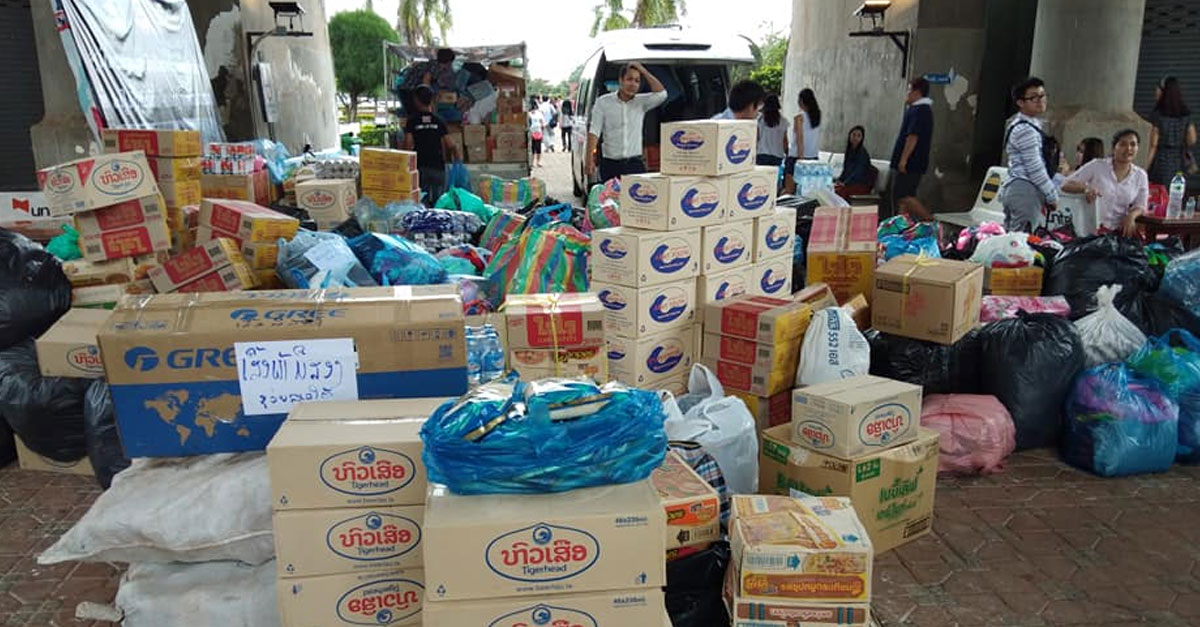
  • Send what the victims need and now what you think they need. While shirts, underwear, pants, blankets and food are invaluable, there are a host of other things that may also be more needed. It is much simpler, and often in the long run less costly, for organizations to procure goods themselves and distribute based on need. If you want to give away things you no longer need, sell them and donate the money to a relief fund like BCEL One Heart or other trusted funds. If you do give goods, the latest I heard was that you should put them in the Attapeu provincial office and not Sanamxay where the military has set up roadblocks to keep the situation under control. The coffee warehouse set up as a makeshift shelter in Paksong is currently overfilled with goods (more supply than demand). There is also a need for boats and canoes and offroad trucks to help with rescue and recovery efforts. There are even people still stuck on higher ground (hills) unable to come down, some even searching for their missing loved ones, who need clean water and ready-to-eat food. Please check with local authorities what is needed. Here is one updated list of what is needed.
  • Give cash (or money transfers). More than your plane ticket or money spent on fuel driving there or second-hand goods, what is most needed in Attapeu right now is money. Donate what you can and do research to find out where your money will go. If you can, compare a few organizations with aid appeals and ensure that you agree with their approach. I know that’s a lot easier said than done to try to sift through the myriad entities claiming to help but it’s worth trying to know where your money is going. The Lao Ministry of Labor and Social Welfare has an official account with the country’s largest state bank, BCEL, where you can donate your funds:
    • Fund Assistance to Disaster Victims
      • KIP: 010-110-001-508-937-001
      • BAHT: 010-110-201-508-937-001
      • USD: 010-110-101-508-937-001
      • Swift Code: COEBLALA
      • For more information, please call:
        • +856-20 55622477
        • +856-20 22238555
        • +856-20 22219355
        • +856-20 99542869
  • In the short term, handouts are necessary. Many have questioned this as a method of long-term development. However, in the immediate wake of such tragedy, handouts are necessary to give victims the essentials for survival.
  • In the long term, rebuild sustainably. If in the coming months you want to contribute to the rebuilding efforts and the longer-term development of the country, consider sustainability as a factor. Once the water recedes, there will be numerous programs to repair and rebuild flooded homes. Laos is a flood-prone country, so designing villages in which family homes can handle another flood is not going to be cheap.
  • If you really need to go. Volunteering is great. However, I am urging you to wait a while and think carefully about where and how to use your skills. Volunteering can have a wonderful impact on the world when done mindfully. But it is not easy or automatically beneficial. Before signing up for something, take the time to learn about Attapeu and the complex nature of its recovery and development, and continue to be open to learning during your time there. For example, several days ago, it was reported that food trucks serving stir-fried noodles and fried rice were deployed to assist the victims, but the villagers were not used to eating this. A common meal in Sanamxay typically consisted of sticky rice and dried meats and jeo (a Lao sauce/dip). Also, please also take this time to review other areas that are currently being affected by flood waters (to a lesser degree than Attapeu) – like Mahaxay District in Khammouane. This province’s flooding has been less covered in the news. Your help will definitely be needed there.
  • Consume news wisely and do not share graphic images. Official state media personnel are doing all they can but for a variety of reasons, sometimes minute-by-minute updates are hard to come by. To make up for this dearth, private initiatives – both amateur and professional, have stormed social media, a phenomenon that can be called the birth of citizen journalism. But with the advent of this revolutionary occurrence, come unaccountable “keyboard gangsters” under the guise of anonymous Facebook pages, whose sole objective is to discredit the government and cause disturbances in the country. But there are undoubtedly many social media pages working for the collective good. Please use your discretion and common sense to maneuver in the swamp that is the Lao social media. Also, have some decency and stop sharing graphic and disturbing images of dead people. It is also unethical and illegal to share fake news.
Feature Image: Alan Liu (Hope Vision)

Government Appoints Special Task Force to Combat National Level Crises

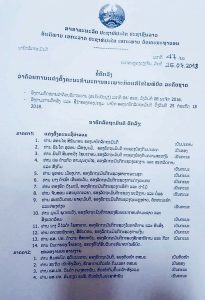
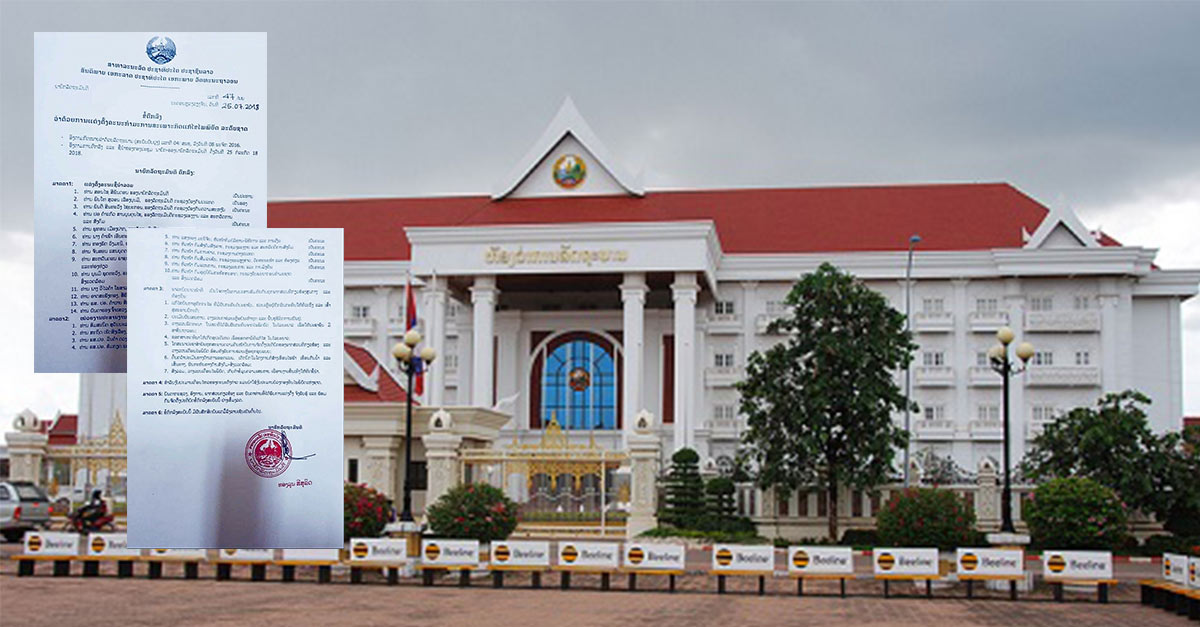
The Lao Government has upheld its commitment to improving its disaster management system nationwide by establishing a special committee tasked with overseeing the management of national level crises.

Following the failure of a saddle dam at Xe Pian Xe Namnoy hydropower reservoir in the southern province of Attapeu, Prime Minister Thongloun announced in an official decision yesterday the officials that comprise the special committee.

The special committee is tasked with being the coordinating body between all relevant parties at all levels. It is to perform analyses of the damages done by the disaster and employ solutions to mitigate its effects. The committee is to investigate upon the causes of the disaster and take the necessary precautions to prevent it in the future. It is also its responsibility to spread public awareness of the disaster and provide the public with up to date news and developments.

The leadership of the committee responsible for oversight includes:

  1. Chairman: Sonxay Siphandone, Deputy Prime Minister
  2. Vice Chairman: Lieutenant General Souvone Leuangbounmee, Vice Minister of National Defense 
  3. Member: Brigadier General Sinthavong Sayakone, Vice Minister of Public Security
  4. Member: Dr Khamkeo Sanebounkounxay, Vice Minister of Labor and Social Welfare
  5. Member: Phouthone Meuangpak, Vice Minister of Health
  6. Member: Khamphao Ernthavan, Vice Minister of Foreign Affairs
  7. Member: Thongphat Vongmany, Vice Minister of Agriculture and Forestry
  8. Member: Chansone Senebouthalat, Vice Minister of Energy and Mines
  9. Member: Savankhone Razmountry, Vice Minister of Information, Culture and Tourism
  10. Member: Bounmy Phouthavong, Vice Minister of Natural Resources and Environment
  11. Member: Vilaykham Phosalat, Vice Minister of Public Works and Transportation
  12. Member: Atsaphangthong Siphandone, Vice Minister of Finance
  13. Member: Dr Khamphai Sisavan, Vice Minister of Education and Sports
  14. Member: Vice Governors of the affected Province

Members of the coordinating division are as follows:

  1. Somsanith Souvannalath, Vice Minister, Prime Minister’s Office
  2. Sathit Phetsingleuang, Acting Director of the Secretariat, Prime Minister’s Office
  3. Linkham Douangsavanh, Director of Research
  4. Somkiat Phasy, Director of Communications
  5. Sengthong Manichanh, Director of Administration, Protocol and Finance
  6. Director of Social Charity, Ministry of Labor and Social Welfare
  7. Director of the Press, Ministry of Foreign Affairs
  8. Director of Mass Media, Ministry of Information, Culture and Tourism
  9. Director of Planning, Ministry of Planning and Investment
  10. Director of Hydrology and Meteorology, Ministry of Natural Resources and Environment

Dam Failure Due to Substandard Construction Says Minister

minister khammany dam failure

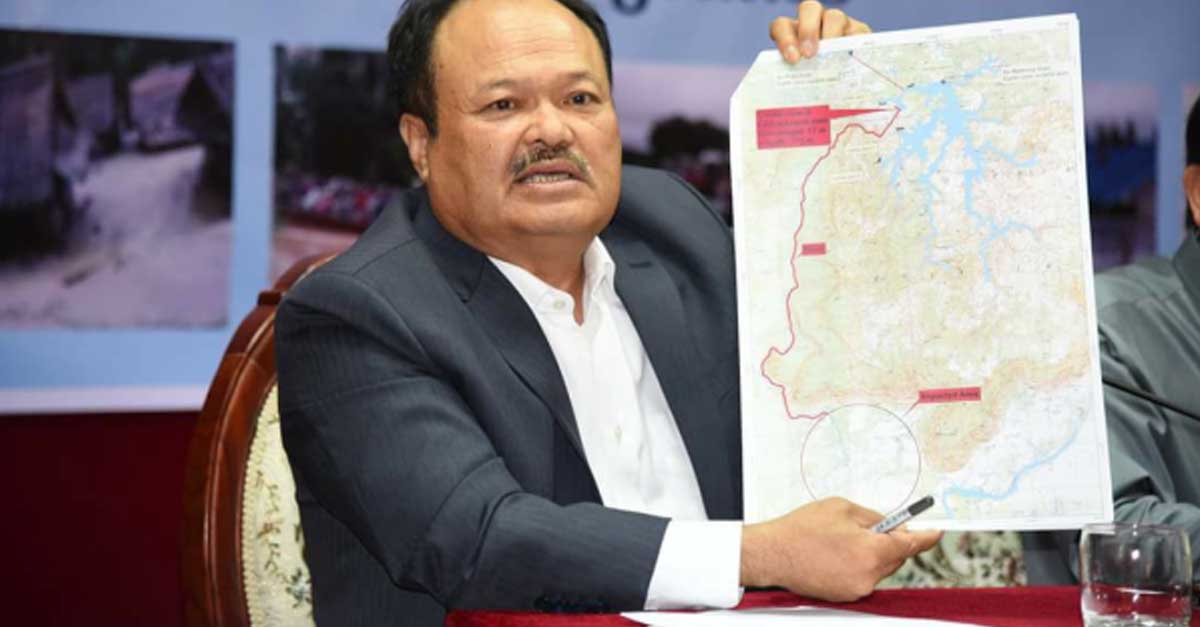
Minister of Energy and Mines, Dr Khammany Inthirath, told the media that the collapse of the Saddle Dam at the Xe-Pian Xe-Nam Noy Dam on July 23 was likely due to substandard construction.

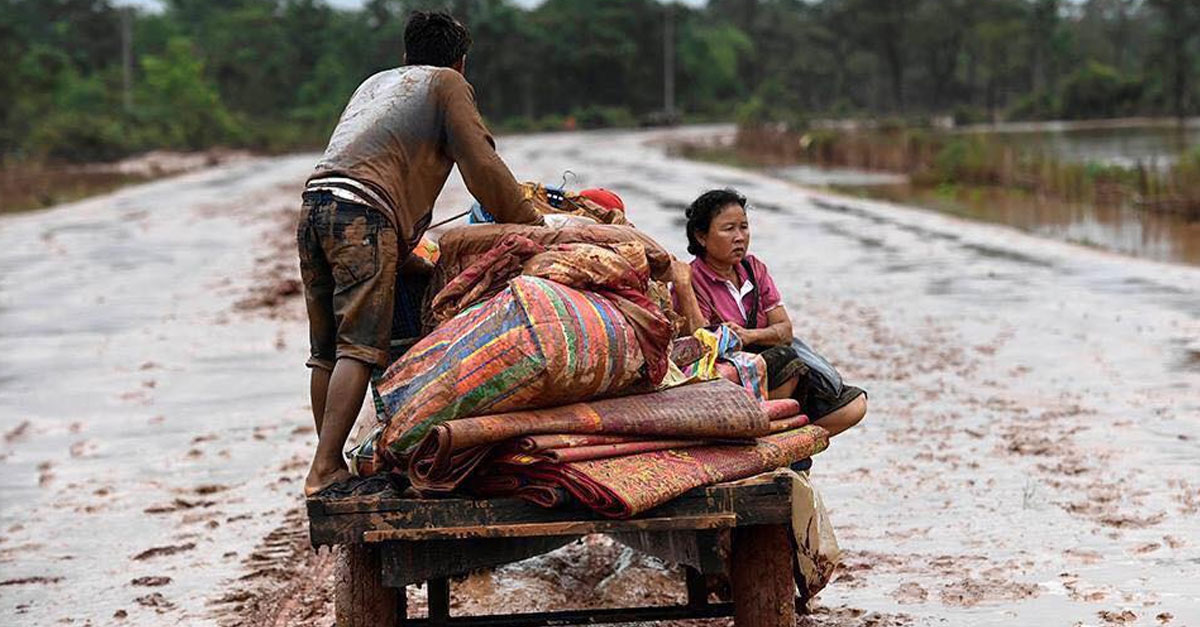
The dam failure incident caused catastrophic damage to Sanamxay District in Attapeu Province, with hundreds of people missing and thousands displaced. Foreign and local rescue teams are at the scene locating survivors and disbursing supplies.

Speaking at a press conference yesterday, Minister Khammany said that the government is still investigating the cause of the incident, but that substandard construction coupled with unexpected rainfall was to blame.

“There may have been a crack in the saddle dam which allowed water to pass through, widening to a hole large enough to cause the collapse,” he said.

Dr Khammany went on to say that the government has launched a full-scale investigation, headed by a newly appointed committee, and that all affected residents will be fully compensated.

The committee will work with the project developers and local authorities to assess the disaster and fully understand the cause.

The dam collapse has so far displaced 3,060 people, while 131 remain unaccounted for. Only four deaths have been recorded so far.

Source: KPL

Power Company to Accept Responsibility for Dam Collapse

power company to accept responsibility for dam collapse

The Xe Pian Xe Namnoy Power Company is to take full responsibility for the collapse of the saddle dam that caused a national emergency in Attapeu Province.

The company has so far refrained from making an official statement, however the Minister of Energy and Mines, Dr Khammany Inthirath confirmed in a press conference yesterday that the company would be fully accountable in accordance with the law.

He stated that compensation for all damage to the livelihoods and property of local people would be borne by the power company, as per the conditions of its concession agreement.

Mr Khammany continued that the government would be working with project developers as well as emergency workers to focus on rescue and rehabilitation of those affected by the dam collapse.

According to the Vientiane Times, which spoke to an official at the company, the firm was ready to handle the incident following the concession agreement and related laws. The official told the newspaper that the company would not deny its responsibility for the flood and its consequences.

After the rescue efforts have been completed, a long-term reconstruction phase will begin, including rebuilding of settlements, including accommodation and land for affected people.

Funding for the reconstruction efforts would stem from the power company and its developers.

While the government has emphasized that the dam must take responsibility in accordance with its concession agreement, concerns have been raised in regard to social justice, and the need to care for those who lost family members in the floods.


Regional flooding continues

The situation has been intensified by the impact of tropical storm Son Tinh, which has caused widespread flooding across Laos and the region. The flood situation has made it more difficult for waters driven by the dam collapse to drain out into the sea, causing rising water levels in Cambodia as the torrents make their way to the Mekong Delta.

Engineering experts from Korea and Thailand are inspecting the site of the dam to investigate the cause of the disaster.

It is expected that the Xe Pian Xe Namnoy Power Company will make its statement following the results of the investigation.

MRC Monitors Rising Mekong Water Levels

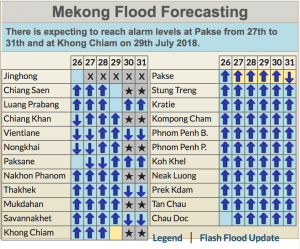
The Mekong River’s water levels have increased rapidly during the period from July 15 – 24, with a rise of over four meters in some stations along the mainstream. But they are currently not at an alarming level yet.

In the upstream part of Laos in Luang Prabang, water levels have risen from 8.97 meters on 18 July to 13.32 on 23 July, a rise of slightly above four meters. A sudden increase was detected at this motoring station, with a jump from 10.85 to 13.28 meters during 21-22 July.

Water levels in Vientiane monitoring station also have increased from 4.64 meters on 18 July to 9.40 meters on 24 July, representing an almost 5-meter rise in five days. Further downstream of Laos in Pakse, water levels increased by two and a half meters, moving from 7.68 on 17 July to 10.11 meters on 20 July.

In Nong Khai of Thailand, there was an increase of almost five meters, with water levels at the stations climbing from 5.58 to 10.30 meters over this monitoring period. Slightly down the mainstream in Thailand, water levels in Nakhon Phanom station plunged from six meters on 15 July to 9.88 meters on 24 July, indicating an almost 4-meter drop over 10 days. At 10.30am yesterday, the water levels in this station were recorded at 9.949 meters, which is 1.5 meters lower than the alarm level of 11.5 meters and two meters below the flood level.

With this continued increase in water levels and possible additional rainfall in the upper part of the basin, Nakhon Phanom and Pakse water monitoring stations may expect to reach their alarm levels (12 meters at Nakhon Phanom station and 11 meters at Pakse station) on 27 and 29 July, respectively.

In Cambodia, three particular water monitoring stations in Stung Treng, Kratie and Kampong Cham all indicated an increase. Water levels in Stung Treng had risen rapidly from 5.25 meters on 8 July to 9.48 meters on 21 July, while in Kratie, the water levels had jumped from 12.5 meters to 19.85 meters over the same period. In Kampong Cham, there was an increase of 6.12 meters, with the water levels moving from 7.05 meters on 08 July to 13.17 meters on 22 July.

The water monitoring stations in Vietnam did not show any increases or worrying trends yet.

Analysis of the Mekong River Commission’s data reveals that the rapid rise of water levels are the result of an extremely high level of rainfall from the upper part of Luang Prabang to Vientiane due to the effects of tropical storm Son-Tinh. This caused a rapid rise in the water levels of many of the Mekong’s tributaries and resulted in a rapid peak in the mainstream.

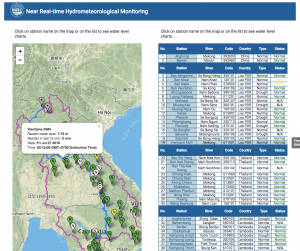
During the flood season, the MRC’s Regional Flood Management and Mitigation Center (RFMMC) provides daily flood forecasting for key stations along the Mekong mainstream from Chiang Sean of Thailand to Tan Chau and Chau Doc of Vietnam. The Commission also conducts Flash Flood Guidance over the lower Mekong basin based on Satellite Rainfall Estimate.

Information on flood forecasting and flash flood guidance can be accessed here.

Information on water monitoring at the stations on the Mekong mainstream can also be found here.

Source: MRC

International Community Offers Support for Laos following Dam Collapse

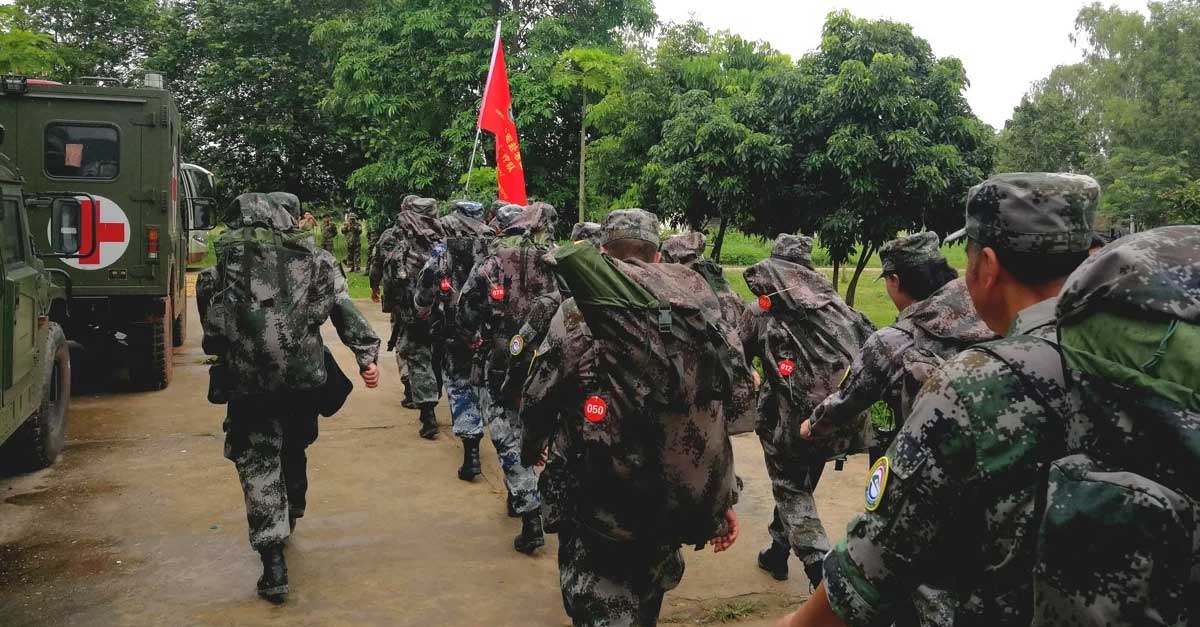
China Sends Rescue Team to Laos

Several foreign countries have begun offering assistance to Laos following the collapse of the Xe-Pian Dam in Attapeu Province on Monday.

The event has been officially classified as a national disaster, with Lao government and military personnel being deployed to the site. 

The plight of affected villagers, desperate, hungry and homeless, has deeply affected the people of Laos, and large sums have already been mobilized domestically. Community drives to raise funds and collect donations of food, clothing, blankets, and sanitary products have been set up across the nation, with desperately needed items beginning to make their way down south.

State commercial bank BCEL has utilized its BCEL One Heart crowdfunding initiative to help consolidate fundraising at the national effort, with donations to date reaching 2.9 billion kip.

Meanwhile, donations from foreign countries are now beginning to flow in.

Donated Items

Countries that have provided support to Laos:

The Republic of Korea has sent a team of rescuers, helicopters and boats to assist in rescue efforts.

The King of Thailand, Maha Vajiralongkorn, personally donated 1 million baht as well as emergency equipment, supplies and medication. Thai Prime Minister Prayut Chan-o-cha also pledged five million baht on behalf of the Thai government.

The Japanese government has donated equipment and supplies through its aid agency, JICA, while the Republic of Singapore has donated 100,000 USD.

China has responded to the crisis by sending a team of over 100 rescue personnel.

Vietnam has also pledged its support and is expected to send materials via the border at Phu Keua.


Source: South China Morning Post, Xinhua, Lao Post

Lao Dam Collapse Floodwaters Hit Stung Treng, Cambodia

stung treng cambodia affected by lao damcollapse

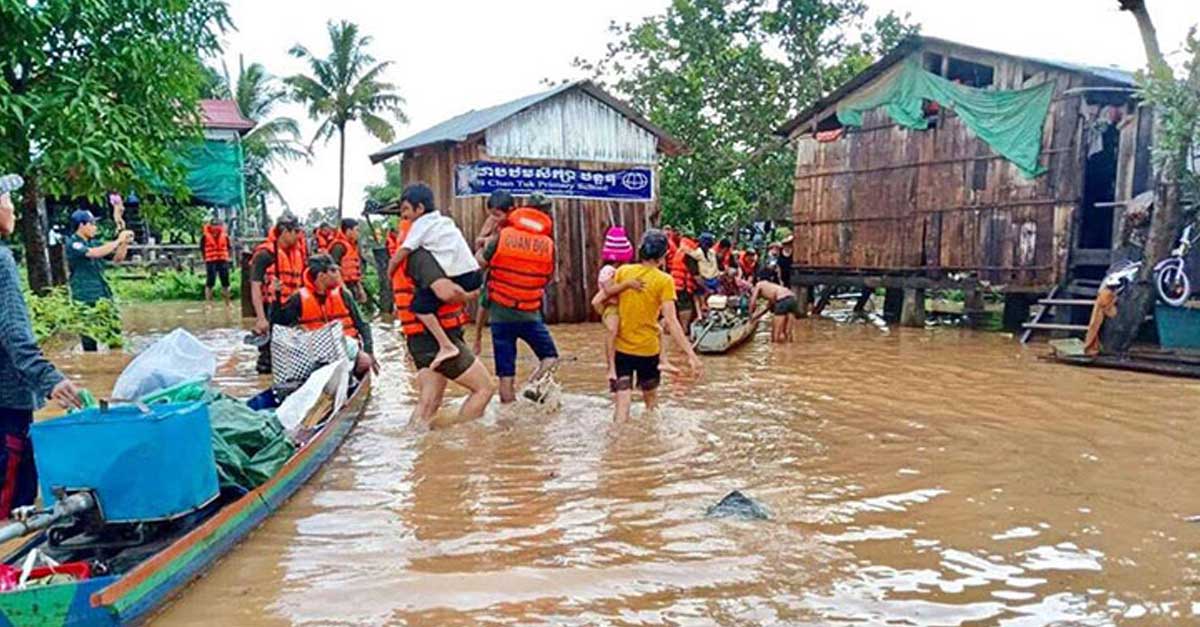
Floodwaters from the dam collapse in southern Laos have hit Stung Treng province in Cambodia, causing the evacuation of over 5,000 people.

The Cambodian Ministry of Water Resources and Meteorology stated that floodwaters from the Xe-Pian Xe-Namnoy dam in Laos have directly affected parts of Stung Treng, which had already been inundated after heavy rains.

Authorities in Stung Treng initially planned to evacuate only 557 families, however the number rose to 1,289 families in communities along the Sekong River after water levels rose to dangerous levels following the dam collapse in Laos.

The water level in the river is now at 11.5 meters.

Soldiers were released from border areas to assist with transporting evacuees.

The Mekong River Commission, which is closely monitoring the situation, stated yesterday that the Lao dam collapse was a great tragedy and has offered its support.

“We express condolences for this national tragedy in Lao PDR. We stand ready to visit the site as well as to provide appropriate support in this time of need,” said MRC Chief Executive Officer Pham Tuan Phan.

Source: Khmer Times, MRC

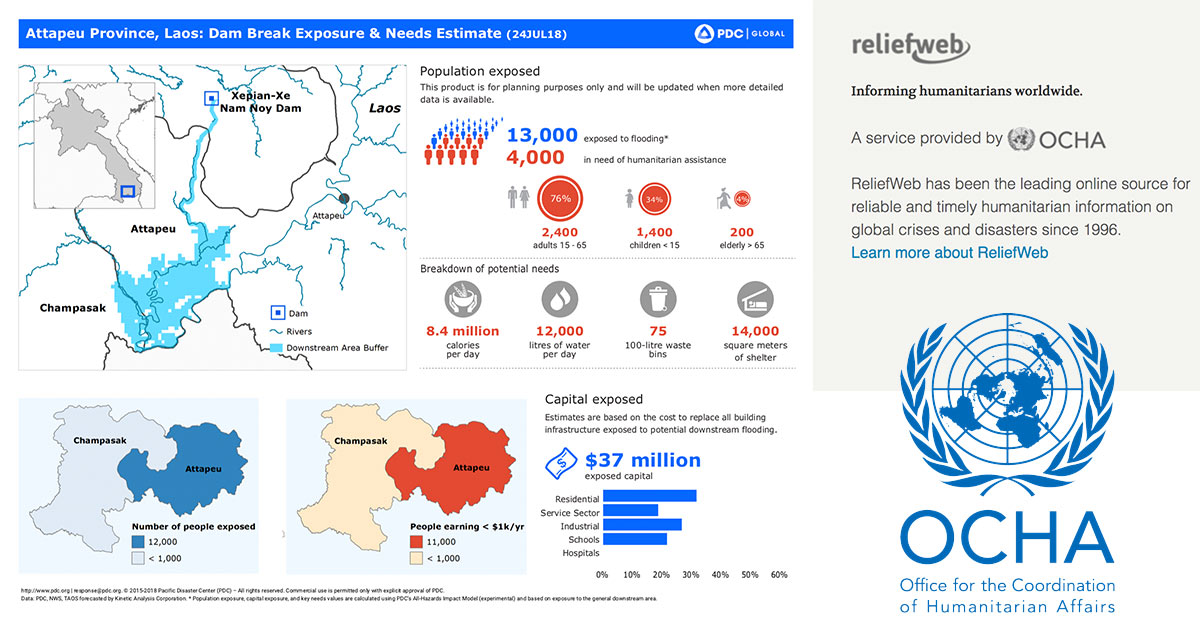
United Nations OCHA Releases Exposure and Needs Infographic

The United Nations Office for the Coordination of Humanitarian AffairsRelief Web, a leading online source for reliable and timely humanitarian information on global crises and disasters, has released an infographic that profiles the dam break exposure and depicts an estimate on the needs of those affected.

The figures demonstrate the catastrophic damage wrought by the flash floods.


About Relief Web and OCHA

ReliefWeb is the leading humanitarian information source on global crises and disasters. It is a specialized digital service of the UN Office for the Coordination of Humanitarian Affairs (OCHA).

We provide reliable and timely information, enabling humanitarian workers to make informed decisions and to plan effective response. We collect and deliver key information, including the latest reportsmaps and infographics from trusted sources.